

Caregiver Self-Care During Medical Travel to Turkey

Caregiver self-care during medical travel to Turkey means planning for yourself as deliberately as for the patient: pack your own documents and medicines, build a flexible daily routine around meals, rest and short breaks, use interpreters and written instructions instead of memory, limit family updates to one channel, and ask hospital support teams for help early rather than late.
Have you packed your own medication yet, or only theirs? Most companions plan the patient’s file, appointments and comfort long before they think about where they will sleep, eat or sit down. That is understandable. It is also how caregivers end up exhausted by day three of a two-week trip.
When you travel to Turkey with someone who needs treatment, your wellbeing is not a side issue. Your sleep, meals, energy and mood shape how well you listen in consultations, how clearly you ask questions, and how steady you can be when plans change. This guide covers caregiver self-care during medical travel to Turkey in practical terms: what to pack for yourself, how to build a workable routine, how to manage communication without drowning in it, and when to hand a problem to the hospital team instead of carrying it alone.
At a glance
- Best for: Family members, friends and companions supporting an international patient in Turkey
- Main focus: Practical self-care, routines, boundaries and logistics for the caregiver, not the patient
- Helpful support: Interpreters, international patient services, hotel and transport coordination
- Key reminder: You are a support person, not a replacement for the care team, and you are not expected to manage everything alone
- Before travel: Sort your own documents, medication supply, insurance, rest plan and emergency contacts, separately from the patient’s
Why caregiver self-care is part of safe medical travel
Caregiver self-care during medical travel to Turkey is not a luxury bolted onto the trip. It is part of what keeps the trip safe. A companion who has slept, eaten and had twenty minutes of quiet is far better at noticing a new symptom, remembering a discharge instruction, or asking the question the patient forgot. A companion running on four hours of sleep and airport snacks is not.
Medical travel is tiring even when everything runs smoothly. You are managing airports, an unfamiliar city, hospital routines, possibly a time zone change, and conversations in a language that may not be your first. At Acibadem, international patient services and interpreters can take a large share of that load, but they cannot rest for you, eat for you, or set boundaries with your extended family for you. That part is yours, and it deserves the same planning you gave the patient’s suitcase.
Be clear with yourself about your role. You are there to be present, to help the patient feel secure, to keep practical information organised, and to raise concerns with the care team. You are not there to carry every clinical and logistical responsibility on your own shoulders. Caregivers who try usually burn out quietly, and the patient feels it.
Prepare your own travel essentials before you leave
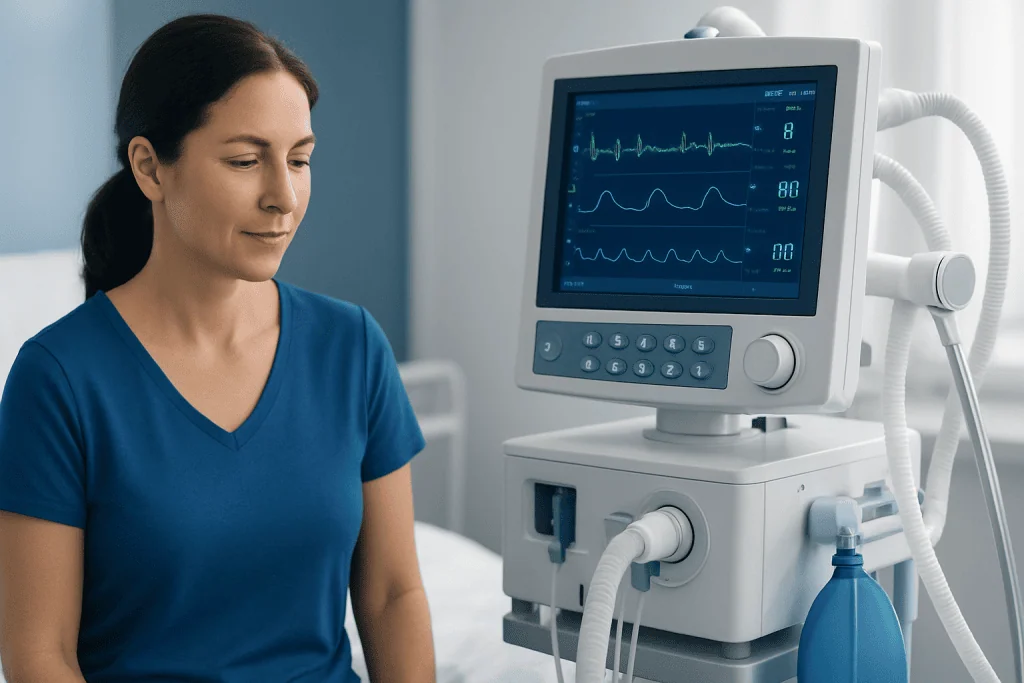
Many caregivers pack meticulously for the patient and throw their own things in a bag the night before. Reverse that habit. Before travelling, confirm your own passport validity, visa or e-visa if your nationality requires one, and travel insurance that covers you, not just the patient. Note that as a visitor you will generally not receive free routine healthcare in Turkey; if you need a doctor for yourself, you or your insurer will pay for it. That is one more reason your own insurance matters as much as the patient’s.
Bring enough of your own regular medication for the full planned stay plus a buffer, because treatment timelines can shift. Keep medicines in their original packaging and in your hand luggage, never in a checked bag. If you take anything on a fixed schedule, the same timing logic that applies to patients applies to you: our guide on keeping regular medicines on schedule during medical travel works just as well for companions. If you live with a health condition yourself, write down your diagnosis, medications, allergies and your home doctor’s contact details in English, and keep that note separate from the patient’s file. See also managing chronic conditions during medical travel if that applies to you.
Keep documents organised so a tired version of you can find them. Copies of key papers, kept apart from the originals, save real stress if a bag goes missing: the approach in keeping valuables and medical documents safe during treatment travel applies to your documents too, not only the patient’s.
Finally, build a small caregiver kit: a refillable water bottle, snacks that survive a bag, a notebook and pen, headphones, hand cream, tissues, a light scarf or jumper for air-conditioned wards, and one or two things that genuinely help you rest. None of this is dramatic. All of it reduces the small daily frictions that accumulate into exhaustion.
Create a simple daily routine in Turkey

Hospital days do not follow your plan. Tests get added, consultations move, recovery takes its own time. Rather than fighting that, build a routine with a few fixed anchors and flexible space between them. Useful anchors: breakfast at a set time, a short walk, one deliberate check-in with the care team, a quiet rest period in the afternoon, and a realistic bedtime.
The most common self-care failure among caregivers is skipped meals. Companions do not want to leave the bedside, so they run on tea and vending machines. When the patient is safely resting or is with clinical staff, that is your window: eat properly, drink water, step outside if you can. Ask floor staff or the international patient team about nearby food options, waiting areas, and prayer or quiet rooms: they answer these questions daily and will not find them trivial. If you are budgeting for your stay, the guide on daily expenses during medical travel in Turkey explains what companions typically need to plan for.
Sort tasks by urgency, honestly. A medication question or a new symptom goes to the care team promptly. Laundry, shopping and replies to extended family can be batched around your rest time instead of interrupting every hour. The distinction sounds obvious; under stress, it stops being obvious, which is why it is worth writing down.
One more practical anchor: reliable mobile data. Maps, translation apps, hospital messages and family calls all depend on it, and hunting for Wi-Fi adds avoidable stress. Setting up connectivity before you land, see using eSIMs and mobile data in Turkeyis a small task with an outsized calming effect.
Use communication support so you do not carry everything alone
One of the most draining parts of the trip is trying to understand complex medical information in a second language, then re-explaining it to the patient and to family at home. Many caregivers appoint themselves the household’s translator, secretary and press office all at once. That role collapses fast.
Acibadem supports international patients with interpreter services and coordination teams. Use them. Before important conversations, write your questions down, under stress, prepared questions get asked and improvised ones get forgotten. During the conversation, take notes or ask whether written instructions are available, particularly for appointment times, medication guidance, preparation rules and discharge steps. “Can you write that down for me?” is a completely normal request, not an imposition.
For family at home, choose one or two people to receive updates and let them relay news to everyone else. A short daily message works well: today’s appointment is complete, we are waiting for the doctor’s plan, we will update again tomorrow. Answering the same question from eight relatives is not caregiving; it is unpaid administration, and you can decline it. Clear boundaries here protect your energy and prevent the mixed messages that happen when tired people repeat medical information many times over.
Protect your sleep, food, movement and emotional balance
Days of caregiving can hold your body in a constant state of alert. You sleep lightly, eat irregularly, and feel vaguely guilty whenever you do something for yourself. Over a week, that pattern commonly shows up as headaches, irritability, stomach discomfort, forgetfulness and emotional flatness. None of that helps the patient.
Set small, achievable targets rather than attempting a perfect wellness regime in a foreign city. Drink water when you wake. Eat something with protein before the hospital day starts. Walk for ten minutes where it is safe and practical. Give your eyes regular breaks from screens. If deep sleep is not happening, a short nap or a few minutes of slow breathing still helps your nervous system recover, imperfect rest beats no rest.
Expect emotional reactions and treat them as normal rather than as failures: worry, frustration, homesickness, sadness, sometimes anger. When a wave hits, step into a quiet area if it is safe to leave, breathe slowly, and name the next concrete need, information, food, rest, reassurance, or help from staff. Naming the need turns a vague feeling into a solvable task. If distress feels intense or does not ease over days, tell the care coordination team; they can point you toward appropriate support, and asking is a sign of competence, not weakness.
- Take breaks before you are completely exhausted, not after.
- Accept help with transport, interpretation and scheduling: that is what the services exist for.
- Keep one comforting routine from home: a morning call, prayer, music, journaling.
- Being calm is helpful. Being human is allowed.
What if you get sick or need help yourself in Turkey
Caregivers get ill too, and pretending otherwise is not a plan. For minor complaints, a cold, an upset stomach, a headache, pharmacies (eczane) are widespread in Turkish cities and pharmacists can help with everyday remedies; for anything beyond that, ask the international patient team where a companion can be seen, and expect to pay or claim through your travel insurance, because tourists do not receive free routine healthcare in Turkey. Do not start, stop or change any of your own regular medication while abroad without speaking to a doctor.
Learn the essentials before you need them. Turkey’s nationwide emergency number is 112. Save it alongside your hospital, hotel and coordinator contacts, and keep a written copy in case your phone dies: our guide to emergency contacts and urgent care during medical travel in Turkey covers this in detail. If you or the patient develops a symptom that could be time-critical, such as chest pain, difficulty breathing, sudden weakness, or heavy bleeding, call your local emergency number or go to the nearest emergency department now.
Part of caregiver self-care during medical travel to Turkey is accepting that you cannot be the emergency plan yourself. Knowing exactly who to call, and having it written down, is what lets you stop rehearsing worst cases in your head at two in the morning.
Know when to ask for help from hospital and concierge teams
You do not need to solve every practical problem alone in a new country. If you are unsure where to go, how to arrange transport, what time to arrive, or how to handle an accommodation change, ask early, before the small problem becomes a stressful one. International patient teams support companions as a matter of routine, not as a favour.
At Acibadem, that support may include appointment coordination, interpreter arrangements, guidance through hospital processes, and help with travel or accommodation logistics. These services matter most exactly when things change: the treatment plan shifts, the patient needs more time in Turkey, or you are juggling appointments across several departments. Asking “can you please repeat the next step?” or “can you write that down?” is normal and expected. A well-informed caregiver supports the patient better and feels far less alone doing it.
Step by step
- Set your caregiver role before departure. Agree with the patient and family what you will handle and what you will not, documents, payments, family updates, luggage, daily communication. Unspoken expectations are where resentment starts.
- Pack for yourself, not only the patient. Your own medication with a buffer, comfortable shoes, layered clothing, chargers, snacks and personal documents. Essentials go in your cabin bag in case checked luggage is delayed.
- Identify support contacts in Turkey. Save the hospital, international patient services, hotel, driver, interpreter and 112 in your phone, and keep a written copy in case your battery runs out.
- Create a daily check-in routine. Each morning, review appointments, transport times and the meal plan. Each evening, note what was completed, what questions remain, and what tomorrow needs.
- Schedule real breaks. Plan them for when the patient is with medical staff, resting safely, or with another companion. Even fifteen minutes for a walk, tea or slow breathing helps you reset.
- Use interpreters and written instructions. Do not rely on memory for medical or logistical detail. Ask for interpretation when needed and request written guidance for preparation rules, follow-up plans and discharge instructions.
- Limit family update pressure. One update channel, one or two main contacts at home, short factual messages at planned times. Everything else can wait.
Your checklist
- Passport, visa or e-visa if required, travel insurance that covers you, and copies of key documents kept separately from originals
- Your own medications in original packaging, prescriptions, glasses and a written note of your health conditions in English
- Comfortable shoes and layered clothing for hospital wards and city travel
- Phone charger, power bank, eSIM or roaming plan, and saved contacts including 112
- Notebook or digital notes for questions, instructions and appointment times
- Healthy snacks, refillable water bottle and small comfort items
- A named family update contact and agreed update times
- Emergency contacts written down for both home and Turkey
- One short rest activity you will actually do: music, prayer, reading, breathing exercises
Key takeaways
- Caregiver self-care during medical travel to Turkey is part of patient safety, not a competing priority.
- Prepare your own documents, medication, insurance and comfort items with the same care you give the patient’s.
- Anchor each day with meals, one care-team check-in, a rest period and a realistic bedtime; let everything else flex.
- Use interpreters and written instructions instead of memory, and route family updates through one channel.
- Know how to get help for yourself: pharmacies for minor issues, your insurance for anything more, 112 and written contacts for emergencies.
- Ask hospital and international patient teams for help early: that is what they are there for.
Frequently asked questions
Is it a good idea to travel to Turkey for medical reasons?
That depends on the treatment, the patient’s condition and how well the trip is planned: there is no universal answer. Turkey is a major destination for international patients, but the sensible decision rests on a clear treatment plan, direct communication with the treating doctor, realistic travel logistics, and honest thought about follow-up care after you return home. A well-prepared caregiver is one part of making the trip work.
What are some self-care checklists for caregivers?
A workable caregiver checklist covers five areas: documents (passport, insurance, copies), health (your own medicines, prescriptions, a written health summary), routine (fixed meal times, a daily rest period, a realistic bedtime), communication (one family update channel, prepared questions, written instructions from the care team), and emergencies (saved and written contacts, including Turkey’s 112). The full checklist in this guide expands on each.
Do tourists get free healthcare in Turkey?
No. Visitors are generally expected to pay for medical care in Turkey, either directly or through travel insurance. What you pay depends on the type of facility, the service you need and your insurance terms, which is why insurance that covers the caregiver, not only the patient, is worth arranging before you travel. Emergency services will respond regardless, but treatment is not free for tourists.
What should I do if I get sick in Turkey?
For minor complaints, pharmacies are widespread and pharmacists can help with everyday remedies; for anything more, ask the international patient team where a companion can be seen and use your travel insurance. Do not change your own regular medication without speaking to a doctor. For symptoms that could be serious, such as chest pain, difficulty breathing, sudden weakness or heavy bleeding, call your local emergency number or go to the nearest emergency department now. Turkey’s emergency number is 112.
Is it selfish to take breaks while my loved one is receiving care?
No. Breaks keep you steady, patient and clear-minded, which is exactly what the patient needs from you. If your loved one is safely resting or with the care team, a short break for food, water, fresh air or quiet time is responsible caregiving, not neglect.
How can I manage messages from family back home?
Choose one or two relatives to receive updates and ask them to relay news to everyone else. Send short, factual updates at planned times rather than responding continuously. This protects your attention, prevents you repeating medical information while tired, and reduces the risk of mixed messages reaching the wider family.
What if treatment plans change and we need to stay longer in Turkey?
Plans can change depending on findings, recovery or follow-up needs. Contact the international patient services or coordination team early for help with appointments, accommodation and transport adjustments. At the same time, review your own medication supply, your work commitments, your insurance dates and your family communication plan: the caregiver’s logistics need updating too, not just the patient’s.
Add us as a Preferred Source to see more of our trusted health content across Google Search, AI Overviews and Discover.

Update history
- PublishedJune 8, 2026
- Medical review approvedSeptember 13, 2026
- Last content updateSeptember 12, 2026
References2
- Caregiver Health: MedlinePlus medlineplus.gov
- Türkiye (Turkey): CDC Travelers' Health wwwnc.cdc.gov
More Patient Guides
Medical Travel with a Companion: Who Should Come and Why
Medical travel with a companion can make treatment in Turkey easier by providing practical help, communication support and reassurance before and after…

How Family Members Can Help Without Disrupting Recovery
Family support during recovery helps when you listen, organize practical tasks and follow the care plan without taking over, in Turkey or…
Need a Family Member to Travel With You? A Companion Decision Guide
A companion travel guide for treatment in Turkey: decide who should travel with you, plan practical support, and prepare for Istanbul care.

Unexpected Overnight Stay in Turkey: What Patients and Companions Should Be Ready For
Unexpected overnight stay in Turkey? Here is what patients and companions should prepare for, from essentials and updates to hospital logistics in…