

Liver Transplant in Turkey: Treatment Guide
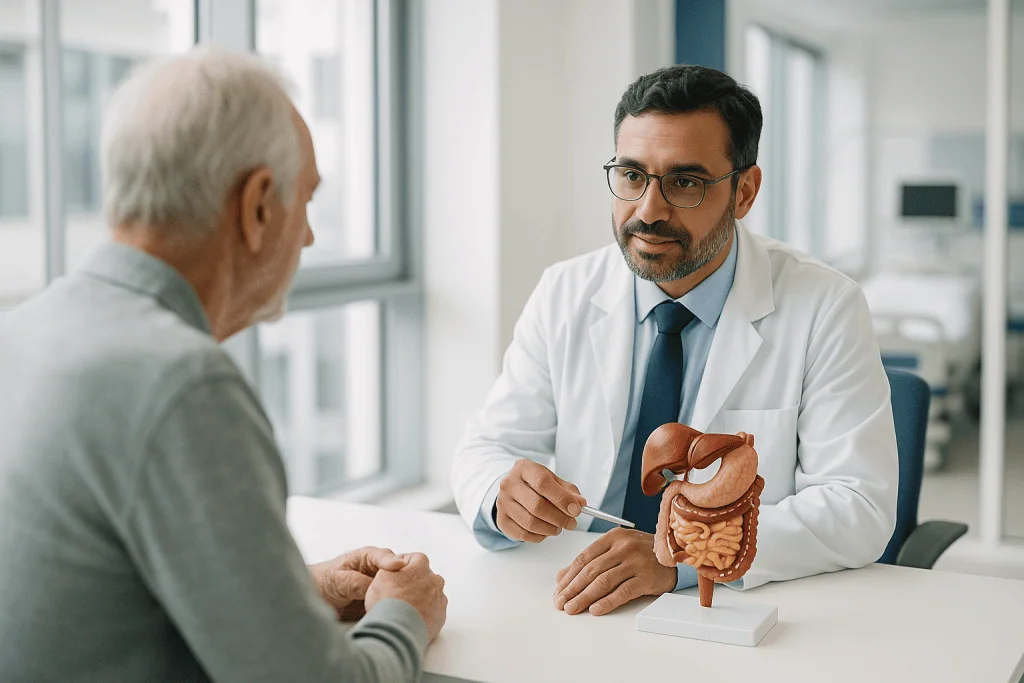
If you are planning a liver transplant in Turkey as an international patient, most cases are assessed as living donor transplants, so both you and your potential donor need separate, detailed evaluations before surgery is scheduled. Expect general anesthesia, several weeks in hospital in total, and follow-up that continues for months after you go home.
Liver transplant survival rates are the most searched and least understood numbers in transplant medicine, quoted without context, compared across incomparable programmes, and read as personal prophecies when they are population statistics. This guide starts by teaching the honest reading: what one-year and five-year survival actually measure, why the figures differ by diagnosis and urgency far more than by hospital brochure, and which questions extract meaningful numbers from any programme. Then it covers what makes Turkey distinctive, some of the world’s highest-volume living-donor liver programmes: the strict legal framework around donation, and the twin recovery roads of recipient and donor.
The statistical literacy first, in one paragraph: modern liver transplantation delivers strong survival for well-selected patients: the large international registries report the majority of recipients alive at five years and beyond, with one-year survival now high in experienced centres. But your number depends on your story: diagnosis (cancer within criteria versus decompensated cirrhosis versus acute failure), your condition at transplant (elective versus intensive-care urgency), donor type and organ quality. A programme quoting one glossy figure for everyone is marketing; one that says “for patients like you, here is our experience” is practising medicine.
And the sentence that governs every international transplant journey: records first, no serious programme, and no serious patient, books travel before a written evaluation of the full medical file.
Reading survival statistics like an insider
The standard milestones, one-year and five-year patient survival, measure different things: the first largely reflects surgical and early-medical quality (the operation, the ICU, infection and rejection management); the second adds the disease’s long game (cancer recurrence within or beyond criteria, disease return, the metabolic marathon). Graft survival versus patient survival differ too, patients can outlive a first graft via retransplant. When comparing programmes, ask for volume (annual transplants, outcomes track experience), survival by diagnosis group, and living-donor-specific results where that is your route.
Context beats league tables: a centre transplanting sicker, more urgent patients can show lower raw survival while delivering better medicine. The honest questions that cut through: How many transplants like mine does this programme do yearly? What are your outcomes for my diagnosis and urgency band? Who manages the first year, and how? Written answers to those three tell you more than any percentage on a homepage.
Living-donor transplantation: Turkey’s particular strength
Deceased-donor organs are scarce worldwide; Türkiye’s transplant medicine answered by building some of the highest-volume living-donor liver programmes on earth. The medicine is remarkable in both directions: the liver regenerates: a healthy donor gives a portion (commonly the right lobe for adult recipients), and both halves regrow toward full function over months. For recipients, living donation converts a waiting-list gamble into a scheduled operation performed before deterioration: a survival advantage in itself for many indications.
The donor’s protection is the programme’s moral core, and you should hear it emphasised unprompted: exhaustive medical and psychological evaluation, the explicit right to withdraw at any stage without explanation, surgical teams and ICU care dedicated to donor safety, and honest disclosure of donor risk, real, small, and never zero. A programme that celebrates its donor-safety record as loudly as its recipient numbers has its priorities in the right order.
The legal framework, stated plainly
Turkish law is strict and worth stating without decoration: living donation is legal between relatives (documented up to the fourth degree); unrelated donation is possible only through ethics-committee approval processes designed to exclude coercion and commerce; and organ trade is criminal, full stop. Any intermediary anywhere offering to “find a donor” is describing a crime, and the correct response is to end the conversation.
For international patients the practical meaning: you arrive with your donor, a relative meeting the legal criteria, or you pursue deceased-donor listing pathways in your own jurisdiction. Documentation of relationship, joint evaluation of recipient and donor, and committee review where applicable are built into the timeline. Programmes that walk you through this framework transparently at first contact are demonstrating exactly the institutional integrity a transplant deserves.
The two recoveries: recipient and donor
The recipient’s road: one to three weeks in hospital typically (ICU first days, then the transplant ward), immunosuppression begun immediately and adjusted like a craft: the first three months are the vigilance window for rejection and infection, with frequent labs and reviews; by month three, stability for most; by six to twelve, a life recognisably normal, carried on daily medication and periodic monitoring forever. The lifetime contract is real and liveable: adherence, infection sense, cancer screening per protocol, and a named team you can reach.
The donor’s road, honestly: major surgery with its own recovery, roughly one week in hospital, desk work around four to six weeks, heavier activity by two to three months as the liver completes its regrowth. Most donors return fully to normal life; their follow-up (labs, imaging milestones) is part of the programme’s obligation, not a courtesy. International logistics for the pair: evaluation can begin remotely on records, but final work-up, committee steps where applicable, surgery and early follow-up mean weeks in Türkiye: a timeline serious programmes map in writing before anyone books anything.
Frequently asked questions
What is the survival rate for liver transplant?
In experienced centres, one-year survival is high and the majority of recipients live five years and beyond, but the honest number is diagnosis- and urgency-specific. Ask any programme for outcomes in patients like you, in writing.
Why do survival rates differ between hospitals?
Case mix more than quality: centres accepting sicker, urgent patients show lower raw figures while sometimes practising better medicine. Volume, diagnosis-specific results and first-year management answer more than league tables.
How does living-donor liver transplant work?
A healthy relative donates a liver portion; both portions regenerate toward full size over months. It converts waiting into scheduling, often before dangerous deterioration, and is the signature strength of Türkiye’s high-volume programmes.
Who can be my living donor in Turkey?
Documented relatives within the legal degrees, after exhaustive medical and psychological evaluation, with unrelated donation possible only via ethics-committee approval. Organ trade is criminal, and any “donor-finding” offer is your signal to walk away.
How risky is it for the donor?
Donor hepatectomy is major surgery with real but small risk, disclosed honestly by serious programmes, and donor safety infrastructure (dedicated evaluation, the right to withdraw, protected surgical priority) is the moral core of living donation.
How long is recovery after a liver transplant?
Hospital one to three weeks; the vigilance window for rejection and infection spans the first three months with frequent monitoring; recognisably normal life for most by six to twelve months, on lifelong medication and scheduled follow-up.
What is life like on immunosuppression?
Daily medication, periodic labs, sensible infection precautions and protocol screening: a liveable contract millions manage. Adherence is the single strongest predictor of long-term graft survival that patients control.
Can liver cancer patients be transplanted?
Within established criteria, yes, transplant treats the cancer and the cirrhosis beneath it, with strong outcomes when selection rules are respected. Records-first evaluation determines eligibility; no honest answer precedes it.
How long would we need to stay in Turkey?
Plan in weeks: final evaluation for recipient and donor, committee steps where applicable, surgery, and the early monitored recovery before any flight clearance, mapped in writing by the programme before travel is booked.
How much does a liver transplant cost in Turkey?
Substantially below Western self-pay levels for a procedure of this magnitude, quoted only after records review, itemised across evaluation, surgery for both patients where living donation applies, ICU, and the first-phase follow-up. Any programme quoting a transplant from an email deserves your suspicion, not your deposit.
Add us as a Preferred Source to see more of our trusted health content across Google Search, AI Overviews and Discover.

Update history
- PublishedJune 9, 2026
- Medical review approvedSeptember 1, 2026
- Last content updateSeptember 2, 2026
References2
- Liver Transplant: MedlinePlus medlineplus.gov
- CDC Travelers' Health: Immunocompromised Travelers wwwnc.cdc.gov
More Patient Guides

HoLEP in Turkey: How It Compares With TURP and What Recovery Involves
HoLEP in Turkey treats enlarged prostate tissue with laser enucleation; learn how it compares with TURP, recovery, travel and follow-up.
Porcelain Veneers in Turkey: Who Is Suitable and How Many Visits Are Needed?
Porcelain veneers in Turkey can enhance tooth shape and colour in two visits for suitable patients after a personalised dental assessment.

How to Prepare for a Sedation Procedure in Turkey
Prepare safely for a sedation procedure in Turkey with guidance on fasting, medicines, travel, recovery and follow-up.
Treatment Delays in Turkey: What Happens If Tests or Recovery Change Your Schedule
Treatment delays in Turkey can happen if tests or recovery change your plan. Learn how to manage appointments, travel, accommodation and follow-up.