

Medical Records Checklist for Treatment in Turkey

Gather your ID, diagnosis or referral letter, recent specialist notes, laboratory results, imaging reports with the original image files, pathology reports, previous treatment summaries, and a current medication and allergy list. Translate the key reports into English where needed, organise everything into clearly named PDF files, and carry printed and digital backups when you travel to Turkey.
Before you book a flight for treatment abroad, one question decides how smoothly everything else goes: does the hospital have enough information to understand your case? A well-prepared file can spare you repeated tests, shorten your first consultation, and let the medical team plan your visit rather than reconstruct your history.
This guide gives you a complete medical records checklist for treatment in Turkey: what to gather, how recent each item should be, what to translate, how to name and organise your files, and what to carry with you on the plane. It reflects how international patient teams, including those at Acibadem, typically work with the documents you provide.
At a glance
- When to start: Begin gathering records one to two weeks before you plan to share them
- Core items: ID copy, diagnosis or referral letter, imaging reports and image files, laboratory results, pathology reports, medication and allergy list
- Preferred format: Clear PDF files, plus original scan discs or digital image files where available
- Translation: English versions of the main reports usually make advance review faster
- Why it matters: Complete records help the hospital route your case correctly and plan appointments before you arrive
Why a medical records checklist for treatment in Turkey matters
Your records are the fastest way for a hospital abroad to understand your situation before you travel. When a specialist can read your diagnosis, review your scans, and see what has already been tried, the team can tell you what the sensible next steps are — and, just as usefully, what cannot be decided until further tests are done in person. Working through a medical records checklist for treatment in Turkey before you send anything means the review starts from a complete picture rather than a partial one.
For you, the practical benefits are concrete. A complete file usually means a more focused first consultation, better appointment scheduling across departments, and fewer tests repeated simply because a previous result was missing, undated, or unreadable. It also allows interpreter support and specialty routing to be arranged in advance rather than on the day.
If you want to understand what happens on the hospital side once your file arrives, the guide on how records are reviewed before a treatment plan is given explains the process step by step. The same preparation applies if you are seeking a review of an existing diagnosis: the guide on medical second opinions in Turkey covers what to send and what kind of answer to expect.
The core documents you should gather
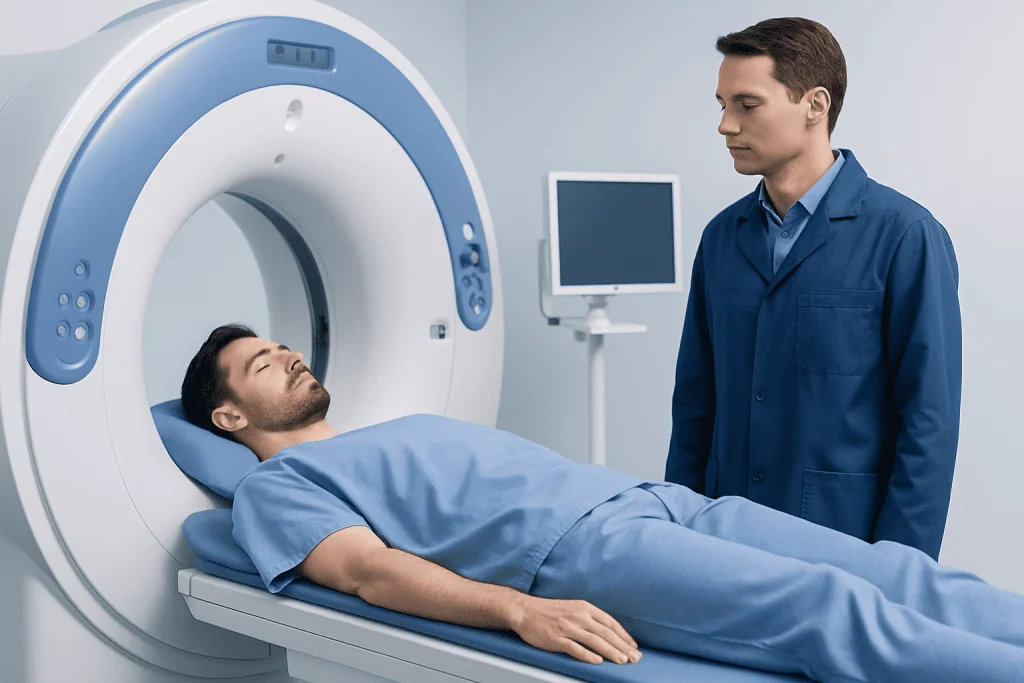
Start with identity and context. You will need a copy of your passport or government ID, your main diagnosis or referral letter, recent consultation notes, and a short summary of your medical history. If you have already been treated for the same condition — anywhere, not only in your home country — include operation notes, discharge summaries, and treatment records such as chemotherapy or radiotherapy summaries. These documents explain what has already been done, which is often as important as the diagnosis itself.
Test results are usually the most valuable part of the file. Gather recent blood tests, biopsy results where relevant, ECG or cardiology reports if they apply to your case, and all imaging reports: MRI, CT, PET-CT, ultrasound, mammography, X-ray. Two things matter here. First, the written report and the actual images are not the same thing — specialists often want to review the images themselves, not only another doctor’s description of them. If you have the original files on CD, DVD, USB or a digital link, keep them. Second, every result needs a visible date. An undated scan report is far less useful than it looks.
Do not underestimate the medication and allergy list. A simple, current list of what you take, at what dose, and how often can be as important as any scan. Include over-the-counter medicines, supplements, blood thinners, insulin, biologic treatments, and details of any implanted device such as a pacemaker or stent. Known drug allergies belong on the same page.
- Passport or government ID copy
- Doctor referral letter or diagnosis summary
- Recent consultation notes
- Laboratory test results
- Imaging reports and the original image files
- Pathology and biopsy reports
- Previous surgery or treatment summaries
- Current medications, doses and allergies
For certain specialties the file has extra layers. Cancer cases usually need pathology slides or blocks to be discussed, staging scans, and treatment summaries in sequence, so the reviewing oncology team can follow how the disease and its treatment developed over time. If your condition involves inherited factors, previous genetic test reports and family history notes are worth adding to the file.
How recent should your records be?

There is no universal expiry date on a medical record, but a useful rule of thumb applies: the faster a condition can change, the fresher the evidence needs to be. Recent blood tests, recent imaging, and the latest specialist notes carry more weight than older documents on their own. If your most important scan is several months old, send it anyway — and note in your summary whether your symptoms have changed since it was taken. That single sentence helps the reviewing doctor judge how much to rely on it.
Older records still earn their place in the file. A specialist may need to compare your current state with earlier findings, trace how a condition has developed over time, or see how you responded to a previous treatment before suggesting the next one. If your history is long, do not try to send everything at once. Lead with the documents most relevant to the current issue, then add the older records that explain the timeline.
Expect that some tests may be repeated after you arrive regardless of what you send. Hospitals have their own protocols, some results are only valid for a limited period before a procedure, and symptoms can change between your last test and your first appointment in Turkey. Complete records reduce unnecessary duplication; they do not remove the need for up-to-date checks where the treating team requires them.
Translation, file format, and how to organise everything
If your records are not in English, translate the core items first: the diagnosis summary, pathology results, imaging reports, recent specialist notes, and your medication list. You rarely need every page translated for an initial review, but the documents that carry the diagnosis must be understandable, or the review will stall while clarification is requested. English is usually the most practical language for advance review by international patient teams in Turkey.
Choose formats that survive the journey. PDF is the safest choice for letters, reports and lab results. For imaging, keep both the written report and the original DICOM files from the disc or download link. Avoid blurred phone photos of paper documents when a clean scan or exported PDF exists — an unreadable file is a delay waiting to happen.
File names matter more than most patients expect. A practical method is one master folder with numbered subfolders: 01_ID, 02_Doctor_Letters, 03_Lab_Results, 04_Imaging_Reports, 05_Imaging_Files, 06_Pathology, 07_Medications, 08_Previous_Treatment. Then name each file with a date and a short description, newest first in each folder: 2026-05-18_MRI_Brain_Report, 2026-06-02_CBC_Lab_Result. Anyone opening the folder — including you, six months from now — can see at a glance what is current and what is history.
When you are ready to share the file, use a secure channel rather than a chain of unencrypted emails. The step-by-step guide on sending medical records to Turkey securely walks through the options, and the guide on medical records privacy in Turkey explains how consent and data protection work once your records are received.
Common gaps that delay treatment planning
Most delays trace back to the same handful of gaps. The classic one is the report without the images: an MRI report arrives, the images do not, and the specialist cannot complete the review. Others include pathology results with no date, medication lists without doses, and scanned pages that are cut off, illegible, or missing the signatures and stamps that are standard on the original.
Volume without order is its own problem. Fifty unlabelled files sent in one batch force the receiving team to spend time working out what is current, what is duplicated, and what is outdated — time that could have gone into the medical review itself. A smaller, clearly labelled set of relevant documents is almost always reviewed faster than a large disorganised one.
Translation gaps cause a quieter kind of delay. If the key diagnosis sits in an untranslated report, the hospital may need extra time or may ask for clarification before anything can move forward. The fix is simple: a one-page personal summary in English. State your main diagnosis, your symptoms and when they started, the treatments already tried, other relevant conditions, and what kind of consultation or treatment you are seeking in Turkey. This single page lets the international patient team route your case to the right specialty quickly, with the full file behind it as evidence.
Records, quotes, and health checks: how the paperwork connects to planning
Many patients preparing a medical records checklist for treatment in Turkey are also comparing quotes or considering a full health check while they are in the country. It helps to understand how records feed into both.
A treatment quote is built on your file. What it covers depends on the diagnosis your records support, the procedure or programme being considered, the expected length of stay, and which tests the hospital still needs to run on arrival. Incomplete records tend to produce provisional quotes with more open items; complete records allow a more specific plan. The same logic applies to a comprehensive health check: its scope depends on your age, history, risk factors and the package chosen, so what you pay for is defined by what is included — which is exactly what your records help the hospital determine. For the wider financial picture beyond the quote itself, see the medical travel budget checklist.
It is also worth knowing the basics of the system you are entering. Foreign nationals can be treated in Turkish hospitals, both public and private, and international patient departments exist precisely to handle registration, interpretation and coordination for patients arriving from abroad. Turkey receives international patients across many fields — commonly ophthalmology, dentistry, orthopaedics, cardiology, oncology, fertility treatment and aesthetic surgery — and the records you need to prepare follow the same checklist logic in each of them, with specialty-specific additions such as dental X-rays or fertility test histories.
What to bring with you when you travel
Even if everything has been uploaded and confirmed in advance, travel with a full backup. Bring printed copies of your most important reports, your passport, insurance or payment documents where relevant, your prescription list, and emergency contact details. Carry the original scan discs or a USB drive if image files were part of your review. Internet access, file compatibility and missing attachments are small problems at home and large ones at a registration desk.
Keep your medications in their original packaging in your hand luggage, particularly daily medicines, injectables and anything used with a medical device. A short written card listing your conditions, allergies, blood group if known, and key precautions — pacemaker details, anticoagulant use — takes minutes to prepare and travels well. The dedicated guide on travelling to Turkey with medical records covers packing in more detail, and it is worth preparing your visa and entry paperwork in parallel so that your medical file and your travel file are ready at the same time.
Step by step
- Make a master list of your records. Write down every document connected to your current condition: consultations, scans, lab tests, surgeries, medications, previous treatments. The list shows you what is missing before you start requesting files from different doctors and hospitals.
- Request complete copies from every provider. Ask each clinic or hospital for both the written reports and, where relevant, the original imaging files. If you were treated in more than one centre, request records from each so the timeline has no gaps.
- Write a one-page personal summary. State your diagnosis, main symptoms and their start date, treatments already tried, other conditions, allergies, and current medications. This page is the first thing a reviewing team reads.
- Translate the key documents into English. Prioritise the diagnosis summary, pathology, imaging reports and medication list. Full translation of every page is rarely needed for an initial review.
- Organise and name the files clearly. Save documents as readable PDFs, group them into numbered subfolders, and name each file with a date and short description. Keep a cloud backup alongside the working folder.
- Share records early, before booking travel. An advance review lets the medical team indicate which appointments, tests or specialists your visit will need, which makes your itinerary in Turkey more efficient and reduces last-minute changes.
- Carry originals and backups on the journey. Printed essentials, original scan media and a digital copy on a secure drive protect you against upload failures and format problems on the day.
Your checklist
- Passport or government ID copy
- Doctor referral letter or diagnosis summary
- Recent consultation notes from your current specialist
- Latest blood tests and other laboratory results
- Imaging reports plus CD/DVD or digital image files
- Pathology or biopsy reports, if relevant
- Surgery notes and discharge summaries from previous treatment
- Current medication list with doses and schedule
- Allergy list and significant medical conditions
- One-page personal summary in English
- English translations of key reports if originals are in another language
Key takeaways
- Gather both recent results and the past treatment summaries that explain your timeline.
- Send imaging reports and the original image files, not the report alone.
- English translations of the core documents speed up advance review.
- A one-page personal summary helps route your case to the right specialty quickly.
- Complete records improve planning but do not remove the possibility of repeat tests on arrival.
- Travel with printed essentials, original scan media and digital backups.
Frequently asked questions
Can foreigners go to hospital in Turkey?
Yes. Foreign nationals can receive care in Turkish hospitals, both public and private. Larger private hospital groups run international patient departments that handle registration, interpretation and appointment coordination for patients arriving from abroad, which is why complete records prepared in advance make the process noticeably smoother.
What are the most popular medical procedures in Turkey?
International patients commonly travel to Turkey for ophthalmology, dentistry, orthopaedics, cardiology, oncology, fertility treatment, hair restoration and aesthetic surgery, as well as comprehensive health check programmes. Whatever the field, the records checklist follows the same logic: diagnosis, imaging, laboratory results, treatment history and medications, plus specialty-specific items such as dental X-rays where relevant.
How much does a full health check cost in Turkey?
There is no single figure, because the price depends on the scope of the package: which laboratory tests, imaging studies and specialist consultations are included, and whether it is a general programme or one tailored to your age, history and risk factors. Hospitals typically prepare a written quote listing exactly what a given health check covers, so packages can be compared item by item rather than by headline price.
What should I do if I get sick while in Turkey?
Turkey has an extensive network of public and private hospitals, and pharmacies (eczane) are widespread in cities and towns. Foreign visitors can be treated in Turkish hospitals, and carrying your travel insurance details, medication list and key medical documents makes any unplanned visit easier to manage. If you are in the country for planned treatment, your records folder already contains most of what an unfamiliar doctor would need to understand your history.
Do I need to translate all of my medical records before treatment in Turkey?
Usually not every page at first. The core documents should be understandable in English for advance review: the diagnosis summary, pathology results, imaging reports, recent specialist notes and your medication list. Further translation can follow if the reviewing team requests specific pages.
Is it enough to send imaging reports without the actual scan files?
A written report may be enough to start a discussion, but many specialists prefer to review the images themselves before commenting on a case. If you have MRI, CT, PET-CT, ultrasound or X-ray files on disc or via a digital link, keep them available and include them in your file where possible.
Should I bring paper copies if I already sent everything digitally?
Yes. Carry printed copies of the most important reports plus a digital backup on a secure drive. Upload problems, missing attachments and file compatibility issues do happen, and a doctor may want to compare documents on paper during your consultation.
Will complete records mean I will not need repeat tests in Turkey?
No. Repeat testing may still be needed depending on how recent your results are, the hospital’s own protocols, or changes in your symptoms since the last test. What complete records reliably do is make planning easier and reduce unnecessary duplication.
Add us as a Preferred Source to see more of our trusted health content across Google Search, AI Overviews and Discover.

Update history
- PublishedJuly 8, 2026
- Medical review approvedSeptember 1, 2026
- Last content updateSeptember 1, 2026
References1
- CDC Yellow Book – Medical Tourism — wwwnc.cdc.gov
More Patient Guides

CyberKnife Radiosurgery in Turkey: Candidacy, Treatment Schedule, and Travel Plans
CyberKnife radiosurgery in Turkey involves eligibility review, several planning steps and short outpatient visits; international patients can arrange care in Istanbul.
8 min read
Traveling to Turkey for Biopsy Review: What Happens Before Treatment Is Confirmed
Biopsy review in Turkey helps confirm your diagnosis before treatment, using pathology slides, reports and specialist assessment in Istanbul.
8 min read
Flying to Turkey with Recent Scan Results: How to Organize Reports and Images
Organize recent scan results for travel to Turkey by bringing reports, original image files, dates, and a clear medical summary for your…
8 min read
Questions to Ask Before Signing a Consent Form for Treatment in Turkey
Ask the right consent form questions before treatment in Turkey, including risks, alternatives, costs, language support and follow-up plans.
8 min read