

Medical Travel to Turkey During Ramadan: What Patients Should Plan Ahead

Yes, you can travel to Turkey for treatment during Ramadan. Hospitals run as normal. What changes is the rhythm around them: meal hours shift, traffic builds before sunset, and evenings run late. Plan appointment times, meals, medicines and transfers in advance, and if you intend to fast, raise it with your treating team before anything is booked.
If your treatment dates fall during Ramadan, your trip can still run smoothly. Medical travel to Turkey during Ramadan comes with one reassuring fact: hospitals operate as normal throughout the month. What changes is everything around the hospital: meal hours, traffic patterns, the pace of the day. A little planning covers all of it.
Five things deserve early attention: appointment timing, meals, medicines, transport, and who is travelling with you. This guide walks through each one, plus the parts most patients only discover on arrival: the pre-iftar traffic, the shifted restaurant hours, and the public holiday that closes the month.
At a glance
- When to start planning: Two to four weeks ahead as a minimum; earlier for complex or multi-stage care
- What to arrange: Appointment times, meal access, medicine routines, airport transfers, accommodation near your hospital
- If you intend to fast: Raise it with your treating team before anything is booked, some tests and medicines have timing requirements
- What changes in Ramadan: Traffic peaks before sunset, daytime restaurant service varies, evenings run later, and Eid al-Fitr closes the month with a public holiday
- Useful support: An interpreter, a single point of contact for logistics, and a companion with a clear role
What actually changes during Ramadan, and what does not
Medical travel to Turkey during Ramadan is entirely workable, and many international patients do it every year. Hospitals do not reduce clinical services for the month. Consultations, imaging, laboratory work, surgery and inpatient care continue on their normal footing. If you are picturing a country that pauses for thirty days, that is not what you will find.
What you will notice is a shift in daily rhythm. Many people around you will be fasting from dawn to sunset. Some restaurants and cafés scale back daytime service, particularly in more traditional neighbourhoods, while hotels and hospital cafeterias generally carry on serving. Roads become noticeably busier in the hour or two before iftar, the meal that breaks the fast at sunset. Evenings are livelier and run later than usual, because meals, socialising and prayer move into the night.
One calendar point catches people out: Ramadan follows the lunar calendar, so it begins roughly ten to eleven days earlier each year. Check the actual dates for your travel year rather than relying on memory of a previous trip. Also note that the month ends with Eid al-Fitr, a multi-day public holiday when government offices and many businesses close, domestic travel surges, and flights fill quickly. Hospitals maintain emergency and inpatient care through the holiday, but routine outpatient scheduling around Eid deserves the same caution as any peak holiday period.
For you as a patient, the practical question is not whether care continues, it does, but how your own energy, eating schedule, hydration, sleep and transport timing fit around it. That matters most if you are arriving jet-lagged, attending several tests in a short window, or recovering from a procedure while the city around you keeps unusual hours.
How to schedule appointments, tests and treatment days

Build a realistic schedule rather than a dense one. During Ramadan, morning appointments suit many patients: roads are quieter, waiting areas calmer, and if you are fasting, your energy is usually better earlier in the day. Patients who are not fasting sometimes prefer later slots, leaving time for a proper breakfast, rest after a flight, or recovery from a late evening. Neither choice is wrong: the point is to choose deliberately instead of taking whatever slot appears first.
If you plan to fast, say so before anything is booked. This is a medical conversation, not only a cultural one. Some blood tests require you to fast beforehand, which may align neatly with a religious fast; others require hydration or food at specific times, which will not. Contrast imaging, sedation, certain procedures and some medicines carry timing requirements of their own. Only your treating doctor can tell you whether fasting is compatible with your specific plan, whether part of the schedule should move, or whether your faith’s established exemptions for illness and treatment are relevant to your situation. Raising it early gives everyone room to arrange the calendar sensibly.
Leave buffer time between consultations, imaging and any admission. A journey that looks short on a map can take considerably longer in the pre-iftar rush, especially in Istanbul. Grouping visits at one campus, keeping travel legs off the sunset window, and refusing to stack an airport landing against a major appointment on the same day will do more for your comfort than any other single decision.
- Ask for a written itinerary with exact building locations and realistic travel times between them.
- Check whether any test requires fasting beforehand, extra hydration, or a companion to escort you afterwards.
- Keep the first day light if you are crossing time zones, settle in, eat, hydrate and sleep before the demanding appointments begin.
- Note where Eid al-Fitr falls relative to your dates, and avoid placing routine follow-ups inside the holiday if you can.
Meals, fasting, hydration and medicine planning
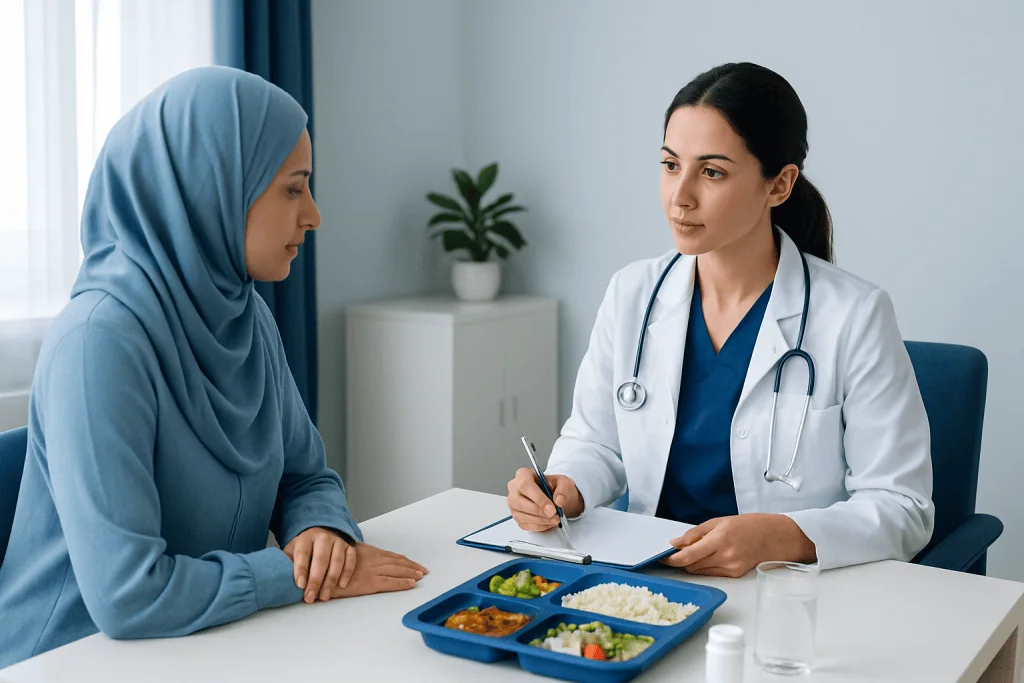
Food logistics matter more during Ramadan than most patients expect. If you are not fasting, you will always be able to eat, hotels, hospital cafeterias and plenty of restaurants serve through the day, but hours and patterns vary by neighbourhood and property. Confirm before you travel whether your hotel serves daytime meals and early breakfast, whether room service runs on normal hours, and whether the kitchen can prepare packed food for a long hospital day. Carrying simple snacks and a bottle of water covers the gaps that no amount of planning fully removes: a delayed appointment, a long transfer, a test that overruns.
If you are fasting, do not assume anything about what is compatible with your treatment. Depending on your condition, procedure and recovery stage, fasting may be fine for the whole trip, fine for part of it, or not advisable at all around certain days. This is your treating doctor’s call to make with you. It matters most if you live with diabetes, take medicines at fixed times, need regular pain relief, or are in the days after surgery when nutrition and hydration support healing. Patients with diabetes have an additional planning layer, covered in detail in the guide on travelling to Turkey for surgery with diabetes.
On medicines: bring an up-to-date list with names, doses and timing, including anything you take only as needed. Keep the medicines themselves in your hand luggage with their original packaging and prescriptions, plus a small buffer beyond your planned trip length. Do not adjust doses or timing on your own to fit around fasting hours: that conversation belongs with your treating doctor, who knows your full picture. Turkey has a well-developed pharmacy network, including a rotating duty-pharmacist system for out-of-hours needs, but availability of your exact brand and formulation may differ from home, so self-sufficiency for the first days is the sensible baseline. A separate guide covers keeping regular medicines on schedule during medical travel, including time-zone shifts.
Two meals anchor the fasting day: sahur, eaten before dawn, and iftar at sunset. Even if you are not fasting, these times shape hotel kitchens, restaurant bookings and road traffic. If you have dietary restrictions on top of everything else, allergies, texture requirements after a procedure, or a prescribed diet, the guide on managing special diets during medical travel in Turkey covers how to communicate them clearly.
Transport, hotels, companions and daily comfort
Much of your Ramadan comfort is decided outside the hospital. Choose accommodation close to your treatment site if you can: it shortens tiring journeys, makes rest between appointments realistic, and removes the anxiety of long transfers when you are sore or fatigued. Ask specifically about breakfast hours during Ramadan, quiet rooms away from late-evening street noise, and whether the front desk can help with early sahur-hour arrangements if you are fasting.
Traffic is the single most predictable disruption. In Istanbul and other large cities, roads thicken markedly in the hour or two before sunset as people head home for iftar, and evenings stay busy well into the night. If an important test or admission falls late in the day, leave earlier than seems necessary. Pre-arranged transfers beat improvised local transport when you are tired, unfamiliar with the city, or travelling on the day of a procedure. Save your hospital’s full address in both English and Turkish, keep offline maps downloaded, and carry a power bank: a dead phone at the wrong moment turns a small delay into a stressful one.
If a companion is travelling with you, give them a defined role rather than a vague one: documents, timing, meals, charging devices, communicating with the hotel. That said, a family member is not a substitute for professional interpreting in clinical conversations, where precision matters. The trade-offs are laid out in the guide on whether an interpreter or a family member should help during appointments. Plan where your companion will wait during longer appointments or an admission, and agree how you will reach each other inside a large hospital campus.
- Confirm airport pickup details, including the meeting point and driver contact, before you fly.
- Keep transfer times away from the pre-iftar window where the schedule allows.
- Carry water, snacks, a charger and a light layer for long or cool waiting areas.
- Agree a fallback plan with your companion in case one of you is delayed.
Cultural awareness without added pressure
Many patients quietly worry about causing offence during Ramadan. In practice, a little awareness goes a long way and nobody expects expertise. It helps simply to know that many people around you may be fasting, that prayer times structure the day, and that public spaces tend to be subdued before sunset and lively after it.
If you are not fasting, eat and drink as your care plan requires, hospitals treat people of every background and medical need, and staying nourished and hydrated as advised is your responsibility as a patient. Being discreet in crowded public spaces during daylight is a courtesy, not an obligation, and it is all the etiquette the situation asks of you. Turkey’s cities are cosmopolitan; visitors eating during the day are an ordinary sight.
If you are fasting for religious reasons, be open with your care team about what matters to you: fasting intentions, prayer times, halal preferences, and how you would like the day structured. Clear communication lets the team schedule around your priorities where treatment safely allows, and tells you plainly where it does not. Patients balancing worship with a treatment calendar may also find the guide on planning prayer, diet and daily routine during treatment in Turkey useful, most hospitals have prayer rooms, and Turkish clinical teams are thoroughly familiar with Ramadan-related requests.
Documents, communication and the practical safety net
Paperwork is easier to organise at home than in an arrivals hall. Keep your passport, visa confirmation if required, insurance documents, medical records, imaging reports, prescriptions and emergency contacts together in one folder, with both printed and digital copies. Digital copies rescue you when a bag is delayed; printed copies rescue you when a battery dies. Sharing records with the treating hospital ahead of arrival is standard practice in international care, and it matters more when a treatment plan needs careful timing around fasting or recent test results.
Communication planning is less about language than about knowing who holds which thread. Save the numbers for your hospital, your logistics contact, your driver or transfer service, your hotel and your companion. Agree one primary contact for travel-day questions so that a delayed flight or a shifted appointment involves one conversation, not five. During Ramadan, remember that some administrative offices outside the hospital keep adjusted hours, and that everything administrative slows around Eid, so finish visa, insurance and document tasks well before departure. Insurance itself deserves its own check; the guide on travel insurance for treatment in Turkey explains what international patients should verify before buying a policy.
Situations that deserve extra planning
Some patients should give Ramadan logistics more room than others. Extra planning helps if you have a complex condition, reduced mobility, strict dietary needs, a treatment plan with multiple same-week appointments, or significant anxiety about travelling. Medical travel to Turkey during Ramadan does not create medical risk by itself; it simply makes a tightly packed itinerary more tiring than it needed to be.
Travelling alone also raises the value of preparation. Even a straightforward medical visit involves forms, navigation, waiting periods and small schedule changes, and there is no companion to absorb them. Interpreter support, a single named logistics contact, and a lighter first day compensate for a lot. Large international hospital groups such as Acibadem maintain international patient services, interpreting, transfer coordination, accommodation guidance, precisely because these frictions are predictable. That support reduces the burden of managing every detail alone during a busier seasonal period, though it never replaces your own preparation: your medicines in your hand luggage, your documents in order, your buffer time built in.
Step by step
- Confirm the Ramadan and Eid dates for your travel year. The lunar calendar shifts the month roughly ten to eleven days earlier each year. Check where your treatment window sits relative to both the fasting month and the Eid al-Fitr holiday before locking anything in.
- Share your travel dates and medical needs early. As soon as you know your intended treatment window, give the hospital your likely arrival date, departure date and main medical concern, so appointments can be shaped around test requirements and your energy levels.
- Settle the fasting question before appointments are finalised. If you intend to fast, say so clearly before tests, consultations or procedures are booked. Your doctors can then explain what is compatible, what should move, and where medical exemptions apply.
- Build in buffer time for transport and rest. Keep travel legs away from the pre-iftar rush where possible, never stack an airport landing against a major appointment, and leave genuine gaps between hospital visits.
- Confirm food, water and hotel arrangements in writing. Ask your hotel specifically about Ramadan-period breakfast hours, daytime dining, room service and packed food for long hospital days. State dietary restrictions explicitly before you travel.
- Pack medicines and documents in hand luggage. Keep essential medicines in original packaging with prescriptions, plus a buffer supply, alongside your key medical papers. Checked-bag delays should never cost you a dose or a document.
- Appoint one contact for logistics. One coordinator, companion or family member tracks timing, drivers, addresses and updates. You focus on your health instead of repeating details to several people.
- Keep the first day light. After a long flight or time-zone change, use day one to settle, eat, hydrate, pray if you wish, and sleep, so the demanding days start from a rested baseline.
Your checklist
- Passport, travel documents and copies of your itinerary, printed and digital
- Medical reports, scans, prescriptions and a current medication list
- Enough regular medicines for the trip plus a buffer, in hand luggage
- Hospital, coordinator, driver and hotel contact numbers saved on your phone
- Hotel confirmation with Ramadan-period meal hours checked in advance
- Airport transfer arranged, with the hospital address saved in English and Turkish
- Comfort items for long days: water bottle, snacks, power bank, light scarf or layer
- Fasting, prayer and medicine-timing plan discussed with your treating doctor
- Eid al-Fitr dates checked against your appointment and departure schedule
Key takeaways
- Hospitals in Turkey operate normally through Ramadan; the changes you will notice are in traffic, meal hours and the rhythm of the day.
- If you plan to fast, raise it with your treating team before anything is booked, some tests, procedures and medicines have timing requirements only your doctor can weigh.
- Confirm meal access, carry snacks and water, and keep medicines and documents in your hand luggage.
- Keep travel legs away from the pre-iftar rush, stay close to your hospital, and never stack arrival day against a major appointment.
- Check where Eid al-Fitr falls: it is a public holiday with heavy travel demand, and routine scheduling around it needs care.
Frequently asked questions
Can I travel to Turkey for treatment during Ramadan?
Yes. Hospitals provide their full range of services throughout the month, and many international patients travel during Ramadan without difficulty. The planning differences sit outside the hospital: meal hours, traffic patterns around sunset, your own energy levels, and any fasting-related needs you want the schedule to respect.
Will hospitals and clinics operate normally during Ramadan?
Yes. Consultations, imaging, laboratory tests, surgery and inpatient care continue on their normal footing. The one calendar point to watch is Eid al-Fitr at the end of the month, a public holiday when administrative offices close and routine outpatient scheduling tightens, even though emergency and inpatient care continue.
What if I want to fast during my treatment trip?
Tell your treating team as early as possible, ideally before appointments are booked. Depending on your condition, medicines, procedure and recovery stage, fasting may be fully compatible, partly compatible or not advisable around certain days. Only your doctor can advise for your specific situation, and raising it early gives the schedule room to accommodate you.
Are restaurants and hotels open during the day in Ramadan?
Many are, particularly in larger cities and areas used to international visitors, but hours and patterns vary by neighbourhood and property. Hotels and hospital cafeterias generally serve through the day. Ask your hotel specifically about breakfast hours, daytime dining, room service and packed food for long hospital days.
Should I avoid evening appointments during Ramadan?
Not necessarily, but plan the journey carefully. Roads become busy in the hour or two before iftar, and evenings run lively and late. A later appointment can work well if your transfer is pre-arranged, you leave earlier than the map suggests, and you are comfortable with the timing.
Is it disrespectful to eat or drink in public if I am not fasting?
No, and in a medical setting your health comes first, especially where food, water or medicine timing is part of your care plan. In crowded public spaces during daylight, simple discretion is a courtesy that is always appreciated, but visitors eating during the day are an ordinary sight in Turkey’s cities.
Does Ramadan affect medicine availability or pharmacies?
Pharmacies remain widely available, and Turkey operates a rotating duty-pharmacist system for out-of-hours needs. Availability of your exact brand or formulation may differ from home at any time of year, so carry your regular medicines in hand luggage with prescriptions and a buffer supply rather than relying on local purchase.
What is Eid al-Fitr and how does it affect a medical trip?
Eid al-Fitr is the multi-day public holiday that ends Ramadan. Government offices and many businesses close, domestic travel surges and flights fill quickly. Hospitals maintain emergency and inpatient care, but it is sensible to keep routine appointments, administrative tasks and departure flights clear of the holiday where you can.
Add us as a Preferred Source to see more of our trusted health content across Google Search, AI Overviews and Discover.

Update history
- PublishedJuly 8, 2026
- Medical review approvedSeptember 13, 2026
- Last content updateSeptember 12, 2026
References1
- CDC Travelers' Health: Türkiye (Turkey) wwwnc.cdc.gov
More Patient Guides

When a Hospital Stay in Turkey Becomes Longer Than Planned: What to Arrange
If your hospital stay in Turkey is longer than planned, arrange medical updates, accommodation, travel changes, insurance and support for your companion.

Waiting for Test Results in Turkey: How to Use Time Between Appointments
Waiting for test results in Turkey is easier with a clear plan for appointments, rest, records, questions and support in Istanbul.

Unexpected ICU Stay in Turkey: What Patients and Families Should Expect
Unexpected ICU stay in Turkey: learn what patients and families can expect, from communication and visiting to care updates and travel support.

How to Manage Special Diets During Medical Travel in Turkey
Special diets during medical travel in Turkey are easier to manage when you share your needs early, confirm meals and carry safe…