

Paying for Treatment in Turkey: Card, Bank Transfer, Cash, and Currency Questions

Most international patients settle hospital bills in Turkey by card, bank transfer, or a combination of both. Bank transfer suits deposits and larger planned payments; card is usually easiest on the day. Cash is possible in some settings but rarely practical for major bills. Confirm accepted methods, the billing currency, and payment timing directly with the hospital before you travel, and prepare a backup method.
How will you actually pay the bill? It is one of the first questions patients ask once a treatment date is agreed, and one of the easiest to leave unanswered until you are standing at a check-in desk. Card, bank transfer and cash all behave differently in Turkey, and currency adds a layer that catches people out.
This guide explains how paying for treatment in Turkey usually works in practice: what each payment method is good for, where the friction points sit, and the questions worth settling with the hospital before you board a flight. It cannot quote figures — every treatment plan is priced individually — but it can make the mechanics predictable.
At a glance
- Best for deposits and advance payments: Bank transfer, sent early, with the exact payment reference and proof kept
- Best for convenience on arrival: Credit or debit card, once you have confirmed your card type is accepted and warned your bank
- Cash: Accepted in some settings, but check limits, currency and declaration rules first; keep it for daily spending where possible
- Currency: Ask whether your bill is calculated in Turkish lira or another currency, and how conversion is handled on the day
- The core question: Which payment methods, currencies and payment dates apply to your treatment plan — in writing
Start with the payment plan, not just the price
When you are paying for treatment in Turkey, the most useful first step is to understand exactly when money is due, not only how much. Some elements of your care may need to be settled before travel — typically a deposit that secures your date. Other items may fall due at admission, on the day of a scan or test, or at discharge. A written breakdown of this timeline, requested early, prevents most of the confusion patients report later.
Be aware that a quote and a final bill are not always identical. Your treatment plan can change once a doctor has examined you and reviewed imaging or blood results — that is a normal part of medical care, not a billing trick. What you can do is ask three things in advance: which items in the quote are fixed, which are estimates, and which additional services could be added if they become clinically necessary. Hospitals that treat international patients regularly are used to answering exactly these questions. Our separate guide on deposits, balances and billing questions goes through this structure step by step.
If an international patient office is coordinating your visit, ask them to lay out the payment pathway in plain steps: deposit, admission payment, discharge settlement, refund process if plans change. At Acibadem International, coordinators handle these practical questions before travel precisely so you are not resolving financial details while tired, jet-lagged or recovering.
Do you have to pay for hospital treatment in Turkey?
Yes — as an international patient, you should expect to pay for planned hospital treatment yourself unless a private insurer, employer scheme or other third party has agreed in writing to cover it. Turkey’s public health insurance system covers people registered within it; visitors travelling for treatment are not part of that system and are billed as private patients.
Two related points matter here. First, do not assume any home-country public system will fund planned care in Turkey. UK readers in particular should note that the NHS does not pay for planned private treatment abroad in Turkey — the limited overseas funding routes that exist apply to specific circumstances and specific countries, and Turkey is not among them. The FAQ below covers the common dental question directly. Second, travel insurance is generally designed for emergencies, not for treatment you travelled to receive; a standard travel policy will normally exclude planned procedures. If any third party might reimburse you, get their requirements in writing before treatment starts, not after.
Using a card: the easiest option for many patients

For many international patients, a credit or debit card is the most straightforward way to pay on the day. It is quick, fully traceable, and spares you from carrying large sums. If card is your plan, confirm three things with the hospital in advance: which card brands are accepted, whether a payment can be split across two cards, and whether a companion may pay with their own card if yours fails.
Then turn to your own bank, because this is where card payments most often go wrong. A hospital payment in Turkey may be far larger than your normal spending pattern, and banks routinely block unusual overseas transactions for security. Before you travel, tell your bank you expect to make a healthcare payment in Turkey, check your daily purchase limit and ask whether it can be raised temporarily, and find out whether large payments need approval in your banking app or a one-time passcode sent by text. If approval arrives by SMS, make sure your phone will receive messages abroad — a surprising number of declined payments come down to a verification code that never arrived.
Also ask your bank how it handles currency on card payments: what foreign transaction fee applies, and what exchange rate is used. If a card terminal offers to charge you in your home currency rather than Turkish lira — a practice called dynamic currency conversion — you are entitled to ask what rate is being applied before you accept. Keep every card slip and ask the hospital for an itemised receipt alongside it; the two together are what an insurer or employer will want to see.
Finally, carry a second payment option even if you fully intend to pay by card. A backup card from a different bank, or access to online banking for a same-day transfer, turns a technical decline from a crisis into an inconvenience.
Bank transfer: the sensible route for deposits and larger planned payments
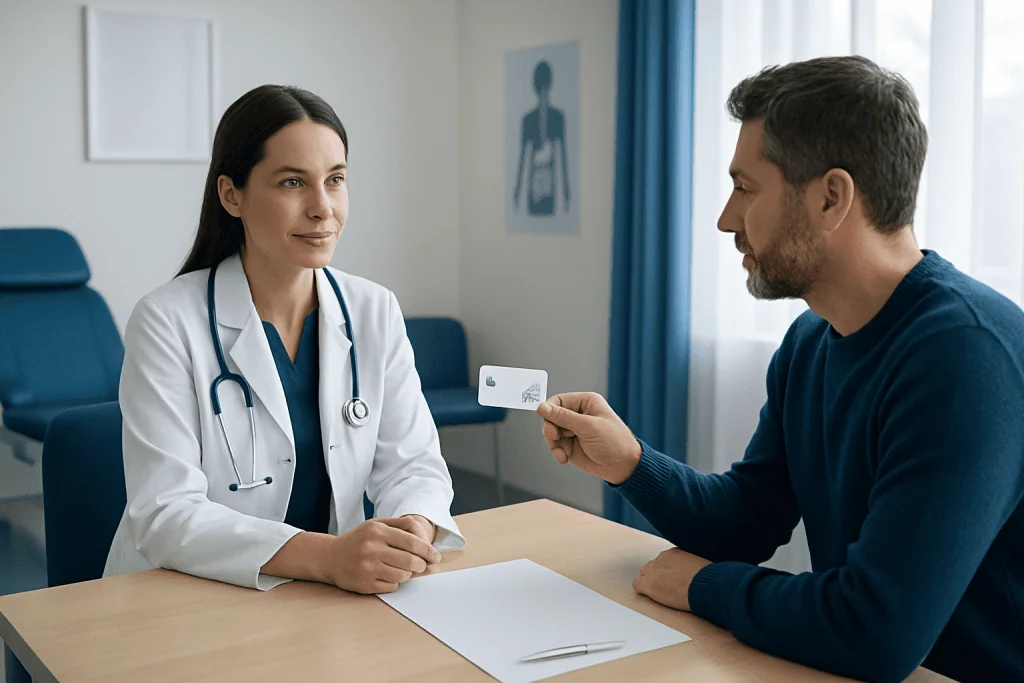
Bank transfer suits payments made before you travel — a deposit to confirm your treatment date, or a larger planned amount that would strain card limits. It creates a formal banking record on both sides, which is useful if you ever need to trace a payment or claim reimbursement.
Security comes first. Only use bank details you have received through a verified channel, and check the beneficiary name matches the hospital exactly before sending anything. Payment-diversion fraud — a convincing email with slightly altered account details — targets exactly this kind of high-value international payment. If bank details change mid-conversation, verify by a second channel before you act.
Timing comes second. International transfers are not instant: weekends, public holidays in either country, and correspondent banks in between can each add days. Ask the hospital how many working days to allow, whether proof of payment is sufficient for admission if the funds have not yet landed, and at what point a transfer counts as received. Send early rather than the day before you fly.
Fees come third, and they catch people out. Your bank may charge a sending fee, intermediary banks may deduct their own charges in transit, and a currency conversion happens somewhere along the way. The result is that the amount received can be smaller than the amount sent. Ask the hospital whether transfer fees must be covered by the sender, which currencies it accepts by transfer, and always include the exact patient name and payment reference you were given so the funds can be matched without delay. Our bank transfer guide for hospital payments in Turkey walks through references, SWIFT details and fee options in more depth.
Cash and currency: what to know before you pack money
Some patients assume cash is the simplest option. For small daily spending it often is; for a hospital bill it usually is not. Carrying a large sum creates security worries, and cash above certain thresholds must be declared when crossing borders — the rules depend on every country you pass through, including your own on departure. If you are considering cash for any part of your bill, confirm first whether it is accepted, in which currency, and whether documentation or upper limits apply.
The currency question deserves its own conversation regardless of method. Ask whether your bill is calculated in Turkish lira, euros, US dollars or another currency, and how conversion is handled on the day of payment. Exchange rates move, sometimes noticeably, between the day you receive a quote and the day you pay — so the amount you prepared at home may not match the amount due. Understanding which currency your quote is anchored to tells you who carries that exchange-rate movement: you or the hospital.
For day-to-day money — taxis, pharmacies, meals, tips — a modest cash reserve in Turkish lira is genuinely useful. Use official exchange offices or bank ATMs rather than informal channels, avoid changing more than you are likely to spend, keep the receipts, and store money securely. Our guide to currency exchange and cash tips for medical travellers in Turkey covers the practical detail. Whatever you carry for daily life, the payment method for the treatment itself should always be confirmed directly with the hospital billing office, not assumed from general travel advice.
Why do treatment costs in Turkey often look lower?
Patients researching paying for treatment in Turkey often ask why quotes from Turkish hospitals can look lower than prices at home. The honest answer is structural rather than mysterious. Staff salaries, property, utilities and general operating costs in Turkey are lower than in many Western European or North American cities, and the exchange rate between the Turkish lira and major currencies amplifies that difference for anyone paying in pounds, euros or dollars. Turkey also has a large private hospital sector that treats international patients at scale, which brings its own efficiencies.
What lower costs do not tell you, in either direction, is anything about the quality of a specific hospital or doctor. Quality varies by institution in every country. The sensible approach is to assess the hospital, the treating team and the treatment plan on their own merits — and to treat any quote dramatically lower than all the others as a prompt for more questions, not fewer.
The same structural logic applies to medicines. Pharmacy prices in Turkey are regulated nationally and vary by medicine, brand and dose; there is no single meaningful figure for what any medicine ‘typically’ costs. Any prescription decision — what to take, when to start or stop — belongs to your treating doctor, and the pharmacy dispensing it can tell you the current regulated price of that specific item.
Invoices, receipts, insurance paperwork and your own records
Good paperwork removes most of the stress from medical travel. The documents worth collecting are: a written quotation before you commit; a proforma invoice if your bank or employer needs one to release a transfer; confirmation of any deposit received; and a final itemised receipt after payment. If you may claim reimbursement from a private insurer, an employer or a medical travel fund, ask that organisation in advance exactly which documents it requires and whether the hospital paperwork must be in English.
If an insurer is involved, do not assume direct billing exists unless you have explicit written confirmation from both the insurer and the hospital. Many international patients pay first and claim afterwards, and reimbursement can hinge on pre-authorisation, diagnosis codes or formal referral letters obtained before treatment. Clarify what you must pay yourself and what might be claimable before anything begins.
International patient teams at larger hospital groups, including Acibadem International, routinely prepare invoices and supporting documents for overseas patients. Even so, keep your own folder — digital and, ideally, printed — containing your passport copy, quote, transfer confirmations, card slips, final receipt, insurance correspondence and the billing office’s contact details. Our guide to cards, bank transfers and receipts lists what a complete paper trail looks like.
How to avoid last-minute payment stress on arrival
The smoothest experiences of paying for treatment in Turkey share one habit: everything financial was re-confirmed a few days before departure. Check the amount due at arrival, the accepted methods, the billing currency, and whether any pre-treatment tests could change the total. If your plan involves several appointments or a longer admission, ask whether you will pay once or in stages.
Think about timing practically too. If you land late at night, arrive very early, or are admitted at a weekend, ask whether billing staff will be available and whether payment must be completed before admission or scheduling. This matters most if you depend on a same-day transfer, app-based bank approval, or a companion’s presence to authorise a card. The guide on paying from abroad and getting the timing right covers these sequencing questions in detail.
The aim is simply to remove surprises: know your method, know your backup, and know exactly who at the hospital handles billing questions if something does not go to plan.
Step by step
- Ask for a written quote and payment timeline. Request a document showing what is included, what is estimated, and when each payment falls due — deposit, admission, discharge. Comparing options calmly beforehand beats negotiating at a reception desk.
- Confirm accepted payment methods directly with the hospital. Do not rely on general travel advice or another clinic’s rules. Ask about card brands, transfer details, cash limits and accepted currencies for your specific plan.
- Prepare your bank and cards before travel. Notify your bank of a planned healthcare payment in Turkey, check purchase limits, ask how large payments are approved, and make sure verification codes will reach your phone abroad.
- If using a transfer, send it early and keep proof. Allow several working days, use the exact payment reference provided, check the beneficiary name against verified details, and save the transfer receipt in case the payment needs tracing.
- Carry a backup payment method. A second card from a different bank, or working access to online banking, means a technical decline or a delayed transfer does not derail your admission.
- Keep every invoice and receipt together. Quote, proforma invoice, deposit confirmation, final itemised bill and payment proofs in one folder — on your phone and in print. You may need them for reimbursement, records or later billing questions.
Your checklist
- Written treatment quote received and reviewed
- Payment timeline confirmed: deposit, admission, discharge
- Accepted payment methods confirmed with the hospital
- Billing currency and conversion approach clarified
- Bank notified of a planned overseas healthcare payment
- Card limits, app approvals and transfer limits checked
- Backup payment option prepared
- Proof of any transfer or deposit saved
- Hospital billing contact details stored
- Insurance or reimbursement document requirements confirmed in writing
Key takeaways
- Card is usually the easiest day-of-payment option, but bank security blocks and daily limits cause most failures — prepare your bank before you fly.
- Bank transfer suits deposits and larger planned payments; allow working days for processing and clarify who covers transfer fees.
- Cash may be accepted in some situations, but it is less practical and less secure for large medical bills, and border declaration rules apply.
- Always confirm the billing currency and how exchange conversion is handled, because rates can move between quote and payment day.
- Keep an organised folder of quotes, invoices, transfer proofs and itemised receipts — reimbursement and later queries depend on it.
Frequently asked questions
Can the NHS pay for dental treatment in Turkey?
No. The NHS does not fund planned dental treatment in Turkey. The narrow routes through which the NHS can fund treatment abroad apply to specific circumstances in specific countries, and Turkey is not covered by them. If you travel to Turkey for dental work, you should plan to pay privately in full, and check separately what your dentist at home would charge for any follow-up care.
Do you have to pay for hospital treatment in Turkey as a visitor?
Yes. Planned treatment for international patients is billed privately unless an insurer or other third party has confirmed cover in writing. Turkey’s public health insurance covers people registered within its own system, not visitors travelling for care, and standard travel insurance normally excludes planned procedures.
Can I pay with a foreign credit card?
Often yes, but confirm with the hospital before travelling. Ask which card brands are accepted and whether payments can be split across cards. Then tell your bank about the planned payment, check your daily limit, and confirm how large transactions are approved — most card failures abroad are security blocks or verification codes that never arrive.
Is bank transfer better than card for hospital payments in Turkey?
It depends on timing and amount. Transfers work well for deposits and larger planned payments made before travel, because they avoid card limits and create a clear record — but they take working days and can lose fees in transit. Card is usually more convenient on the day. Many patients prepare both so a delay in one does not stall admission.
Should I bring cash for my treatment payment?
Usually only as a backup and for daily expenses, unless the hospital specifically confirms cash is acceptable for your bill. Large sums are inconvenient to carry, must be declared above certain thresholds when crossing borders, and offer a weaker paper trail than card or transfer. A modest lira reserve for taxis, meals and pharmacies is the more practical use of cash.
Will I pay in Turkish lira or another currency?
It depends on the hospital’s billing process and your arrangement. Ask which currency your quote is issued in, whether you can pay in another currency, and how conversion is handled on payment day. Knowing which currency the bill is anchored to tells you whether exchange-rate movement between quote and payment affects you.
How much do antibiotics typically cost in Turkey?
There is no single meaningful figure. Pharmacy prices in Turkey are regulated nationally and vary by medicine, brand and dose, and they change over time. Whether any medicine is appropriate for you is a decision for your treating doctor; the pharmacy dispensing a specific prescription can tell you its current regulated price.
Can someone else pay on my behalf?
In many cases yes, but confirm with the billing office in advance. If a relative or companion will pay, ask whether they need to be present, whether their own card can be used, and which patient identification details must appear on the payment so it is matched to your file correctly.
Add us as a Preferred Source to see more of our trusted health content across Google Search, AI Overviews and Discover.

Update history
- PublishedJuly 8, 2026
- Medical review approvedSeptember 1, 2026
- Last content updateSeptember 1, 2026
References3
More Patient Guides

Private MRI, CT and Check-Up Costs in Turkey: How Scans Are Priced
How private MRI, CT, PET-CT and full check-up packages are priced in Turkey — modality, region, contrast, reporting — and what a…

Cataract Surgery Cost in Turkey: Per-Eye Prices and Lens Options
Cataract surgery in Turkey is priced per eye and the lens decides the quote. Biometry, both eyes on one trip, and what…

Lip Filler Cost in Turkey: Per-ml Prices Explained
Lip filler in Turkey is priced per millilitre with licensed hyaluronic acid brands and physician injectors. Volume, product, dissolving, safety and what…

Botox Cost in Turkey: Per-Area and Per-Unit Prices
How Botox is priced in Turkey — per area or per unit, brand, physician injectors, medical indications — and what a serious…