

Preparing for Pre-Admission Tests in Turkey

Send your medical records, imaging and medication list to your coordinator before you fly. Arrive with time to spare, because testing can take a few hours or more than a day. Confirm fasting and medication instructions in writing, bring your passport and documents on the day, and keep flights and hotels flexible until your team has reviewed every result.
How many days before treatment should you land in Turkey? Can you eat breakfast on testing day? Should you bring printed records or is email enough? These are the questions this guide answers. Pre-admission tests exist so your medical team can confirm you are ready for the consultation, procedure or treatment you have planned, and preparing for pre-admission tests in Turkey properly is the single best way to avoid delays after you arrive.
One clarification before we begin. If you searched for pre-admission tests expecting university entrance exams such as YÖS or SAT, this is not that guide. Here, pre-admission means the medical checks a hospital carries out before admitting you for treatment. If that is what you need, read on.
At a glance
- Best time to start: Share your records and travel dates with your coordinator before you fly, as early as you can
- Common requirements: Passport, medical reports, medication list, imaging files, recent lab results and your treatment plan
- On arrival: Expect some combination of blood tests, imaging, ECG, anaesthesia review or specialist consultations
- Support available: International patient services, interpreters, scheduling help and practical local guidance
- Important reminder: Do not stop medicines or start fasting unless your care team gives you specific instructions
Why preparing for pre-admission tests in Turkey matters
Pre-admission tests are a normal part of care in Turkey, not a hurdle invented for international patients. They give your doctors a current picture of your health, confirm the treatment plan still fits, and flag anything that needs attention before admission. For patients travelling from abroad, this step carries extra weight: your team may be reconciling records from different countries, languages, laboratories and reporting standards, and they need to be sure the information they act on is accurate and recent.
What you are asked to do depends on your age, diagnosis, planned treatment and history. It may be as simple as blood and urine tests, or it may include imaging, heart checks such as an ECG, an anaesthesia assessment, a medication review or consultations with other specialists. If you are coming for surgery, cancer care or a complex intervention, your pathway can involve several departments over more than one day. Some tests done at home may be accepted; others will be repeated on sitethis guide explains why hospitals sometimes repeat blood tests and scans even when you bring recent results.
At Acibadem, pre-admission planning is coordinated through international patient services together with the hospital’s medical teams. Their job is to sequence your appointments sensibly, arrange interpreter support where needed, and give you practical guidance on timing, fasting, transport and paperwork. You should always feel able to ask what a test is for and when the result is expected. There is no such thing as a foolish question at this stage, only questions asked too late.
Documents and medical records to prepare
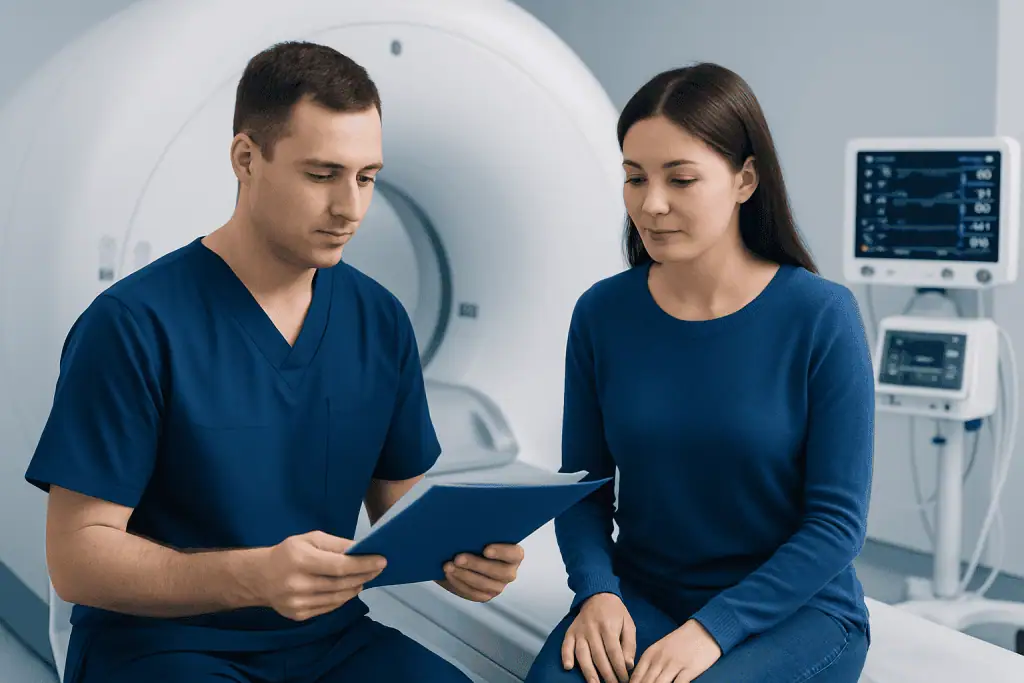
Before you travel, gather everything into one secure folder, digital, plus printed copies if you can manage them. Complete records help the hospital avoid repeating tests unnecessarily and help specialists understand your case faster. If your reports are not in English or Turkish, ask your patient coordinator whether translation is needed before arrival; do not assume it will be sorted on the day.
The most useful items are your passport, visa details if applicable, referral letters, diagnosis reports, operation notes, pathology reports, recent blood results, imaging files and a full medication list. Imaging deserves special attention: radiologists need the original DICOM files on a CD, USB stick or secure upload, not photographed screenshots of a screen. A printed radiology report alongside the files is ideal. If you have allergies, implants, a pacemaker, stents, dialysis access or a history of problems with anaesthesia, make sure this is written down clearly rather than mentioned in passing.
It also helps to write a short health summary in your own words: main diagnosis, current symptoms, previous treatments, chronic conditions, allergies and an emergency contact. Registration staff, nurses and new specialists will all appreciate it. For a full list of what to carry, see the documents international patients should bring for hospital admission in Turkey.
- Passport and identification documents
- Recent medical reports and discharge summaries
- Medication names, doses and schedules
- Allergy list and details of previous reactions
- Imaging files in original format plus written radiology reports
- Insurance or payment approval documents, if relevant
Timing your trip around testing and admission

The most common question about preparing for pre-admission tests in Turkey is how many days early to arrive. The honest answer: it depends on the type of care, which tests are required, and whether doctors must review results before confirming your admission. Some patients complete testing in a single day. Others, particularly those needing specialist clearance, additional imaging or an anaesthesia work-up, need longer, and no coordinator can promise otherwise before your file has been reviewed.
Resist the temptation to book a razor-thin schedule. Long flights, jet lag, transfers and time-zone changes make the first day tiring, and if you have fasting blood tests booked for early morning, landing the night before may not leave you in good shape. Ask your coordinator directly: how much buffer time does my plan need, and should my companion attend the key consultations?
Keep flights and hotel bookings flexible until your admission schedule is confirmed in writing. Acibadem can assist with appointment planning, airport transfer guidance, accommodation suggestions and communication between departments, support that matters most when your tests are spread across more than one hospital unit. If you end up with gaps in your schedule, there is a separate guide on how to organise your days between tests and treatment in Turkey.
Fasting, medicines and your routine before tests
Some pre-admission tests require fasting; many do not. Fasting usually means not eating for a set number of hours beforehand, but the details vary: you may still be allowed water, or you may be asked to avoid specific drinks, supplements or smoking. Because requirements differ by test and by patient, follow the written instructions from your own care team rather than general advice from the internet, including this page.
Medication planning matters just as much. Do not stop blood pressure medicine, diabetes medicine, blood thinners, heart medication, hormone therapy or any long-term prescription on your own initiative; those decisions belong to your treating doctor. If you take insulin, anticoagulants, aspirin, herbal supplements or anything that affects bleeding, tell your coordinator early so the medical team can plan around it. If your treatment involves anaesthesia, read what international patients should know about preparing for general anaesthesia in Turkey, because fasting rules before anaesthesia are stricter and non-negotiable.
The day before testing, aim for a calm routine. Drink water unless told otherwise, avoid alcohol, pack a snack for after fasting tests, and sleep as well as travel allows. Wear clothing that is easy to remove for examinations or imaging. If you have mobility needs, significant pain, anxiety or a medical device, tell patient services in advance so practical support is ready rather than improvised.
What to expect on the testing day
Your day usually starts with registration and identity checks. You will show your passport, confirm contact details, and sign consent or privacy forms. An international patient representative or interpreter may accompany you between departments, depending on your appointment plan and language needs. Keep your phone charged and carry your documents with you, even if you have already sent everything digitally, uploads fail, and a paper backup costs nothing.
The order of tests varies. Blood and urine samples usually come first, especially when fasting is involved, so you can eat afterwards. Imaging, ECG, lung function tests, anaesthesia assessment or specialist consultations may follow. Some appointments take minutes; others involve waiting for results or for a physician to review your file. That waiting is normal hospital workflow, not a sign that something has gone wrong, but your coordinator can always tell you what comes next.
Plan for a full hospital day, not a quick errand. A companion helps, particularly if you are elderly, anxious, fresh off a long flight or expecting complex information. If you need prayer space, wheelchair support, help with children or a quieter waiting area, ask the international patient services team what the hospital can offer.
- Arrive at the requested time, especially for fasting tests
- Carry your passport and appointment details
- Bring glasses, hearing aids, chargers and mobility aids
- Keep medication in its original packaging where possible
- Ask when and how results will be explained to you
Communication, interpreters and cost questions
Clear communication is part of safe care. If English or Turkish is not your preferred language, request interpreter support in advance rather than relying solely on family members for complex medical discussions. Professional interpretation reduces misunderstandings about fasting, medication timing, consent forms, risks and next steps, exactly the topics where a mistranslated word matters.
Write your questions down before appointments. Good ones include: which tests are required before admission, whether any can be done in my home country, how recent previous results must be, what happens if a result is abnormal, and whether my treatment date could move. If something is unclear, pause and confirm. Guessing about medicines, fasting or arrival times is how avoidable problems start.
How the cost of pre-admission testing works
Many patients search for the price of a full medical exam in Turkey and find a spread of conflicting numbers. No single figure is honest, because the cost depends on which tests your plan actually requires: the number of blood panels, the type of imaging, whether specialist consultations or an anaesthesia assessment are included, and whether the testing is part of a standalone check-up or bundled into a treatment pathway. The reliable approach is structural, not numerical: ask the international patient office for a written, itemised quote based on your own records, confirm what it includes and excludes, and ask how additional tests would be handled if your doctors request them after arrival. Sorting this out before you fly is far less stressful than negotiating it on admission day.
If a result changes your treatment plan
Sometimes pre-admission tests reveal something new, anaemia, infection markers, uncontrolled blood sugar, a heart rhythm change, or a finding that needs a closer look. This does not automatically mean cancellation. It means your team must choose the safest next step, which might be repeating a test, adding a consultation, adjusting a medication under your doctor’s direction, treating a temporary condition, or rescheduling admission. There is a dedicated guide on why pre-admission tests may change your treatment plan if you want the detail.
Changes are frustrating when you have travelled internationally, and it is fair to say so. They are still made for one reason: your safety. Your care team should explain what was found, what it means for the planned treatment, and whether your timeline shifts. If you have a return flight or hotel booking at risk, tell your coordinator promptly so they can walk you through practical options. For a picture of how added testing plays out in practice, see what happens if you need extra tests after arriving in Turkey.
For complex cases, multidisciplinary teams may review your records together, surgeons, physicians, anaesthesiologists, radiologists, nurses and others, depending on your condition. Structured safety routines such as identity checks, documentation review and care coordination are part of how hospitals in the Acibadem network run pre-admission pathways day to day.
Step by step
- Share your records before you travel. Send medical reports, imaging in original format, your medication list and your planned travel dates to your coordinator as early as possible, so the team can identify which tests you need and what is missing.
- Confirm fasting and medication instructions in writing. Ask specifically whether you must fast and how to handle your regular medicines on testing morning. Never stop or change medication without clear instructions from your doctor.
- Plan a realistic arrival schedule. Avoid landing hours before important appointments. Build in time for flight delays, rest, transport, registration and the possibility of extra tests.
- Prepare a hospital day bag. Passport, printed documents, medications in original packaging, phone charger, water if allowed, a snack for after fasting tests, and glasses or hearing aids. Comfortable clothes and shoes make moving between departments easier.
- Request interpreter and patient services support early. Ask before your appointment day so language support can actually be scheduled, and so you know who to contact if plans change.
- Ask when results will be reviewed. Before leaving the hospital, confirm whether all tests are complete and when a doctor will assess the findings. If your admission depends on results, clarify whether to wait, return later or expect a call.
- Keep travel plans flexible. Results occasionally lead to extra consultations or a new schedule. Flexible hotel and flight arrangements turn a schedule change from a crisis into an inconvenience.
Your checklist
- Passport, visa documents and appointment confirmation
- Recent medical reports, discharge summaries and referral letters
- Imaging in original DICOM format plus written radiology reports
- Medication list with doses and timing; original packaging where possible
- Allergy list, implant details and previous anaesthesia concerns
- Insurance, guarantee letter or payment documents if applicable
- Comfortable clothing, charger, glasses, hearing aids, mobility aids
- Interpreter request confirmed, if needed
- Fasting and medication instructions confirmed in writing
- Hotel, transfer and companion arrangements reviewed
Key takeaways
- Pre-admission tests are safety checks that confirm you are ready for treatment or admission.
- Share records early so tests, consultations and timing can be planned before you travel.
- Never stop medicines or fast without clear instructions from your own care team.
- Bring original imaging files, printed documents and practical items for a full hospital day.
- Costs are quoted per case; ask for a written, itemised quote rather than trusting generic figures online.
- If a result changes your schedule, your team will explain the finding and guide the safest next step.
Frequently asked questions
Is this the same as the entrance exam for international students at Turkish universities?
No. University entrance exams for international students in Turkey, such as YÖS or accepted SAT scores, are academic tests set by universities. The pre-admission tests in this guide are medical checks, blood tests, imaging, heart and anaesthesia assessments, done by a hospital before admitting you for treatment. The two share a name and nothing else.
How much is a full medical exam in Turkey?
There is no single honest figure, because the cost depends on which tests your plan includes: the blood panels ordered, the type of imaging, and whether specialist consultations or anaesthesia assessment are involved. Ask the international patient office for a written, itemised quote based on your own records, and confirm what it covers before you travel.
Can I do my pre-admission tests in my home country before travelling?
Some results may be accepted if they are recent, complete and relevant to your planned care. Your hospital team may still repeat certain tests in Turkey for safety, quality or timing reasons. Ask your coordinator which tests can be done at home and what format the results should arrive in.
How long do pre-admission tests usually take?
It depends on your treatment plan and history. Some patients finish in a few hours; others need a full day or extra consultations, plus time for doctors to review results. Keep your schedule flexible until your team confirms everything has been assessed.
Will I need to fast before all tests?
No. Some blood tests and anaesthesia-related checks involve fasting; many other tests do not. Instructions vary by test and by patient, so follow what your care team tells you in writing, and ask specifically whether water and your morning medicines are allowed.
What happens if one of my test results is abnormal?
An abnormal result does not automatically mean cancellation. Your doctors may repeat the test, request a specialist opinion, adjust the plan or treat a temporary issue before proceeding. The priority is always the safest route for your condition, and your team should explain the finding and the options clearly.
Will an interpreter be available?
Interpreter support can often be arranged for international patients, depending on language and scheduling. Request it before your appointment day so the hospital can plan properly. Professional interpretation matters most for consent forms, medication instructions and treatment decisions.
Do I need printed documents if I already emailed everything?
Yes, bring printed backups. Digital files can be delayed by upload failures, email access problems or format issues, and paper copies speed up registration and movement between departments. Keep key reports, passport details and your medication list easy to reach.
Add us as a Preferred Source to see more of our trusted health content across Google Search, AI Overviews and Discover.

Update history
- PublishedJune 8, 2026
- Medical review approvedAugust 30, 2026
- Last content updateAugust 30, 2026
References2
- MedlinePlus: Fasting for a Blood Test medlineplus.gov
- NHS: Having an operation (surgery): Before surgery nhs.uk
More Patient Guides

GHIC and EHIC in Turkey: Why They Do Not Cover You
The blue card that quietly covers you across Europe stops working at the Turkish border, and every summer, travelers discover this…

Do You Need Vaccinations for Turkey?
Here is the answer travel clinics give every day: no vaccinations are required to enter Turkey from anywhere in the normal course…

Flying With a Broken Leg or Cast: Airline Rules and Comfort
A broken leg does not cancel a flight, airlines carry passengers in casts every single day. What surprises travelers is that…
Travel Insurance After Cancer: What Patients Should Know
A cancer diagnosis changes how insurers read your name, but it does not end your traveling life. Thousands of people with…