

Pre-Admission Tests in Turkey: Why They May Change Your Treatment Plan

Pre-admission tests in Turkey give your hospital team a current picture of your health before treatment begins. Because your first plan is usually based on records sent from home, fresh blood work, imaging, specialist reviews and an anaesthesia assessment can change the timing, the technique or occasionally the treatment itself. A revised plan usually reflects new information, not a problem with your care.
You agreed a procedure, booked the flights, and now the hospital wants another round of tests. That can feel unsettling. In most cases it is routine. Pre-admission tests in Turkey exist to confirm that the plan made from your records is still the right plan for the person who actually walks through the door.
This guide explains which tests are commonly requested, why results sometimes change a treatment plan, what that means for your schedule and your quote, and how to prepare so the process moves as quickly as it safely can.
At a glance
- Main purpose: To confirm that the planned treatment is safe, appropriate and correctly timed for your current condition
- Why plans change: Fresh results can reveal risks, infections, medication issues or findings that suggest a different approach
- Common tests: Blood work, urine analysis, ECG, chest imaging, updated scans, specialist reviews and an anaesthesia assessment
- What a change may affect: Your admission date, the procedure type, your length of stay, your travel bookings and your quote
- Good to bring: Passport, previous reports, imaging files, a full medication and supplement list, and allergy details
- Support available: International patient coordinators, interpreters and help with rescheduling practical arrangements
Why pre-admission tests in Turkey matter before treatment
The plan you agreed before travelling was built from the information available at the time: reports, scans and letters, sometimes weeks or months old, often produced in a different hospital system. Pre-admission tests in Turkey replace that historical picture with a current one, taken by the team that will actually treat you.
Bodies change between a consultation and an admission. A blood count can drift. An infection can appear. Blood pressure or blood sugar control can slip. A lesion seen on an old scan can look different on a new one. None of this is unusual, and none of it is your fault. It is simply why hospitals do not operate on the basis of documents alone.
There is a second reason repeat testing happens, and it is worth understanding before you arrive: hospitals generally need results they can verify. A scan performed elsewhere may use a different protocol, a lab result may lack the reference ranges the team needs, or a report may not translate cleanly. Repeating a test you have already had is often about reliability, not distrust. The guide on why blood tests and scans may be repeated before treatment in Turkey covers this in more detail.
At Acibadem, pre-admission testing is coordinated as part of the admission pathway for international patients. Because care often involves several departments, laboratory, radiology, anaesthesiology, the treating specialty, these checks help the team agree on one plan rather than several partial opinions.
Which tests you may be asked to complete
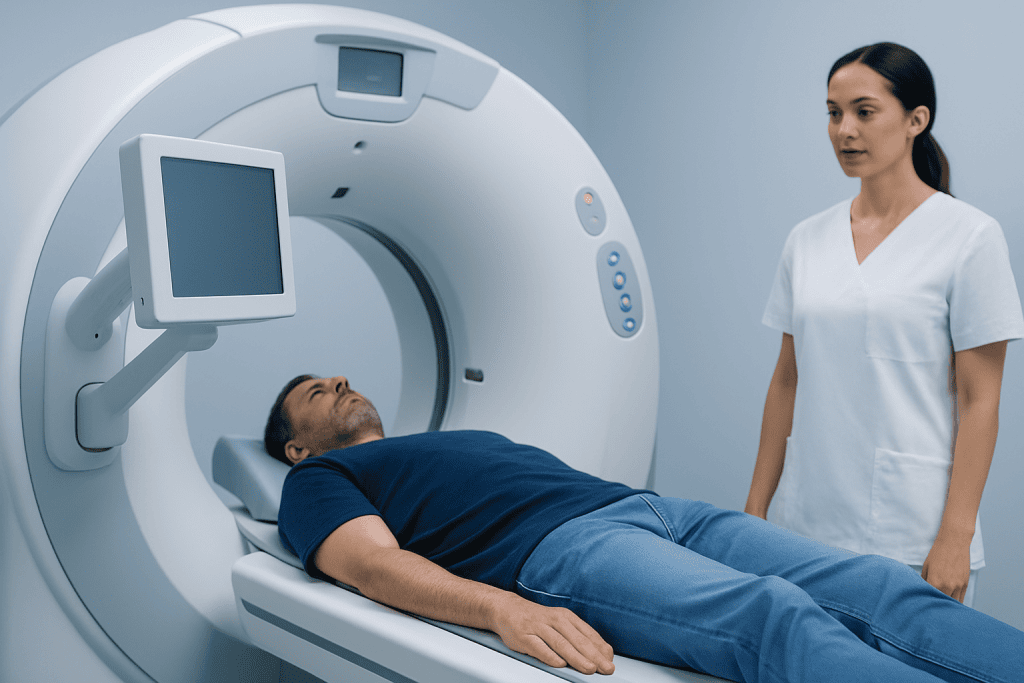
There is no single fixed panel. The tests requested depend on your age, medical history, current medications and the treatment you are coming for. A patient having a short procedure under local anaesthetic may need little more than standard blood work. A patient having major surgery, or one with chronic conditions, will usually need more.
Commonly requested tests include:
- Laboratory tests: complete blood count, kidney and liver function, clotting tests, blood sugar, and urine analysis
- Heart checks: an ECG as standard, with echocardiography or a cardiology review if your history or results suggest it
- Imaging: a chest X-ray where relevant, plus updated ultrasound, CT or MRI if previous scans are old or were done to a different protocol
- Specialist consultations: for conditions such as diabetes, high blood pressure, heart disease or thyroid disease, a related specialist may review you before final clearance
- Anaesthesia assessment: a structured review before any surgery or sedation
The anaesthesia assessment deserves particular attention because it frequently shapes the final plan. The anaesthesiology team will ask about previous reactions to anaesthetic, dental work, snoring or sleep apnoea, smoking, and every medicine and supplement you take, including blood thinners, herbal products and injections. Answer fully. Decisions about pausing or adjusting any medication belong to the treating doctors, and they can only make those decisions with complete information.
If you want to know what to do before each appointment, fasting, hydration, timing, what to wear, see preparing for pre-admission tests in Turkey.
Why your treatment plan may change after testing

Most plan changes fall into one of four categories, and it helps to know which one you are dealing with.
The timing changes, the treatment does not
This is the most common outcome. A test shows something that is better addressed first: an infection to treat, blood pressure or blood sugar to bring under control, a medication that needs adjusting under the doctor’s direction before it is safe to proceed. The procedure stays the same; the date moves.
The treatment stays, the approach is modified
Updated imaging may show that the area being treated has changed in size, position or complexity since your last scan. The team may adjust the technique, involve an additional specialist, or plan a longer observation period afterwards. You still have the treatment you came for, delivered slightly differently.
More information is needed before anyone decides
Sometimes one result raises a question that only another test can answer. This can feel like the process is stalling. In practice it usually means the team is refusing to guess. The guide on why unexpected extra tests happen before treatment in Turkey explains the common triggers.
A different treatment path is recommended
Least common, and hardest to hear if you travelled expecting one specific procedure. Testing occasionally shows that a different approach is safer or more suitable than the one first discussed. You are entitled to a plain-language explanation of what the results showed and why the recommendation changed, and you remain free to accept or decline any proposal. What you should not expect is a hospital proceeding with a plan its own tests have called into question.
Whichever category applies, a revised plan usually means your doctors are working from real-time information rather than assumptions made at a distance. How Acibadem handles this internally is described in what happens if your in-person evaluation changes the initial plan.
How changes may affect your schedule, stay and travel
The first impact of a changed plan is usually practical, not medical. Your admission date may move. Your hospital stay may become longer or shorter. You may need an extra clinic visit before the schedule is confirmed, or extra nights of accommodation while a result comes back.
Plan for this before you fly. Do not book a return flight on the earliest possible discharge estimate. Even when everything proceeds smoothly, final dates are typically confirmed only after testing, specialist review and anaesthesia clearance, and refundable or changeable bookings are far cheaper in stress, whatever they cost in flexibility. If a delay does happen, what happens if tests or recovery change your schedule in Turkey walks through the practical sequence.
Acibadem’s international patient services help coordinate the logistics around a changed plan: appointment flow, interpreter support, and guidance on accommodation, companion arrangements and transfers. If your plan changes while you are here, your coordinator can tell you which bookings are affected and what paperwork you may need for an employer or insurer.
What pre-admission testing means for your quote
Many patients searching for a full medical exam in Turkey want a number. An honest answer is structural, because no fixed figure exists. What a pre-admission work-up involves, and therefore what it costs, depends on the scope of tests your condition requires, whether imaging or specialist consultations are included, and whether the tests are bundled into your treatment quote or itemised separately. Two patients having the same procedure can need very different work-ups.
What you can reasonably expect from a well-run international programme is process, not a universal price: a written quote before you commit, clarity on which tests are included in it, and an explanation before any additional test is performed of why it is needed and how it affects the total. If extra tests are added after arrival, ask for the revised figure in writing before proceeding. Acibadem’s approach to this is set out in how we explain possible additional costs if your treatment plan changes.
What you can do to make testing smoother
A surprising number of plan changes trace back to a detail that was not shared early enough. You can shorten the whole process by arriving prepared.
Send complete records before you travel. Recent reports, pathology results where relevant, imaging with both the written report and the image files (disc, USB or secure link), and a medication list with doses. The more the team knows in advance, the more accurately they can predict which tests you will need.
Be complete about medicines and habits. Prescriptions, injections, over-the-counter painkillers, herbal products, vitamins, smoking, alcohol, previous surgeries, implanted devices. Products that seem minor to you can affect bleeding risk, anaesthesia planning or how a result is interpreted. Declare everything and let the doctors decide what matters.
Follow preparation instructions exactly. You may be asked to fast before blood sampling, drink water before certain scans, or arrive at a set time. If an instruction is unclear, ask before the appointment rather than improvising on the day: a mistimed meal can push a test to the next day.
Complete requested tests promptly. Results drive decisions; delayed tests delay everything downstream, including discharge planning.
How to respond if your doctor recommends a different next step
If your plan changes, ask for the reasoning in plain language. Useful questions include:
- What did the test show, and why does it matter for this treatment?
- Is this change about safety, timing, missing information, or a better option?
- Is the change temporary or permanent? What must happen before we can proceed?
- Does my admission date move? Do I need another consultation first?
- Are there medication changes the treating doctor wants to make, and when do they take effect?
- How does this affect the quote, my accommodation and my companion’s arrangements?
You do not need to interpret laboratory numbers yourself. What you need is a clear statement of what changed, why, and what happens next. Before you leave the clinic, ask for the revised plan in writing: dates, instructions, fasting rules and the contact point for questions. In a multidisciplinary hospital, your coordinator’s job is to bring the treating specialist, radiology, laboratory and anaesthesia teams into one pathway so you receive a single coherent answer rather than fragments from four departments.
Step by step
- Send your records before you travel. Share recent reports, imaging, medication lists and medical history as early as possible so the team can anticipate which tests you will need.
- Keep your travel schedule flexible. Avoid booking your return on the earliest possible day. Final dates are confirmed only after testing and anaesthesia clearance.
- Complete all requested tests promptly. Blood work, imaging and specialist reviews done on schedule keep the treatment decision on schedule.
- Ask what each result means for your plan. If a result is described as abnormal, ask whether it affects safety, timing or the type of treatment recommended.
- Declare every medication and supplement. Prescriptions, injections, painkillers, herbal products and vitamins can all be relevant. Any pause or adjustment is a decision for the treating doctor, made with full information.
- Coordinate practical details early. If the plan changes, review flights, accommodation, transfers and companion arrangements straight away with your coordinator’s help.
- Leave with a written summary. Revised timing, instructions, fasting rules, any medication changes the doctor has made, and who to ask if something is unclear.
Your checklist
- Passport and hospital registration documents
- Recent medical reports and previous test results
- Imaging reports plus scan files on disc, USB or digital link
- Full medication and supplement list with doses
- Details of allergies and any prior anaesthesia reactions
- Names of your chronic conditions and past surgeries
- Comfortable clothing for clinic visits and imaging appointments
- A notepad or phone to record instructions and schedule changes
Key takeaways
- Pre-admission tests in Turkey confirm that the treatment agreed from your records is still appropriate at the time of admission.
- Plans change for four main reasons: timing, technique, the need for more information, or a different recommended path.
- Repeated tests are usually about reliability and current data, not doubt about your previous hospital.
- A changed plan affects logistics first, dates, stay length, travel bookings, so build flexibility into your itinerary.
- There is no fixed price for a full medical work-up; what matters is a written quote, clarity on what it includes, and explanation before anything is added.
- Complete records and a full medication list are the two things most within your control for avoiding delays.
Frequently asked questions
Is it normal for a treatment plan to change after I arrive in Turkey?
Yes. Initial plans are based on records available before travel, while pre-admission tests reflect your condition now. A revised plan usually means your doctors are working from more complete, more current information, not that something has gone wrong with your care.
How much is a full medical exam in Turkey?
There is no single figure, because there is no single exam. The cost depends on which tests your condition requires, whether imaging and specialist consultations are included, and whether testing is bundled into your treatment quote or itemised separately. Ask for a written quote that states exactly which tests it covers, and for a revised figure in writing before any additional test is performed.
Does a changed plan mean something is wrong?
Not necessarily. Many changes are minor: a moved date, an added specialist review, or an adjustment the treating doctor makes to preparation instructions. In other cases the team has found a risk that is better addressed before treatment continues, which is exactly what pre-admission testing is designed to catch.
What kinds of results most commonly delay admission?
Common reasons include infection, anaemia, poorly controlled blood sugar or blood pressure, abnormal clotting results, and new imaging findings. Anaesthesia-related concerns and medication interactions can also lead to postponement until the treating team judges it safe to proceed.
Can I refuse a test I already had in my home country?
You can always ask why a repeat is being requested, and you are free to decline any test. In many cases the hospital needs a more recent result, a different imaging protocol, or a result produced under its own laboratory standards before treatment can go ahead, so declining may mean the treatment cannot be confirmed.
Should I book my return flight only after testing is complete?
Where possible, keep your return flexible until the hospital confirms the final schedule. Even with a tentatively agreed date, test results, specialist reviews and anaesthesia clearance can shift admission timing or the length of observation afterwards.
Who helps with logistics if my plan changes at Acibadem?
International patient coordinators manage the practical side: rescheduling appointments, arranging interpreters, and advising on accommodation, transfers and companion arrangements. They also coordinate communication between departments so you receive one revised plan rather than separate messages from each team.
What should I ask my doctor if tests change the plan?
Ask what the result showed, why it matters now, and whether the change is temporary or permanent. Then ask what happens next, whether the treating doctor is changing any medications, how the quote is affected, and how your travel schedule may need to move. Request the revised plan in writing before you leave.
Add us as a Preferred Source to see more of our trusted health content across Google Search, AI Overviews and Discover.

Update history
- PublishedJuly 8, 2026
- Medical review approvedSeptember 13, 2026
- Last content updateSeptember 12, 2026
References1
More Patient Guides

Sleep Apnea Testing in Turkey: What Happens During Your Evaluation
Sleep apnea testing in Turkey may include a consultation, overnight sleep study or home test, and a clear review of your results…

How to Organize Your Test Results Before Traveling to Turkey
Organize your test results before traveling to Turkey by sorting records, images, medicines and timelines so your Istanbul care team can review…

When Extra Tests Are Needed Before Treatment in Turkey
Extra tests before treatment in Turkey may be needed to confirm diagnosis, timing, and safety. Here is what you can expect in…

At Acibadem, How to Prepare for Blood Tests, Scans, and Pre-Op Checks
Blood tests, scans, and pre-op checks at Acibadem in Turkey help confirm you are ready for treatment and avoid delays on the…