

Unexpected Extra Tests Before Treatment in Turkey: Why They Happen

Unexpected extra tests before treatment in Turkey usually happen because your care team needs current, locally verified results before proceeding. Records from abroad may be too old, incomplete, or in a format the hospital cannot fully rely on. Extra testing rarely means bad news, most of it is precautionary, and many tests are completed the same day. Building a small buffer into your travel plans makes the process less stressful.
You planned the trip, packed your reports, and arrived ready for treatment, and then someone tells you a few more tests are needed. It is an unsettling moment. Most of the time, it simply means your team wants the safest and most accurate plan before anything irreversible happens.
This guide explains why unexpected extra tests before treatment in Turkey are requested, what they typically involve, how they can affect your schedule and your quote, and what you can do before and after arrival to keep surprises to a minimum.
At a glance
- Why it happens: To confirm the diagnosis, check safety for anaesthesia or surgery, or update results that are too old or incomplete
- Common examples: Blood and urine tests, imaging, ECG, anaesthesia assessment, infection screening, specialist reviews
- Does it mean bad news?: Not usually; most extra testing is routine and precautionary
- Will it affect timing?: Sometimes; many tests are same-day, but specialist reviews or detailed imaging can shift treatment by a day or more
- Will it affect cost?: It can; tests outside your original quote are usually itemised separately, so ask before each one is done
- How to prepare: Send complete records early, ask which results must be recent, and leave flexibility in your itinerary
Why extra tests can be requested after you arrive
It is frustrating to travel for planned treatment and then hear that more tests are needed. In most cases, nothing has gone wrong. The team wants to confirm key details before moving ahead, usually because your previous results are incomplete, older than the hospital accepts, or do not fully answer the questions a safe treatment plan depends on.
Hospitals in Turkey that treat international patients review records from many countries, laboratories, and imaging centres. Test formats, measurement units, reporting standards, and image quality all vary. A doctor may therefore ask for repeat or additional testing so they can work from results produced under their own protocols and compare them directly against the treatment you are about to have. There is a separate guide on why blood tests and scans are often repeated in Turkey if you want the detail on that specific point.
There is also a simple clinical reality: the doctor treating you carries responsibility for the decision to proceed. If a surgeon, radiologist, or anaesthesiologist is not satisfied that the picture in front of them is current and complete, asking for one more test is the careful option, not the difficult one. Unexpected extra tests before treatment in Turkey are, more often than not, a sign that the team is being deliberate rather than rushing you through.
The most common reasons for unexpected pre-treatment testing
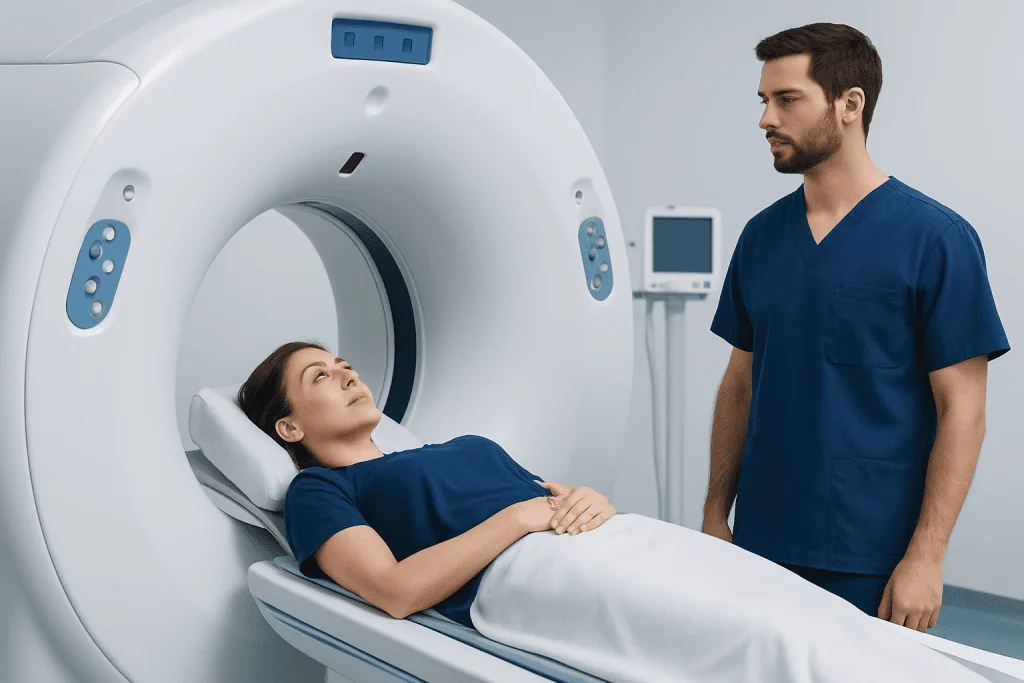
Your results are no longer current enough. Some treatments require very recent blood work, imaging, heart checks, or infection screening. Even if you had everything done at home, the hospital may need updated results if your condition, your medicines, or simply the calendar has moved on since the tests were performed. Each hospital sets its own validity windows, which is why the same report can be accepted in one place and repeated in another.
The first consultation raises new questions. A physical examination, a symptom review, or a discussion between specialists can reveal details that were not visible in your original records. A doctor may want more imaging to define the treatment area, additional blood tests to check organ function, or a separate anaesthesia evaluation before sedation or surgery is confirmed.
Your records are hard to rely on. Reports arrive with missing pages, images come as low-quality printouts rather than original files, translations are incomplete, or the original test used a method the local team does not normally work with. In these cases repeating the test is faster and safer than guessing.
Common additional checks include:
- Blood and urine tests
- Ultrasound, X-ray, CT, MRI, or a fresh review of existing images
- ECG or other heart-related checks
- Pulmonary or respiratory assessment
- Infection screening
- Anaesthesia clearance
- A consultation with another specialist, such as cardiology, endocrinology, or internal medicine
None of these, on its own, tells you anything about the seriousness of your condition. The pattern to notice is that most of them answer one question: is it safe to proceed as planned?
What extra tests usually mean for your treatment schedule

Sometimes additional testing barely touches your timetable. Routine blood tests, ECGs, and some imaging studies can often be arranged the same day or the next, and if the results are straightforward, treatment goes ahead with little or no change.
In other cases, timing shifts. Detailed imaging, specialist consultations, or a finding that needs closer review can delay treatment briefly, particularly if a result suggests your doctor should adjust something first, involve another specialist, or revise the planned approach. Delays are disappointing, but their purpose is to reduce risk, not to inconvenience you. The guide on what happens if tests or recovery change your schedule in Turkey walks through the practical side of a shifted date.
If you are travelling internationally, build a little flexibility into your itinerary rather than assuming every step will run to the hour. International patient departments can usually reorganise appointments, explain a revised schedule, and coordinate logistics if an extra test changes your plan. There is also a fuller guide on what happens if you need extra tests after arriving in Turkey, covering the arrival-day sequence in more detail.
What extra tests mean for your quote
A test that was not in your original plan is usually not in your original quote either. Most international treatment quotes list what they include, consultations, named tests, the procedure itself, a defined length of stay, and anything added afterwards is itemised separately. That is normal practice, not a sign of hidden charges, but it does mean the number you were given before travel can change.
The useful habit is simple: before any additional test is performed, ask whether it sits inside your existing quote or will be billed separately, and ask for that answer in writing where possible. How that conversation typically works, and what your options are if the plan changes, is covered in paying for extra tests in Turkey when your plan changes.
What a quote for extra testing depends on is fairly consistent: the type of test, whether contrast material or sedation is involved, whether an additional specialist reviews the result, and whether the test changes your length of stay. Knowing those levers helps you ask precise questions rather than open-ended ones.
How to respond calmly and ask the right questions
If you are told that more tests are needed, the best first step is to ask for the reason in plain language. You are entitled to understand what the test is for, whether it is routine, whether it is urgent, and how it may affect your treatment date. Most patients feel steadier once they know whether a request is precautionary, confirmatory, or linked to a specific finding.
Practical questions are just as legitimate. How long does the test take? Do I need to fast beforehand, and if so, from when? Is contrast material or sedation involved? When will the results be ready, and who reviews them? Should someone come with me? If fasting is mentioned, the guide on fasting before tests and procedures in Turkey explains what those instructions usually involve. If language is a barrier, ask for interpreter support rather than nodding along, hospitals with international departments expect that request.
One caution: do not change anything about your usual medicines because a test has been ordered. Whether a medicine needs to be taken differently before a test or a procedure is a decision for your treating doctor, and they will tell you specifically if it applies to you.
Above all, try not to read an extra test as a sign that treatment will be cancelled. In most situations it is preparation, not a verdict. The team is gathering the clearest possible information now so your plan rests on current facts rather than assumptions.
How to reduce the chance of last-minute testing surprises
You cannot eliminate extra tests entirely, some are genuinely unforeseeable, but you can shrink the odds considerably by sending complete records well before you travel. Include written reports, original image files where available (not just printed summaries), a current medication list, allergy information, details of previous procedures, and any relevant history. If your records are not in English, ask in advance whether translation is needed and which formats the hospital accepts.
Before booking flights, ask your coordinator three specific questions: how old can my blood tests be, do you need original image files or only reports, and will I need an anaesthesia assessment on arrival? Vague reassurance is less useful than a concrete list. There is a dedicated guide on which medical tests to complete before flying to Turkey that helps you have that conversation properly.
Finally, leave buffer time. Scheduling treatment and return travel back-to-back is the single most common way an extra test turns from a minor inconvenience into a genuine problem. A day or two of slack costs little and buys a great deal of calm.
When extra tests are especially likely
Additional testing is more probable if your case is complex, if you have several medical conditions, or if you take medicines that affect treatment safety, blood thinners, diabetes medicines, and drugs that influence immunity are the usual examples. It is also common whenever treatment involves anaesthesia, surgery, advanced imaging, or several specialties working together.
Repeat tests are more likely if your original results sit near the edge of the accepted timeframe, if your symptoms have changed since the remote evaluation, or if a long gap has passed between that evaluation and your arrival in Turkey. Even a small change in general health can justify rechecking key information.
For older adults, patients with heart or lung conditions, and people with a history of reactions to contrast agents or anaesthesia, extra checks are particularly common. These requests are about tailoring the plan to you as an individual. A personalised plan sometimes takes a little longer to confirm, and that is generally the safer way to proceed.
Common questions from international patients about treatment in Turkey
Extra tests often come up in the wider context of deciding whether to travel at all, so here is the honest background.
Can foreigners go to hospital in Turkey?
Yes. Turkey has a large number of hospitals that routinely treat international patients, and many run dedicated international departments with interpreters, coordinators, and processes for reviewing overseas records. You do not need to be a resident to receive planned treatment; you register as an international patient and are treated under the hospital’s standard clinical protocols.
What kinds of procedures do international patients commonly travel for?
Patients travel to Turkey for a wide range of care: dental treatment, hair restoration, eye surgery, orthopaedics, cardiology and cardiac surgery, oncology, fertility treatment, bariatric surgery, and organ-specific specialist care among them. The type of procedure affects how much pre-treatment testing to expect, anything involving general anaesthesia or surgery carries a fuller work-up than a purely outpatient consultation.
Why is treatment often less expensive in Turkey?
Lower prices generally reflect structural factors: lower staffing and operating costs than in Western Europe or North America, exchange rate effects, and high patient volumes in centres that focus on particular procedures. Lower cost does not automatically mean lower quality, and it does not mean corners must be cut, but it is one reason careful hospitals insist on their own testing rather than accepting every overseas result at face value. It is part of doing the job properly.
Is Turkey good for medical treatment?
Quality varies between providers, as it does in any country. What you can sensibly do is judge each hospital on its processes: how thoroughly it reviews your records before quoting, whether it explains which tests will be needed and why, how it handles changes to the plan, and how clearly it communicates. A provider that asks for extra tests before treating you is often displaying exactly the caution you should want.
Step by step
- Pause and ask why the test is needed. Ask for the reason in straightforward language. Knowing whether the test is routine, time-sensitive, or prompted by a specific finding helps you understand the situation and plan calmly.
- Clarify how it affects your schedule. Ask whether the test can be done the same day and when results are expected. Check whether your treatment date is still likely to hold or whether flexibility may be needed.
- Ask how it affects your quote. Before the test is performed, confirm whether it is included in your existing quote or billed separately, and ask for the answer in writing where possible.
- Confirm preparation instructions. Some tests require fasting, hydration, or arriving with previous images and reports. Follow the instructions exactly so the test does not need repeating, and leave any question about your usual medicines to your treating doctor.
- Share your full medical information again. Bring or resend your medication list, allergies, prior procedures, and any recent changes in symptoms. Small details can matter and may help the team decide which tests are truly necessary.
- Use interpreter and coordinator support. If any instruction is unclear, ask for help rather than guessing. International patient services can assist with translation, appointment timing, and coordination between departments.
- Ask for the next decision point. Before leaving the testing area, find out what happens once the result comes back: who reviews it, when you will be updated, and what the possible outcomes are. Knowing the next step removes most of the uncertainty.
Your checklist
- Passport and hospital registration details
- Printed and digital copies of recent reports and imaging, including original image files where possible
- A current medication list with doses
- Allergy information and past reactions to drugs, contrast, or anaesthesia
- A short summary of your medical history and previous operations
- A written copy of your quote, showing which tests it includes
- Comfortable clothing for appointments and imaging visits
- Contact details for your international patient coordinator
- A little extra time in your itinerary before treatment and before flying home
Key takeaways
- Unexpected extra tests before treatment in Turkey are usually requested for safety, accuracy, and up-to-date planning, not because something has gone wrong.
- Older, incomplete, untranslated, or non-standard records are the most common triggers for repeat testing.
- Many tests are completed the same day; specialist reviews and detailed imaging are the ones most likely to shift your date.
- Tests outside your original quote are usually billed separately, so ask before each one is performed.
- Complete records sent early, precise questions before booking flights, and a small travel buffer prevent most surprises.
Frequently asked questions
Why do I need more tests if I already sent my results?
Your doctors may need more current results, a different type of test, or measurements produced under their own protocols before treatment. Records from another country vary in format, detail, image quality, and timing, so repeating or adding tests is sometimes the safest option.
Do unexpected extra tests mean my condition is worse than expected?
Not necessarily. In many cases extra testing is routine and simply confirms that treatment remains appropriate and safe on the day you are seen. The most useful step is to ask your doctor to explain the specific reason rather than assuming the worst.
Can extra tests delay my procedure in Turkey?
They can, but not always. Many tests are completed quickly and do not change the schedule. Others require specialist review or lead to a brief postponement so the team can adjust the plan safely. A day or two of buffer in your itinerary absorbs most delays comfortably.
Will I have to pay for tests that were not in my original quote?
Usually, tests added after your quote was issued are itemised separately, unless your agreement states otherwise. Before any additional test is performed, ask whether it is included and request written confirmation. What the charge depends on, test type, contrast or sedation, specialist review, is worth understanding before you agree.
Can foreigners go to hospital in Turkey?
Yes. Many Turkish hospitals treat international patients routinely and run dedicated international departments with interpreters and coordinators. You register as an international patient and receive care under the hospital’s standard clinical protocols; residency is not required for planned treatment.
Why is medical treatment often less expensive in Turkey?
Prices generally reflect lower staffing and operating costs, exchange rate effects, and high patient volumes in specialised centres, structural factors rather than reduced clinical standards. Judge each provider on its processes and transparency rather than on price alone.
Do dentists in Turkey do blood tests before implants?
Some do, depending on your health history. Blood tests may be requested before implant surgery when a dentist needs to check factors relevant to healing or safety, such as certain medical conditions or medicines you take. Ask your clinic in advance whether any testing is planned so it does not come as a surprise on arrival.
How can I lower the chance of needing repeat tests?
Send complete, recent records in the requested formats before you travel, including original image files, and ask which results must be updated on arrival. Even with good preparation, some repeat testing may still be needed, because hospitals often require very current information before treating you.
Add us as a Preferred Source to see more of our trusted health content across Google Search, AI Overviews and Discover.

Update history
- PublishedJuly 8, 2026
- Medical review approvedSeptember 1, 2026
- Last content updateSeptember 1, 2026
References1
More Patient Guides
Sleep Apnea Testing in Turkey: What Happens During Your Evaluation
Sleep apnea testing in Turkey may include a consultation, overnight sleep study or home test, and a clear review of your results…

How to Organize Your Test Results Before Traveling to Turkey
Organize your test results before traveling to Turkey by sorting records, images, medicines and timelines so your Istanbul care team can review…

When Extra Tests Are Needed Before Treatment in Turkey
Extra tests before treatment in Turkey may be needed to confirm diagnosis, timing, and safety. Here is what you can expect in…

At Acibadem, How to Prepare for Blood Tests, Scans, and Pre-Op Checks
Blood tests, scans, and pre-op checks at Acibadem in Turkey help confirm you are ready for treatment and avoid delays on the…