

Preparing for Your Flight Home After Treatment in Turkey

Ask your treating doctor to confirm when you are fit to fly before you finalise anything else. Then gather your documents — discharge summary, prescriptions, a fit-to-fly letter if required — keep all medicines and paperwork in your hand luggage, book the simplest route you can manage with assistance arranged in advance, and agree your follow-up plan before you leave Turkey.
Flying home after treatment is not the same as flying home after a holiday. Your body is still recovering, your bag now holds medicines and medical paperwork, and the airline may ask questions an ordinary traveller never hears. Preparing for your flight home after treatment in Turkey is mostly a matter of sorting these things before discharge, while your care team is still in the room and answers are easy to get.
This guide covers the whole journey in order: travel clearance, why timing differs between treatments, booking decisions, what belongs in your hand luggage, how medicines cross borders, what to do during the flight, how to recover from the flight itself, and how to set up follow-up before you leave.
At a glance
- Best time to plan: Before discharge, with written travel advice from your care team
- Most important document: Your fit-to-fly letter or airline medical form, if one is required
- Key travel priorities: Hydration, movement, medication timing, and protecting the treated area
- Who helps you prepare: Your doctor, your nurse, and the international patient services team
- Common extra support: Wheelchair assistance, early boarding, and seat selection arranged in advance
Start with medical clearance, not the flight search
Preparing for your flight home after treatment in Turkey begins with one question to your treating doctor: when am I fit to fly? Not when your ticket says, and not when other patients typically leave. The answer depends on what was done, how your recovery is progressing, how well your pain is controlled, whether you still have dressings or drains, and whether your procedure affects circulation, breathing, or pressure-sensitive parts of the body.
An aircraft cabin is a mildly demanding place. Air pressure is lower than at ground level, the air is dry, seating is cramped, and you sit still for hours. None of this troubles a healthy traveller. After surgery, sedation, or certain dental and eye procedures, it can matter — which is why doctors and airlines treat recent treatment differently from ordinary travel. For a closer look at how procedures affect timing, see when it is safe to fly home after surgery in Turkey. If your treatment involved sedation or a general anaesthetic, this guide on flying after sedation or anaesthesia explains why the first hours and days call for extra caution.
Before discharge, ask for your travel advice in writing. Useful documents include a discharge summary, a full prescription list, wound care instructions, and — where the airline requires it — a fit-to-fly letter or a completed airline medical form. Not every patient needs formal clearance, but finding out at the check-in desk is the wrong time to learn that you do. Check your airline’s medical clearance policy on its website or by phone a few days ahead, so you know before you reach the airport whether a form is expected.
Why the type of treatment changes the timing
There is no single waiting period that fits everyone, and any website that gives you a universal number is guessing. What your doctor actually weighs is a set of physical factors, and it helps to understand them so the advice you receive makes sense.
| Factor | Why it matters in the air |
|---|---|
| Trapped gas after some procedures | Gas expands as cabin pressure falls. This is why doctors are cautious about flying soon after certain abdominal, eye, ear, and sinus-related procedures. |
| Long periods of sitting | Immobility affects circulation in the legs. This is one reason compression garments and regular in-flight movement are commonly advised after surgery. |
| Sedation and anaesthesia | Drowsiness, slower reactions, and nausea can linger, and a confined cabin at altitude is a poor place to feel unwell. |
| Swelling and wound healing | Dry cabin air, dehydration, and pressure changes can make swelling and discomfort more noticeable than they were on the ground. |
| Casts, braces, and limited mobility | A fresh cast and restricted movement change how you board, sit, and move in the cabin, and airlines have their own rules about both. |
None of this means flying is dangerous for you. It means the safe timing is individual. Your surgeon or physician weighs these factors against your actual recovery and gives you a date, and that date anchors everything else in this guide. If you will be travelling in a cast or brace, or with reduced mobility, there are extra practicalities covered in flying home with a cast, brace, or limited mobility.
Choose the easiest route home, not just the cheapest one
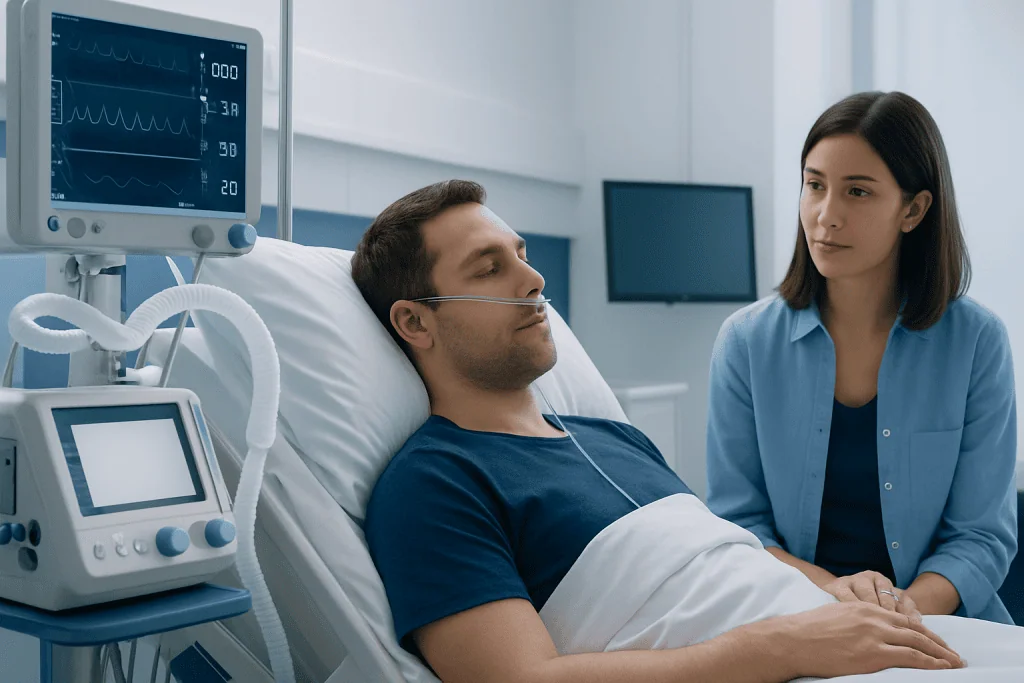
After treatment, convenience is not a luxury. A direct flight, or the route with the fewest airport changes, spares you the parts of travel that recovery makes hardest: long walks between terminals, standing in queues, lifting bags into overhead lockers, and rushing to make a tight connection. If a direct flight is not available, favour one comfortable connection over two cheap ones.
Treat your seat as part of your recovery plan. An aisle seat lets you stand, stretch, and reach the toilet without climbing over other passengers. If the treated area is on one side of your body, think about which side of the aircraft keeps it away from the aisle traffic. If you need extra legroom, early boarding, or wheelchair assistance through the airport, request it from the airline well before the day of travel — assistance arranged in advance is far more reliable than assistance requested at the desk.
If you are departing from Istanbul, allow more time than you normally would. The airports are large, walking distances can be long, and recovery slows most people down more than they expect. A calm, well-spaced travel day serves you better than a tightly packed itinerary, even if it means an earlier hotel checkout. Some patients also find it worth paying for a flexible ticket in case their doctor adjusts the travel date late in the recovery.
Pack your medical essentials in your hand luggage

Much of preparing for your flight home after treatment in Turkey comes down to packing well, and the rule is simple: anything you might need during the journey, or could not easily replace, travels with you in the cabin. Checked baggage gets delayed and occasionally lost. Being separated from your passport is inconvenient; being separated from your medicines and discharge papers is a genuine problem.
- Medicines and prescriptions, with enough supply for the journey plus a buffer for delays
- Discharge summary and your written follow-up plan
- Fit-to-fly letter or airline medical form, if you were advised to carry one
- Dressings or wound care supplies your team told you to bring
- Compression stockings or garments, if prescribed
- Passport, insurance documents, phone charger, and emergency contact details
Add the small things that make hours in a seat bearable: a neck pillow, a light scarf or blanket, an empty water bottle to fill after security, plain snacks, lip balm, tissues, hand sanitiser, and a small cushion if sitting puts pressure on the treated area. If you use a mobility aid, ask the airline how it should be labelled and handled before you travel. For a complete packing list built around this journey, see how to pack a post-surgery flight home comfort kit.
Carrying medicines across borders
Many patients leave Turkey with medicines they did not arrive with, and this deserves specific preparation. Keep every medicine in its original packaging, carry the prescriptions that match it, and ask your doctor for a letter listing each medicine by its generic name, the dose, and why you take it. Pharmacies abroad and border officials both work far better from generic names than from brand names, which change from country to country.
Some medicines are treated as controlled substances — strong painkillers and certain sedatives and sleep medicines are the usual examples — and many countries, Turkey included, place limits and documentation requirements on carrying them across a border. The rules differ by country and by medicine, they change over time, and quantity limits apply in some places. So check the official guidance for both directions of your journey: Turkey’s rules for what leaves the country, and your home country’s rules for what comes in. UK travellers, for instance, can check the government’s guidance on travelling with controlled medicines before flying. If you are unsure whether something you were prescribed falls into this category, ask your treating doctor before discharge.
Two practical points for the airport itself. Medically necessary liquids are generally exempt from the standard cabin liquid limits, but declare them at security screening rather than hoping they pass unnoticed. And if any medicine must be taken at fixed times, set phone reminders and work out in advance how the time zone change affects the schedule — your care team can help you map this out. There is a fuller guide to this whole topic in returning home with new medicines after treatment in Turkey.
Plan for comfort and safety during the flight
Once you are on board, your priorities are hydration, circulation, pain control, and protecting the treated area. Wear loose, comfortable clothing that does not press on wounds, casts, or swollen tissue, and shoes you can slip on and off, because feet often swell in flight. If your team prescribed compression stockings or a support garment, wear them exactly as instructed — not loosely interpreted, and not skipped because the flight is short.
Move regularly. Flex your feet and ankles in your seat, and take short walks up the aisle when the seatbelt sign allows and you feel steady enough. Long stretches of stillness stiffen everyone and can make post-treatment swelling worse. Drink water steadily throughout the flight unless your doctor has given you fluid restrictions, and treat alcohol with caution: it dehydrates you and can interact with medicines you are taking.
If discomfort is likely, follow the medication plan your team gave you rather than waiting for pain to become hard to manage — staying ahead of pain is easier than chasing it. Keep your approved pain relief within reach, not in the overhead locker. And tell the cabin crew early if you have positioning needs, nausea, or dizziness; they can do more for you at the start of a flight than in the middle of a meal service. There is a dedicated guide to managing pain on the flight home after treatment if this is your main concern.
Recovering from the long flight once you land
A long flight takes something out of every traveller, and more out of someone who is recovering. Plan the first day or two at home to be quiet. Arrange for someone to meet you at the airport if you can, keep your bags light enough to manage, and do not schedule anything demanding for the day after you land.
The basics of long-flight recovery are unglamorous but effective: keep drinking water, eat light regular meals, take short gentle walks rather than lying completely still, and shift your sleep to local time as soon as you reasonably can — daylight and a normal bedtime do most of the work. Resume your aftercare routine immediately: keep dressings clean and dry if that is what your plan says, take medicines exactly as prescribed with the time zone adjustment you worked out before departure, and hold off on strenuous activity until your doctor has said it is appropriate.
Before you leave Turkey, ask your doctor what a normal recovery should look like in the first days after travel. Some tiredness, soreness, bruising, or swelling is expected after many treatments; knowing in advance what your team considers ordinary for your specific procedure means you spend less of your first week at home wondering, and your written aftercare plan answers questions before they become worries.
Set up follow-up before you leave Turkey
The best time to organise aftercare is before departure, not after you get home. Find out whether your next review will be a virtual consultation, a visit to a local doctor, or both. Ask who removes sutures if you have them, whether you need blood tests or imaging at home, and when. If any of this is left vague at discharge, ask for it in writing.
Request copies of your important records in English: imaging reports and the images themselves where relevant, operative notes when appropriate, pathology reports if any were produced, your medication list, and your discharge instructions. A local doctor who receives a complete, legible file can pick up your care smoothly; one who receives nothing has to start from guesswork. Ask for these copies before discharge day, while the people who can produce them are still one corridor away, so that you leave with a clear plan rather than a list of open questions.
Step by step
- Confirm when you are fit to fly. Ask your doctor for specific travel timing based on your treatment and your recovery, not on general online advice. Request a fit-to-fly letter or airline medical form before discharge day if one is needed.
- Book the least demanding journey. Choose a direct flight or the simplest route you can manage, and arrange wheelchair support, early boarding, or extra legroom in advance so the airport asks less of your body.
- Prepare documents and medicines together. Keep your passport, discharge summary, prescriptions, doctor’s letter, and any medical clearance in your hand luggage, with enough medicine for the journey plus a buffer for delays, in original packaging.
- Check the border rules for your medicines. Confirm the documentation requirements for controlled medicines in both Turkey and your home country before travel day, and declare medically necessary liquids at security.
- Dress and pack for recovery, not style. Loose clothes, easy shoes, prescribed compression garments, and small comfort items that help you sit, rest, hydrate, and protect the treated area.
- Follow your in-flight plan. Take medicines on time, drink water steadily, move your feet and take short walks when it is safe, and tell the cabin crew early about any needs.
- Leave with follow-up already arranged. Know whether your next review is online or in person, carry your records in English, and understand what a normal first week at home should look like for your procedure.
Your checklist
- Doctor-approved travel date confirmed in writing
- Fit-to-fly letter or airline medical form obtained if needed
- Discharge summary and prescriptions packed in hand luggage
- Enough medication for travel days and possible delays, in original packaging
- Border rules checked for any controlled medicines, both directions
- Airport wheelchair or special assistance booked in advance if required
- Direct or low-stress route selected where possible
- Comfort items packed: water bottle, snacks, pillow, dressings, compression garments
- Records in English collected for your local doctor
- Follow-up appointment or review plan arranged before departure
Key takeaways
- Your doctor’s travel clearance matters more than the date on your ticket.
- Safe timing is individual — it depends on the procedure, the anaesthesia, and your actual recovery.
- Keep medicines, documents, and essential supplies in your hand luggage, never in the hold.
- Controlled medicines need paperwork for both the country you leave and the country you enter.
- Hydration, movement, and staying ahead of pain are the main in-flight priorities.
- Arrange follow-up and collect your records in English before you leave Turkey.
Frequently asked questions
How soon can you fly home after treatment in Turkey?
There is no universal answer. Safe timing depends on the type of treatment, how you are recovering, whether you had sedation or a general anaesthetic, and factors such as trapped gas, swelling, and mobility. Your treating doctor weighs these against your actual progress and gives you a date, and in some situations may recommend waiting longer or adding extra support for the journey.
Do you need a fit-to-fly letter after treatment?
Not every patient needs one, but some airlines ask for medical clearance after recent surgery or when a passenger needs special assistance. Ask both your hospital team and your airline before travel so you are not delayed at check-in, and carry the letter in your hand luggage rather than your checked bag.
What medications can you not take into Turkey — or out of it?
Many countries, Turkey included, restrict controlled medicines such as strong painkillers and certain sedatives, with documentation requirements and sometimes quantity limits. The rules differ by country and change over time, so check the official guidance for both directions of your journey before travel day. Carry all medicines in original packaging with matching prescriptions and a doctor’s letter listing generic names and doses.
Is it safe to go to Turkey for medical procedures?
Safety is not a property of a country; it depends on the specific hospital, the experience of the clinicians, and how carefully the treatment and travel are planned. Useful things to examine are how a hospital documents its care, how it plans discharge and travel timing, whether it provides records in your language, and how follow-up is arranged after you return home.
What can you do to recover from a long flight?
Keep the first day or two quiet. Drink water steadily, eat light regular meals, take short gentle walks rather than staying completely still, and move your sleep to local time as soon as you reasonably can. Resume your written aftercare routine straight away, including medicines at the adjusted times you planned before departure, and avoid strenuous activity until your doctor has cleared it.
What should you keep in your hand luggage on the flight home?
All medicines and prescriptions, your discharge summary, passport, insurance details, and any medical letters or clearance forms. Add anything you may need during the flight itself: dressings, a prescribed support garment, snacks, and a water bottle to fill after security. Nothing essential should travel in the hold.
Should you request wheelchair assistance at the airport?
If you tire easily, walk slowly, need to avoid strain, or use mobility aids, wheelchair assistance can make the journey far more manageable — particularly in large airports with long walking distances. Request it through the airline in advance rather than on the day, when availability is less certain.
How do you manage follow-up once you are back home?
Arrange it before you leave Turkey. Know whether your next review is virtual, with a local doctor, or both, and who handles practical steps such as suture removal or dressing changes. Carry your records in English — imaging, medication list, discharge instructions — so a local clinician can take over your care without guesswork.
Add us as a Preferred Source to see more of our trusted health content across Google Search, AI Overviews and Discover.

Update history
- PublishedJuly 8, 2026
- Medical review approvedSeptember 1, 2026
- Last content updateSeptember 1, 2026
References2
More Patient Guides

Flying After a C-Section: Timing for New Mothers
A C-section is real abdominal surgery that happens to come with a newborn attached — so the flying question has two clocks…

When Can You Drive After Anesthesia or Sedation?
You feel fine an hour after the procedure. You are chatting, you walked to the car unaided, you could obviously drive it.…
Flying After Hip Replacement: When Is It Safe?
Hip replacement recovers famously well — many patients walk further at three weeks than they had in three years. Flying is part…

Flying After Knee Replacement: When Is It Safe?
The knee is new, the physio is going well, and there is a boarding pass with your name on it. Flying after…