

Preventing Infection During Medical Travel

Preventing infection during medical travel comes down to preparation and habit. Confirm you are well enough to fly, carry hand sanitiser, masks and your medicines in your hand luggage, clean your hands at every transition point, follow wound-care instructions exactly, and report fever, spreading redness or drainage early. Your daily routines matter as much as the hospital's own infection control systems.
Worried about picking something up on the plane, or unsure how to keep a fresh wound clean in a hotel room? Those are exactly the right questions. Preventing infection during medical travel is not about fear — it is a set of small, repeatable habits that start before you pack and continue after you land back home.
This guide walks you through each stage: preparing before departure, reducing exposure in transit, knowing what good infection control looks like in a hospital, protecting a healing wound in accommodation, and watching for warning signs after you return. It is written for international patients travelling to Turkey for treatment, but the principles apply to any medical journey.
At a glance
- Best time to start: Two to four weeks before travel, or as early as your treatment schedule allows
- Single most useful habit: Hand hygiene before eating, after shared surfaces and before any wound care
- In hospital: Ask about infection control routines; speak up if anything is unclear
- Carry-on essentials: Sanitiser, masks, wipes, thermometer, prescribed medicines and clean dressings
- Contact your team if: Fever, spreading redness, drainage, worsening pain or new breathing symptoms appear
Why infection prevention matters during medical travel
When you travel for treatment, your body is often working harder than usual. Long flights, airport queues, disrupted sleep, unfamiliar food, climate change and the procedure itself all add strain. None of these makes infection inevitable, but together they mean your usual margins are thinner. Preventing infection during medical travel is about restoring some of that margin with deliberate, simple choices.
Your journey crosses several environments: home, transport, airport, aircraft, hotel, hospital and follow-up appointments. Each has different touchpoints — lift buttons, tray tables, taxi door handles, clinical waiting rooms, your own dressing at the hotel sink. You cannot sterilise a journey, and you do not need to. What you can do is know which moments carry real risk and manage those consistently.
At Acibadem, international patient teams work with cross-border logistics daily, including interpreters and coordinators who can pass your questions to clinical staff. Hospital infection control is a system: cleaning, sterilisation, staff training, monitoring. But no system replaces the part only you can do — clean hands, honest reporting of symptoms and following instructions exactly. Treat yourself and your companion as active members of the safety team, because you are.
Prepare before you leave home
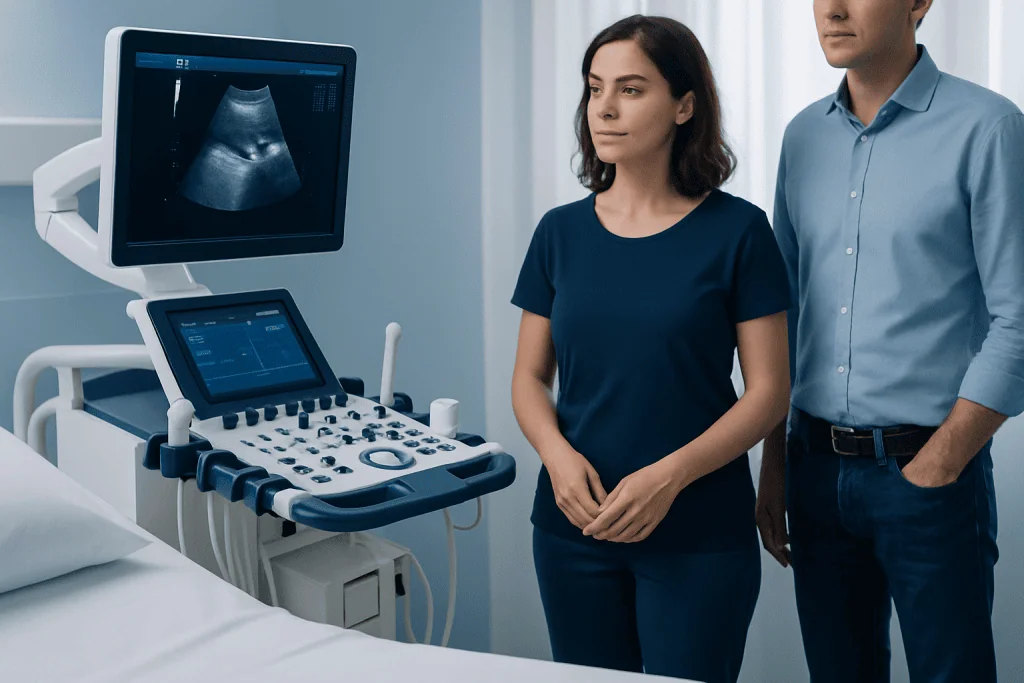
The most common question patients ask is how to avoid getting sick before the trip itself. The honest answer: you cannot eliminate the risk, but you can reduce it meaningfully in the two to four weeks before departure. Prioritise sleep, avoid close contact with people who are visibly unwell, wash your hands more often than feels necessary, and deal with any niggling health issue — a dental problem, a urinary symptom, a skin infection — before you fly rather than hoping it settles on its own.
Tell your local doctor and your international patient coordinator about anything relevant: current fever or cough, recent antibiotic use, an open wound, contact with someone who has a contagious illness, or a known history of resistant bacteria such as MRSA. This is not box-ticking. Depending on your treatment and its urgency, the team may advise testing, extra precautions or adjusting your travel date. Arriving with an undeclared active infection can delay your procedure far longer than an honest conversation would have.
Check your vaccination status early, because some vaccines need time to take effect. What you need depends on your health, your routine immunisation history and your treatment plan — a travel medicine clinic or your own doctor can advise. Our guide to pre-travel vaccines and infection precautions for medical trips to Turkey covers this in more detail.
Gather your medical documents in one digital folder and, ideally, one printed set: recent laboratory results, medication list, allergies, vaccination record, implant or device details. Clear information lets the receiving team plan appropriate precautions instead of discovering things mid-admission. If you live with diabetes, a heart condition or another long-term illness, read our guide on managing chronic conditions during medical travel as well — a well-controlled condition is itself a form of infection prevention.
Finally, pack a small kit in your hand luggage, never in checked baggage: alcohol-based hand sanitiser, spare masks, disinfecting wipes, tissues, a thermometer, clean dressings if you already need them, and all prescribed medicines in original packaging. Do not add antibiotics to the kit on your own initiative — whether you need them, and which ones, is a decision for your treating doctor only. Keeping your regular medicines running smoothly across time zones matters too; see how to keep your regular medicines on schedule during medical travel.
Reduce exposure on flights, transfers and in public areas
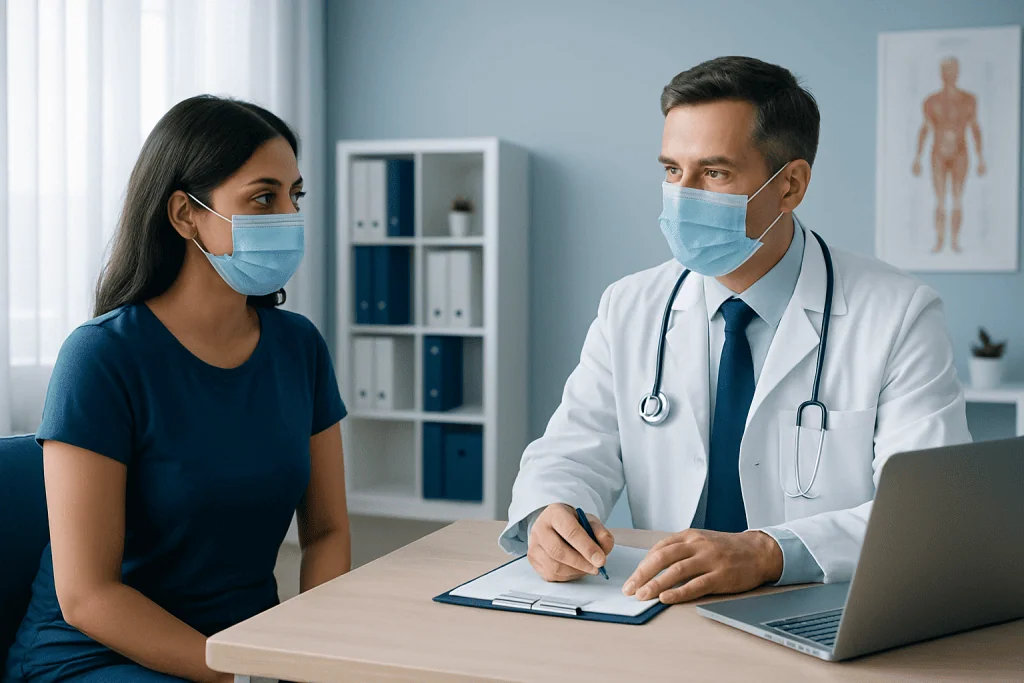
Public health guidance during the pandemic popularised the “three C’s”: avoid closed spaces with poor ventilation, crowded places, and close-contact settings. The framework remains a useful mental shortcut for any respiratory infection risk, and airports concentrate all three. You cannot avoid them entirely, but you can shorten your time in the worst spots: check in online, keep connections generous rather than tight, and sit away from dense queues where you have the choice.
Simple routines do most of the work. Clean your hands after security screening, after using the toilet, before eating and after touching shared surfaces such as kiosks, armrests, handrails and luggage trolleys. Avoid touching your face with unclean hands — this single habit interrupts a large share of common transmission routes. If you are immunocompromised, recovering from surgery, or your doctor has advised it, a well-fitting mask in crowded indoor areas adds a further layer of protection. Nobody in a Turkish airport or hospital will find a mask unusual.
On the aircraft, keep your essentials within reach so you are not repeatedly handling overhead luggage. Wipe your tray table, armrests and seatbelt buckle if you prefer. Drink water regularly. Flights carry a second, unrelated risk worth planning for at the same time — read preventing blood clots during medical travel to Turkey, because the same journey deserves both plans.
For ground transfers, organised transport is usually the better option, especially soon after treatment. Acibadem patient services can help coordinate airport transfers and hotel arrangements on request, which reduces waiting time in crowded halls and removes the guesswork of unfamiliar taxis. If you begin to feel unwell at any point in transit, tell your coordinator rather than managing it silently — a small adjustment early is easier than a complication later.
Know what good infection control looks like in hospital
Hospitals that regularly treat international patients should have visible, systematic infection prevention: hand hygiene stations at entrances and wards, patient identification wristbands, controlled clinical areas, documented cleaning and sterilisation routines, and staff who use gloves, masks or other protective equipment when the task calls for it. Many hospitals also hold external accreditations that audit these systems against published standards. Accreditation does not remove risk — nothing does — but it means safety processes are formally checked rather than assumed. You are entitled to ask any hospital, anywhere, how its infection control works.
Useful questions to ask your care team, in person or through your coordinator, include:
- Should I clean my hands before this test or dressing change, and how?
- Should my wound or dressing stay dry, and for how long?
- What is normal healing, and what should worry me?
- Who do I contact — and how quickly — if symptoms start at my hotel or after I fly home?
- Are there restrictions on visitors, bathing or activity while I heal?
None of these questions is rude. Clinicians expect them, and interpreter support means you can ask them in the language you think in, not the language you struggle in. Patients who understand their instructions follow them better, and patients who follow instructions have fewer avoidable problems. That is the whole logic of this guide.
Protect wounds, catheters and healing areas
If your treatment involves an incision, catheter, drain or injection site, the hospital’s specific instructions override anything general — including this page. Keep dressings clean and dry unless told otherwise. Do not apply creams, powders, herbal products or antiseptics to a healing area unless your clinician specifically recommends them; well-meant extras are a common cause of irritation and delayed healing.
Before touching a dressing or the skin around it, wash your hands with soap and water, or use sanitiser if your hands are not visibly dirty. Before discharge, ask your nurse to show you — physically, not just verbally — how any home care should be done, and what normal healing looks like versus concerning change. Spreading redness, increasing warmth or swelling, pus-like drainage, worsening pain, a bad smell or fever should be reported promptly, not watched for a few days.
In a hotel or serviced apartment, set up a small clean zone for any care you have been instructed to do: a clean towel or disposable surface, supplies kept in a sealed bag, good light near the sink. Companions can help, but children and pets should not handle dressings, and anyone assisting should clean their hands first. If you are not confident doing something yourself, say so — a nurse visit or an earlier outpatient check is often possible, and asking for one is not a failure.
Accommodation, food and daily routines
Your accommodation is part of your recovery environment. Choose somewhere with reliable cleaning standards, a private bathroom if possible, and straightforward transport to the hospital. On arrival, wash your hands after handling luggage, and consider wiping frequently touched surfaces — door handles, light switches, remote controls, bathroom taps. This takes two minutes and removes a whole category of low-grade exposure.
Food safety deserves particular care if you have had surgery, take medicines that affect immunity, or have been given dietary restrictions. Follow your care team’s instructions first. As general habits: choose freshly prepared, thoroughly cooked food; be cautious with raw seafood, unpasteurised dairy and buffet items sitting at room temperature; and drink bottled or properly treated water if your team has advised it. If you follow a medical or religious diet, our guide on managing special diets during medical travel in Turkey explains how to communicate requirements to hotels and hospital kitchens.
Balance activity with rest. Istanbul and other Turkish cities are tempting, but crowded bazaars, long shopping days and late nights combine exposure with fatigue at exactly the point your body is asking for neither. Early recovery is not the time for the three C’s. Your coordinator can arrange appointment timing so your schedule supports healing rather than stretching it.
Seven habits that do most of the work
Patients often ask for a short list of the ways to prevent infection. If you remember nothing else from this guide, remember these seven:
- Clean your hands at every transition — before eating, after toilets and shared surfaces, before wound care.
- Keep hands away from your face unless they are clean.
- Follow wound and device instructions exactly, with nothing added and nothing skipped.
- Eat and drink cautiously — cooked, fresh, and within any restrictions you have been given.
- Avoid closed, crowded, close-contact settings where you reasonably can, especially early in recovery.
- Stay up to date with vaccinations as advised by your doctor before travel.
- Report symptoms early instead of waiting to see whether they pass.
None of these is dramatic. All of them are repeatable, and repetition is what makes them work.
Continue precautions after you return home
Infection prevention does not end when your flight lands. Continue wound care, medicine schedules and activity restrictions exactly as instructed, and share your discharge summary with your local doctor if follow-up is needed. Monitor your temperature and symptoms for the period your care team recommends.
For non-urgent concerns — mild redness you are unsure about, a question on bathing, a dressing query — contact your treating team with a clear description: what you see, when it started, your temperature, and your current medicines. Send wound photos only if requested, taken in good light. Acibadem can support post-treatment communication and route questions to the right clinical team, but replies across time zones take time, so ask early rather than late.
Some symptoms should never wait for an international reply. If you develop difficulty breathing, chest pain, confusion, sudden weakness, or fever with rapidly spreading redness around a wound, call your local emergency number or go to the nearest emergency department now.
Step by step
- Confirm you are well enough to travel. Report fever, cough, open or infected wounds, recent antibiotic use or any unexplained illness to your doctor or coordinator before booking or boarding.
- Share your medical history in full. Send recent results, medication lists, allergies and any history of resistant infections before arrival so the hospital can prepare the right precautions.
- Sort vaccinations early. Discuss what you need with your doctor or a travel clinic several weeks ahead, and bring your vaccination record with you.
- Pack a carry-on hygiene kit. Sanitiser, masks, wipes, tissues, thermometer, dressings and all prescribed medicines in original packaging — never in checked luggage.
- Clean your hands at every transition point. Before eating, after toilets and shared surfaces, and before any wound-related task. This is the highest-value habit on the list.
- Follow hospital instructions exactly. Have dressing care, bathing, medicine timing and warning signs explained — and demonstrated — before discharge, with interpreter support if needed.
- Keep your recovery environment clean and calm. Choose accommodation that supports rest and hygiene, limit crowded outings early on, and store supplies in a clean, dry, sealed place.
- Report warning signs quickly. Contact your care team for non-urgent concerns; for severe symptoms, call your local emergency number or go to the nearest emergency department now.
Your checklist
- Fitness-to-travel advice from your doctor, with any current symptoms disclosed
- Digital and printed copies of records, allergies, medications and device details
- Vaccination record, and destination advice discussed with a clinician in good time
- Hand sanitiser, masks, tissues, wipes and a thermometer in your hand luggage
- All prescribed medicines in original packaging, with extra supply for delays
- Wound care supplies your team has recommended, kept in a sealed bag
- Coordinator and hospital contact details saved offline on your phone and on paper
- Accommodation address, transfer arrangements and the local emergency number noted
Key takeaways
- Preventing infection during medical travel starts weeks before departure and continues after you return home.
- Hand hygiene, careful wound care and avoiding closed, crowded, close-contact settings are your highest-value daily habits.
- Hospital infection control systems matter, but they work alongside your habits, not instead of them — and you may ask about them freely.
- Never self-start antibiotics or apply unapproved products to a healing wound; those decisions belong to your treating doctor.
- Report warning signs early; for severe symptoms, use local emergency services rather than waiting for an international reply.
Frequently asked questions
How can I prevent myself from getting sick before the trip?
In the weeks before departure, prioritise sleep, wash your hands often, avoid close contact with people who are unwell, and resolve minor health issues — dental problems, skin infections, urinary symptoms — rather than travelling with them. Check your vaccination status early, since some vaccines need time to work, and tell your doctor about anything unusual before you book flights.
What are the three C’s of infection prevention?
The three C’s are closed spaces, crowded places and close-contact settings — the three conditions that most favour respiratory infection spread. The framework became widely known during the pandemic and remains a useful shortcut: where you can, choose ventilated over sealed, quiet over packed, and distance over dense queues, especially in the early days after a procedure.
What should I take while travelling so I don’t get sick?
Carry alcohol-based hand sanitiser, spare masks, disinfecting wipes, tissues, a thermometer and all prescribed medicines in original packaging — in your hand luggage, not checked baggage. Add clean dressings if you already need wound care. Do not pack antibiotics you have prescribed yourself; whether you need any medicine is a decision for your treating doctor.
Should I travel if I have a fever or cold symptoms?
Tell your doctor or international patient coordinator before travelling. Depending on your symptoms, treatment plan and urgency, the team may recommend testing, extra precautions or moving your travel date. An undeclared active infection can delay your procedure after arrival far more than an honest conversation beforehand would have.
Is it safe to recover in a hotel after treatment?
Many patients recover in hotels or serviced accommodation when their doctor confirms it is appropriate for their procedure. Choose somewhere clean and quiet with easy hospital access, set up a small clean area for any wound care you have been shown, and follow discharge instructions on bathing, diet and activity exactly. If you are unsure about anything, ask whether a nurse visit or earlier check is possible.
What infection warning signs should I watch for after a procedure?
Contact your care team if you notice fever, chills, spreading redness, increasing swelling or warmth, pus-like drainage, worsening pain or a bad smell from a wound. If you develop difficulty breathing, chest pain, confusion or sudden severe weakness, call your local emergency number or go to the nearest emergency department now.
Can my companion help reduce infection risk?
Yes. A companion can keep their own hands clean, remind you about medicine timing, limit unnecessary visitors and watch for changes you might miss. Ask them to sit in when discharge instructions are explained, especially if they will help you at the hotel. If they become unwell themselves, they should keep their distance from you and any wound care.
What should I do about a wound problem after returning home?
For severe or rapidly worsening symptoms, seek urgent local care immediately. For non-urgent concerns, contact your treating team with a clear description: what you see, when it started, your temperature and your current medicines, plus photos only if requested. Acibadem can support follow-up communication and route your question to the appropriate clinical team.
Add us as a Preferred Source to see more of our trusted health content across Google Search, AI Overviews and Discover.

Update history
- PublishedJune 8, 2026
- Medical review approvedAugust 30, 2026
- Last content updateAugust 30, 2026
References2
- CDC Travelers' Health — wwwnc.cdc.gov
- MedlinePlus: Infection Control — medlineplus.gov
More Patient Guides

Need a Blood Transfusion in Turkey? What International Patients Should Know
Blood transfusion in Turkey is provided after blood typing, compatibility testing and clinical review, with international patient support available in Istanbul.
8 min read
When You May Need ICU Care After Surgery in Turkey
ICU care after surgery in Turkey may be planned for close monitoring or needed if recovery requires extra support. Learn what to…
8 min read
Medical Records Privacy in Turkey: Consent, Sharing, and Patient Rights
Medical records privacy in Turkey gives you rights to informed consent, confidential care, record access and controlled sharing during treatment in Istanbul.
8 min read
When to Delay Travel for Treatment in Turkey Because of Cold, Flu, or Fever
Delay travel for treatment in Turkey if you have fever, worsening flu symptoms, or breathing difficulty; contact your care team before flying.
8 min read