

Returning Home with New Medicines from Turkey: How to Organize Your First Week

Returning home with new medicines from Turkey is easier when you organize your first week with clear labels, timing, supplies, and follow-up plans.
If you are going home from Turkey with new medicines, the first week is usually about staying organized, avoiding missed doses, and knowing who to contact if something feels unclear. A simple routine, clear paperwork, and a realistic plan for travel, time zones, and follow-up can make the transition much smoother.
At a glance
- Best time to prepare: Before you leave the hospital and again before your flight
- Main goal: Take each medicine correctly and safely during your first week at home
- What to keep with you: Prescription, discharge summary, medicine list, and original packaging
- Biggest risk: Mixing up names, doses, or timing after travel fatigue and time-zone changes
- Helpful support: Interpreter notes, written schedules, and international patient services
- When to ask for help: If you miss doses, have side effects, or cannot understand a medicine instruction
Start before you leave Turkey
Your first week at home usually goes better if your medicine plan is organized before you travel. Before discharge, ask for a complete written list of every new medicine, what it is for, how much to take, when to take it, how long to continue, and whether it should be taken with food or on an empty stomach. If any instruction feels vague, ask for it to be written in plain English.
Keep your medicines in their original packaging and match each box or bottle to your paperwork before you leave the hospital. This matters because brand names may differ from the names you know at home, while the active ingredient may be the same. If you were treated at Acibadem International, the international patient services team can often help you organize discharge documents, interpreter support, and practical travel planning so that your medicine list is easier to follow once you are back home.
It is also wise to check whether you have enough supply for the first week or longer, especially if the medicine may not be immediately available in your home country. If you think you may need a refill soon after arrival, ask whether there is a generic name on the label and whether there are any safe alternatives your local doctor can recognize.
Build a simple first-week medicine system
When you get home, avoid relying on memory. Travel tiredness, airport stress, and disrupted sleep can make it surprisingly easy to skip or repeat a dose. Instead, create one simple system that you can use every day for the first week: a printed schedule, phone alarms, and a small checklist you can tick after each dose.
Write down each medicine in a format that makes sense to you. Include the medicine name, the purpose, dose, time, and any notes such as “after breakfast” or “only if needed.” If you have several medicines, group them by time of day rather than by condition. That makes the routine easier to follow, especially during the first few days home.
If a family member or companion is helping you, show them the plan too. A second person can notice confusion, remind you about timing, or help if jet lag or discomfort makes concentrating harder. Keep your medicines in one safe, dry place, but store any item with special temperature instructions exactly as directed.
- Morning medicines together
- Midday or lunchtime medicines together
- Evening medicines together
- As-needed medicines listed separately
Handle airport travel, customs, and packaging carefully
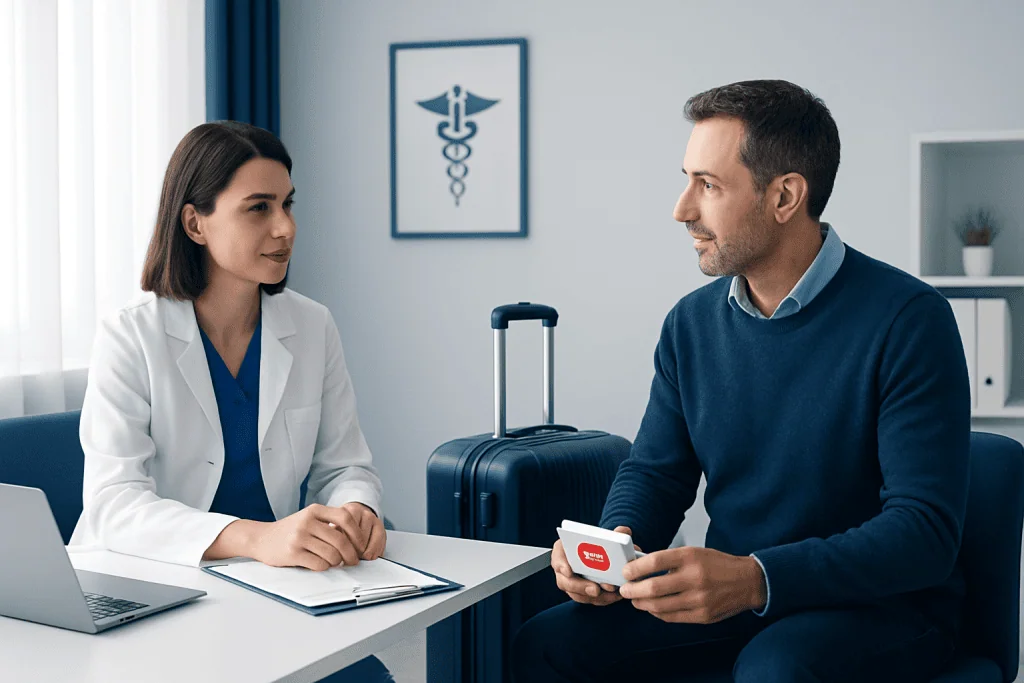
For your journey home, keep medicines, prescriptions, and your discharge summary in your hand luggage, not checked baggage. Delays, lost luggage, and temperature changes in the hold can create problems. Original packaging helps airport security, customs officers, and local healthcare professionals understand what you are carrying.
It is helpful to carry a brief medication summary that includes your full name, the active ingredient names, dose instructions, and the reason each medicine was prescribed. If any medicine is injectable, liquid, refrigerated, or used with a device, ask for practical travel instructions before departure. This is especially important for long-haul flights or complex itineraries.
Once home, do not immediately transfer everything into unmarked pill boxes if you are unfamiliar with the medicines. For the first few days, keeping packaging and labels visible can prevent mix-ups. If you later choose to use a weekly organizer, do it calmly with your paperwork beside you, ideally when you are fully rested.
Watch for timing, side effects, and medicine interactions
The first week after returning home is often when routine problems appear: a missed dose, nausea, uncertainty about food restrictions, or confusion about whether a long-standing medicine should continue. Do not guess. If your discharge instructions are unclear, contact the treating team or your local doctor or pharmacist with the written medicine list in hand.
Be especially careful if you already take regular medicines for blood pressure, diabetes, heart conditions, thyroid disease, pain, sleep, or mental health. New prescriptions can sometimes overlap with your home medicines or change how they should be timed. Also mention any vitamins, herbal products, or supplements, because these can matter too.
Common mild side effects may settle, but you should still note when they started, which medicine was involved, and whether they happen after food or at a certain time of day. Use a small symptom diary during the first week. If symptoms feel severe, unusual, or worrying, seek urgent medical advice according to the instructions you were given at discharge.
Plan your follow-up before problems appear
Good follow-up is part of safe medication use. Before leaving Turkey, make sure you know whether you need a virtual review, a local doctor appointment, blood tests, wound checks, imaging, or a prescription renewal. Put these dates into your calendar right away, along with reminders a day or two in advance.
If you were treated at Acibadem International, ask which questions should go back to the treating team and which ones are better handled by a local doctor after you return. This can save time if you are unsure whether a concern is routine or urgent. The most useful discharge pack usually includes a treatment summary, medicine list, follow-up recommendations, and contact points for the international patient team.
It is also a good idea to share your discharge documents with your local doctor soon after arrival, even if you feel well. That way, if you need support in the first week, they already understand what treatment you had in Turkey and why the medicines were prescribed.
Make the first week realistic, not perfect
You do not need a complicated system; you need one that works when you are tired. Keep water, your medicine schedule, and any measuring device or pill cutter together in one place. If one medicine must be taken at a strict hour, prioritize alarms for that medicine first and build the rest around your normal meals and sleep.
Expect your routine to feel slightly unsettled after travel. Time-zone changes, appetite changes, and fatigue can all affect how confidently you manage new prescriptions. Be gentle with yourself and avoid making major changes to your medicines on your own unless a doctor has told you to do so.
If language has been a concern during your trip, keep both the original documents and any translated summaries together in a folder or phone file. Acibadem International’s interpreter and patient support services can be helpful in making sure instructions are understandable before you leave, which is often the easiest moment to prevent first-week confusion at home.
Step by step
- Collect one complete medicine pack before discharge. Before leaving the hospital, gather your prescription, discharge summary, medicine list, and any special instructions into one folder. Check that each medicine box matches the paperwork and that you understand dose, timing, and duration.
- Pack medicines in hand luggage. Keep all medicines in original packaging and place them in your cabin bag with your documents. This reduces the risk of loss, delays, and confusion at security or customs.
- Convert instructions into your home routine. On your first day home, rewrite the schedule using your own meal and sleep times. If you crossed time zones, confirm when the next dose should be due rather than guessing.
- Set alarms and use a written checklist. Phone reminders are useful, but pair them with a paper or digital checklist that you mark after each dose. This helps prevent taking the same medicine twice if you are tired or distracted.
- Separate regular medicines from 'as needed' medicines. Daily medicines should be listed in your main schedule, while pain relief or other as-needed medicines should be kept on a separate line. That makes it easier to see what is essential and what is optional.
- Monitor how you feel during the first week. Keep a brief note of side effects, missed doses, appetite changes, or questions. If something worries you, this record makes it easier for your treating team, pharmacist, or local doctor to advise you.
- Arrange follow-up early. Book any recommended review appointments, blood tests, or local doctor visits as soon as you are home. Early planning is especially helpful if you may need prescription renewals or medicine substitutions.
Your checklist
- Original medicine packaging packed in hand luggage
- Written prescription and discharge summary
- Full medicine list with active ingredient names
- Clear dosing schedule in your own time zone
- Phone alarms set for each regular medicine
- Enough supply for the first week at home
- Contact details for the hospital or international patient team
- Local doctor or pharmacist informed about your new medicines
Key takeaways
- Organize your medicine plan before leaving Turkey, not after problems start at home.
- Keep medicines in original packaging with your prescription and discharge papers.
- Use a simple first-week routine with alarms, written timings, and clear labels.
- Check how new medicines fit with your usual medicines, supplements, and meals.
- Arrange follow-up early and share your treatment documents with your local doctor.
Frequently asked questions
Should I keep my medicines in my hand luggage when flying home from Turkey?
Yes, in most cases your medicines should travel with you in your hand luggage along with your prescription and discharge documents. This helps if checked baggage is delayed or lost and makes it easier to explain the medicines at security or customs.
What if the medicine name from Turkey looks unfamiliar to my local pharmacist?
This can happen because brand names may differ between countries. Show the pharmacist the active ingredient name from the box or prescription, along with your discharge summary, so they can identify the medicine more accurately.
How do I manage medicine timing if I crossed time zones?
Do not make assumptions, especially for medicines that need consistent timing. Use your discharge instructions as a base and, if needed, confirm with the treating team, your local doctor, or pharmacist when the next dose should be taken in your home time zone.
Can I stop a new medicine early if I feel better after I get home?
You should not stop, reduce, or extend a medicine on your own unless a doctor has advised you to do that. Some medicines are prescribed for a full course or need gradual adjustment, so changing them without advice may affect your recovery.
What should I do if I miss a dose in the first week?
Check the written instructions first, because the safest response depends on the medicine and the timing. If the instructions do not say what to do, contact a pharmacist, your local doctor, or the treating team rather than doubling up without advice.
When should I contact the hospital in Turkey after I return home?
Contact the hospital if your discharge instructions tell you to report certain symptoms, if you are unsure how to take a medicine, or if you cannot obtain an equivalent supply locally. If you were treated through Acibadem International, the international patient support pathway can help direct your question appropriately.
Is it useful to share my Turkish discharge papers with my local doctor even if I feel fine?
Yes, that is a sensible step. It helps your local doctor understand what treatment you had, what medicines were started, and what follow-up may be needed if any issue appears during your first week at home.
Add us as a Preferred Source to see more of our trusted health content across Google Search, AI Overviews and Discover.
More Patient Guides

When Can You Fly After Surgery in Turkey? A Procedure-Specific Guide
When can you fly after surgery in Turkey? Your safe travel date depends on your procedure, recovery, fit-to-fly review and airline rules.
8 min read
At Acibadem, How to Prepare for a Safe Flight Home
Safe flight home after treatment starts with medical clearance, medication planning, and airport support from Turkey or Istanbul.
9 min read
Follow-Up Tests After Treatment in Turkey: When You May Need Imaging or Labs
Follow-up tests after treatment in Turkey may include imaging or labs if your doctor needs to monitor healing, symptoms, or medication effects.
9 min read