

Service Animals and Medical Travel to Turkey
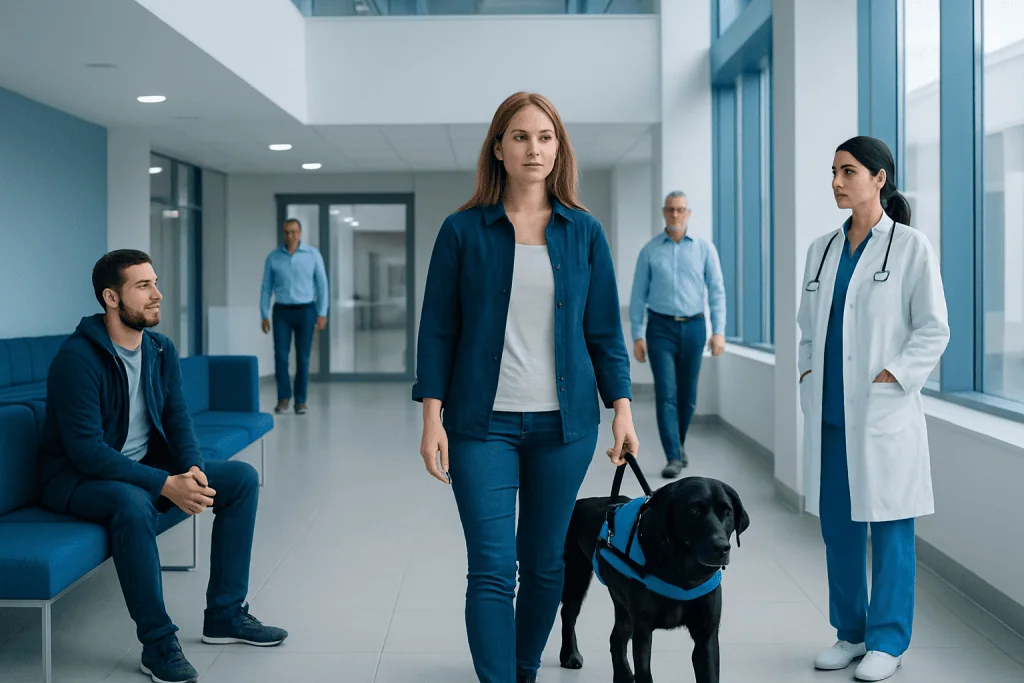
You can bring a trained service animal to Turkey for medical treatment, but each stage has separate rules. The airline, Turkish border authorities, your hotel and the hospital all set their own requirements, and none of them assumes the others have said yes. Start six to eight weeks ahead, confirm everything in writing, and prepare a backup plan for clinical areas your animal cannot enter.
You want your service animal beside you from the departure gate to the hospital waiting room. That is achievable in Turkey, but it is not automatic. Service animals and medical travel to Turkey is a planning problem with five separate gatekeepers: the airline, Turkish border officials, your hotel, your transport and the hospital, and each one answers to different rules.
This guide takes you through each stage in order: flight approval, entry documents, hospital access limits, accommodation, daily logistics, the return journey and the backup plan that holds everything together. It is honest about the parts that cannot be promised in advance, because those are exactly the parts you need to confirm in writing before you fly.
At a glance
- When to start planning: Six to eight weeks before travel; earlier if your animal needs vaccinations, a titre test or government-endorsed certificates
- Core documents: Microchip record, valid rabies vaccination, an official veterinary health certificate issued close to departure, and the airline’s own service animal forms
- Hospital access: Must be agreed in advance; expect restrictions in sterile, procedural, imaging, intensive care and shared-patient areas
- Airline rules: Trained service dogs and emotional support animals are treated differently by most carriers; confirm your specific route in writing
- Backup plan: A companion, a pre-checked temporary care arrangement, or an agreed handover point for the moments your animal cannot enter with you
What to Know Before You Travel with a Service Animal
Service animals and medical travel to Turkey sit at the junction of two systems that rarely talk to each other: aviation and animal-import rules on one side, healthcare and infection-control rules on the other. Your animal may be essential to your safety and independence, and every organisation you deal with will still apply its own policy. Approval from your airline does not bind Turkish border officials. Entry into the country does not bind your hotel. And nothing outside the hospital binds the hospital.
The legal landscape also differs from what you may know at home. Countries such as the United States and the United Kingdom have specific access legislation for assistance dogs in public places. Turkey does not have an identical framework, so access to restaurants, shops, taxis and hotels depends more on the individual business than on an enforceable right. This does not mean access is impossible: it means you confirm rather than assume, and you get confirmations in writing.
Most large international hospitals have patient coordinators who handle non-clinical logistics for people travelling from abroad, and a service animal is exactly the kind of detail that belongs in those conversations before an appointment schedule is fixed. What no coordinator anywhere can do is override infection-control rules inside clinical areas, which is why the backup plan later in this guide matters as much as the paperwork.
Airline and Airport Planning
Start with the airline, because it has the longest lead times. Most carriers distinguish sharply between a trained service dog that performs specific tasks and an emotional support animal. Trained service dogs are often accepted in the cabin free of charge on approved routes; emotional support animals are increasingly treated as ordinary pets, which means carrier rules, size limits and fees apply. Turkish Airlines, the main carrier into Istanbul, accepts trained service dogs in the cabin on many routes subject to advance notice, documentation and route-specific conditions, but its policies distinguish service dogs from emotional support animals, and both the forms and the deadlines change. Treat any summary you read online, including this one, as a prompt to get current written confirmation for your exact flights.
Ask the airline these questions specifically: what forms are required and by what deadline; whether the animal sits at your feet or needs a specific seat assignment; whether a harness, leash or muzzle is required on board; what happens during long delays; and whether the same approval covers every segment of your itinerary. That last point catches people out. If you connect through another country, the transit country may have its own animal requirements even if you never leave the airport, and a codeshare partner operating one leg may apply different rules from the airline that sold you the ticket.
At the airport, ask in advance whether your animal stays with you through security screening, special assistance and boarding, and where animal relief areas are located at departure, transit and arrival airports. Istanbul Airport is large; walking distances between gates can be long, so build in time. For the flight itself, pack absorbent pads, waste bags, a collapsible water bowl, a modest food supply and a familiar mat or blanket in your cabin bag, never in checked luggage. Avoid introducing new food in the days before departure: a stable stomach matters more at 11,000 metres than on the ground.
Turkish Entry Documents and Veterinary Requirements
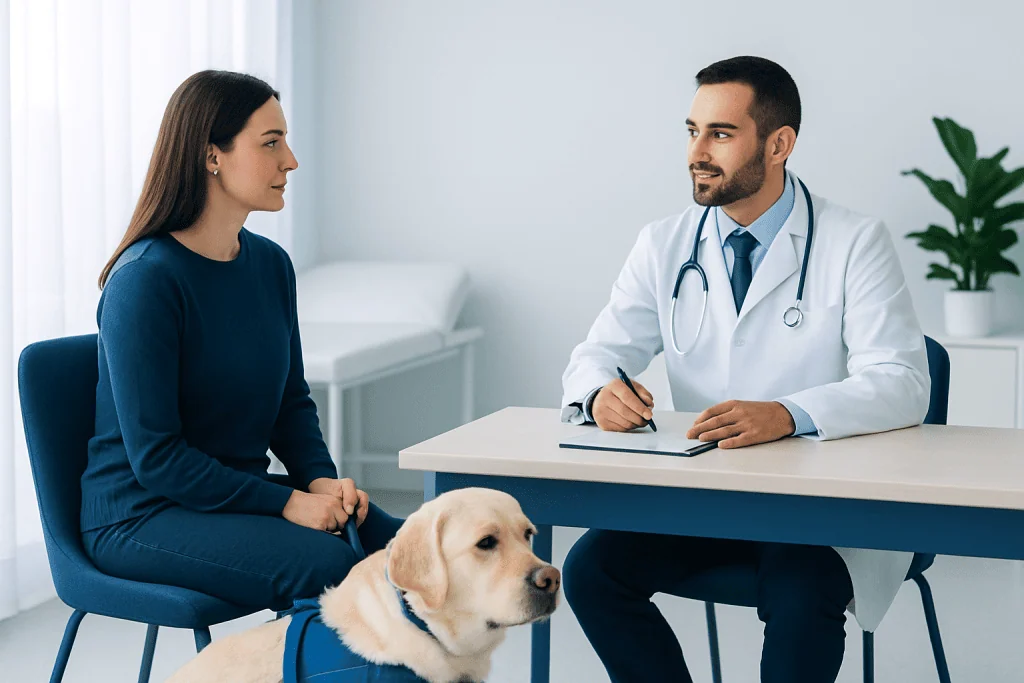
Turkey does not have a separate import category for service animals. At the border, your service dog is an animal entering the country, and the veterinary import rules apply in full. The commonly requested documents are: an ISO-compatible microchip; a rabies vaccination administered after the microchip was implanted and still within its validity period; and an official veterinary health certificate issued shortly before departure and, for many countries, endorsed by your national veterinary authority. Depending on your country of origin, a rabies antibody titre test with a mandatory waiting period may also be required, and a titre test cannot be rushed, which is the single strongest argument for starting this process weeks in advance.
Travellers from the European Union may be able to use an EU pet passport as part of their documentation. Travellers from other countries generally need an export health certificate in the format their government issues for Turkey. Because these requirements are set by regulation and do change, confirm the current version through your country’s official veterinary authority and the nearest Turkish consulate before you book flights, not after.
Two further points deserve honesty. First, Turkey restricts certain dog breeds classified as dangerous under Turkish law; if your service dog is a restricted breed or resembles one, resolve this question with official sources before committing to travel, because breed restrictions are enforced at entry regardless of training or role. Second, Turkey limits how many animals a traveller may bring in, and general prohibited-import rules, covering items such as certain foodstuffs and unapproved medicinal products, apply to what you pack for the animal as well as for yourself. Keep the animal’s food and medication in original, labelled packaging.
Carry printed and digital copies of every animal document alongside your passport and treatment paperwork. You may be asked to show them at check-in, in transit, at Turkish arrival controls and at your hotel. If any document is in a language other than English or Turkish, ask the issuing authority whether a certified translation is advisable. The same discipline you apply to your own records, described in our guide on keeping valuables and medical documents safe during treatment travelapplies to your animal’s file.
Hospital Access and Infection-Control Considerations
Here is the part most guides soften, so read it plainly: no hospital anywhere grants a service animal unlimited access, and hospitals in Turkey are no exception. Even a superbly trained dog will face restrictions in operating theatres, intensive care units, imaging suites, procedure rooms, sterile zones, isolation areas and shared wards. The reasons are legitimate, infection control, equipment safety, and the allergies, phobias or immune vulnerability of other patients. Consultation rooms and general waiting areas are usually the realistic ceiling, and even those need advance agreement.
When access is discussed before your appointment schedule is finalised, describe the animal’s role in practical terms: what tasks it performs, where you expect it to accompany you, and who can care for it during tests, procedures or an inpatient stay. Coordinators can then check facility policy, suggest appointment timing that reduces waiting, and identify suitable waiting areas or handover points. If part of your treatment involves an admission of several days, be explicit about that early: an animal cannot stay on a ward with you, so an inpatient stay makes the care plan in the next sections essential rather than optional.
None of this should feel like rejection. It is the same balance every serious hospital strikes, and a facility that answers your access questions with clear, specific limits is behaving more reliably than one that promises everything. Our guide on how to recognise a reliable hospital in Turkey makes the same point about medical questions: precise answers with stated limits are the good sign.
Hotels, Transport and Daily Life in Istanbul or Turkey
Do not equate “pet-friendly” with “service-animal-ready”. A hotel that accepts pets may still impose size limits, restrict animals from restaurants and lobbies, or charge cleaning fees. Ask in writing: whether service animals are accepted and on what terms; whether any fees apply; where the nearest outdoor relief area is; and whether your room can be placed near a lift or exit if that suits your routine. If you expect long treatment days, a hotel within a short, predictable journey of the hospital is worth more than a nicer room further away.
Arrange transport before you arrive rather than negotiating with taxi drivers at the kerb. If you use hospital transfers or private drivers, state that a service animal will travel with you and give its size and space needs, because individual drivers can and do decline animals. In Istanbul, traffic is genuinely unpredictable, so pad every hospital journey with time for relief breaks and calm transitions. If your treatment falls in high summer or midwinter, weather affects both your animal’s comfort and your own recovery logistics, see how weather can affect recovery plans in Turkey.
Daily life will feel different from home. Restaurants, shops and public transport respond to animals inconsistently, and without assistance-dog access legislation of the kind you may be used to, a refusal is not something you can insist your way past. A simple card in Turkish and English explaining that your animal is a trained service animal helps in most encounters; patience covers the rest. Plan your errands around places you have confirmed rather than testing access when you are tired or between appointments.
Packing and Health Preparation for Your Animal
Pack for your animal with the same rigour you apply to your own medical kit. Bring enough of its regular food for the full stay plus a margin for delays, because switching food abruptly in a new climate invites digestive trouble at the worst possible time. Add the leash, harness and identification tag, a muzzle if any transport provider requires one, grooming items, waste bags, cleaning wipes and the familiar mat or blanket that anchors the animal’s routine. If the animal takes medication, carry it in original packaging with a veterinary prescription or letter: the same logic as keeping your own regular medicines on schedule during medical travel.
Book a veterinary check-up before departure and discuss the whole trip: flight length, climate, walking demands, and your treatment timeline including any days the animal will spend with a companion. Ask whether parasite prevention is advisable for the region and season, and request a short written care summary that a companion or temporary carer could follow without you. Turkey’s climate varies widely: Istanbul is humid in summer and cold and wet in winter, while other regions run hotter and drier, so plan paw protection, shade, water and rest accordingly.
Two adjacent pieces of planning belong here. Check whether your travel policy says anything about the animal at all, most medical travel policies do not cover it, which is worth knowing before something goes wrong; our guide on travel insurance for medical treatment in Turkey explains how to read a policy’s limits. And budget for the animal as a real line item: airline fees where they apply, hotel terms, veterinary certificates, possible temporary care. These are exactly the kind of costs covered in our budget checklist beyond the treatment quote.
Planning the Return Journey
The trip home is not a mirror image of the trip out. Your home country sets its own animal-import rules, and some are stricter than Turkey’s. The United States, for example, applies specific CDC requirements to dogs entering the country, with rules that depend on where the dog has been in the preceding months; the United Kingdom and EU countries have their own certificate, microchip and timing requirements for animals arriving from Turkey. Check your home country’s current rules before you leave, not from a hotel room the week you fly back, because some requirements involve timing windows that must be satisfied in advance.
Also think about what happens if treatment extends your stay. A veterinary health certificate valid for the outbound journey will usually have expired by the time you return, so identify a veterinary clinic near your accommodation that can issue or update documents if needed. Your hotel or patient coordinator can usually point you to one; confirm it early so a schedule change does not become a document crisis.
Creating a Backup Support Plan
A backup plan is not pessimism. With service animals and medical travel to Turkey, treatment schedules shift, tests overrun, and some part of the hospital will be off-limits to your animal no matter how well you prepare. A plan made calmly at home beats a decision improvised in a corridor before a procedure.
The strongest option is a travel companion who understands both your needs and the animal’s routine, and who can take over care during any test, procedure or admission. If travelling with a companion is not possible, ask before you travel what practical options exist near the hospital and hotel, trusted local contacts, short-term animal care, safe waiting arrangements. Availability varies by city and season, so anything you intend to rely on should be verified in advance, not assumed.
Round out the plan with the supports that keep you independent if routines break: written care instructions for the animal that anyone could follow, your veterinarian’s contact details, a local veterinary clinic’s details, interpreter arrangements, and a clear emergency contact list. Keep the animal’s file with your own documents so that whoever helps you has everything in one place.
Step by step
- Raise the animal early with the hospital. Before appointments are scheduled, make sure the international patient team knows a service animal is travelling with you. Share its size, role, training status and where you expect it to accompany you.
- Confirm airline rules in writing. Contact the airline before booking if possible. Get every required form and its deadline, and check each carrier and transit country on a connecting itinerary separately.
- Prepare veterinary and entry documents. Verify Turkey’s current import requirements through official channels. Arrange the microchip record, rabies vaccination proof, any titre test, the endorsed health certificate and translations if advisable.
- Check breed restrictions. If your dog is, or resembles, a breed restricted under Turkish law, resolve this with official sources before booking anything else.
- Agree hospital access limits in advance. Ask specifically where the animal may accompany you and where a companion or handover plan is needed, especially for imaging, procedures, inpatient stays and sterile areas.
- Book accommodation and transport that have said yes in writing. Confirm the hotel’s service animal terms, the nearest relief area, and tell every transfer provider the animal’s size before travel days.
- Pack a dedicated animal travel kit. Food with a delay margin, water bowl, waste bags, wipes, documents, medication in original packaging and comfort items, all in cabin baggage.
- Write the backup and return plan. Decide who cares for the animal when access is restricted, identify a local veterinary clinic, and check your home country’s re-entry rules for animals before departure.
Your checklist
- Airline service animal approval and completed forms, in writing
- Microchip number and identification details
- Rabies vaccination certificate, titre test result if required, and endorsed veterinary health certificate
- Breed restriction question resolved through official sources
- Printed and digital copies of all animal documents
- Written hospital guidance on where the animal may and may not go
- Hotel acceptance confirmed in writing, with relief area identified
- Every transport provider informed about the animal in advance
- Food, medication, water bowl, waste bags and cleaning supplies in cabin baggage
- Turkish and English explanation card for daily encounters
- Backup caregiver or temporary care plan, verified before travel
- Home-country re-entry requirements checked and timed
Key takeaways
- Start six to eight weeks out: airline forms, endorsed certificates and any titre test all carry deadlines that cannot be compressed.
- Turkey has no separate import category for service animals; standard veterinary entry rules and breed restrictions apply in full.
- Hospital access will be limited in clinical and sterile areas everywhere; agree the boundaries before your schedule is fixed, not on the day.
- Airlines treat trained service dogs and emotional support animals differently, confirm your exact route in writing rather than relying on summaries.
- A companion or verified backup care arrangement is what keeps a schedule change from becoming a crisis, and your home country’s re-entry rules deserve the same attention as Turkey’s.
Frequently asked questions
Does Turkish Airlines accept service dogs?
Turkish Airlines accepts trained service dogs in the cabin on many routes, subject to advance notice, documentation and route-specific conditions. Emotional support animals are treated under different, more restrictive rules. Because forms, deadlines and route conditions change, request written confirmation for your specific flights directly from the airline before you book, and check any connecting carrier separately.
What documents do I need to travel to Turkey with my dog?
Commonly required items are an ISO-compatible microchip, a valid rabies vaccination given after the microchip was implanted, and an official veterinary health certificate issued close to departure and endorsed where your country requires it. Depending on your country of origin, a rabies antibody titre test with a waiting period may also apply. Confirm current requirements through your national veterinary authority and a Turkish consulate before booking.
Can my service animal enter the hospital with me in Turkey?
Partially, at best. Access is normally possible in some general and consultation areas by prior agreement, but restricted in sterile zones, operating theatres, intensive care, imaging areas, procedure rooms and shared wards for infection-control and patient-safety reasons. Ask for the specific boundaries in writing before your appointment schedule is finalised, and plan care for the animal during any restricted portion of your visit.
Is an emotional support animal treated the same as a service animal?
Usually not. Airlines, hotels and hospitals commonly distinguish between a trained service animal that performs specific tasks and an emotional support animal, which is increasingly handled under ordinary pet rules. Never assume that a policy written for trained service dogs extends to your situation; confirm each organisation’s rules for your category of animal directly.
What is not allowed to bring into Turkey?
Relevant to animal travel: Turkey restricts certain dog breeds classified as dangerous under Turkish law, limits the number of animals per traveller, and applies general import prohibitions that can affect foodstuffs and unapproved medicinal products in your luggage. Keep animal food and medication in original labelled packaging, and check current customs and veterinary rules through official sources before you pack.
Is it a good idea to travel to Turkey for medical reasons?
That depends on your condition, your treatment plan and how well the logistics around it are arranged: there is no universal answer. Turkey receives large numbers of international patients and has well-established hospital infrastructure for them, but a sound decision rests on verified information about the specific hospital, a realistic view of travel demands, and honest conversations with your own doctors about timing and fitness to fly.
Should I travel with a companion if I have a service animal?
If you can, yes. A companion who knows both your needs and the animal’s routine solves the hardest problem in this whole plan: what happens to the animal during tests, procedures or an inpatient stay. If travelling alone is unavoidable, verify a temporary care arrangement near the hospital or hotel before departure rather than searching for one under pressure.
What should I do if my airline refuses cabin access?
Ask for the reason and the applicable policy in writing. Sometimes the fix is an additional form or a different fare or route; sometimes another carrier is the practical answer. What you should not do is arrive at the airport without confirmed approval: a refusal at check-in can unravel a medical schedule that took months to arrange.
Add us as a Preferred Source to see more of our trusted health content across Google Search, AI Overviews and Discover.

Update history
- PublishedJune 22, 2026
- Medical review approvedSeptember 13, 2026
- Last content updateSeptember 12, 2026
References1
More Patient Guides

When a Hospital Stay in Turkey Becomes Longer Than Planned: What to Arrange
If your hospital stay in Turkey is longer than planned, arrange medical updates, accommodation, travel changes, insurance and support for your companion.

Waiting for Test Results in Turkey: How to Use Time Between Appointments
Waiting for test results in Turkey is easier with a clear plan for appointments, rest, records, questions and support in Istanbul.

Unexpected ICU Stay in Turkey: What Patients and Families Should Expect
Unexpected ICU stay in Turkey: learn what patients and families can expect, from communication and visiting to care updates and travel support.

How to Manage Special Diets During Medical Travel in Turkey
Special diets during medical travel in Turkey are easier to manage when you share your needs early, confirm meals and carry safe…