

Toiletries and Personal Care Supplies to Buy in Turkey

You can buy almost all everyday toiletries and personal care supplies in Turkey: shampoo, shower gel, toothpaste, razors, wipes, cotton pads and basic skincare are stocked in pharmacies, supermarkets and malls. Pack prescription creams, medicated shampoos, contact lens supplies and allergy-safe products from home, and ask your care team before applying anything near a treated area.
Wondering whether to squeeze another shampoo bottle into an already full suitcase? In most cases, you do not need to. Everyday toiletries and personal care supplies are easy to buy in Turkey, particularly in Istanbul and other large cities, and buying locally often makes more sense than paying for extra luggage weight.
This guide walks you through what to pack, what to buy after you arrive, where to shop, what genuinely differs from home, and when a product decision should go through your care team rather than a shop shelf. It is written for people travelling to Turkey for treatment, but the shopping advice holds for any visitor.
At a glance
- Best items to buy locally: Shampoo, conditioner, shower gel, toothpaste, tissues, wet wipes, cotton pads, razors, sanitary products and basic skincare
- Best items to pack from home: Prescription creams, medicated shampoos, contact lens supplies, allergy-safe cosmetics and anything your skin depends on
- Where to shop: Pharmacies (look for the red “E” sign), supermarkets, personal care chains, shopping malls and hospital-area convenience shops
- Helpful Turkish word: Eczane means pharmacy; pharmacists are a practical first stop for many personal care questions
- What to be careful with: Counterfeit-looking cosmetics from unofficial sellers, and any product used on or near a treated area without your team’s approval
What toiletries and personal care supplies to buy in Turkey after you arrive
Turkey has a large domestic personal care industry and a well-developed retail network, so the practical answer to which toiletries and personal care supplies to buy in Turkey is: nearly all of the standard ones. Shampoo, conditioner, shower gel, bar soap, deodorant, toothpaste, toothbrushes, dental floss, mouthwash, tissues, wet wipes, cotton pads, cotton buds, razors, shaving foam, nail files, hand cream and basic moisturisers are stocked in pharmacies, supermarkets and neighbourhood shops across every major city.
Both international and Turkish brands sit on the same shelves. The international brand you use at home may appear under a slightly different name, scent or formula, because manufacturers adjust products by region. For anything routine, washing, brushing, shaving, this rarely matters. For anything your skin genuinely depends on, it can, which is why the next section exists.
Sanitary pads, tampons, panty liners and incontinence products are widely sold in supermarkets and pharmacies. Pads and liners are easy to find everywhere; tampon selection is narrower in small shops than in large supermarkets and pharmacies, so if you use a specific type, bring a starter supply and top up once you see what local shelves carry.
If you are travelling for treatment, buying bulky, heavy or easily replaceable items locally frees luggage space for the things that actually need to travel with you: prescription medication in original packaging, medical reports, comfortable clothing and any device or supply your team has asked you to bring. There is a separate guide on how to pack medical devices and supplies for treatment travel to Turkey if that applies to you.
What to bring from home instead
Some items are worth their suitcase space. Pack from home anything that is prescribed, medicated or chosen around a known sensitivity: prescription creams and ointments, medicated shampoos, contact lens solution and lenses, allergy-safe or fragrance-free cosmetics, and any product a dermatologist or other clinician has specifically recommended. Bring enough for the full trip plus a small buffer, because an equivalent product may exist locally but an identical one may not.
Keep these items in their original packaging. The label matters twice: it shows airport security what the product is, and it lets a pharmacist, nurse or interpreter read the actual ingredients if a question comes up during your stay. A photo of the ingredient list on your phone is a useful backup if the packaging is bulky.
Two practical constraints shape what you carry. Airline liquid rules limit what goes in hand luggage, so put full-size bottles in checked baggage and keep only travel sizes with you. And heat matters: some creams and solutions do not tolerate a hot car boot or a long wait on airport tarmac, so anything temperature-sensitive belongs in your cabin bag where you can keep an eye on it.
If your routine includes items tied to modesty, religious practice or personal grooming preferences, it helps to think those through before travel as well: the guide on planning for prayer, modesty and cultural needs during care in Turkey covers that side in more detail.
Where to shop in Turkey
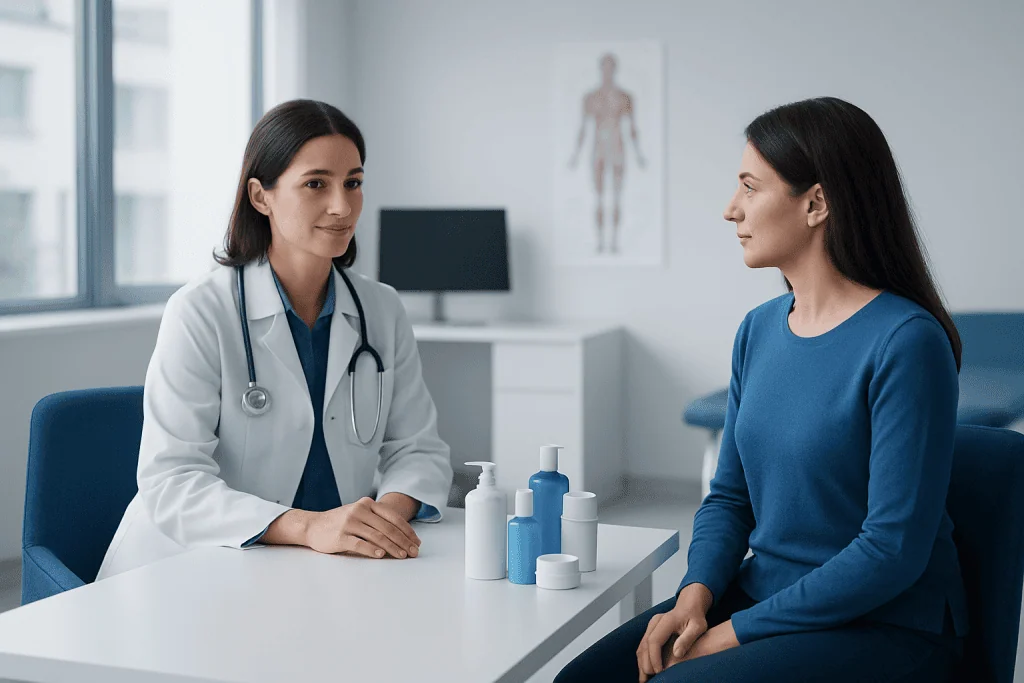
The single most useful word is eczanepharmacy. Turkish pharmacies are marked with a red “E” sign and are dense in city neighbourhoods; you are rarely more than a short walk from one in central Istanbul. Pharmacists handle far more than prescriptions: they stock oral care, skin-friendly cleansers and moisturisers, simple first-aid supplies, sun protection and dermocosmetic skincare lines. For anything that touches on your health, a rash, a sore mouth, a product near a healing area, a pharmacy is a better first stop than a supermarket aisle, and you should mention your condition and current medicines so the advice fits your situation.
For volume shopping, supermarkets and national personal care chains are the practical choice: this is where you buy the big shampoo bottle, the multipack of tissues, the box of cotton pads. Larger malls combine beauty stores, pharmacies, supermarkets and cafés under one roof, which makes errands efficient if you are travelling with a companion or working around appointment times. Hotel districts and hospital neighbourhoods almost always have small convenience stores for basics, soap, toothpaste, bottled water, wipes.
Pharmacies work a duty rota, so in any given district one pharmacy (the nöbetçi eczane) stays open overnight and on Sundays; the rota is posted in pharmacy windows. That is worth knowing if you arrive late or run out of something on a public holiday.
If language is the obstacle, show a photo of the product you need or use a translation app on the ingredient list. Hotel reception staff and hospital concierge desks are used to pointing international visitors towards the nearest pharmacy or market.
Turkish skincare and beauty products worth knowing about
People often ask what skincare and beauty products are worth buying in Turkey specifically. A few categories genuinely stand out. Turkish pharmacies carry the same European dermocosmetic skincare lines found in French and German pharmacies, cleansers, moisturisers, sunscreens and repair creams built around sensitive skin, alongside Turkish brands in the same style. Traditional items are popular souvenirs and daily-use products: olive oil and laurel soaps, rosewater (gül suyu) used as a facial toner, and hamam accessories such as the kese exfoliating mitt and peştemal towels. Turkish colognes (kolonya), usually lemon-scented, are a cultural staple offered to guests and sold everywhere.
Two honest caveats. First, “natural” does not mean “gentle”: rosewater, essential-oil soaps and cologne are fragranced or alcohol-based, and an exfoliating mitt is exactly what it sounds like. None of these belong anywhere near an incision, a dressing, irritated skin or a treated area unless your clinical team has said otherwise. Second, quality varies with the seller. Pharmacies, supermarkets and branded stores sell regulated stock; a bazaar stall selling suspiciously cheap “brand-name” perfume or cosmetics may not. Buy skincare and cosmetics from proper retail channels and treat tourist-market versions as decorative rather than dependable.
What to be careful about when buying personal care products
A few sensible precautions cover most problems. Buy cosmetics, skincare and anything that touches your eyes or broken skin from pharmacies, supermarkets or official brand stores, not from street sellers or unlabelled market stalls, where counterfeit or expired stock is a real possibility. Check that packaging is sealed and that the label lists ingredients, genuine products sold in Turkey carry proper labelling.
Be cautious with products making strong claims: herbal creams promising to heal, lighten or repair skin are not a substitute for clinical advice, and anything marketed as treating a medical condition should go through your doctor, not your shopping basket. The same applies to strong cosmetic actives, acids, retinoids, bleaching agents, during a treatment period; whether and when to use them is a question for your team, not a shop assistant.
On cost, without quoting figures: Turkish-made basics and local brands are generally the economical choice, while imported international brands sit at the higher end of the shelf, much as they do anywhere. Pharmacy dermocosmetics cost more than supermarket equivalents because of what they are, not where you are. What you actually pay depends on brand origin, product category, shop type and neighbourhood: a mall beauty store and a district supermarket price the same category differently. If budget matters, the supermarket own-label and Turkish-brand shelves are where to look.
Personal care during a hospital stay
For a hospital stay, think gentle and practical rather than a full routine. A small pouch with a toothbrush, toothpaste, lip balm, hairbrush or comb, deodorant, facial wipes, a simple moisturiser, a glasses case, a contact lens case if lenses are permitted for your procedure, and hair ties covers most of what makes a hospital day more comfortable. Skip strong perfumes and heavily scented products; shared clinical spaces are sensitive environments for other patients.
Hospitals provide the clinical items your treatment requires. Your personal comfort products are your own choice, with one firm boundary. If you have an incision, a dressing, an IV site, a marked radiotherapy area, an injection site or irritated skin, do not apply creams, oils, exfoliants, perfumes, makeup or adhesive products there unless your clinical team has confirmed it is safe. Healing skin and cosmetic products interact unpredictably, and the safe answer is specific to your treatment, so the question belongs to your nurse or doctor.
A workable rhythm: bring travel sizes for the first 24–48 hours, then buy larger bottles once you know your hospital and hotel routine. Before discharge, it is also worth reading about aftercare supplies to buy in Turkey before you leave the hospital, because recovery items are a different shopping list from comfort items, and some of them your team will specify precisely.
Skin, hair and hygiene: choosing safely
Flights, hospital air-conditioning and stress dry skin out. For most trips, a mild cleanser, a plain moisturiser and lip balm do more good than a bag of active skincare. If you are having treatment, surgery, dermatology care, oncology care, dental procedures, ask your team whether products containing acids, retinoids, strong fragrance, exfoliants or bleaching ingredients should sit out the treatment period. Do not guess; the answer depends on your treatment and its timing.
For hair, Turkey stocks a wide range of shampoos, conditioners and styling products, including sulfate-free, anti-dandruff and colour-safe lines, though exact formulas vary from what you know at home. If your scalp is sensitive or your treatment affects skin or hair, bring your usual product or ask a pharmacist to point you to a gentle equivalent.
For hygiene, wet wipes, hand sanitiser, tissues and disposable masks are everywhere; choose unscented or sensitive-skin versions if you react easily. If your team has given you specific infection-prevention or wound-care instructions, those override general travel habits: the guide on managing wound care and dressings after discharge in Turkey explains how that side of things is organised.
Packing lighter without feeling unprepared
The balanced approach: pack what is medically important or personally irreplaceable, buy the standard toiletries and personal care supplies in Turkey once you arrive. Your suitcase stays manageable, you avoid liquid spills over your documents, and you keep room for comfortable shoes, loose post-treatment clothing and anything your care team has specifically requested.
Before departure, split one list into two: “must bring” and “can buy in Turkey.” Prescription items, sensitive-skin products, lenses and solutions, chargers, travel documents and medical reports go on the first. Shampoo, body wash, cotton pads, tissues and replacement toothbrushes go on the second. If you will be in Turkey for several weeks, resist buying everything on day one, start with essentials, then add items as your routine between hospital, hotel and recovery accommodation becomes clear. And before you fly home, there is a separate question of which aftercare supplies to buy before leaving Turkey, since some recovery items are easier to source here than to hunt down after landing.
Step by step
- Make a personal care inventory before you travel. Write down what you use every morning, evening and after bathing. Mark anything prescription, medicated, allergy-safe or hard to replace as a must-pack item; everything else is a candidate for local shelves.
- Pack a 48-hour essentials pouch. Enough basic toiletries for arrival day, your first hospital visit and one unexpected delay: toothbrush, toothpaste, deodorant, lip balm, facial wipes, moisturiser and any hygiene items you need immediately.
- Bring specialty items in original packaging. Prescription creams, medicated products, lens supplies and allergy-safe products stay in their labelled containers so pharmacists and your care team can read exactly what you use.
- Ask before applying anything near a treatment area. No creams, oils, perfumes, makeup, exfoliants or adhesive products on incisions, dressings or irritated skin without your team’s confirmation. The safe answer is specific to your treatment.
- Use pharmacies for advice-sensitive purchases. Skin irritation, oral discomfort, wound-adjacent supplies, start at an eczane and explain your condition and medicines, not at a general store. Bring photos of your usual products if language is a barrier.
- Buy bulky items locally after settling in. Once you know your hotel, schedule and bathroom setup, buy the large bottles and multipacks nearby instead of hauling them across a border.
- Keep the packaging if a product causes a reaction. Redness, itching or swelling after a new product: stop using it, keep the package or photograph the label, and show it to your medical team or pharmacist so they can advise properly.
Your checklist
- Toothbrush, toothpaste and dental floss
- Deodorant, lip balm and a gentle, unscented moisturiser
- Travel-size shampoo, conditioner and shower gel for the first days
- Prescription creams, medicated shampoos or specialty skincare from home, in original packaging
- Contact lenses, glasses, lens case and your preferred solution if needed
- Hairbrush or comb, hair ties and simple grooming tools
- Tissues, wet wipes and hand sanitiser (sensitive-skin versions if you react easily)
- Menstrual or incontinence products you prefer, plus a small backup supply
- Photos of your usual products and their ingredient lists, saved on your phone
- A small pouch of hospital-day essentials, kept fragrance-light
Key takeaways
- Most standard toiletries and personal care supplies are easy to buy in Turkey; local availability is a reason to pack lighter, not a risk.
- Pack prescription, medicated and allergy-safe products from home in original packaging, with a buffer beyond your planned stay.
- Pharmacies (eczane) are the right stop for advice-sensitive items; supermarkets and malls cover everything routine.
- Buy cosmetics from proper retail channels, not street stalls, and treat strong-claim herbal products with scepticism.
- Nothing goes on or near an incision, dressing or treated area without your clinical team’s approval: that rule outranks every shopping tip here.
Frequently asked questions
What are some good skincare products to buy in Turkey?
Turkish pharmacies stock the same European dermocosmetic lines found in French and German pharmacies, sensitive-skin cleansers, moisturisers and sunscreens, plus Turkish brands in the same style. Traditional items such as rosewater, olive oil and laurel soaps and hamam exfoliating mitts are popular, but they are fragranced or abrasive, so keep them away from healing or treated skin unless your team approves.
What should I beware of when buying personal care products in Turkey?
Buy from pharmacies, supermarkets and official brand stores rather than street or bazaar sellers, where counterfeit or expired cosmetics circulate. Check for sealed packaging and a readable ingredient list. Be sceptical of herbal or “miracle” products claiming to treat medical conditions, and never apply new products near a treatment area without asking your clinical team first.
Are toiletries cheap to buy in Turkey?
Turkish-made basics and local brands are generally the economical end of the shelf, while imported international brands and pharmacy dermocosmetics sit higher, much as anywhere. What you pay depends on brand origin, product category, shop type and neighbourhood. Supermarket own-label and local-brand shelves are the place to look if budget matters.
Can I buy familiar international toiletries in Turkey?
Yes, many international brands are sold in Turkish pharmacies, supermarkets and personal care stores, especially in Istanbul. Names, scents, formulas and packaging may differ slightly from your home market. If a product is essential for sensitive skin or medical reasons, bring your own supply rather than relying on finding the identical version.
Should I pack shampoo and shower gel or buy them in Turkey?
Pack travel sizes for the first day or two, then buy full-size bottles locally. Shampoo, conditioner, shower gel and soap are among the easiest things to find and among the heaviest to carry, so leaving them out frees luggage space for medical documents, prescription items and post-treatment clothing.
Can I use my normal skincare after surgery or treatment?
Ask your clinical team first, especially near incisions, dressings, injection sites, irritated skin or treated areas. Exfoliants, retinoids, acids, perfumes and oils may not suit certain stages of healing, and the safe answer depends on your specific treatment and timing. Bringing the actual product to an appointment makes the question easy to settle.
Are fragrance-free or sensitive-skin products available in Turkey?
Often, yes, particularly in pharmacies and larger beauty stores, where dermocosmetic ranges are built around sensitive skin. Availability varies by location and brand, so bring your own if you have severe allergies or a history of reactions, and keep a photo of the ingredient list so a pharmacist can suggest a close alternative.
Can I shop for these things if I do not speak Turkish?
Yes. Staff in central pharmacies and malls often understand some English, translation apps handle product names well, and showing a photo of the item or its ingredient list usually solves the rest. Hotel reception and hospital concierge desks can point you to the nearest pharmacy or market.
Add us as a Preferred Source to see more of our trusted health content across Google Search, AI Overviews and Discover.

Update history
- PublishedJune 22, 2026
- Medical review approvedSeptember 13, 2026
- Last content updateSeptember 12, 2026
References2
- CDC Travelers' Health: Pack Smart wwwnc.cdc.gov
- UK Government Foreign Travel Advice: Turkey gov.uk
More Patient Guides

When a Hospital Stay in Turkey Becomes Longer Than Planned: What to Arrange
If your hospital stay in Turkey is longer than planned, arrange medical updates, accommodation, travel changes, insurance and support for your companion.

Waiting for Test Results in Turkey: How to Use Time Between Appointments
Waiting for test results in Turkey is easier with a clear plan for appointments, rest, records, questions and support in Istanbul.

Unexpected ICU Stay in Turkey: What Patients and Families Should Expect
Unexpected ICU stay in Turkey: learn what patients and families can expect, from communication and visiting to care updates and travel support.

How to Manage Special Diets During Medical Travel in Turkey
Special diets during medical travel in Turkey are easier to manage when you share your needs early, confirm meals and carry safe…