

Weekend Hospital Services in Turkey: What Changes on Saturdays and Sundays

Turkish hospitals never close at weekends, but they change rhythm. Emergency departments, inpatient nursing and urgent diagnostics run around the clock on Saturdays and Sundays. Routine outpatient clinics, elective tests and administrative offices work reduced schedules, and Sundays are quieter than Saturdays. If your trip depends on weekend appointments, confirm each step with your coordinator before Friday rather than assuming weekday availability.
Landing on a Friday and hoping to fit consultations, scans and discharge paperwork into two days? That plan can work, but only if you know what actually runs on a Saturday and a Sunday. Turkish hospitals do not close at weekends. They change rhythm. Urgent and inpatient care continue at full pace, while planned activity slows down. This guide explains what stays open, what shrinks, and how to build a weekend timetable that holds.
At a glance
- Emergency care: Runs 24 hours a day, every day, including weekends and national holidays
- Inpatient care: Nursing, medication rounds, meals and duty-doctor cover continue around the clock
- Outpatient clinics: Reduced on Saturdays, minimal on Sundays; individual doctor schedules vary
- Diagnostics: Urgent imaging and laboratory work continue; elective tests and specialist reporting often wait for Monday
- Administration: Billing, insurance approvals and translated reports can take longer at weekends
- Best planning step: Get a written weekend schedule from your coordinator before Friday afternoon
What changes with weekend hospital services in Turkey
Weekend hospital services in Turkey are built around one principle: nothing urgent stops. If you are already admitted, your nursing care, medication rounds, monitoring, wound care and meals continue on Saturday and Sunday exactly as they do midweek. Emergency departments stay open day and night. Duty doctors cover the wards, and on-call specialists can be brought in when a clinical decision cannot wait.
What does change is the planned, non-urgent layer of the hospital. Outpatient clinic lists are lighter on Saturdays and often minimal on Sundays. Some doctors do not hold regular weekend consultations. Administrative offices, billing, insurance liaison, medical records, report translation, typically work shorter hours or reopen on Monday. Elective blood tests, scheduled imaging and pre-operative assessments may still be possible, but they need more coordination than a weekday slot.
The honest picture of weekend hospital services in Turkey is therefore two-speed: full speed for anything urgent or inpatient, reduced speed for anything elective or administrative. For an international patient on a short trip, the difference matters most when several steps depend on each other: a scan, a specialist review of that scan, and a decision built on the review. Each step may be possible at the weekend individually; chaining them together usually needs advance planning. The exact rhythm also varies by city, campus and department, so treat every weekend schedule as hospital-specific rather than assuming a national pattern.
Emergency and urgent care: what stays available 24/7
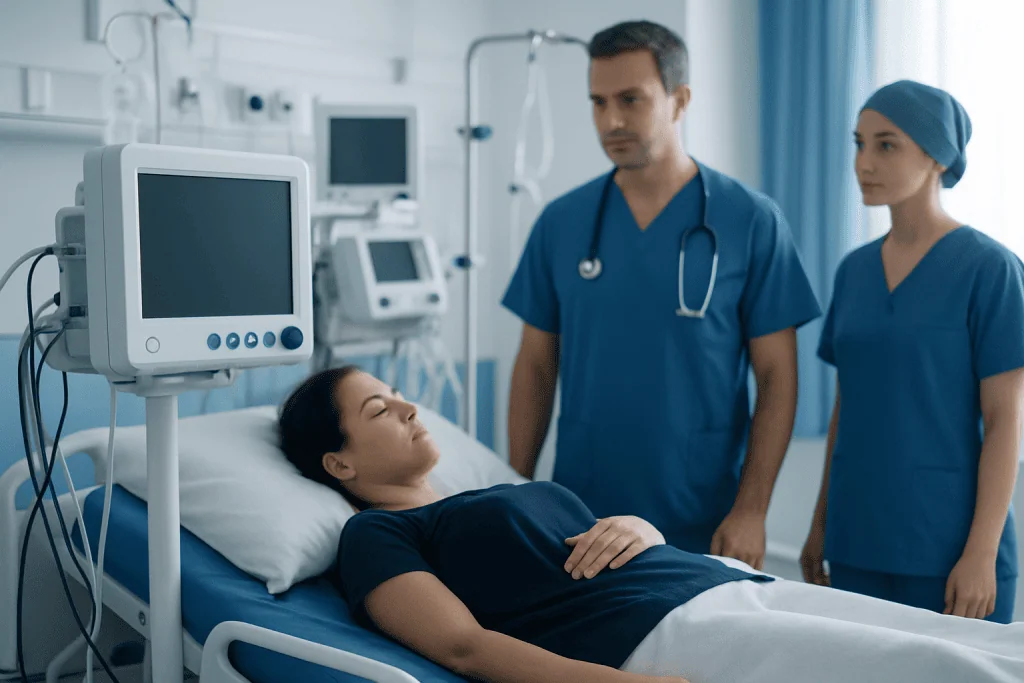
Emergency departments in major Turkish hospitals operate 24 hours a day, including Saturdays, Sundays and public holidays. The national emergency number in Turkey is 112, which covers ambulance dispatch across the country. Emergency teams assess patients on arrival, order urgent laboratory tests and imaging when needed, and can call in on-call specialists out of hours. If you want to understand how ambulance transport works during a medical trip, the guide to using ambulance services in Turkey during medical travel covers the practical details.
A point that reassures many international patients: even if your treating doctor is not physically in the building at the weekend, hospitals run duty-doctor and on-call systems so that urgent clinical decisions can still be escalated to the right specialist. Weekend emergency care is not a lesser version of weekday care; it is the part of the hospital that is deliberately staffed to run at the same intensity every day of the year.
What you can do in advance is purely practical. Keep your passport, hospital file number if you have one, medication list, allergy information and insurance documents together, in a folder or as photos on your phone. Emergency teams work faster when they can see your history at a glance, and hotel front desks in Turkey are used to helping guests arrange transport to a hospital.
Can foreigners use hospitals in Turkey, and who pays?
Yes. Foreigners can be treated in Turkish hospitals, at the weekend or on any other day. Private hospitals in Turkey routinely register international patients using a passport, and large groups run dedicated international patient departments precisely because treating visitors is a normal part of their work. You do not need Turkish residency or a Turkish insurance number to be seen.
Hospital treatment in Turkey is not automatically free for visitors. Turkey’s public health insurance system covers people enrolled in it, primarily citizens and registered residents. If you are visiting from abroad, you will normally pay for your care directly or through your travel or health insurance. What a private hospital charges depends on the type of care, the department involved, the tests and materials used, and the length of any admission, which is why quotes are prepared case by case rather than from a fixed menu. If your plan changes mid-treatment, the bill can change with it; the guide to unexpected changes in your bill in Turkey explains which extra items commonly appear and how to ask about them.
One weekend-specific caution: insurance approval desks and billing offices often work reduced hours on Saturday and Sunday. Emergency care never waits for paperwork, but pre-approval for a planned procedure, a detailed invoice for your insurer, or a payment plan discussion may realistically belong to Friday or Monday. Building that into your timetable prevents a frustrating Sunday spent waiting for an office that opens the next morning.
Outpatient appointments, second opinions and consultations

Saturday outpatient clinics exist in many large Turkish hospitals, but they are thinner than weekday lists and depend entirely on individual doctors’ schedules. Sunday routine consultations are uncommon; Sunday activity is usually reserved for urgent reviews, inpatients and follow-ups that cannot wait. If a specific specialist is the reason for your trip, their Saturday availability is a fact to confirm, not an assumption to make.
Multidisciplinary reviews are the step most likely to break a weekend plan. A case that needs input from two or three specialists, a radiology review, pathology slides or records from your home country can rarely be assembled between Saturday morning and Sunday evening. A Friday arrival with the goal of completing all assessments by Sunday is usually too tight unless every step has been confirmed individually in advance.
Timetables also shift for clinical reasons, not just calendar ones. A test result can prompt an extra consultation; a doctor can be called to an emergency; a review can move by a day. Weekend hospital services in Turkey handle these shifts the same way weekday services do, but with fewer alternative slots to move into. The guide on what to do if your treatment schedule changes explains how to respond calmly when an appointment moves, and it applies doubly at weekends.
Tests, imaging, pharmacies and laboratory services
Hospital laboratories and imaging departments support emergency and inpatient needs throughout the weekend. Urgent blood tests, CT scans, X-rays and ultrasound are performed whenever they are clinically necessary, on any day. The weekend limitation applies to elective and highly specialised investigations: tests that need fasting preparation, contrast approval, a specific supervising specialist or a dedicated reporting team may have few weekend slots or none at all.
There is also a distinction that catches many travellers out: a test being performed at the weekend does not mean it will be reported at the weekend. Routine results often come back quickly, but specialist reporting, detailed imaging reads, pathology, some genetic and hormonal panels, may be finalised on the next working day. If your discharge, your next appointment or your flight depends on a result, ask two questions: can the test be done this weekend, and when will the report exist?
Hospital pharmacies continue to supply inpatients and urgent prescriptions across the weekend, but outpatient dispensing can vary by site and hour. If your discharge falls near a weekend, raise the medication question early: what you will take home, written instructions in a language you read, the generic names of each medicine for customs and your home doctor, and whether anything must come from an external pharmacy before it closes for the evening.
Discharge planning, payments and paperwork at the weekend
Weekend discharge is often possible, but it is a slower machine than a weekday discharge because several teams must finish their part in sequence. Your doctor approves the discharge, nursing prepares instructions, pharmacy assembles take-home medication, and administration completes billing, insurance and report steps. On a Saturday or Sunday, each of those teams may be running with fewer people, so each handover takes a little longer.
If you hope to leave on a Saturday or Sunday, say so clearly by Friday morning at the latest. Ask exactly what must happen first: final blood tests, drain or stitch review, medication reconciliation, invoice review, insurance approval, fitness-to-travel advice, sick-leave documents, translated medical reports. Each item you surface on Friday is one less item discovered at noon on Saturday.
Then look at the travel side. Airport transfers, hotel checkout times and flight departures do not flex the way a hospital timetable does, and a discharge that slips by three hours can collapse a same-day flight plan. Avoid booking a tight international departure immediately after a planned weekend discharge unless your care team has confirmed it is realistic. The guide to coordinating hotel, hospital and flight changes during treatment in Turkey covers how to keep all three moving together when one of them shifts.
Communication, interpreters and companion support
Clear communication matters more at weekends precisely because schedules are leaner and there are fewer chances to catch a misunderstanding the same day. If English or Turkish is not your preferred language, confirm interpreter arrangements in advance for the conversations that carry weight: consent discussions, discharge teaching, medication instructions and any change to your plan. Interpreter rosters vary by language, hospital and hour, and weekend cover is thinner for less common languages. The guide to hospital interpreter services in Turkey explains how the arrangements work and what to request ahead of time.
Before Friday afternoon, sort your contacts into two channels: one number for urgent medical concerns and one for logistics, schedules, transfers, paperwork. Hospitals answer both at weekends, but knowing which channel is which saves time and prevents a logistics question from sitting in a clinical queue, or the reverse. Save the hospital switchboard, your international patient contact and any ward number you are given.
A companion earns their place on a weekend trip. Ask them to keep a running list of questions, note medication times, hold the coordinator’s number, and run the final check before you leave the hospital: passport, test results, receipts, prescriptions, discharge documents. If you are staying in overnight, weekend life on the ward continues normally, including meals, which are described in the guide to meal services during a hospital stay in Turkey.
Step by step
- Confirm the weekend schedule before Friday afternoon. Ask your coordinator which appointments, tests, doctor visits and administrative steps are planned for Saturday or Sunday. Request approximate times in writing and the best contact number in case something moves.
- Separate urgent needs from routine requests. Emergency departments and duty doctors handle urgent problems around the clock. For routine questions, refills of paperwork or non-urgent requests, ask whether the answer can safely wait until the next working day, often it can, and knowing that removes weekend anxiety.
- Prepare your documents and medication list. Keep your passport, hospital number, insurance details, current medications, allergies and previous reports in one folder or one phone file. Any team seeing you at the weekend works faster with your history in hand.
- Ask about test timing and result availability separately. A test performed on Saturday may be reported on Monday, depending on the investigation and the specialist review required. Clarify whether your treatment, discharge or travel plan depends on the report, not just the test.
- Start weekend discharge planning on Friday morning. Tell your nurse and coordinator early if you hope to leave on Saturday or Sunday. Ask about prescriptions, invoices, translated reports, travel advice and a realistic estimate of when everything will be ready.
- Keep travel plans flexible. Avoid tight airport transfers or non-refundable same-day flights after important tests, procedures or a planned discharge. A buffer of half a day absorbs the delays that weekends occasionally produce.
- Know your two contact channels. Before the weekend, confirm which number is for urgent medical concerns and which is for logistics. Save both, and give both to your companion.
Your checklist
- Passport, visa details and hospital registration number
- Medication list with doses, allergies and important diagnoses
- Copies of recent test results, imaging reports and discharge summaries
- Written weekend appointment or testing schedule
- Interpreter or coordinator contact details for after-hours questions
- Insurance documents or payment method if needed
- Two saved numbers: urgent medical channel and logistics channel
- Hotel, transfer and companion contact details
- Phone charger and comfort items for possible waiting time
- Questions you want answered before discharge or travel
Key takeaways
- Emergency departments, inpatient nursing and urgent diagnostics continue throughout weekends across Turkey; 112 is the national emergency number.
- Foreigners can be treated in Turkish hospitals; visitors normally pay directly or through insurance, since public coverage applies to those enrolled in Turkey’s system.
- Routine outpatient clinics, elective tests and administrative offices are reduced on Saturdays and minimal on Sundays.
- A test performed at the weekend may not be reported until Monday, always ask about both dates.
- Weekend discharge is possible but slower; raise it by Friday morning and keep flights flexible.
- Confirm interpreter cover and your two contact channels, medical and logistics, before the weekend begins.
Frequently asked questions
Are hospitals in Turkey open on weekends?
Yes. Major Turkish hospitals continue essential services every weekend: emergency care, inpatient nursing, duty-doctor cover and urgent diagnostics all run around the clock. What changes is the planned layer, routine outpatient clinics, elective tests and administrative departments work reduced schedules, especially on Sundays.
Can foreigners go to hospital in Turkey?
Yes. Foreigners can be registered and treated in Turkish hospitals using a passport, on any day of the week. Private hospital groups run international patient departments that handle registration, interpretation and coordination for visitors. No Turkish residency or local insurance number is required to be seen.
Is hospital treatment free in Turkey for visitors?
Not automatically. Turkey’s public health insurance covers people enrolled in it, primarily citizens and registered residents. Visitors from abroad normally pay for care directly or through travel or health insurance. What a private hospital charges depends on the department, the tests and materials involved and any admission, so quotes are prepared case by case.
What should I know about getting sick in Turkey at the weekend?
Emergency departments operate day and night, including Sundays and holidays, and 112 is Turkey’s national emergency number for ambulance dispatch. Hotel front desks routinely help guests arrange transport to a hospital. Keeping your passport, medication list, allergies and insurance details accessible helps any team assess you quickly.
Can I see a specialist on a Saturday in Istanbul?
Sometimes. Some specialists hold Saturday clinics, particularly at larger hospitals, while others consult only on weekdays or for urgent reviews. Saturday availability depends on the individual doctor’s schedule, so confirm the appointment before booking flights or accommodation rather than assuming it exists.
Will lab tests and imaging be available on the weekend?
Urgent laboratory tests and imaging are available for emergency and inpatient needs throughout the weekend. Elective or specialised investigations have fewer slots, and some reports are only finalised on the next working day. Always ask whether the result timing affects your treatment, discharge or travel plan.
Can I be discharged from hospital on a Saturday or Sunday?
Weekend discharge is possible when your doctor confirms it is appropriate and the paperwork is complete. It often takes longer than a weekday discharge because pharmacy, billing, insurance and translation teams run with reduced weekend staffing. Raising your discharge plans by Friday morning makes a weekend departure far more realistic.
Will interpreter support be available during the weekend?
Often, but the roster varies by language, hospital and hour, and weekend cover is thinner for less common languages. For conversations that matter, consent, discharge teaching, medication instructions, request interpreter arrangements in advance so the right person is scheduled for the right moment.
Add us as a Preferred Source to see more of our trusted health content across Google Search, AI Overviews and Discover.

Update history
- PublishedJune 22, 2026
- Medical review approvedAugust 31, 2026
- Last content updateAugust 31, 2026
References1
- Türkiye (Turkey): CDC Travelers' Health Destination Page wwwnc.cdc.gov
More Patient Guides

When a Hospital Stay in Turkey Becomes Longer Than Planned: What to Arrange
If your hospital stay in Turkey is longer than planned, arrange medical updates, accommodation, travel changes, insurance and support for your companion.

Waiting for Test Results in Turkey: How to Use Time Between Appointments
Waiting for test results in Turkey is easier with a clear plan for appointments, rest, records, questions and support in Istanbul.
Unexpected ICU Stay in Turkey: What Patients and Families Should Expect
Unexpected ICU stay in Turkey: learn what patients and families can expect, from communication and visiting to care updates and travel support.

How to Manage Special Diets During Medical Travel in Turkey
Special diets during medical travel in Turkey are easier to manage when you share your needs early, confirm meals and carry safe…