

What Discharge Papers Do You Need Before Leaving Turkey?

Before leaving Turkey, collect a discharge summary in English, prescriptions with generic drug names, copies of test and imaging reports, an operation or procedure note where relevant, written follow-up instructions, and, if you are flying soon after treatment, a fit-to-fly note and a letter covering any medicines or devices you carry. Ask for the full list at least a day before discharge.
Your flight home is booked and your bag is half packed. The question that matters now is whether everything is on paper: the record your doctor at home will read, the letter your airline might ask for, the prescription your pharmacist can actually match. This is the part of treatment abroad that is easiest to leave until the last morning, and hardest to fix once you have landed.
This guide sets out exactly which discharge papers you need before leaving Turkey, why each one matters, what can delay them, and how to check the whole set before you walk out of the hospital. It is written for international patients, so it covers the travel documents local patients never need to think about.
At a glance
- Best time to request papers: At least 24 hours before discharge, earlier for translations
- Most important document: Your discharge summary, in English where possible
- Also collect: Prescriptions with generic drug names, test results, imaging reports, procedure notes
- For travel day: Fit-to-fly note if advised, and a letter for medicines or devices in hand luggage
- Keep copies: Printed originals in hand luggage, plus digital backups
- Share with: Your doctor at home, your insurer if relevant, and your travel companion
Why your discharge papers matter
Your discharge papers are the medical and practical record of everything that happened during your treatment in Turkey. Once you are home, they are the only account your local doctor has. A verbal summary from you, however careful, is not enough: clinicians need dates, drug names, doses, findings and plans in writing.
Put simply, the discharge papers you need before leaving Turkey answer the questions you will be asked after you leave hospital. What treatment did you have? When? What medicines are you taking now? What should be monitored? When is the next review due? If anything unexpected happens during the journey or the first weeks of recovery, a complete document set saves the receiving clinicians time they would otherwise spend reconstructing your history from scratch.
For international patients, the paperwork has to work harder than a standard local discharge. It should be clear, preferably in English, and easy to share across borders, with a doctor who has never met you, an insurer with its own requirements, and sometimes airline or airport staff. At hospitals with international patient services, including Acibadem, coordinators typically help organise translated summaries, copies of reports, and the practical letters described below. It is still your job to check the set is complete before checkout, and this guide shows you how.
The core documents you should collect before checkout
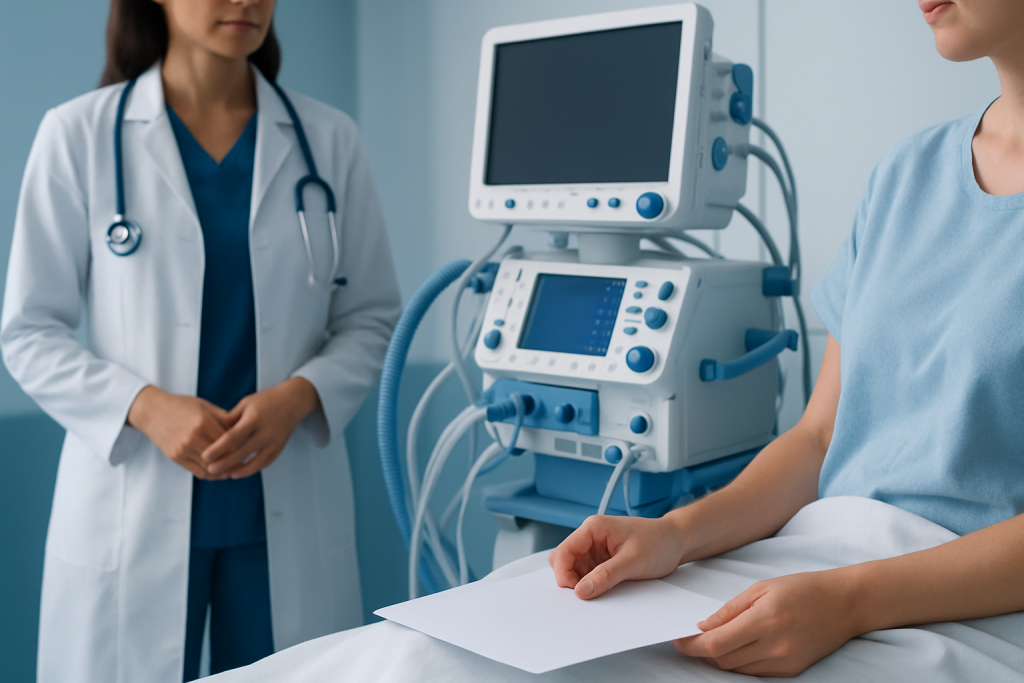
The single most important document is your discharge summary. It should state your diagnosis, the treatment or procedure you had, the relevant dates, your condition at discharge, any complications if they occurred, your current medicines, and the next steps for recovery and follow-up. If any of those elements is missing, ask for it to be added before you leave: a summary that only says a procedure was performed, without dates or a medication list, will frustrate every clinician who reads it later. There is a separate guide on what your discharge summary should include before you fly home if you want to check yours line by line.
Alongside the summary, ask for copies of the key results from your stay. Depending on your treatment, this may include blood test results, pathology reports where available, imaging reports, an operative or procedure note, and any consultation notes your home doctor may need. Not every report is ready on discharge day; some pathology results in particular take longer. If something is pending, ask when it will be ready and by which secure route it will reach you.
Your medication paperwork deserves the same attention. Leave with a prescription that lists each medicine’s name, dose, timing and duration. Brand names differ between countries, so ask for the generic (international) name to be written clearly next to any Turkish brand name: this is what lets a pharmacist at home match the drug safely. Any question about continuing, adjusting or replacing a medicine after you get home belongs to your treating doctors, so raise it with the team while you are still in the hospital rather than guessing later.
The core set, in one list:
- Discharge summary
- Prescription and medication instructions, with generic drug names
- Blood test and other laboratory results
- Imaging reports and, where useful, the image files on CD or a secure digital link
- Operative or procedure note, if relevant
- Written follow-up plan, activity restrictions and warning signs to watch for
Different people will ask you for different pieces of this set. A rough map:
| Document | Who typically needs it |
|---|---|
| Discharge summary | Your doctor at home; sometimes your insurer |
| Prescription with generic names | Your pharmacist and doctor at home; airport security if medicines are queried |
| Test, pathology and imaging reports | The specialist continuing your care |
| Operative or procedure note | Any surgeon or specialist involved in follow-up |
| Fit-to-fly note | Your airline, if it requires one |
| Medicine and device carriage letter | Airport screening staff and, occasionally, border officials |
A broader companion guide covers the full range of medical documents to collect before leaving Turkey, including items that only apply to specific treatments.
Travel-related papers many patients forget

If you are flying soon after treatment, ask your care team whether a fit-to-fly note or medical clearance letter is advisable. Airlines set their own rules, and some ask for documentation when a passenger has had recent surgery, needs mobility assistance, is travelling with drains or dressings, or may need medication, oxygen or extra support during the flight. Whether you need one depends on your procedure, your airline and the timing of your flight: your team can tell you which applies. If your recovery is not far enough along, there is a separate guide on when you may need extra recovery time in Turkey before flying home.
Ask for a short travel letter if you will be carrying medicines, syringes, liquid medications above the usual cabin limits, or medical devices in your hand luggage. Security staff at your departure airport and at any transit stop may not recognise Turkish medicine packaging, and a letter listing what you are carrying and why usually resolves questions quickly. Keep the medicines in their original labelled packaging where you can, and keep the letter with them, not in a checked bag.
If you are travelling with a drain, catheter or other tube still in place, the paperwork needs to reflect that: what the device is, how it is managed during travel, and when and where it should be reviewed or removed. The guide on drains, catheters and tubes before discharge in Turkey covers this in detail.
Finally, ask for written practical advice suited to a traveller rather than a local patient: wound care and dressing changes for the days you are in transit, mobility and lifting limits, compression garments if they apply to your treatment, hydration and meal guidance, and the timing of your next review. Ask for these instructions in English and read them through before you pack them, vague wording is easier to fix at the ward desk than from an airport.
What to check before you leave the hospital
Do not assume every document will automatically be in your discharge folder. Before you leave, sit down with a nurse, coordinator or international patient representative and go through the papers item by item. Check that your full name matches your passport spelling, and that your date of birth, treatment dates and the procedure name are all correct. A summary issued under a slightly different spelling of your name can cause avoidable friction with insurers later.
Then check that the instructions are specific enough to act on. Good discharge papers tell you which medicines to take and when, how to care for any incision or dressing, which symptoms your care team wants you to watch for, and whether you should avoid flying, lifting, bathing, exercise or certain foods for a stated period. Vague phrases like “rest and take medication” are a sign the document needs another pass before you accept it.
Confirm how you can reach the hospital after discharge, a phone number, email address or patient portal route, in case you need clarification from your hotel, the airport or home. In larger international hospitals in Istanbul and other Turkish cities, this follow-up channel usually runs through the international patient services team, and it is worth having it in writing rather than relying on a business card you might lose. Two companion guides go deeper here: what to check on discharge day before leaving the hospital and follow-up questions to ask before leaving Turkey.
How long do discharge papers take, and can you leave without them?
Two questions about the discharge papers you need before leaving Turkey come up constantly, so they deserve straight answers.
Do you have to wait for discharge papers before leaving the hospital? In most cases the core set, summary, prescription, instructions, is prepared on discharge day itself, and the wait is a matter of hours, not days. What genuinely takes longer is anything that needs extra steps: English translations, copies of imaging on disc, itemised documents for insurance, or reports that depend on a laboratory. The single most effective thing you can do is ask the ward team or your coordinator, at least a day in advance, what will be in your folder and what will not. That gives the hospital time to prepare translations and travel letters, and gives you time to notice gaps while they are still easy to fill.
Can you walk out without your discharge papers? A hospital cannot hold you against your will; adult patients are free to leave, and if someone leaves before the medical team recommends it, they are usually asked to sign a form acknowledging that. But leaving without documents is a poor trade for an international patient. You lose the written record your home doctor needs, the prescription your pharmacist can read, and any letter your airline or insurer might ask for, and requesting all of this from another country afterwards is slower and more complicated than waiting a few hours on the day. If a genuine scheduling clash forces an early exit, ask before you go how the outstanding papers will be sent to you, and get that in writing.
The exception worth planning around is pending results. Some pathology and specialised laboratory reports simply are not ready on discharge day, whatever the hospital does. That is normal. What you can control is knowing exactly which reports are outstanding, when each is expected, and whether it will come to you by email, through a portal, or directly to your doctor at home.
How to organise your papers for the journey home
Keep both paper and digital copies of everything. Carry the essentials, discharge summary, prescription, fit-to-fly note if you have one, medicine carriage letter, and a list of contacts, in your hand luggage, never in checked baggage. A single folder that opens flat is enough; you want to be able to hand over one document at a security desk without unpacking a bag.
Photograph or scan every page and store the files somewhere you can reach abroad, such as your phone plus a cloud account. Share the key files with your travel companion. If you are tired after treatment, or someone needs to speak on your behalf at any point in the journey, they will have what they need without asking you to search for it.
Once home, send the discharge summary and major results to your local doctor or specialist promptly rather than waiting for the first appointment. If any reports were pending at discharge, note in your calendar when they were promised, so you know what still needs forwarding and can chase it if it does not arrive.
When to ask for extra documentation
Some patients need more than the standard set. If you plan to claim from an insurer, ask before discharge day whether you also need itemised billing records, proof of payment, diagnosis codes or stamped medical reports. Requirements differ by insurer and by country, and it is the insurer’s list, not the hospital’s default pack: that decides what counts as complete. Getting the format right while you are still on site is far easier than requesting stamped originals from overseas.
If your home doctor will continue a complex treatment plan, ask for more detail rather than less: implant identification details where relevant, rehabilitation recommendations, pathology follow-up instructions, or a summary letter written specifically for the receiving clinician. Where language may be a barrier, request English versions of the key documents; a translated summary your doctor can read on day one is worth more than a thicker folder in Turkish.
Extra documentation also helps with special travel or care needs. Common examples include a wheelchair or special assistance note for the airport, written confirmation of restrictions on work or driving for your employer, and a letter for border officials if you are carrying a significant quantity of medication. Each of these takes minutes to produce while you are in the hospital and considerably longer to arrange afterwards.
Step by step
- Ask for your discharge document list early. Ideally a full day before discharge, ask your coordinator or ward team exactly what papers will be prepared. This creates time to add translations, travel letters or insurer-specific items before you are due to leave.
- Collect your discharge summary and treatment record. Confirm it states your diagnosis, treatment dates, procedure details where relevant, medication list and condition at discharge. This is the document your doctor at home will rely on most.
- Review your medicines with the team. Go through each prescription before you leave. Confirm the generic names, dose, schedule and duration, and raise any question about what happens to each medicine after you get home with your treating doctors while they are in front of you.
- Request travel-related notes if advised. Ask whether your procedure or airline makes a fit-to-fly letter sensible, and get a carriage letter for any medicines, syringes or devices in your hand luggage. It is better to carry these and never show them than to be delayed without them.
- Pin down pending results. Ask which reports are outstanding, when each is expected, and how it will be sent, email, portal or direct to your home doctor. Write the answers down.
- Check every personal detail. Name spelled as in your passport, correct date of birth, correct dates and procedure name. Fix errors before checkout, not after landing.
- Store paper and digital copies. Originals in hand luggage, scans on your phone and in cloud storage, key files shared with your companion.
- Confirm follow-up and contact routes. Before leaving, make sure you know how to reach the hospital with questions after discharge and what your written instructions say about warning signs and next reviews. That gives you a clear plan for the first days after leaving Turkey.
Your checklist
- Discharge summary, in English if possible
- Prescription with generic medicine names, doses and duration
- Copies of important blood tests and imaging reports
- Operative or procedure note, if relevant
- Fit-to-fly or travel clearance letter, if advised
- Letter for carrying medicines or medical supplies on the plane
- Clear wound care and activity instructions
- List of pending results, with expected dates and delivery route
- Insurance items if you will claim: itemised bills, proof of payment, coded reports
- Follow-up appointment plan and hospital contact details
- Digital backup of every document, shared with your companion
Key takeaways
- The discharge summary, prescription with generic drug names, and written follow-up instructions are the papers you need most before leaving Turkey.
- Ask about travel letters, fit-to-fly and medicine carriage, if you are flying soon after treatment or carrying medicines, syringes or devices.
- Check every document for passport-matching personal details, correct dates and specific instructions before checkout.
- Pending results are normal; leaving without knowing what is pending, and how it will reach you, is the avoidable mistake.
- Keep printed originals in hand luggage and digital backups elsewhere, and send the key documents to your doctor at home promptly.
- International patient teams can help with translations, travel letters and pending reports, but the final check of the folder is yours to make.
Frequently asked questions
Can I walk out without my discharge papers?
You can, hospitals cannot hold adult patients against their will, and someone leaving before the team recommends it is usually asked to sign a form acknowledging that. For an international patient it is rarely worth it: you would leave without the record your home doctor needs and the letters your airline or insurer may ask for, and requesting them from abroad later is slower and more complicated.
Do you have to wait for discharge papers to leave the hospital?
The core set is usually prepared on discharge day, so the wait is typically hours rather than days. Translations, imaging discs and insurer-specific documents take longer, which is why it helps to request the full list at least a day in advance. Some laboratory and pathology reports cannot be ready on the day at all, for those, agree in writing how they will be sent to you.
What is the most important discharge paper to take home?
The discharge summary. It gives your doctor at home a clear record of your diagnosis, treatment, medicines and follow-up needs, and it is the document insurers and airlines most often want to see alongside any specific letters they require.
Do I need my discharge papers in English?
For international travel and follow-up care, English is usually the most practical option. If your home doctor does not read Turkish, ask for an English summary or translated versions of the key documents before you leave, arranging translations takes time, so request them early rather than on the last morning.
What if some of my test results are not ready when I am discharged?
This is common, especially with certain pathology and specialised laboratory reports. Before you leave, ask exactly which results are pending, when each is expected, and whether it will arrive by email, through a patient portal, or directly to your doctor at home. Note the promised dates so you can follow up if a report does not appear.
Do I need imaging on a CD, or is the report enough?
The written report is the minimum you should carry. The actual image files matter more when a specialist at home will compare them with future scans, after surgery, cancer care or other specialist follow-up, for example. Ask your team whether the images should be provided on disc or by secure digital link in your case.
Should I ask for a fit-to-fly letter before leaving Turkey?
If you recently had surgery, need assistance, or are travelling with medical equipment or medicines, it is sensible to ask. Not every patient needs one: it depends on your procedure, your airline’s rules and how soon you fly, and your care team can tell you whether one is advisable for your journey.
Add us as a Preferred Source to see more of our trusted health content across Google Search, AI Overviews and Discover.

Update history
- PublishedAugust 21, 2026
- Medical review approvedSeptember 13, 2026
- Last content updateSeptember 12, 2026
References2
- Hospital discharge: MedlinePlus medlineplus.gov
- CDC Travelers' Health wwwnc.cdc.gov
More Patient Guides

Flying After a C-Section: Timing for New Mothers
A C-section is real abdominal surgery that happens to come with a newborn attached, so the flying question has two clocks…

When Can You Drive After Anesthesia or Sedation?
You feel fine an hour after the procedure. You are chatting, you walked to the car unaided, you could obviously drive it.…

Flying After Hip Replacement: When Is It Safe?
Hip replacement recovers famously well, many patients walk further at three weeks than they had in three years. Flying is part…

Flying After Knee Replacement: When Is It Safe?
The knee is new, the physio is going well, and there is a boarding pass with your name on it. Flying after…