

What If Your Diagnosis Changes After Arriving in Turkey

If your diagnosis changes after arriving in Turkey, the team pauses the original plan, explains which test or finding prompted the change, and confirms it before treatment continues. You can ask for interpreter support, a written summary and an updated cost estimate. Travel dates, hospital stay and insurance approvals are then reviewed against the revised plan, usually with help from the international patient team.
You flew in with a plan, and now your doctor is describing something different. It is an unsettling moment, but it is not rare. When specialists examine you in person and review fresh imaging, laboratory results or pathology, the picture can shift, sometimes slightly, sometimes substantially.
This guide explains what happens if your diagnosis changes after arriving in Turkey: why it happens, how a revised diagnosis is confirmed, what questions to ask before you agree to anything, and how the practical side, costs, insurance, accommodation and flights, is adjusted around the new plan. It also answers the questions international patients ask most about using hospitals in Turkey as a foreigner.
At a glance
- Main concern: Your diagnosis or treatment plan may be revised after in-person evaluation in Turkey
- Common reasons: New imaging, updated laboratory results, pathology review, physical examination, or a multidisciplinary opinion
- What to ask: What changed, which finding caused it, how confident the team is, and which options are now recommended
- Practical impact: Treatment choice, timing, hospital stay, cost estimate, insurance approval, travel dates and companion plans may all need review
- Support available: Interpreters, international patient coordination, rescheduling, updated documentation and travel guidance
- Golden rule: Understand the medical reason first; adjust flights, hotels and payments only after the timeline is clear
Why a diagnosis can change after you arrive in Turkey
When you travel for care, your initial plan is built on what could be shared before you arrived: scans, laboratory reports, discharge letters, sometimes pathology reports. These documents are genuinely useful, but they have limits. Reports can be months old. Image quality varies. Some records arrive incomplete, translated loosely, or without the original files. A specialist reading them at a distance is working with a partial picture.
Once you are seen in person, that picture fills in. Your doctor examines you, asks about symptoms in detail, and often requests updated or more specific tests. Any of these can add information the original records did not contain. If your diagnosis changes after arriving in Turkey, it is usually because one of the following happened:
- The condition changed over time. Weeks or months may have passed since your last scan or blood test at home, and some conditions do not stand still.
- A more detailed test gave a clearer answer. A higher-resolution scan, a repeat biopsy or a specialised laboratory panel can refine or overturn an earlier impression.
- Pathology was reviewed again. When original slides or blocks are re-examined, the interpretation sometimes differs, particularly in complex cases.
- The physical examination added something. A finding on examination can change how the existing results are read.
- A multidisciplinary team weighed in. Several specialists reviewing one case together may reach a different conclusion than a single report written in isolation.
Two points are worth holding onto. First, a changed diagnosis does not automatically mean your previous doctor was wrong; it often means new information exists. Second, the diagnosis itself sometimes stays the same while the stage, location, severity or safest treatment approach changes, which can matter just as much for what happens next. The confirmation step exists so that treatment matches your actual condition, not the assumptions made before travel.
What usually happens first
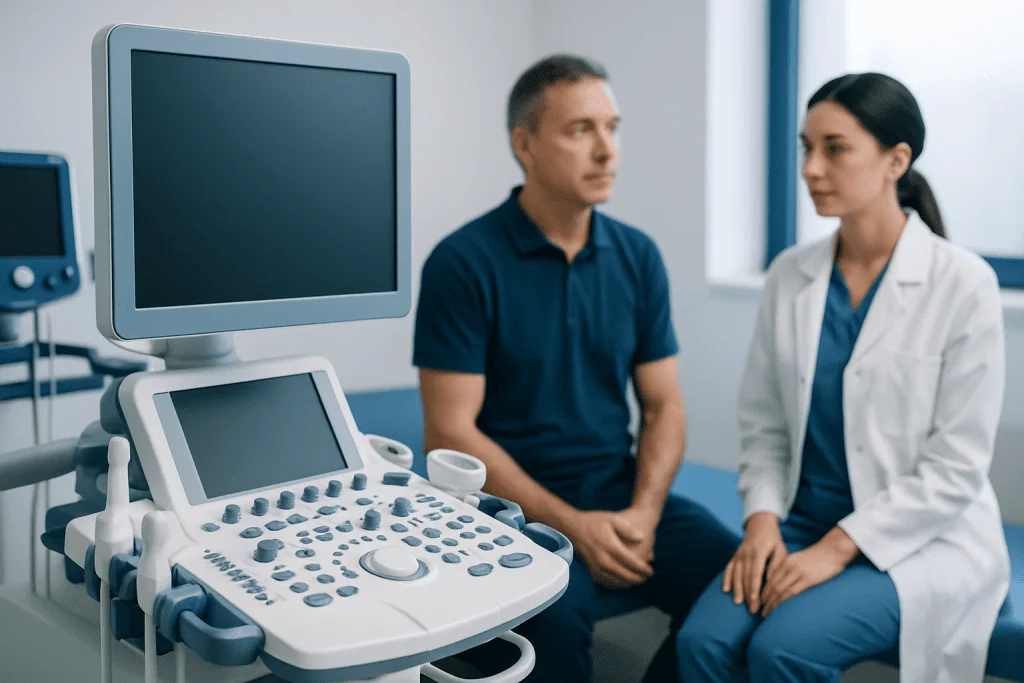
If your doctor sees something that may change your diagnosis, the team normally pauses rather than pushing ahead with the original plan. That pause can feel like a setback when you have travelled specifically for treatment, but it is a deliberate safety step: starting the wrong treatment quickly is worse than starting the right one slightly later.
The pause usually takes one of a few forms. You may be asked to complete additional tests, to provide original imaging files or pathology slides rather than written reports, or to meet a second specialist. Our separate guide on what happens if you need extra tests after arriving in Turkey covers this stage in detail, including typical turnaround expectations and how results are shared with you.
What you should expect during this period:
- A plain explanation of what is being checked and why. If the reasoning is not clear to you, ask for it to be repeated. This is normal and welcome.
- A sense of scale. Ask whether the possible change is minor, a different medication plan, an adjusted sequence, or significant, such as a different surgical approach or a referral to oncology, cardiology, neurology or another specialty.
- Rescheduling support. The international patient coordinator can often reorganise appointments within the same day or over the following days, depending on test availability and medical urgency.
- Your companion in the room. If someone is helping you make decisions, ask for them to be included in the key conversations. Two sets of ears retain more than one.
If you prepared your records carefully before travelling, as described in our guide on organising records, questions and priorities before flying to Turkeythis stage tends to move faster, because the team can compare old and new findings side by side instead of requesting documents from abroad.
How your treatment plan may be affected

A revised diagnosis can reshape your plan in several practical ways. Your doctor may recommend a different procedure, a different order of treatments, a longer pre-treatment evaluation, or occasionally a less invasive option than the one you travelled for. Treatment may be postponed until a pending result is confirmed, or it may go ahead with adjustments. Each of these is a legitimate outcome; what matters is that the reasoning is explained to you before anything is signed.
A useful habit is to separate the medical question from the logistical ones, even though both matter to you. First, understand why the plan changed. Only then work through what it means for your schedule. Questions that cover most situations:
- Will the originally planned procedure still happen, in some form?
- Is another specialist opinion or a multidisciplinary review needed before a decision?
- Do I need new imaging, blood tests, a biopsy review or cardiac clearance first?
- Does the change affect anaesthesia, the length of hospital stay, or aftercare?
- Should my return date or accommodation be adjusted, and by roughly how long?
Your team should give you time to ask these questions before you consent to a revised plan. If you want a written summary to share with family or with your doctor at home, ask whether one can be arranged, for significant changes, it usually can. For a description of how this process works specifically within our hospitals, see what happens at Acibadem if your treatment plan changes after in-person evaluation.
Questions to ask before agreeing to a new plan
When plans change abroad, it is natural to feel pressure to decide quickly: you have a hotel booking, a return flight, a companion with limited leave. Unless your situation is genuinely urgent, it is reasonable to ask for a calm explanation in your own language and time to consider the options. A good conversation should leave you understanding the benefits, the risks, the remaining uncertainties, and the practical impact of each choice.
Questions that patients find most useful:
- What exactly changed in my diagnosis? The name of the condition, its stage or extent, or the recommended treatment?
- Which specific test or finding led to the change? A scan, a blood result, a pathology review, an examination finding?
- Is this confirmed, or still being investigated? If results are pending, when are they expected, and should any decision wait for them?
- What are my options now? Including the option of returning home for treatment, and what each path would mean in practice.
- Which decisions are time-sensitive, and which can wait? This single question removes a great deal of unnecessary pressure.
- Has my case been discussed with other specialists? In complex conditions, a multidisciplinary review brings together different perspectives, and you are entitled to ask whether one is appropriate.
Whatever the recommendation, it should be explained in terms you understand. If the first explanation used unfamiliar terminology, asking for a simpler version is not an imposition: it is part of informed consent.
Costs, quotes and insurance when the diagnosis changes
A change in diagnosis can change the estimated cost of care, and it is better to face that directly than to discover it at discharge. Your original quote was built on specific assumptions: a particular procedure, an expected number of hospital days, a defined set of tests, medications, implants or level of care. If the medical plan changes, the financial estimate is rebuilt on the new assumptions.
What this means in practice:
- Ask for an updated estimate before approving significant additional testing or a new treatment plan. It may not be final, some plans depend on results that are still pending, but it should show you the likely direction and what the main variables are.
- Understand what drives the estimate. The largest factors are usually the type of procedure, the length of hospital stay, the level of care required, and any implants, devices or specialised medications. Knowing this helps you interpret why an estimate moved.
- If you use international insurance or a sponsor, ask whether the revised plan needs new pre-authorisation before treatment or admission. Approvals issued for one procedure do not automatically cover a different one.
- Keep every document. Updated medical notes, test reports, invoices and discharge summaries may be needed for reimbursement, second opinions or follow-up care at home.
The international patient team can help you communicate with the relevant hospital departments and clarify payment steps. For a fuller picture of how estimate revisions are handled, see how we explain possible additional costs if your treatment plan changes.
Using hospitals in Turkey as a foreign patient
Patients whose plans change often start asking broader questions about how healthcare in Turkey works for visitors. The short answers, honestly stated:
Can foreigners go to hospital in Turkey? Yes. Foreign nationals can be seen at private hospitals in Turkey without holding Turkish residency or Turkish public insurance. You will need identification, normally your passport, and the hospital will register you as an international patient. Large private groups routinely treat patients from abroad and provide interpreter support for major languages.
Do tourists get free healthcare in Turkey? Generally, no. Turkey’s public health insurance system covers people who are enrolled in it, which typically means residents and workers, not short-term visitors. Emergency departments will assess anyone who arrives, but as a visitor you should expect to pay for care yourself or through insurance. This is why travel or international health insurance, and understanding exactly what it covers, matters before any medical trip.
How much does it cost to see a doctor in Turkey? There is no single answer, and any page that gives you one number is simplifying. The fee depends on the specialty, whether the visit is a consultation or includes tests, the hospital, and whether imaging or laboratory work is added on the day. The reliable approach is to request a written quote based on your own records before travelling, and an updated one whenever the plan changes, as described in the previous section.
Is it safe to go to Turkey for medical procedures? No procedure anywhere is without risk, and no honest provider will tell you otherwise. Safety depends on the individual hospital, the team treating you, and your own condition, not on the country name. Sensible steps apply everywhere: verify the facility, understand who will treat you, ask how complications are handled, plan realistic recovery time before flying, and check your own government’s travel advice for Turkey before you book.
Travel, accommodation and companion planning
A changed diagnosis can affect the practical side of your stay as much as the medical side. You may need extra nights in Istanbul or another city, a later return flight, a different room arrangement, or more hands-on support from your companion. If the revised plan involves closer monitoring, your team may advise against travelling until you are medically cleared.
Practical guidance that holds in almost every case:
- Do not change flights first. Wait until you understand the revised medical timeline, then ask your doctor for a recommended safe-to-fly window. Our guide on when it is safe to fly home after surgery in Turkey explains what that assessment involves.
- Book flexibly where you can. Fare classes that allow date changes cost more upfront but remove a major source of stress when treatment timelines move. See how to book flexible return flights for recovery changes.
- Ask about airline documentation early. Some airlines require a medical fitness form after surgery, hospitalisation or certain acute conditions. Rules vary by airline, so ask which documents to request from the hospital rather than assuming.
- Plan around your companion’s time. If their leave is limited, raise this early. Decide who receives updates, who can help with translation, mobility, medications and decisions, and who supports you after discharge. Interpreter services and patient coordination can cover part of this, but a named person at your side still matters.
The emotional side: deciding well under pressure
Hearing that your diagnosis has changed is frightening, and it is harder when you are far from home, in an unfamiliar system, watching a travel budget. Confusion, disappointment and worry are normal responses, not signs that you are handling it badly. You do not need to absorb everything in one conversation.
Things that genuinely help:
- Ask for explanations to be repeated, and use the interpreter even if your English is good, medical vocabulary under stress is a different skill.
- Take notes, or ask your companion to. Request a short written summary of the new findings and the recommended plan.
- If you want to speak with family before deciding, say so plainly. The team can tell you which decisions are time-sensitive and which can safely wait a day or two.
- Remember what a revised plan can mean. It is frustrating, but it can also prevent unnecessary treatment, reveal a safer option, or focus care on what you actually need. A plan that changed because of better information is a stronger plan than one that ignored it.
Step by step
- Pause and ask what changed. Before touching logistics, ask your doctor to explain the change in plain language. Clarify whether the diagnosis itself changed, or the severity, stage, location or treatment priority.
- Request interpreter support. If English or Turkish is not your strongest language, ask for an interpreter before the important conversations, not after them. Decisions are easier when reasoning, risks and alternatives are fully understood.
- Confirm which findings support the new diagnosis. Ask which scan, laboratory result, pathology review, examination finding or specialist opinion led to the update. If results are still pending, ask when they are expected and whether decisions should wait.
- Discuss the revised options. Ask which treatment paths are now available and how each affects your expected stay, recovery and follow-up. In complex cases, ask whether a multidisciplinary review is recommended.
- Update costs and approvals. Request a revised estimate if the plan differs from the original quote. If insurance or a sponsor is involved, confirm whether new authorisation is needed before treatment or admission.
- Review travel and accommodation dates. Do not change flights until the medical timeline and safe-to-travel advice are clear. Ask whether you may need extra hotel nights, a medical fitness document for the airline, or companion support after discharge.
- Collect records for home follow-up. Updated reports, imaging copies, prescriptions, invoices and discharge notes help your doctor at home continue care and support any insurance claim.
Your checklist
- Original medical reports, imaging files and pathology materials, if available
- Passport, visa documents, insurance details and payment information
- A written list of current medications, allergies and previous surgeries
- Contact details for your doctor or clinic at home
- Your written questions before accepting a revised plan
- Copies of updated test results and medical summaries produced in Turkey
- Flexible flight and accommodation arrangements where possible
- Companion contact information and your preferences for who receives updates
- A notebook or phone note for decisions, dates and instructions
Key takeaways
- Diagnoses can change after arrival in Turkey when in-person examination, fresh tests or specialist reviews add information the original records did not contain.
- A change does not necessarily mean anyone was wrong; conditions evolve, records age, and detailed testing sharpens the picture.
- A revised plan can affect the treatment choice, timing, hospital stay, cost estimate, insurance approval and return travel, review each deliberately, medical questions first.
- Ask for plain-language explanations, interpreter support and written documentation of the updated findings before consenting.
- Request updated quotes and confirm insurance pre-authorisation before approving major changes; keep every document for follow-up at home.
- Change flights only after your doctor gives a realistic timeline and safe-to-travel guidance.
Frequently asked questions
Is it common for a diagnosis to change after arriving in Turkey?
It happens, particularly when a specialist reviews updated imaging, blood tests or pathology slides, or examines the patient in person for the first time. Sometimes the change is small, such as an adjusted treatment sequence. Sometimes it is more significant and leads to a new plan. In either case, the team should explain which finding prompted the change before treatment continues.
Does a changed diagnosis mean my previous doctor was wrong?
Not necessarily. Medical information changes over time, and earlier records may not include the most recent or most detailed findings. A second review can also interpret the same material differently, especially in complex cases. What matters now is that the current plan reflects the fullest available picture.
Can foreigners go to hospital in Turkey?
Yes. Foreign nationals can be treated at private hospitals in Turkey without Turkish residency or Turkish public insurance. You will be registered as an international patient using your passport, and interpreter support is available for major languages at large hospital groups.
Do tourists get free healthcare in Turkey?
Generally, no. Turkey’s public insurance system covers people enrolled in it, typically residents and workers, not short-term visitors. Emergency departments will assess anyone who arrives, but visitors should expect to pay for their care directly or through travel or international health insurance. Checking exactly what your policy covers before travelling is essential.
How much does it cost to see a doctor in Turkey?
There is no single figure. The cost depends on the specialty, the hospital, whether the visit is a consultation alone or includes imaging and laboratory tests, and whether further care follows. The reliable approach is to request a written quote based on your own medical records before travelling, and an updated estimate whenever the plan changes.
Is it safe to go to Turkey for medical procedures?
No procedure anywhere is free of risk, so the honest answer is that safety depends on the specific hospital, the team and your condition rather than the country. Verify the facility, ask who will treat you and how complications are managed, plan realistic recovery time before flying, and check your government’s travel advice before booking.
Should I change my return flight right away?
Not immediately. Wait until you understand the revised medical timeline and your care team’s travel guidance. You may need extra time for tests, treatment, recovery or follow-up before flying, and some situations require an airline medical clearance document. Flexible fares make these adjustments considerably less stressful.
Can I ask for another opinion within the hospital?
Yes. You can ask whether another specialist or a multidisciplinary team review is appropriate for your case: this is especially useful when the diagnosis is complex or several treatment paths are possible. The international patient coordinator can explain how such reviews are arranged and how long they typically take.
Add us as a Preferred Source to see more of our trusted health content across Google Search, AI Overviews and Discover.

Update history
- PublishedJune 22, 2026
- Medical review approvedSeptember 13, 2026
- Last content updateSeptember 12, 2026
References2
More Patient Guides

CyberKnife Radiosurgery in Turkey: Candidacy, Treatment Schedule, and Travel Plans
CyberKnife radiosurgery in Turkey involves eligibility review, several planning steps and short outpatient visits; international patients can arrange care in Istanbul.

Traveling to Turkey for Biopsy Review: What Happens Before Treatment Is Confirmed
Biopsy review in Turkey helps confirm your diagnosis before treatment, using pathology slides, reports and specialist assessment in Istanbul.

Flying to Turkey with Recent Scan Results: How to Organize Reports and Images
Organize recent scan results for travel to Turkey by bringing reports, original image files, dates, and a clear medical summary for your…

Complications During Treatment Abroad: How International Patients in Turkey Can Prepare
Complications during treatment abroad can be managed with planning, clear contacts and follow-up support for international patients in Turkey.