

What to Expect from Acibadem Technology and Equipment

Hospital technology matters most where you feel it: how quickly tests are organised, how clearly results are explained, how well departments coordinate, and how smoothly your treatment day runs. At Acibadem, expect imaging, laboratory and monitoring equipment, digital records shared across specialties, and coordinators who handle scheduling and interpretation. Equipment supports careful assessment and planning: it does not replace them, and it does not shorten standard recovery on its own.
You have a limited number of days in Turkey, a quote in your inbox, and a list of impressive-sounding equipment you are not sure how to judge. Which parts of it actually change anything for you? That is the useful question, and it is the one this guide answers.
Here is what you can reasonably expect from technology and equipment at Acibadem hospitals: not a catalogue of machines, but a plain account of how imaging, digital records, operating room tools and monitoring systems shape your timing, your comfort, your coordination between departments, and the structure of your quote.
At a glance
- Best for: Patients who want a practical, honest overview of hospital technology before travelling
- What it covers: Imaging and diagnostics, digital records, treatment-day equipment, safety processes, and how technology relates to quotes and packages
- What it does not do: Replace a personalised medical opinion, a treatment plan, or your doctor’s judgement about which tests you need
- Useful timing: Read before requesting a quote, choosing a hospital, or confirming travel dates
- Support available: International patient coordinators, interpreters, and practical travel assistance
What “technology and equipment” actually means for you as a patient
When you read hospital websites, the phrase covers everything from an MRI scanner to a records database. The most useful question is not whether a machine sounds advanced, but what you should expect from technology and equipment in terms of your own experience: how quickly tests are organised, how clearly doctors can review and explain findings, how well different teams coordinate your plan, and how predictably your treatment day runs.
For international patients this matters more than usual, because you are working within a fixed travel window. Well-organised diagnostic systems, digital records that follow you between departments, and equipment that supports planning and monitoring can reduce the gaps between consultation, testing and treatment decisions. That does not mean every step happens instantly. Some results take days regardless of the machine that produced them. What good systems do is make your stay structured rather than improvised.
It also matters to say what technology does not do. Equipment does not diagnose you on its own, does not remove the need for an in-person examination, and does not shorten standard recovery time by itself. A scanner is only as useful as the specialist reading its output and the process that carries the result to a decision. Throughout this guide, that is the standard applied: what to expect from technology and equipment as one part of a coordinated care environment, not as a substitute for it.
At Acibadem, international patients are usually guided through this environment by international patient services. That can include help with appointments, document sharing before arrival, interpreter support, and coordination between departments, so the technology works around you rather than the other way round.
What you may notice before treatment begins
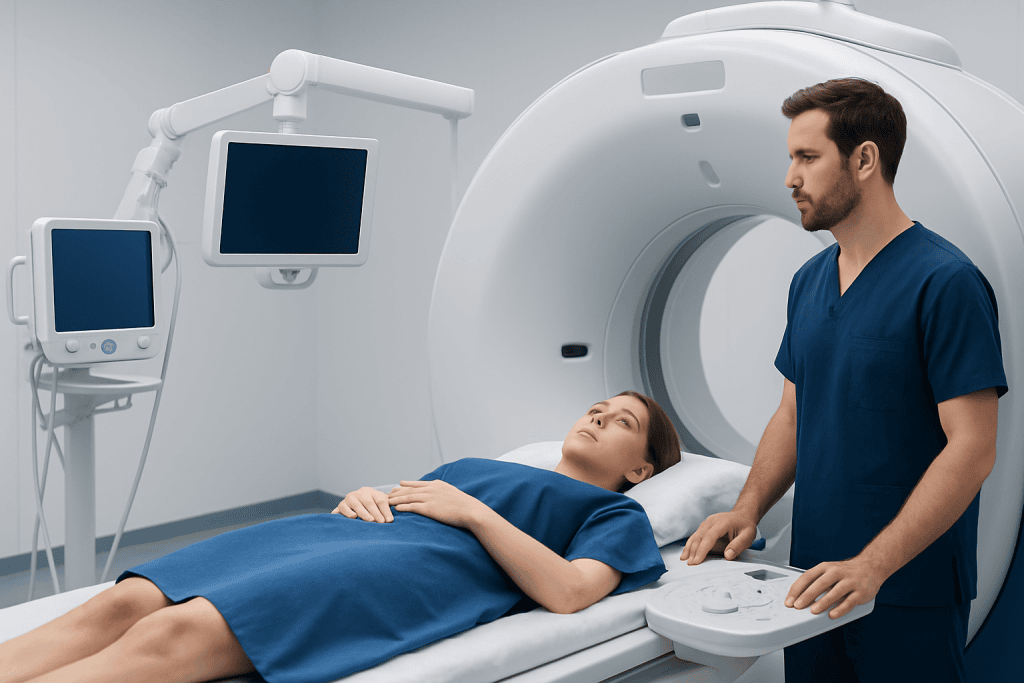
Before any treatment starts, technology is most visible in diagnostics and planning. Depending on your case, this may include imaging, laboratory testing, cardiac assessment, endoscopy platforms or other tools used to understand your condition in enough detail for your specialist team to confirm whether the proposed treatment is appropriate for you, or whether the plan should change.
If you already have scans and reports from your home country, they can usually be reviewed in advance. This helps the team decide what remains valid, what should be repeated, and what additional tests may be useful once you arrive in Turkey. Digital formats are the simplest option, especially when images are needed for comparison; a CD or USB of the actual scan images is often more useful than a printed report alone. If you want a structured view of which documents carry the most weight, the guide on what records matter for a medical second opinion in Turkey covers this in detail.
Digital record systems also make multidisciplinary review practical. If your care involves more than one department, surgery and oncology, for example, or cardiology and anaesthesiology before an operation, shared access to the same results supports a joint decision rather than a series of disconnected opinions. When plans do shift after specialists compare notes, that is a normal part of careful assessment; the guide on how Acibadem manages unexpected changes to a treatment plan explains what that process looks like.
- Ask which of your current test results can be used, and which have a limited validity window.
- Check whether digital files, CDs, USB drives or printed reports are preferred, or all of them.
- Confirm whether fasting, medication timing or other preparation applies to any scheduled test, and follow your treating doctor’s instructions on this.
Examples of hospital technology and equipment you may encounter
Patients often ask for concrete examples rather than categories. The table below sets out the main groups of equipment you may meet during an international treatment journey, and what each one means for you in practice.
| Category | Typical examples | What it means for you |
|---|---|---|
| Diagnostic imaging | Ultrasound, X-ray, MRI, CT, mammography, PET-related imaging | Builds the picture your specialists use to confirm or adjust the plan; some scans need preparation or booking lead time |
| Laboratory systems | Blood tests, tissue analysis, pre-anaesthetic screening | Often the quiet reason a schedule holds or slips; results feed directly into treatment decisions |
| Monitoring equipment | Bedside monitors, anaesthesia monitoring, telemetry | Tracks your condition during and after procedures; mostly works in the background |
| Operating room tools | Image-guided systems, minimally invasive and endoscopic platforms, navigation tools | Relevant only if they apply to your procedure; your surgeon explains what is used and why |
| Digital records | Electronic patient files, shared imaging archives | Lets several specialists review the same information quickly, often the biggest practical benefit for a short trip |
| Support and rehabilitation equipment | Mobility aids, physiotherapy devices, wound-care supplies | Shapes your comfort after treatment and what you may need to manage after discharge |
A fair example of genuine technological progress in hospitals is the shift many procedures have made toward image guidance and minimally invasive approaches, alongside electronic records replacing paper files. Whether any of that applies to your case is a question for your treating doctor, some conditions are still best treated with conventional approaches, and that is not a lesser option.
How technology supports treatment day logistics

On the day of a procedure, most equipment works in the background. You may notice digital check-in steps, identity checks against your electronic file, monitoring devices being attached, or staff confirming details you have already given. For you, the practical benefit is smoother coordination and clearer communication about timing and next steps, not a visibly futuristic experience.
Technology use varies by specialty. Some patients mainly encounter imaging and monitoring; others are told about minimally invasive platforms or navigation tools used during their specific procedure. Your care team should explain what is relevant to you in plain language, including whether it changes preparation or what the hours after treatment look like. If your procedure involves anaesthesia, the equipment used to monitor you throughout is described in the guide on general anaesthesia in Turkey for international patients.
Expect repetition. Modern hospitals build safety into process, not just machinery: equipment checks, documentation steps, patient identification, consent review and clinical monitoring all interlock. Being asked your name and date of birth for the fourth time, or having a site marked and re-confirmed, can feel excessive. It is deliberate, and it is there to protect you.
What to expect from imaging, diagnostics and digital records
Scanners are the most photographed part of any hospital, but the exact machine matters less than three practical questions: why is this test being done, how long until the result, and will the result change the immediate plan? Those three answers tell you what a test means for your schedule. A scan whose result arrives the same afternoon has a different effect on your itinerary than a laboratory analysis that takes several days.
Digital record systems are often as important as the machines themselves. When results are stored and shared within one system, specialists can review reports quickly, compare new findings against earlier ones, and update your plan without waiting for paper to move between buildings. For an international patient on a tight schedule, this is frequently the difference between a structured week and a fragmented one. It also matters if further tests are recommended after your first review: a common and normal event, explained in the guide on how unexpected tests affect timing and cost in Turkey.
If language is a concern, ask how results will be explained and whether written summaries in English will be available. Acibadem’s international patient services commonly assist with interpretation, which helps when findings need to be discussed across several appointments in a short period.
- Ask when each result is expected, in hours or days.
- Check whether reports and images will be shared with you digitally, so you can take them home.
- Confirm who will explain the findings and in which language.
How equipment can affect comfort, recovery and hospital stay
It is tempting to ask whether technology is “advanced”. It is more useful to ask how it may affect your comfort and stay. In some cases, modern equipment supports smaller incisions, more targeted treatment or closer monitoring. In others, the main benefit is better planning rather than a noticeably different recovery. Your doctor is the right person to say what is realistic for your condition, and honest answers here vary case by case. If you want to understand how expectations are framed rather than promised, see how Acibadem explains expected clinical outcomes and treatment information.
Technology does not remove the need for standard recovery time, nursing care or follow-up instructions. Even after a procedure performed with sophisticated tools, you may still need observation, medication review by your treating doctor, physical support or repeat checks before discharge. Sophisticated equipment does not automatically mean a shorter or easier recovery, and no responsible hospital will tell you otherwise.
From a trip-planning perspective, the details that matter are practical: expected length of stay, whether you will need a companion, when you can walk, eat or travel, and whether any dressings or devices will need attention after discharge. These answers shape your booking decisions far more than the name of a machine.
How technology relates to your quote and package
Since equipment use often shows up in your quote, it is worth understanding the structure, not the figures, which depend entirely on your case, but the logic. A quote is typically built on the information available before you arrive: your records, your requested treatment, and standard pre-treatment tests. Some imaging, laboratory work and specialist evaluations may be included in a package; others are billed separately if they become necessary after the doctor examines you in person.
This is not a trick: it reflects the honest limit of what can be known from documents alone. What you can do is make the boundary explicit before you travel. Ask, in writing, which tests are inside the quoted scope, how additions are decided, and how you will be told before an extra item is performed. The guide on unexpected changes in your bill in Turkey walks through the common extra items and how to ask about them constructively.
- Is the proposed imaging or testing included in the quote?
- What could be added after the in-person assessment, and how would that be communicated?
- Will multiple specialists review my case if needed, and is that within the quoted scope?
- How many days should I allow in Turkey for testing, results and treatment?
Questions worth asking when comparing hospitals or packages
If you are comparing providers, it is reasonable to ask what technology is available and how often it is used for your type of case. But general questions get general answers. Instead of asking whether a hospital has advanced equipment, ask which diagnostic tools are relevant to you, whether multidisciplinary review is available, and whether consultation, testing, treatment and follow-up can be coordinated within your travel dates. A hospital that answers those questions specifically is telling you something more useful than any equipment list.
Treat marketing language as a prompt for follow-up, not as information. “State-of-the-art” says nothing about whether the tool applies to your procedure. A specific answer, this scan, for this reason, with results in this timeframe, is the mark of a team that has actually thought about your case.
Step by step
- Gather your medical records early. Recent reports, scan images in digital format, a medication list and a short medical summary let the reviewing team decide which technology or tests are actually needed, and reduce the chance of unnecessary repetition after you arrive.
- Ask which equipment is relevant to your case. You do not need a list of every machine in the building. Ask which diagnostic or treatment technologies are likely to be used for your condition and how they affect timing, preparation or the days after treatment.
- Clarify what your quote or package includes. Confirm in writing whether imaging, laboratory work, anaesthesia-related assessments and follow-up reviews are inside the quoted scope, and how any additions after the in-person examination are handled.
- Plan enough time in Turkey. Even in a well-organised hospital, some results take time and plans sometimes change after in-person assessment. Build flexibility around consultations, diagnostics, possible treatment and an appropriate observation or recovery period.
- Use the international patient team. Coordinators can assist with scheduling, interpretation and movement between departments, so language and logistics do not fall on you alone.
- Prepare questions for your doctor. Ask what each recommended technology does, why it is recommended for you, and whether it meaningfully changes comfort, preparation or length of stay. Clear answers separate useful clinical information from marketing language.
Your checklist
- Passport and travel documents
- Recent medical reports and scan images in digital format
- Current medication list and allergy information
- Written questions about tests, equipment and timing
- Written confirmation of what your quote or package includes
- Contact details for your international patient coordinator
- Comfortable clothing for test days and hospital visits
- A companion plan if your procedure requires support after discharge
Key takeaways
- Technology and equipment matter most in diagnostics, planning, monitoring and team coordination: the places you feel them, not the brochure.
- Digital records and organised scheduling are often the biggest practical benefit for a patient on a short travel window.
- Ask specific questions about which tests and tools apply to your case rather than relying on general claims about advanced equipment.
- Equipment can influence comfort and efficiency, but it does not replace careful medical assessment or standard recovery needs.
- Confirm in writing which imaging, diagnostics and related services sit inside your quote, and how additions after examination are handled.
Frequently asked questions
What are some examples of technology equipment in a hospital?
The main groups are diagnostic imaging (ultrasound, X-ray, MRI, CT, mammography), laboratory systems, patient monitoring devices, operating room tools such as image-guided and minimally invasive platforms, and digital record systems that share results between specialists. Which of these apply to you depends entirely on your condition and treatment plan.
Does advanced hospital equipment mean I will need fewer tests?
Not always. Modern equipment can improve planning and give doctors more detailed information, but you may still need several tests depending on your condition and how recent your previous results are. The aim is not fewer tests at all costs: it is the right tests, done safely, in a sensible order.
Will I be able to use scans and reports from my home country?
Often yes, especially if they are recent and shared in a usable digital format. Your specialist may still recommend repeating some tests in Turkey to confirm findings, apply the hospital’s own protocols, or obtain images needed for treatment planning. Bringing the original image files, not just written reports, makes reuse more likely.
Does technology make treatment safer?
Technology can support safety through better imaging, monitoring, planning and documentation. But safety also depends on trained staff, clear protocols, patient identification checks, infection control and coordinated decision-making. Equipment is one layer in that system, which is why the repeated safety questions you meet on treatment day matter as much as the machines.
Are technology-related tests usually included in treatment packages?
It depends on the package and the type of care. Standard pre-treatment tests are often included, while additional imaging or specialist assessments may be added only if your doctor decides they are necessary after examining you. The reliable approach is to request the scope of the quote in writing before you travel, along with how additions are communicated.
What is a good example of technological progress in hospitals?
Two broad examples: the shift of many procedures toward image guidance and minimally invasive techniques, and the replacement of paper files with electronic records that all of your specialists can see at once. Both change planning and coordination more than they change the fundamentals, careful assessment and proper recovery time still apply.
What if I do not understand the equipment or the test results?
Ask for a plain-language explanation: that is a normal request, not an imposition. Interpretation support is available through international patient services, so you can know what a test is for, what preparation it needs, and who will discuss the results with you, in a language you are comfortable in.
Should technology be the main reason I choose a hospital?
It should be one factor among several. Also weigh the experience of the specialist team, how your case will be coordinated across departments, what support exists for international patients, and whether the proposed schedule fits your travel window. A specific, honest answer about your case is worth more than any equipment list.
Add us as a Preferred Source to see more of our trusted health content across Google Search, AI Overviews and Discover.

Update history
- PublishedJune 22, 2026
- Medical review approvedSeptember 13, 2026
- Last content updateSeptember 12, 2026
References1
- MedlinePlus: Imaging and radiology medlineplus.gov
More Patient Guides
Private MRI, CT and Check-Up Costs in Turkey: How Scans Are Priced
How private MRI, CT, PET-CT and full check-up packages are priced in Turkey, modality, region, contrast, reporting, and what a…

Cataract Surgery Cost in Turkey: Per-Eye Prices and Lens Options
Cataract surgery in Turkey is priced per eye and the lens decides the quote. Biometry, both eyes on one trip, and what…
Lip Filler Cost in Turkey: Per-ml Prices Explained
Lip filler in Turkey is priced per millilitre with licensed hyaluronic acid brands and physician injectors. Volume, product, dissolving, safety and what…

Botox Cost in Turkey: Per-Area and Per-Unit Prices
How Botox is priced in Turkey, per area or per unit, brand, physician injectors, medical indications, and what a serious…