

What to Pack for a Hospital Stay in Turkey: International Patient Checklist

Pack a small admission bag with your passport, hospital confirmations, a written medication list, your regular medicines in original packaging, phone and charger, glasses, basic toiletries and one change of loose clothing. Keep documents and medicines in hand luggage, never in checked baggage. Hospitals in Turkey usually supply gowns and clinical basics, so travel light and confirm in advance what is provided.
Standing over an open suitcase, wondering whether you really need three pairs of shoes for a hospital stay? Most people preparing for treatment abroad pack too much of the wrong things and forget the one or two items that matter. The fix is not a bigger bag. It is a clearer plan.
This guide shows you how to pack for a hospital stay in Turkey as an international patient: what belongs in your hand luggage, what the hospital usually provides, what Turkish customs rules mean for your medicines, and what you can safely leave at home. It covers the whole journey — airport, transfer, admission, recovery and discharge — not just the hospital room.
At a glance
- Best for: International patients planning treatment or surgery in Turkey
- Main goal: Pack only what supports admission, recovery and discharge
- Key documents: Passport, hospital paperwork, insurance details, medication and allergy list
- Medication rule: Regular medicines travel in hand luggage, in original packaging, with prescriptions
- Good to know: Hospitals usually supply gowns and clinical basics — confirm before you fill a suitcase
How to pack for a hospital stay in Turkey: start with three groups
The simplest way to pack for a hospital stay in Turkey is to sort everything into three groups before anything goes into a bag: hospital essentials, travel essentials, and comfort items. Hospital essentials are the things admission cannot happen smoothly without — documents, medicines, devices you rely on. Travel essentials get you through the airport, the transfer and the hotel. Comfort items are optional, and they only earn their place if they genuinely make recovery easier.
Your stay may be a single night of observation or several days of monitoring, depending on your treatment plan. Either way, one small, organised bag by your bedside beats two full suitcases every time. Hospital rooms have limited storage, and a cluttered room makes it harder for you — or a tired companion — to find what you need quickly.
Pack for the full journey, not just the ward. Think through the sequence: arrival at the airport, the transfer to your hotel or hospital, any pre-treatment tests, the admission itself, the recovery days, and the trip home. Each stage needs slightly different things within easy reach. The arrival day checklist walks through that first sequence in detail if your treatment starts soon after landing.
One more principle before the lists: anything you cannot afford to lose — passport, medicines, medical records, glasses — travels in your hand luggage. Checked baggage is for everything replaceable.
Documents and medical information to keep with you

Documents are the part of your bag that actually determines whether admission day runs smoothly. If your suitcase is delayed, you can buy a toothbrush in any Turkish city within minutes. You cannot buy a replacement referral letter or imaging report. So every document lives in your hand luggage, ideally in one folder, with digital copies saved to your phone in a way that does not depend on an internet connection.
Bring your passport and, if required for your nationality, your visa or e-visa confirmation. Add your hospital appointment confirmations, any treatment plan or admission letter you have received, insurance documents if your insurer is involved, and a page of emergency contacts — family at home, your hotel, and the hospital’s international patient contact details.
Medical records matter just as much. Recent test results, imaging reports on disc or drive, a referral or summary letter from your doctor at home, and copies of current prescriptions all help your care team in Turkey see the full picture without repeating work unnecessarily. Even if you have already sent records by email, printed copies are a reliable backup when a phone battery dies or a file will not open.
Finally, write out a current medication list: the name of each medicine, the dose, how often you take it, and — if you know it — why you take it. Note allergies, previous operations, implants and chronic conditions on the same page. A single clear sheet like this answers most of the questions an admitting team will ask, in any language.
- Passport and visa or e-visa confirmation if required
- Hospital confirmations, admission letter and contact numbers
- Insurance or payment paperwork
- Recent reports, scans, referral letters and prescriptions
- Written medication list, allergy list and medical history summary
- Emergency contacts for home, hotel and hospital
On admission day itself, the paperwork side has its own rhythm — registration, identity checks, consent forms. The hospital admission check-in checklist covers what to expect step by step.
Medicines, devices and health essentials
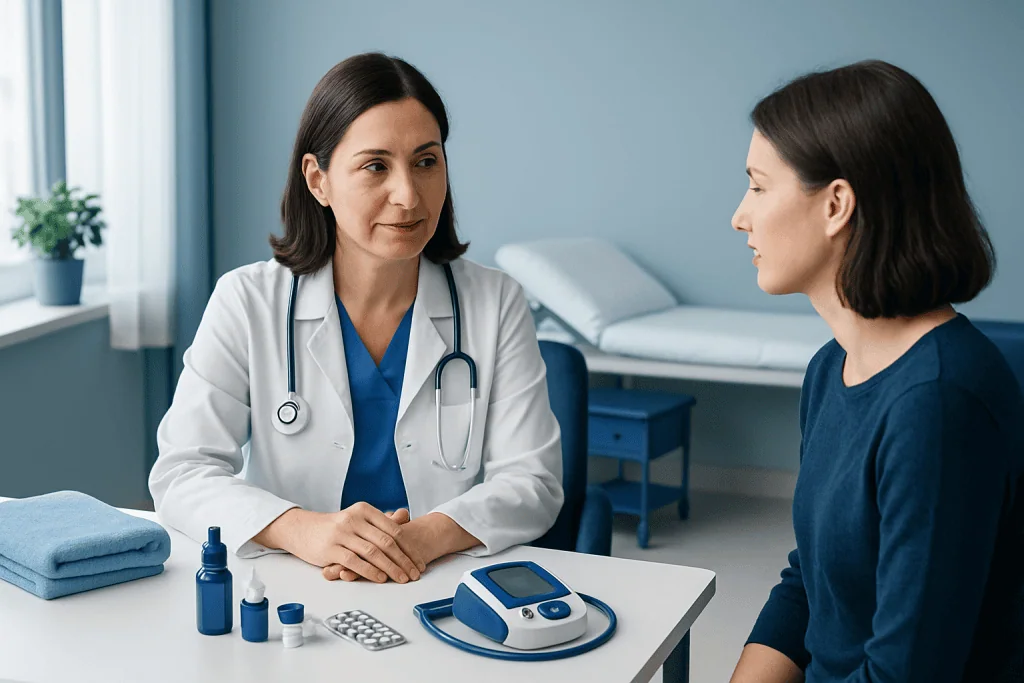
Your regular medicines travel in your hand luggage, in their original packaging, with the prescription or a copy of it. Original packaging matters for two reasons. At the airport, it makes security and customs checks straightforward. At the hospital, it lets your care team confirm exactly what you take, at what strength, without guesswork or translation errors.
Bring enough medicine for the planned length of your trip plus a margin in case your return is delayed — a few extra days’ supply is a sensible buffer for most people. If any of your medicines are controlled substances, such as strong painkillers or certain sleep or anxiety medicines, carry supporting documentation from your prescriber and check the current rules before you fly. The guide to travelling to Turkey with regular prescriptions explains how to pack and document medicines properly.
One thing this guide will not do is tell you to change anything you take. Some medicines and supplements need specific handling before a procedure, but those instructions come from your treating doctor and no one else. Your job when packing is simpler: bring everything you currently take, documented clearly, so that the right decisions can be made with complete information.
Personal medical devices need a plan of their own. Glasses, hearing aids, CPAP machines, dental appliances, blood glucose monitors, mobility aids — if you use it at home, plan for it early. Pack chargers, spare batteries where relevant, storage cases and the cleaning supplies you normally use. Label larger items with your name; admission areas are busy places. If you travel with a CPAP or similar equipment, the guide to packing medical devices and supplies for treatment travel covers airline and practical details.
If you wear contact lenses, bring your glasses as well. Many people prefer glasses during a hospital stay, and some procedures require lenses to be removed anyway.
Clothing and comfort items that make recovery easier
Hospitals in Turkey, as elsewhere, provide gowns and most clinical items, so your clothing list can be short. The goal is not variety; it is ease. Choose loose, soft pieces that go on and come off without effort: pyjamas or comfortable sleepwear, a light robe or cardigan, underwear, socks, and slippers with a proper grip for hospital floors.
Think about what your body will find easy after treatment. If you expect dressings, drains, drips or limited movement, front-opening tops beat anything that goes over the head, and soft, non-restrictive waistbands beat anything fitted. Set aside one comfortable outfit specifically for discharge day — you will not want to think about clothes at that point, and abdominal or chest procedures in particular make ordinary trousers and pullovers surprisingly awkward.
For toiletries, a small bag is enough: toothbrush, toothpaste, lip balm, moisturiser, hairbrush, and travel-size versions of the personal care products you actually use. Hospital air tends to be dry, which is why lip balm and moisturiser appear on nearly every experienced patient’s list. Unscented products are kinder in a shared clinical environment.
A few comfort items earn their place for most people: earplugs and an eye mask (hospitals are rarely quiet or dark), tissues, a notebook and pen for questions and instructions, and a lightweight scarf or blanket if you feel the cold during transfers. Beyond that, be ruthless. If you are recovering for a longer period at a hotel afterwards, the separate guide to packing for surgery recovery in Turkey covers that phase, and there is a dedicated checklist for the flight home comfort kit.
Technology, money and practical travel items
Your phone will be your most-used possession during the trip: bookings, translation apps, digital documents, messages home. Support it properly. Pack your charger, a power bank for long airport and waiting-room days, and a plug adapter — Turkey uses the two-pin European-style sockets, so travellers from the UK, Ireland and several other countries will need one.
Carry a modest amount of Turkish lira for small everyday expenses, and rely on a bank card for anything larger. Do not travel with significant cash. If you have a companion, split payment methods and document copies between you so that no single lost bag becomes a crisis.
A short list of small practical items pays for itself: a pen (forms appear at every stage), a folder for the paperwork you accumulate, a reusable water bottle for after any fasting period ends, and a small lock or pouch for the few valuables you do bring. Keep valuables minimal — expensive jewellery, large sums of cash and non-essential electronics are better left at home. Hospital rooms are not designed for safekeeping, and jewellery usually has to come off before procedures anyway.
If your stay involves moving between hospital and hotel on different days, pack so that the hospital bag can separate cleanly from the main luggage, and confirm the planned sequence of days before you decide how to split your bags.
What your companion should pack
A companion’s trip looks different from yours: long stretches in waiting areas, patient lounges, transfer vehicles and hotel rooms, often with an unpredictable schedule. They should pack accordingly — their own documents and medicines, their own charger and adapter, comfortable layers for over-air-conditioned buildings, snacks where permitted, and something to pass the hours.
Crucially, your companion should carry copies of your essential paperwork: passport details, admission letters, the medication list, and key phone numbers. While you are in a procedure or resting, they become the person who answers questions and relays updates to family at home. Interpreters and international patient staff at the hospital can help with communication, but your companion still needs the basic facts to hand.
A simple division of labour works well: one person holds passports, admission papers and transport details; the other keeps daily-use items — chargers, water, tissues, snacks — accessible. Deciding this before travel day removes one small source of friction from a day that already has enough.
What not to bring — and what Turkey restricts
Start with what stays home. Large suitcases for a short stay, valuable jewellery, strong fragrances, bulky toiletries and stacks of unnecessary paperwork add clutter and risk without adding comfort. The test is simple: if an item does not help with travel, admission, communication, comfort or discharge, it does not need a place in the bag.
Then there are the things Turkey itself restricts. Like every country, Turkey prohibits illegal drugs and weapons, and customs rules limit certain goods. For a patient, the category that matters most is medicines: some prescription medicines — particularly controlled substances — require documentation to bring into the country, and quantities should match personal use for the length of your trip. Rules change, so check the current entry requirements published by your own government and, if in doubt about a specific medicine, ask your prescriber to provide a letter and check with a Turkish embassy or consulate before travelling.
Finally, mind the treatment-specific rules. Some procedures come with instructions about fasting, nail polish, makeup, contact lenses or jewellery on the day. These vary by treatment, so follow the written guidance from your own care team rather than general advice found online — including this page.
Practical context: illness during travel and how costs are quoted
Two questions come up constantly from people planning treatment travel, so here is the honest, general picture.
If you become unwell during your trip: Turkey has a well-developed pharmacy network — look for the eczane sign — and pharmacies are common in every city, with a rota system for out-of-hours cover. The national emergency number in Turkey is 112. Travel insurance that covers medical care abroad is worth arranging before any trip, and travellers should keep their insurer’s contact details with their documents.
How hospital costs work: there is no single answer to what a hospital visit or stay costs in Turkey, because the figure depends on the treatment itself, the tests and imaging involved, the length of stay, the room type, and whether items such as transfers, accommodation and follow-up visits are bundled in. International patients normally receive a written quote or package description before travelling. Read it as a list of inclusions and exclusions rather than a single number, and ask what happens to the price if the plan changes mid-treatment.
Step by step
- Confirm what the hospital provides. Before you pack, find out which basics are supplied during your stay, such as gowns, towels or standard toiletries. This single check prevents most overpacking and frees space for the items that genuinely affect your comfort.
- Gather your documents in one folder. Passport, appointment confirmations, medical reports, prescriptions and insurance or payment papers go together in one place. Keep printed copies plus digital backups saved to your phone so you can reach them without an internet connection.
- Prepare a hand-luggage medication kit. Regular medicines in original packaging, your written medication list and any essential medical devices go in your carry-on. Never rely on checked baggage for anything you might need the same day.
- Check the customs position for your medicines. If you take controlled or unusual medicines, carry prescriber documentation and check current entry rules well before you fly, so there are no surprises at the border.
- Pack for easy dressing and recovery. Loose sleepwear, front-opening tops, non-slip slippers and a simple discharge outfit that goes on without bending, lifting or reaching. Soft and practical beats smart every time.
- Separate essentials from comfort items. One pouch for immediate needs — charger, glasses, lip balm, tissues — and another for optional extras. When you arrive tired, this division is what lets you or your companion find things fast.
- Equip your companion. Copies of your key documents, your schedule, emergency contacts, and their own supplies for long waits, transfers and hotel time.
- Do a final check the night before travel. Hospital instructions, baggage limits, chargers, prescriptions, transfer details. Ten minutes the night before saves an hour of stress at the airport.
Your checklist
- Passport, visa confirmation if required, and travel documents
- Hospital confirmation letters, admission paperwork and contact numbers
- Medication list, allergy list and recent medical records — printed and digital
- Regular medicines in original packaging, with prescriptions, in hand luggage
- Phone, charger, power bank and a European-style plug adapter
- Glasses (even if you wear lenses), hearing aids or other personal devices with chargers and cases
- Loose sleepwear, front-opening tops, underwear, socks and non-slip slippers
- Basic toiletries: toothbrush, toothpaste, lip balm, moisturiser, hairbrush
- Earplugs, eye mask, notebook and pen
- A comfortable discharge outfit and shoes for short walks
- Small amount of Turkish lira plus a bank card
- Copies of key documents for your companion
Key takeaways
- Passports, hospital papers, medicines and chargers belong in hand luggage — always.
- Regular medicines travel in original packaging with a written medication list and prescriptions.
- Choose loose, practical clothing and a handful of comfort items rather than a full wardrobe.
- Check customs rules for controlled medicines before you fly, and carry prescriber documentation.
- Confirm what the hospital provides so you can travel lighter, and make sure your companion holds copies of everything important.
Frequently asked questions
What do I need to pack for an overnight stay in hospital?
For one night, a small bag is enough: your documents and medication list, regular medicines in original packaging, phone and charger, glasses, basic toiletries, sleepwear, underwear, non-slip slippers and a comfortable outfit for the next day. Earplugs and an eye mask help many people sleep in an unfamiliar ward.
Will the hospital provide basics like gowns and toiletries?
Hospitals generally provide clinical essentials such as gowns, but personal comfort items and toiletries vary between institutions. It is worth confirming with the hospital before you travel so you know exactly what to bring and what you can leave at home.
Should I pack my medicines in checked luggage?
No. Regular medicines should stay in your hand luggage, in original packaging, alongside your prescriptions or medication list. This protects you if checked baggage is delayed and lets your care team confirm exactly what you take.
What can I not bring into Turkey?
Turkey, like all countries, prohibits illegal drugs and weapons and restricts certain goods at customs. For patients, the key point is medicines: controlled substances in particular may require documentation, and quantities should match personal use. Check your government’s current travel advice and, for specific medicines, confirm with a Turkish embassy or consulate before flying.
What should I do if I get sick while in Turkey?
Turkey has an extensive pharmacy network — pharmacies are marked eczane — and the national emergency number is 112. Travel insurance covering medical care abroad is sensible for any trip, and keeping your insurer’s contact details with your documents makes any claim or query simpler.
How much does a hospital visit cost in Turkey?
There is no single figure, because costs depend on the treatment, tests, length of stay, room type and what a package includes, such as transfers or follow-up visits. International patients usually receive a written quote before travelling. Read it as a list of inclusions and exclusions, and ask how changes to the treatment plan would affect it.
Do I need printed medical records if I already sent them by email?
Yes, printed copies of key records remain a useful backup. Phone batteries fail, connections drop, and files sometimes will not open at the moment they are needed. A slim folder of printouts costs nothing to carry and can save real time at admission or a consultation.
What should my companion bring?
Their own documents, medicines, charger and comfortable layers, plus copies of your key paperwork, your schedule and emergency contacts. Long waits are normal, so something to read, snacks where permitted, and supplies for hotel and transfer time all help them support you comfortably.
Add us as a Preferred Source to see more of our trusted health content across Google Search, AI Overviews and Discover.

Update history
- PublishedAugust 4, 2026
- Medical review approvedAugust 31, 2026
- Last content updateAugust 31, 2026
References2
More Patient Guides
GHIC and EHIC in Turkey: Why They Do Not Cover You
The blue card that quietly covers you across Europe stops working at the Turkish border — and every summer, travelers discover this…

Do You Need Vaccinations for Turkey?
Here is the answer travel clinics give every day: no vaccinations are required to enter Turkey from anywhere in the normal course…

Flying With a Broken Leg or Cast: Airline Rules and Comfort
A broken leg does not cancel a flight — airlines carry passengers in casts every single day. What surprises travelers is that…

Travel Insurance After Cancer: What Patients Should Know
A cancer diagnosis changes how insurers read your name — but it does not end your traveling life. Thousands of people with…