

What to Pack for Hospital Treatment Abroad

Keep your passport, medical records and all regular medicines in your carry-on, never in checked luggage. Pack one small hospital bag with loose clothing, toiletries, chargers, and glasses or hearing aids, and a separate bag for the recovery stay. Leave valuables at home, and leave empty space in your luggage for discharge papers, reports and anything you buy locally.
Packing for treatment is not the same as packing for a holiday. You are preparing for four distinct situations: the flight, hospital admission, the ward itself and the recovery days after discharge, and each one needs different things. This guide shows you how to pack for hospital treatment abroad in a way that keeps documents safe, medicines legal and accessible, and your luggage light enough to manage when you are tired.
At a glance
- Best luggage approach: one carry-on for documents, medicines and admission essentials; one checked bag for clothing and the recovery stay
- Never in checked luggage: passport, medical records, prescriptions, regular medicines, glasses, hearing aids and chargers
- Medication rule: original packaging, visible pharmacy labels, and a doctor’s letter or prescription listing generic names and doses
- Clothing rule: loose layers that open at the front, slip-on shoes, and a going-home outfit roomy enough for dressings or swelling
- Support available: international patient teams can advise on which records to bring, interpreter arrangements, arrival and accommodation
How to pack for hospital treatment abroad: think in three bags
The most useful mental model when you pack for hospital treatment abroad is three separate bags with three separate jobs. Your carry-on holds everything you cannot replace or cannot be without for a day: documents, medicines, personal devices, chargers. A small hospital bag, which can live inside your suitcase until admission, holds only what you will use on the ward. Your checked bag holds everything else: recovery clothing, entertainment, spare toiletries.
This split matters because checked luggage can be delayed or lost. If your suitcase arrives two days late, you should be inconvenienced, not endangered. A missing jumper is a nuisance. Missing insulin, a missing implant card or a missing set of imaging reports can delay your treatment.
Here is how the split usually works in practice:
| Carry-on (never checked) | Hospital bag (small) | Checked bag (recovery) |
|---|---|---|
| Passport, visa documents, insurance details, appointment confirmations | Toiletries, loose sleepwear, robe or shawl | Extra clothing for the hotel stay |
| All regular medicines, prescriptions, medication list | Phone, charger, glasses, hearing aids with cases | Entertainment, books, spare chargers |
| Printed medical records, test results, imaging reports | Slippers if permitted, one small comfort item | Snacks from home if allowed, refillable bottle |
| Phone, power bank, plug adapter, key contacts written down | Notebook and pen for questions | Empty space for reports, medicines and discharge papers |
Pack lighter than instinct tells you. You may be moving between airport, hotel and hospital more than once, sometimes while recovering. If your companion cannot lift the bags comfortably, repack.
Start with the paperwork you cannot replace
The most important packing category is not clothing. It is documents. Put your passport, visa or entry documents if required, travel insurance details, hospital appointment confirmation, flight information and accommodation address into one slim folder, and keep that folder in your carry-on. You will reach for it at passport control, at hotel check-in and again at hospital admission, so it should never be buried at the bottom of a suitcase.
Your medical documents travel the same way. Bring recent test results, imaging reports on disc or with access links, discharge summaries from previous treatment, a written allergy list, a list of your current diagnoses and any referral letters from your doctor at home. Digital copies are useful, but do not rely on them alone: a printed page still works when your phone battery is flat, when a clinic desk needs to photocopy something, or when a login fails abroad.
If you are coming to Acibadem International, your patient coordinator can usually tell you before travel which records matter most for your specific treatment. When in doubt, bring more history rather than less, especially for complex conditions, previous surgeries, implants or long medication lists. A complete folder helps the medical team understand your background quickly, and it is a reasonable thing to raise alongside the other questions to ask before booking a treatment package.
One practical extra: photograph every page of your folder and store the images somewhere your companion or a family member at home can also access. If the folder is lost, you still have everything.
Pack medicines safely and clearly
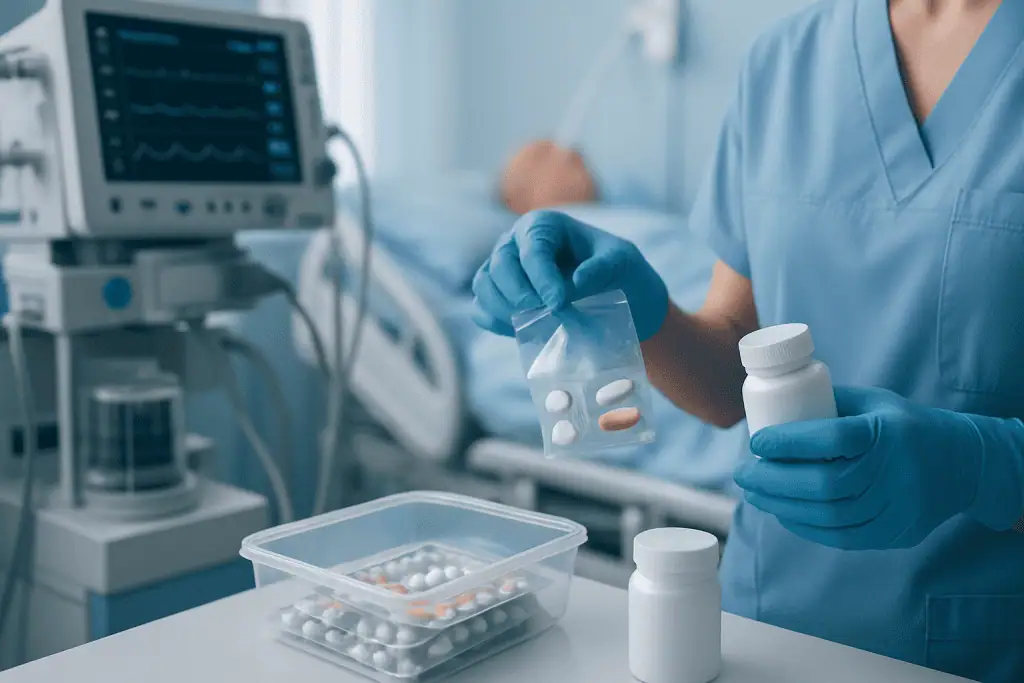
Bring enough of every regular medicine for the whole trip, plus a margin in case your return is delayed. Keep each medicine in its original packaging with the pharmacy label visible, and carry a prescription or a letter from your doctor listing the generic names, doses and timing. Generic names matter because brand names change between countries; a customs officer or a ward pharmacist may not recognise the brand you use at home.
Three rules keep this simple:
- Medicines go in the carry-on, always. Never only in checked luggage. A transparent pouch makes airport inspection quicker if staff want to look.
- Controlled and injectable medicines need paperwork. Strong painkillers, certain sleep or anxiety medicines, blood thinners, insulin and anything injected are the categories most likely to attract questions. Carry the prescription or doctor’s letter with them, not in a different bag. Rules differ by country, so check before you fly: our guide to travelling to Turkey with regular prescriptions covers documentation in detail.
- Refrigerated medicines need a plan, not improvisation. Ask your airline about cooling packs and cabin storage in advance, and tell your hospital contact so storage is ready on arrival.
Do not start, stop or change any medicine because you are travelling. That decision belongs to your treating doctor. Before departure, ask your treating team which medicines to continue up to admission and whether any supplements or herbal products should be paused, some interact with anaesthesia or other treatment. When you arrive, show the full written list, including supplements, to the hospital team so they can check it against your plan.
If you use medical equipment, a CPAP machine, glucose monitor, nebuliser or mobility aid, it needs its own preparation for security screening and voltage differences. See how to pack medical devices and supplies for treatment travel before you decide what goes where.
Choose clothing for comfort, access and recovery
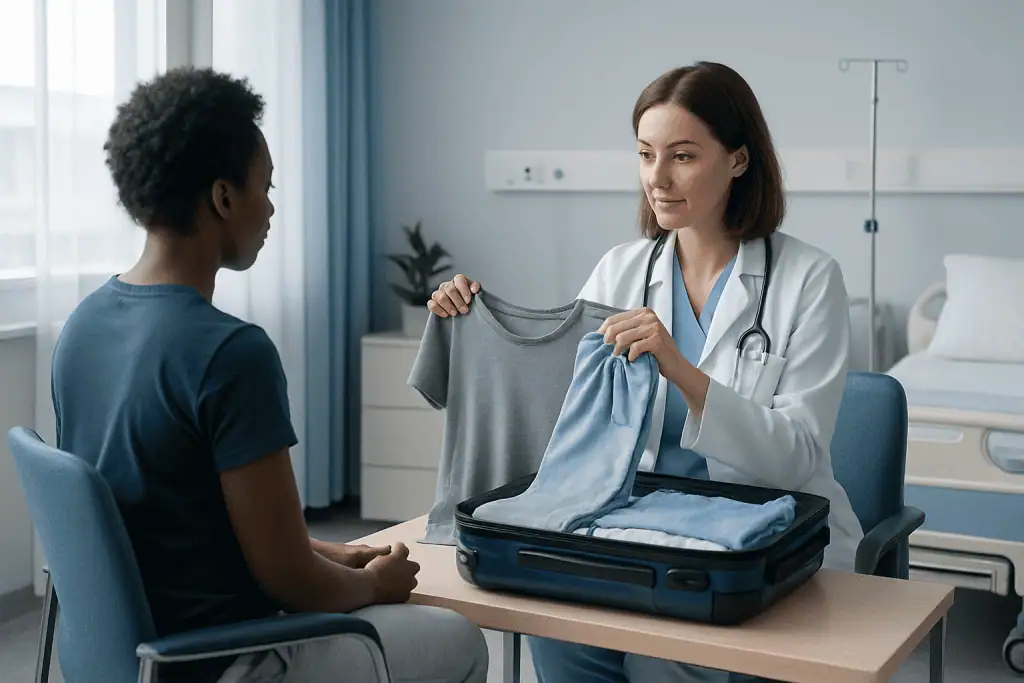
This is not the trip for fitted or complicated clothing. Choose soft, loose layers that go on and come off without effort: front-opening shirts, wide-leg trousers, elastic waistbands, a light cardigan or zip-up jacket. Airports, transfer vehicles and hospital rooms all run at different temperatures, so layers beat one heavy garment every time.
Think about access as well as comfort. If your treatment involves your arm, a shirt that buttons at the front is easier than anything pulled over the head. If it involves your legs or abdomen, avoid waistbands that press on the treatment area. If your mobility may be limited afterwards, pick clothing a companion or nurse can help you into without awkwardness.
A workable clothing plan for the hospital bag looks like this:
- Two or three loose tops or button-front shirts
- Comfortable trousers or a long skirt with an elastic waist
- Slip-on shoes with non-slip soles, and lightweight slippers if permitted on the ward
- A robe, cardigan or shawl for warmth and modesty during ward rounds and transfers
- Underwear and socks that do not press tightly, compression socks only if your doctor has recommended them for travel
- A going-home outfit loose enough to fit over dressings, drains or swelling
You do not need your whole wardrobe on the ward. If you are staying near the hospital, a companion can bring fresh items later. Keep the hospital bag small enough to fit in a bedside cabinet.
Toiletries and personal items: keep them simple
Travel-size toiletries cover almost everything: toothbrush, toothpaste, lip balm, gentle face wash, unscented moisturiser, deodorant, hairbrush, hair ties, shaving items if you use them. Skip strong fragrances, large bottles and anything harsh on skin, treatment and recovery can make skin more sensitive than usual, and shared ward air is kinder without perfume.
The items people genuinely regret forgetting are the small personal devices: glasses, hearing aids, dentures, contact lenses and their cases, cleaning solutions, spare batteries and charging cables. These are easy to overlook and hard to replace quickly abroad, and they matter enormously for communication and safety in an unfamiliar environment. Label the cases with your name and keep them together in one pouch, so nothing goes missing during a room transfer or a trip to imaging.
Hospitals normally provide bedding and basic patient necessities, so leave towels and linens at home. What hospitals cannot provide is familiarity, and one or two small familiar items make an unfamiliar room feel calmer. At Acibadem International hospitals, patient care teams and interpreters can tell you what is available on site and what is worth bringing. The aim is not to pack for every possibility; it is to bring the few things that keep your routine and your dignity intact.
Phone, chargers and staying connected
Your phone will be your map, translator, document wallet, appointment reminder and link to family, so treat it as medical equipment. Pack the charger, a power bank, a plug adapter for your destination (Turkey uses the two-pin European style) and cables for any devices or hearing aids that charge. The plug adapter is one of the most commonly forgotten items in any luggage, buy two and keep one in the carry-on.
Before you fly, prepare for the moments without internet:
- Download offline copies of your itinerary, appointment details, prescriptions, imaging links and insurance documents
- Save key numbers where they work without data: hospital contact, hotel, companion, your embassy or consulate, and your insurer’s assistance line
- Write the hospital and hotel addresses on paper, in local spelling, for taxi drivers
- Update the emergency contacts, allergies and medication details in your phone’s health app
If you are coming to Acibadem International, interpreter services can support communication during appointments and admission, but a few written phrases and addresses still help in taxis, pharmacies and shops. Agree with family at home how often you will send updates: a fixed daily message is calmer for everyone than answering a stream of worried texts during admission.
Pack for your companion and the recovery days
If someone is travelling with you, pack as a team rather than as two separate travellers. Your companion should carry copies of your documents, the hospital address, emergency contacts, a payment method and a note of your allergies and regular medicines. They will spend hours in waiting areas, hotels and pharmacies, so they need their own comfortable clothes, medicines, chargers, snacks and something to pass the time. Their energy directly affects your comfort.
Recovery needs are different from admission needs, and this is where most people under-pack. Depending on your treatment plan, the days between discharge and flying home may call for loose sleepwear, easy snacks if permitted, a refillable water bottle, entertainment, a notebook for questions and a folder for discharge instructions. Do not bring wound care products or medical equipment on your own initiative, only what your healthcare team specifically recommends. Our guide to what to pack for recovery after treatment goes deeper into the hotel-stay phase.
Think ahead to the journey home too. After some treatments, the return flight is the least comfortable part of the trip, and a small, deliberately packed post-surgery flight home comfort kit makes a real difference. Finally, leave empty space in your luggage: you will likely return with reports, medicines, receipts and sometimes assistive items you did not leave home with.
What to leave at home
Packing well is also about subtraction. Leave behind:
- Valuables. Expensive jewellery, unnecessary electronics, large amounts of cash and irreplaceable sentimental items. Hospitals and hotels are busy environments, and you will have enough on your mind without guarding possessions.
- Unapproved supplies and remedies. Herbal products, large quantities of supplements and self-selected wound care materials. Some products interact with medicines, and some are restricted at customs. If a supplement matters to you, bring it in original packaging and disclose it to your medical team before treatment begins.
- The oversized suitcase. You may move from airport to hotel to hospital and back while tired or recovering. If assistance with bags would help, arrange it in advance through the airline, airport, hotel or your international patient coordinator rather than hoping on the day.
Step by step
- Confirm your treatment itinerary. Review your appointment dates, the estimated hospital stay and the planned recovery period before you pack anything. Ask your international patient contact which documents, tests or personal items your admission specifically requires.
- Build a carry-on medical folder. One slim folder: passport, travel documents, insurance details, hospital confirmation, medical records, printed prescriptions, allergy list and emergency contacts. Photograph every page as backup.
- Organise medicines before departure. Original packaging, cabin bag, written medication list with generic names, doses and timing. Ask your doctor whether any medicine needs a travel letter, and ask the airline about anything refrigerated or injected.
- Pack one small hospital bag. Only what you will use on the ward: toiletries, loose clothing, charger, glasses or hearing aids, one comfort item, notebook and pen. It should fit in a bedside cabinet.
- Pack separately for the recovery stay. Extra comfortable clothing, entertainment, snacks if allowed, and empty space for discharge papers and reports. Rest is the goal; heavy luggage is its enemy.
- Brief your companion. Give them copies of the itinerary, hospital contacts and key medical information. Agree who carries which documents and who holds the backups.
- Check travel and customs rules. Baggage limits, liquid rules, medication restrictions and visa requirements. If you carry injectables, cooling packs or mobility aids, confirm airport procedures before the day of travel, not at the security queue.
Your checklist
- Passport, visa or entry documents, and travel insurance details
- Hospital appointment confirmation and accommodation address (also on paper, in local spelling)
- Printed and digital medical records, test results and imaging reports
- Regular medicines in original packaging, with prescriptions or a doctor’s letter
- Written medication list with generic names, allergy list and emergency contacts
- Loose front-opening clothing, slip-on shoes and a roomy going-home outfit
- Travel-size toiletries; glasses, hearing aids or dentures with labelled cases
- Phone, charger, power bank and plug adapter (ideally two)
- Payment cards and a small amount of local currency
- Notebook, pen and a folder for discharge papers, plus empty luggage space for the journey home
Key takeaways
- Documents and medicines travel in your carry-on, never only in checked luggage.
- Original packaging, prescriptions listing generic names, and a clear medication list prevent delays at customs and admission.
- Loose, front-opening clothing beats formal outfits; a small hospital bag beats a full suitcase on the ward.
- Printed copies still matter: phones run out of battery at exactly the wrong moments.
- Leave valuables and self-selected medical supplies at home, and leave empty space in your luggage for the return trip.
- Acibadem International patient services can advise on documents, interpreters, arrival and accommodation before you pack.
Frequently asked questions
What should I include in my medical kit for travelling abroad?
For a treatment trip, the core kit is your regular medicines in original packaging, prescriptions or a doctor’s letter with generic names, a written medication and allergy list, and any personal devices such as glasses or hearing aids with their cases and chargers. Add basics like plasters and lip balm if you wish, but do not pack wound care materials or medical equipment unless your treating team has asked for them.
How do I pack medicine for international travel?
Keep every medicine in its original packaging with the pharmacy label visible, place it all in your cabin bag, and carry a prescription or doctor’s letter listing generic names and doses. Controlled medicines, injections and refrigerated medicines need extra checks: confirm the destination country’s rules and your airline’s requirements before you fly, and never change how you take a medicine without your doctor’s instruction.
What should I pack for someone staying in hospital?
A small bag with loose front-opening clothing, a robe or shawl, slippers if permitted, travel-size toiletries, their phone and charger, glasses or hearing aids with cases, a notebook and pen, and one familiar comfort item. Hospitals usually provide bedding and basics, so avoid bulk. If you are their companion, also carry copies of their documents, medication list and key contacts.
What is the most commonly forgotten item?
For treatment travel, the usual culprits are the plug adapter, phone charger and the cases and cleaning supplies for glasses, hearing aids or dentures, small items that are hard to replace quickly abroad. Documents and medicines are forgotten less often but cause far bigger problems, which is why they belong in one carry-on folder you check twice before leaving home.
Should I bring all my medical records or only recent ones?
Bring the most recent and relevant records: test results, imaging reports, discharge summaries and your medication list. If your condition is complex or you have had previous surgeries or implants, bring the older key records too. Your international patient coordinator can usually tell you before travel which documents matter most for your specific treatment.
How should I pack if I am travelling alone?
Pack lighter than you think you need, because you may handle bags while tired or recovering. Keep documents, medicines, phone and charger in one easy-to-reach carry-on, and store backup copies where family at home can access them. Ask in advance about airport assistance, transfers and interpreter support: these can all be arranged before you travel rather than improvised on arrival.
Should I bring cash for hospital treatment abroad?
Bring a small amount of local currency for taxis, snacks and everyday expenses, but avoid carrying large sums. Use secure card payments where possible, confirm the hospital’s payment process before travel, and keep cards, receipts and financial documents together in a safe place, separate from your spending money.
What if I forget something important?
Most everyday items can be bought locally or arranged through your hotel or patient services team, so do not let a forgotten toothbrush add stress. Documents and medicines are the genuinely hard things to replace, which is why they get double-checked and travel in your carry-on. If you are treated at Acibadem International, your patient team can point you towards practical local solutions when something is missing.
Add us as a Preferred Source to see more of our trusted health content across Google Search, AI Overviews and Discover.

Update history
- PublishedJune 6, 2026
- Medical review approvedSeptember 13, 2026
- Last content updateSeptember 12, 2026
References1
- Pack Smart: CDC Travelers' Health wwwnc.cdc.gov
More Patient Guides

GHIC and EHIC in Turkey: Why They Do Not Cover You
The blue card that quietly covers you across Europe stops working at the Turkish border, and every summer, travelers discover this…

Do You Need Vaccinations for Turkey?
Here is the answer travel clinics give every day: no vaccinations are required to enter Turkey from anywhere in the normal course…

Flying With a Broken Leg or Cast: Airline Rules and Comfort
A broken leg does not cancel a flight, airlines carry passengers in casts every single day. What surprises travelers is that…
Travel Insurance After Cancer: What Patients Should Know
A cancer diagnosis changes how insurers read your name, but it does not end your traveling life. Thousands of people with…