

When Can You Wear a Hat After a Hair Transplant?
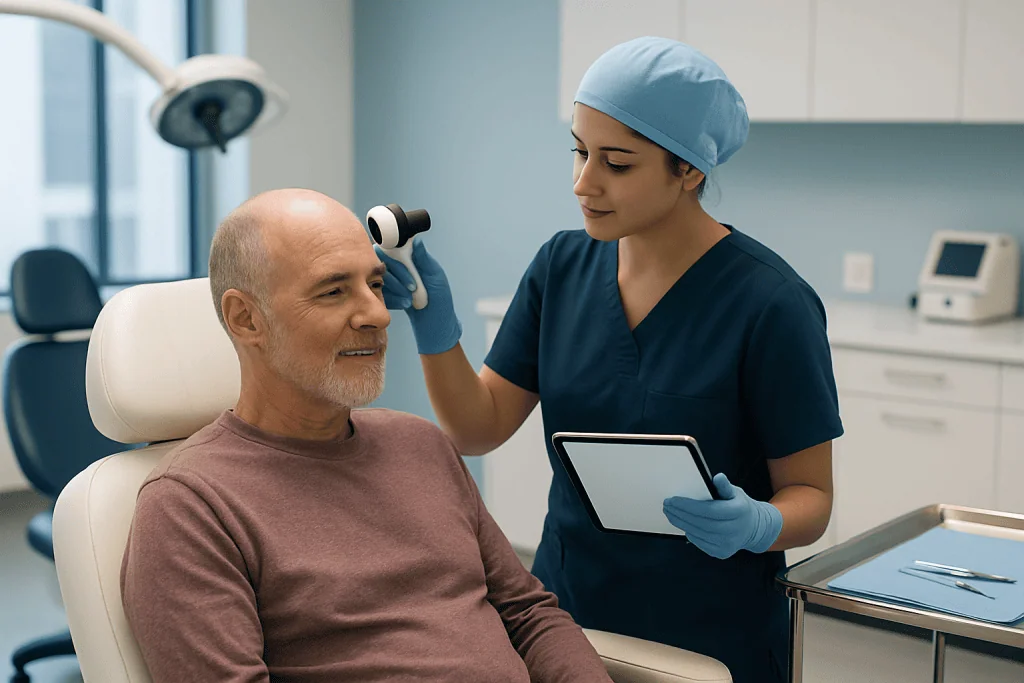
Not straight away. Newly placed grafts are vulnerable to friction and pressure, so most surgeons ask you to keep all headwear off for at least the first week. Many patients can use a loose, clean, adjustable hat around days 7–14, and ordinary soft hats are usually comfortable by one month. Your own surgeon's schedule takes priority over any general timeline.
You want to know how soon you can cover your head again, for the flight home, the first day back at work, or a quiet trip to the shops. So, can you wear a hat after hair transplant surgery? Not straight away, and the honest answer has two parts. In the earliest days, no hat at all: pressure, rubbing and accidental snagging can disturb grafts that have only just been placed. After that, timing depends on the hat as much as the calendar. Many patients can use a loose, clean cap from around days 7–14. Your surgeon’s written instructions always take priority, because your healing, your procedure and the type of headwear all change the answer.
At a glance
- Typical timing: loose headwear is often considered from days 7–14, with your surgeon’s approval.
- First few days: no hats, caps, beanies, hoods, helmets or anything else that touches the recipient area.
- Best early option: a loose, clean, adjustable cap with a roomy crown that clears the grafts entirely.
- Avoid at first: tight beanies, fitted caps, bandanas, hard hats and helmets.
- Around one month: most ordinary soft hats are comfortable if healing has been uncomplicated.
- The priority: protect the grafts, not the appearance: a few extra uncovered days cost you nothing.
Can you wear a hat after a hair transplant?
Yes, but not immediately, and not any hat. People typing “can you wear a hat after hair transplant” into a search bar usually want a single date. There is not one, because two things move the answer: how far along your grafts are, and how much contact the hat makes. Newly implanted grafts sit in small channels in the scalp and need time to anchor. A hat can create friction when it slides on, pressure while it sits, and pulling when it comes off. That is why nearly every clinic asks you to keep your head completely uncovered for at least the first several days.
If your real question is “how soon can I wear a hat after hair transplant surgery”, think in ranges rather than dates. Many surgeons permit a loose, clean, adjustable cap from around day 7 to day 14, provided healing is on track. Tighter styles, snug beanies, fitted caps, anything with a firm inner band, usually wait longer. Hard hats and helmets wait longest of all, because they apply sustained pressure and heat.
Technique matters less than people assume. Whether you had an FUE hair transplant or a DHI procedure, the recipient area heals in broadly the same way, and the headwear rules are broadly the same. What genuinely changes the timeline is where the grafts sit, how large the treated area is, and how your individual scalp is healing. Your surgeon’s schedule reflects those specifics; a general article cannot.
Why the first days are different
It helps to understand what you are protecting. In the first days after surgery, each graft is held in place mainly by the clot and early tissue around it. Three things threaten that:
- Shear. A hat dragged across the scalp as you put it on or take it off can catch grafts or the scabs attached to them. This is the single biggest risk with early headwear.
- Sustained pressure. A band or fitted crown pressing on the recipient area compresses healing tissue for as long as you wear it, very different from a brief accidental touch.
- Heat, sweat and hygiene. A warm, damp environment under a hat encourages irritation, and an unwashed hat introduces bacteria to a scalp with open micro-wounds.
This is the same logic behind the sleeping rules most clinics give you, elevation, clean pillowcases, no face-down positions. If you are planning those first nights, our guide on how to sleep after a hair transplant covers the positions and the timeline in detail.
Hat timeline after hair transplantation

The honest answer to “how long after hair transplant can I wear a hat” is a staged one. Healing timelines vary between people, but this table gives you a realistic planning framework for travel, work and time in public. The consistent principle at every stage: nothing should touch, rub or compress the recipient area while grafts are still vulnerable.
| Time after treatment | General headwear guidance |
|---|---|
| Days 0–3 | No hats, caps, beanies, helmets or hard hats. Avoid all direct contact with the grafts. |
| Days 4–6 | Usually still no headwear, unless your surgeon specifically permits a very loose option for brief travel. |
| Days 7–10 | Some patients may use a loose, clean, adjustable cap with approval. Put it on and remove it with great care. |
| Days 11–14 | Many patients can wear loose headwear more routinely if scabs are resolving and healing is uncomplicated. |
| Weeks 3–4 | Normal soft hats are often tolerated. Still avoid anything tight, abrasive or likely to trap heat and sweat. |
| After 1 month | Most people return to their usual hats. Work helmets and very tight headwear may still need individual advice. |
This table is a planning tool, not a substitute for your personal aftercare plan. Your surgeon may shift the schedule based on the area treated, the number of grafts placed, your scalp’s sensitivity and how the early days actually go. Headwear is only one strand of the recovery rules, washing, sun exposure, exercise and sleep all have their own timelines, gathered in our complete post-op care instructions.
Can I wear a hat 1 month after a hair transplant?

In most uncomplicated recoveries, yes. By one month the grafts are generally well established, the surface of the scalp has usually healed, and ordinary soft headwear is unlikely to cause a problem. This is also the period when many patients notice transplanted hairs shedding: a normal phase of the cycle, and one a hat neither causes nor prevents. The month-by-month recovery timeline explains what to expect at each stage.
Choose comfort over concealment if your scalp is still tender or itchy at this point. A clean, breathable, unstructured cap is a better choice than a tight baseball cap, a rough wool beanie or anything with a stiff inner band. Persistent redness, sores or significant scaling at one month is worth raising at your follow-up rather than simply covering.
Sun protection remains relevant well past the first month, because healing skin is more sensitive to strong light. A loose hat becomes a useful tool here rather than a risk, one reason many surgeons are keen for you to reach the point where headwear is comfortable. Ask your surgeon when sunscreen is suitable for the recipient area, and use shade in the meantime.
Beanies, baseball caps, hoods and hard hats: a hat-by-hat guide
Beanies
A beanie is more problematic than it looks. Most fit snugly across the whole scalp and drag over the grafts as they go on and come off. A sensible general window is at least 10–14 days, with your surgeon’s approval, and even then a loose, soft beanie rather than one with a tight elastic edge. If it catches on scabs or feels compressive, it is too early.
Baseball caps
An adjustable cap with a roomy crown is usually the earliest acceptable option, because it can be sized to clear the recipient area entirely. Set the strap loose before it goes anywhere near your head, keep the front edge away from the transplanted hairline, and avoid taking it on and off repeatedly through the day. It must be freshly washed and completely dry.
Hoods, buffs and bandanas
A loose hood on a zip-up top can be a reasonable stopgap because it does not grip the scalp, but only if it hangs clear of the grafts and the garment does not need to be pulled over your head. Bandanas, buffs and headscarves tied with tension behave like tight beanies and should wait just as long.
Hard hats and helmets
Hard hats, motorcycle helmets, cycle helmets and similar protective equipment sit at the far end of the timeline. They apply sustained pressure through a suspension band, trap heat and sweat, and are often worn for hours at a stretch. Many people need several weeks before returning to this kind of headwear, and the exact timing is genuinely individual: it depends on where the contact points fall relative to the grafts. If your job requires a hard hat, raise it with your surgeon before scheduling surgery so you can plan realistic time away or modified duties, rather than discovering the conflict afterwards.
A side note for a related search: “can I wear a hat after a perm” is a styling question, not a surgical one. A hat will not harm chemically treated hair once the perm has set, though stylists often suggest waiting a day or two so fresh curls are not flattened. The two situations share nothing beyond the hat.
Choosing a loose fitting hat for hair transplant recovery
When your surgeon approves headwear, the hat itself deserves five minutes of thought. A good loose fitting hat for hair transplant recovery has:
- An adjustable closurestrap, buckle or snapback, set loose before you put it on.
- A high, roomy crown that sits above the grafts rather than resting on them.
- Soft, breathable fabric such as light cotton; nothing abrasive, stiff or heavily seamed on the inside.
- No tight inner band pressing on the hairline, which is often exactly where new grafts sit.
- Cleanlinessfreshly washed, fully dry, and not shared with anyone.
Just as important is how it goes on. Wash your hands, open the hat as wide as it allows, lower it straight down without dragging it across the scalp, and reverse the process to remove it. Replace the hat if it becomes sweaty, dusty or damp; moisture and bacteria irritate a healing scalp. If your clinic has prescribed scalp care products such as a healing spray, keep using them on the schedule you were given: our guide to panthenol spray after a hair transplant explains how that fits into the routine.
Are grafts secure after 7 days?
More secure than on day one, but not ready for rough handling. By around a week, the early anchoring process is well underway and the risk of dislodging a graft through minor contact has fallen considerably. The scalp, however, often still carries scabs and remains sensitive, so the washing rules, the no-scratching rule and the gentle-handling rule all still apply.
This partial security is exactly why the question “can you wear a hat after hair transplant surgery at the one-week mark” gets different answers from different clinics. Some are comfortable with very loose headwear from around day 7; others prefer patients to wait until day 10 or 14. Neither position is wrong: they reflect different surgical protocols and different levels of caution, applied to patients the clinic can actually examine. That is also why forum threads and Reddit discussions about hats after a transplant are useful for gathering questions but poor for making decisions: nobody posting there has seen your scalp.
How to hide your head after a hair transplant
Wanting privacy during the visible early period is entirely understandable. The safest concealment strategy costs nothing: plan a quiet week. Where possible, schedule the days after surgery away from social and work commitments, use shade or an umbrella outdoors, and wear button-front shirts or zip-up tops so nothing has to pass over your head. Avoid crowded spaces where your scalp could be bumped, and let someone else handle heavy bags.
What not to do: hair fibres, camouflage sprays, concealers and styling products have no place on the recipient area until your clinical team confirms they are safe, which is usually well after the scabbing phase. Early redness and flaking are temporary and expected. Trading graft protection for faster concealment is the one exchange that can genuinely cost you.
Once headwear is approved, a loose cap covers most of what people worry about being seen. Until then, patience is the concealment method with no downside.
Hats, flights and the journey home
International patients often have their return flight booked before the headwear window opens, and airlines do not require you to cover your head, so do not assume a hat is necessary for travel. If your surgeon has not yet cleared headwear, travel uncovered: choose an aisle-avoiding seat strategy that keeps you away from overhead-bin traffic, keep your aftercare supplies in your hand luggage, and use shade between the terminal and your transport. Our guide on flying soon after treatment in Turkey covers the timing side of the journey itself.
If your flight falls inside an approved headwear window, apply the same rules as at home: a loose, clean, adjustable cap, put on carefully and left in place rather than fiddled with through the flight. Cabin air is dry, so follow whatever moisturising or spray schedule your clinic gave you.
Step by step
- Confirm your personal timeline before leaving the clinic. Ask exactly when a loose cap, a beanie, a helmet and any work-related protective headwear become acceptable for you, and get it in writing, especially if you are flying home soon after surgery.
- Keep everything off in the earliest days. Protect your scalp from sun, dust and accidental knocks with shade, an umbrella and sensible route planning instead of a hat.
- Start only with approved loose headwear. A clean, breathable, adjustable cap with a roomy crown and no tight band. It must clear the grafts entirely, not merely feel comfortable.
- Put it on and take it off slowly. Clean hands, hat opened wide, lowered straight down, lifted straight off. Never dragged across the scalp.
- Keep hats clean and dry. Freshly washed, never shared, replaced the moment they turn sweaty or dusty.
- Treat work equipment as a separate question. A hard hat is not a loose casual cap. Sort out modified duties or time away with your surgeon and employer in advance, and let your healing, not the calendar, set the final pace.
Your checklist
- Written post-transplant instructions from your surgeon, including headwear dates
- A loose, clean, adjustable cap, used only once approved
- Button-front or zip-up tops for the first two weeks
- An umbrella or another reliable way to stay in shade
- Prescribed medications and scalp-care products in your hand luggage
- A plan that avoids heavy lifting and crowded transport
- Workplace arrangements if your job requires a hard hat or helmet
- A follow-up plan for after you return home
Key takeaways
- No hats at all in the first few days, unless your surgeon gives a specific exception.
- Many patients can wear a loose, clean, adjustable cap from around days 7–14, depending on healing and clinic protocol.
- Tight beanies, bandanas, fitted caps, helmets and hard hats need more caution and more time than loose casual headwear.
- At one month, ordinary soft hats are commonly comfortable after an uncomplicated recovery.
- How a hat goes on and comes off matters as much as when, slow, straight down, never dragged.
- Your own surgeon’s aftercare instructions are the safest guide, particularly when travel is involved.
Frequently asked questions
Can you wear a hat after a hair transplant?
Yes, but not straight away. Grafts need several days of undisturbed healing before any headwear is sensible. Most surgeons permit a loose, clean, adjustable cap somewhere between days 7 and 14, and tighter styles later. Your surgeon’s own schedule overrides any general timeline, including this one.
How long after a hair transplant can you wear a hat?
Commonly 7–14 days for a loose cap, around three to four weeks for ordinary soft hats, and longer for anything tight or pressurised such as a helmet. The exact window depends on where your grafts sit, how large the treated area is and how your healing progresses, which is why clinics give individual dates rather than one rule.
Can you wear a hard hat after a hair transplant?
Eventually, yes, but hard hats and helmets need the longest wait because they apply sustained pressure through a suspension band and trap heat and sweat over long shifts. Many people need several weeks before returning to this kind of equipment. If your job requires one, discuss the timeline with your surgeon before booking surgery.
Are grafts secure after 7 days?
They are considerably more secure than immediately after surgery, and the anchoring process is well underway, but they are not ready for rough handling. Scabs and sensitivity often remain at this point. Some clinics accept very loose headwear from day 7; others prefer day 10 or 14. Follow your own clinic’s protocol.
Can I wear a hat 1 month after a hair transplant?
In most uncomplicated recoveries, yes, ordinary soft hats are usually comfortable by one month, as the grafts are generally well established and the scalp surface has healed. Choose breathable, clean headwear without a stiff inner band if your scalp is still tender, and raise any persistent redness or scaling at your follow-up.
What hat can I wear after a hair transplant?
Once headwear is approved, the best first hat is a loose, adjustable cap with a roomy crown, soft breathable fabric and no tight inner band, set loose before it goes on, lowered straight down with clean hands, and freshly washed. Tight beanies, bandanas and anything structured or abrasive should wait longer.
How can I hide my head after a hair transplant without a hat?
Plan a quiet first week, use shade or an umbrella outdoors, and wear button-front or zip-up tops so nothing passes over your scalp. Avoid hair fibres, camouflage sprays and concealers on the recipient area until your clinical team confirms they are safe. Early redness and scabbing are temporary parts of normal healing.
Add us as a Preferred Source to see more of our trusted health content across Google Search, AI Overviews and Discover.

Update history
- PublishedAugust 16, 2026
- Medical review approvedSeptember 2, 2026
- Last content updateSeptember 2, 2026
References1
- Hair transplant: NHS nhs.uk
More Patient Guides

Septoplasty Recovery: Week by Week
Learn what to expect after deviated septum surgery: a week-by-week septoplasty recovery timeline, when it is usually safe to fly home, and…

Gallbladder Surgery Recovery: Week by Week
Learn what to expect after gallbladder surgery: a week-by-week recovery timeline, pain, diet, wound care, when it is safe to fly home…

Robotic Hysterectomy Recovery: Week by Week
Recovery from robotic hysterectomy week by week: pain, lifting, wounds, driving, flying home safely, warning signs and questions to ask before you…

Breast Reconstruction Recovery: Week by Week
DIEP flap recovery week by week: hospital stay, drains, pain, walking, showering, driving, when it is usually safe to fly home, and…