

When Is It Safe to Fly After Treatment in Turkey?

It is safe to fly after treatment in Turkey only when the doctor who treated you confirms you are fit to travel. There is no universal waiting period: timing depends on the procedure, anaesthesia, your mobility, wound stability and clot risk, plus the length of the flight. Minor procedures may allow travel within days; major surgery usually needs longer and a final review before departure.
You booked the return flight before you booked the operation. Most international patients do. So is it safe to fly after treatment in Turkey on the date printed on that ticket? The honest answer is that nobody can tell you from a website. What a guide can do is explain how the decision is made, so you know what your doctor is weighing and what to plan around.
Flying home after treatment is a medical decision first and a travel decision second. You should board only when your treating team confirms you are fit to fly, your recovery is stable, and you know how to manage the journey itself: medicines, movement, documents and assistance.
At a glance
- The rule: fly only after the doctor who treated you confirms you are fit to travel — there is no universal safe day
- What decides it: the procedure, anaesthesia or sedation, wound stability, mobility, pain control and clot risk
- The flight matters too: a short direct flight is a different proposition from a long multi-leg journey
- Before departure: carry your discharge summary, prescriptions and any airline letter in hand luggage
- Medicines: controlled painkillers and sedatives are regulated at Turkish borders — carry documentation, original packaging and personal-use quantities
- If timing is uncertain: book flexible or changeable tickets rather than gambling on the earliest date
Is it safe to fly after treatment in Turkey? The short answer
Yes — provided you fly at the right time, and the right time is set by your treating doctor, not by your ticket. People ask “is it safe to fly after treatment in Turkey?” as if there were one answer, but there cannot be. A tooth whitening appointment, a dental implant, a knee replacement and abdominal surgery place completely different demands on the body, and the same procedure can go smoothly in one person and slowly in another. Fitness to fly is assessed for you, on the day, against the journey you actually face.
Feeling well is a useful sign but not a sufficient one. You may walk comfortably around your hotel and still not be ready for a flight. Air travel adds things a hotel does not: hours of sitting in a confined seat, cabin pressure changes, dry air that dehydrates you, luggage to lift, distances to walk between gates, and no easy way to reach medical care mid-journey. That is why the date you are discharged from hospital and the date you are cleared to fly are often not the same date — and why the second one is the one that matters.
Hospitals that regularly treat international patients plan this part of the journey alongside the medical care itself: where the return flight should realistically sit, whether a review appointment is needed shortly before departure, what paperwork travels with you, and whether airport assistance should be arranged. None of that replaces the medical decision. It simply makes the cleared date easier to travel on.
What determines when you can fly home
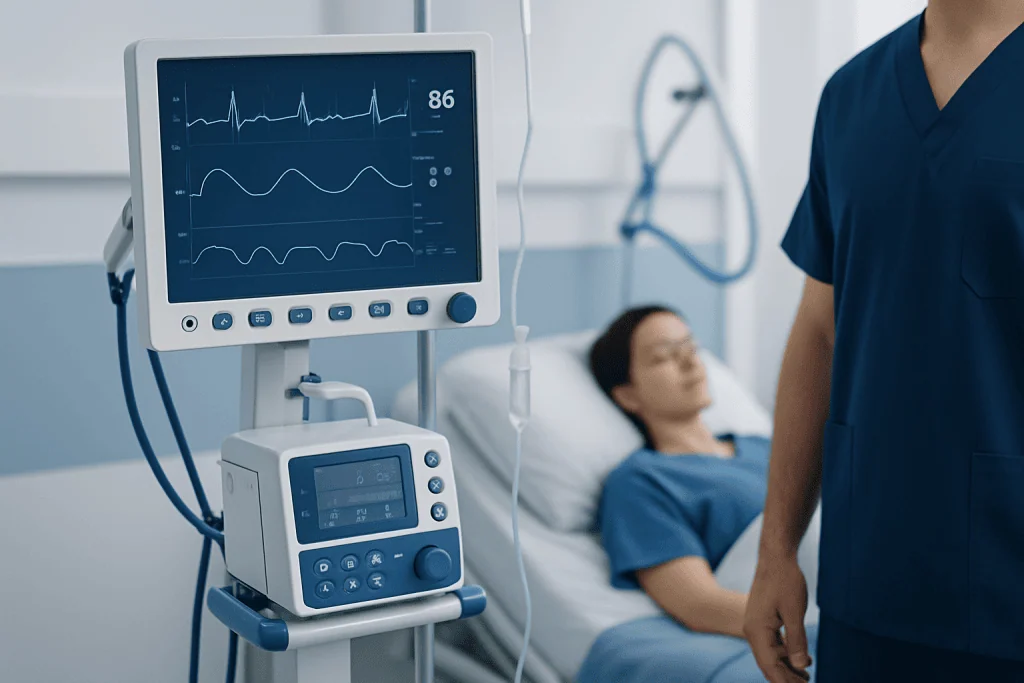
The single biggest factor is what was done to you. A minor outpatient procedure may allow travel within a day or two. Major surgery — particularly anything involving the chest, abdomen, or weight-bearing joints — usually needs longer, because the risks that matter in the air (bleeding, swelling, clots, wound strain) take time to settle on the ground first. Some procedures carry a specific aviation issue: if gas has been introduced into the eye or a body cavity during surgery, it expands as cabin pressure falls, and flying before it has been absorbed can be genuinely dangerous. Your surgeon will tell you if this applies. For typical waiting patterns by operation type, see our guide to flying after surgery, procedure by procedure.
The second factor is how your recovery is actually going. Before clearing you, a doctor typically wants to know that your pain is controlled with oral medicines, you can eat and drink normally, you can walk safely, your temperature is normal, and any wound, drain, cast or dressing is stable enough to survive a travel day. These are individual checks, which is why a fixed number of days printed on a website is never a substitute for a review.
The third factor is the journey itself. A three-hour direct flight home is a different physical event from fourteen hours across two connections with an overnight airport wait. Doctors clear people for a specific journey, so describe yours honestly, including layovers, terminal changes and how much luggage you intend to handle alone.
- Type and extent of the treatment, and whether gas was used during surgery
- General anaesthesia or sedation, and how recently
- Bleeding, swelling and blood clot risk in your specific case
- Your mobility, pain control and general condition on the day
- Length and complexity of the flight, including connections
- Whether you travel with dressings, drains, a cast or oxygen support
Why flying too soon can be risky
The most discussed risk is blood clots. Surgery itself raises clot risk for a period afterwards, and long stretches of immobile sitting raise it further. Dehydration — which dry cabin air encourages — makes the picture worse. This is why post-surgical patients are often advised on compression stockings, in-seat exercises and, in some cases, preventive injections, all decided by the treating doctor rather than adopted from a checklist.
Cabin pressure is the second issue. Aircraft cabins are pressurised to the equivalent of roughly 1,800 to 2,400 metres of altitude, not sea level. At that pressure, trapped gas expands, swelling can become more uncomfortable, and some patients feel markedly more pain in the air than they expected on the ground. Recent surgical sites can also be more vulnerable to bleeding and strain during a long, tiring journey with lifting, queuing and interrupted medicine timing.
The third issue is practical rather than physiological: distance. A problem that would be straightforward to assess while you are still near your surgical team becomes far harder to manage mid-flight or in an unfamiliar airport. This is why many surgeons prefer a final review shortly before departure and send patients home with a written summary of what was done, what to expect, and how follow-up is arranged.
Anaesthesia, sedation and the first days
General anaesthesia and sedation deserve their own mention because they affect travel even after minor procedures. In the first day or so, judgement, balance and reaction times can be subtly impaired, which matters when you are navigating airports, escalators and unfamiliar signage alone. Nausea and drowsiness are also more likely early on, and neither combines well with turbulence and airline meals. Most teams advise against travelling unaccompanied in the immediate window after sedation; the specifics depend on what you were given and for how long. Our guide on flying home after sedation or anaesthesia covers this in detail.
Questions to ask before you book the return flight
The most useful thing you can get from your treating team is not a single earliest date but a realistic travel window, plus the conditions attached to it. Ask specifically, and write the answers down while you are still in Turkey — details blur quickly once you are home.
- Am I medically fit to fly on my planned date, for this specific journey?
- Would a direct flight be meaningfully safer than my connecting itinerary?
- Do I need compression stockings, injections or other clot precautions, and who provides them?
- How often should I stand, stretch or walk during the flight?
- How should my dressing, drain, cast or stitches be managed in transit?
- Do I need a travel letter for airline staff or airport security?
- Should I avoid lifting luggage, and for how long?
Because the safe date can move with your recovery, it is worth building flexibility into the ticket itself rather than paying for rigidity twice — once at booking and again at rebooking. Our guide to booking flexible return flights after treatment in Turkey explains fare types, change windows and how to keep options open without overpaying.
Travelling with medicines: what you can and cannot take through Turkish borders
Many patients leave Turkey carrying medicines — painkillers, antibiotics, anti-nausea tablets — and many arrive carrying their regular prescriptions. Turkey, like most countries, regulates controlled substances at the border. Strong opioid painkillers, certain sedatives and some psychotropic medicines fall into this category. The general principles are consistent: carry medicines in their original, labelled packaging; bring the prescription or a doctor’s letter naming the medicine and the reason for it; keep quantities to what is plausibly for personal use during the trip; and keep everything in hand luggage, never posted ahead or buried in a checked bag.
If you are travelling with a specific controlled medicine and are unsure of its status, check with the Turkish embassy or consulate in your country before you fly, and tell your airline if documentation may be needed. If you were discharged with strong painkillers, our guide on opioid and strong painkiller safety after discharge in Turkey explains storage, documentation and safe use during travel. Any change to what you take, when, or how much remains a decision for your treating doctor — not for a border queue or a travel day.
Is it safe for an American to fly to Turkey right now?
This question appears constantly alongside questions about flying home, so it deserves a straight answer. The U.S. Department of State publishes a standing travel advisory for Turkey, and its guidance is not uniform across the country: the advisory level differs by region, with stronger cautions applying to specific border areas far from the cities where international patients are treated. Istanbul, Ankara and Izmir host major international airports and function as ordinary large-city destinations, but advisories change, so the responsible habit is simple — read the current advisory shortly before booking and again before departure, and check your own government’s equivalent guidance if you are travelling from elsewhere. The same applies in reverse when you plan the flight home: check airline requirements and any transit-country rules on your route.
Making the journey safer and more comfortable
Once you are cleared, plan the trip around your recovery rather than around convenience or price alone. Choose the simplest routing you can — ideally direct — and allow generous time at the airport so nothing has to be done at a run. If walking long distances is hard, pre-book wheelchair or buggy assistance through the airline; this is a standard free service, but it works far better requested in advance than improvised at check-in.
Pack deliberately. Hand luggage should hold everything you cannot afford to lose: medicines, your discharge summary and prescriptions, your passport, spare dressings, any compression garments your doctor advised, and a light snack if permitted. Wear loose clothing and shoes that cope with swollen feet. If time zones are involved, work out your medicine timing before the flight rather than in seat 34C.
In the air, drink water regularly unless you have been told to restrict fluids. Flex your feet and ankles while seated, and stand and walk at the intervals your doctor approved. Protect the treated area from pressure and knocks — an aisle seat helps if the site is on one side — and tell the cabin crew if you feel faint or need help moving safely. Crews handle recovering passengers routinely; a quiet word at boarding costs nothing.
After you land: follow-up still matters
Recovery does not end at arrivals. Expect to feel more tired than usual for a day or two after travelling, even after a smooth flight. Plan a quiet landing at home: no immediate return to work, no heavy lifting, and continued adherence to your medication, wound care and activity instructions exactly as written. When you feel ready to do more, our guide on resuming exercise after treatment in Turkey explains how activity is usually reintroduced in stages.
Share your discharge summary, imaging and operative notes with your local doctor so they understand what was done in Turkey and what your surgeon recommended next. Some aftercare — dressing changes, stitch removal, blood tests — is easier done locally; some follow-up can be handled remotely. Before you leave, ask your treating team which parts of your follow-up suit remote review and which need in-person assessment, and how your reports will be shared in a format your home clinicians can use.
Step by step
- Ask for a realistic travel window. Before booking flights, ask your treating doctor for the safest window rather than the earliest possible day. A range gives you room if you need one more review or a little more recovery time.
- Book flexibility, not just a date. Choose a changeable fare or a booking with a reasonable change fee so a moved date is an inconvenience, not a crisis.
- Schedule a final pre-flight check. Especially after surgery, aim for a review shortly before departure to confirm wound, mobility, pain control and general condition against the actual journey.
- Get documents and medicines ready. Carry the discharge summary, prescriptions, reports and any airline letter in hand luggage, with enough medication for the journey plus a few days’ buffer for delays.
- Arrange assistance early. Request wheelchair support, seating needs and boarding help through the airline in advance so the travel day is physically undemanding.
- Plan the flight around recovery. Prefer a direct route with minimal waiting and minimal luggage handling; if a long journey is unavoidable, build in time to move slowly and keep medicine timing on track.
- Protect yourself in the air. Hydrate, move as advised, keep pressure off the treated area, and follow instructions on stockings, injections and lifting limits.
- Land with a plan. Before leaving Turkey, confirm your follow-up arrangements at home and make sure your local doctor will receive your documents.
Your checklist
- Doctor has confirmed you are fit to fly for this specific journey
- Return flight date sits inside your cleared travel window
- Ticket allows changes if recovery runs slower than planned
- Discharge summary, reports and prescriptions are in hand luggage
- Medicines are in original packaging with documentation for any controlled items
- Airport wheelchair or assistance is booked if needed
- You know how often to move, stretch or walk during the flight
- You understand how your dressing, cast or stitches are managed in transit
- Follow-up at home is arranged and your local doctor will get your records
Key takeaways
- There is no universal safe day to fly after treatment in Turkey; medical clearance from your treating doctor is what matters.
- Procedure type, anaesthesia, mobility, wound stability and clot risk all shape the timing — as does the length and complexity of the flight itself.
- Some procedures involving gas in the eye or body cavities have specific flying restrictions your surgeon will explain.
- Controlled medicines crossing Turkish borders need original packaging, documentation and personal-use quantities.
- Direct flights, pre-booked assistance and careful hand-luggage packing make the cleared date far easier to travel on.
- Recovery continues after landing: follow-up planning deserves as much attention as flight planning.
Frequently asked questions
How long after surgical treatment can you fly?
It varies by procedure and by person. Minor outpatient procedures may allow travel within a day or two, while major abdominal, chest or orthopaedic surgery usually needs longer for bleeding, swelling and clot risk to settle. Procedures where gas was introduced — some eye and abdominal operations — carry specific flying restrictions because gas expands at cabin altitude. The date is set by the treating surgeon, for the specific journey planned.
Can I fly home the day after treatment in Turkey?
Sometimes, after very minor treatment without general anaesthesia — but not as a general rule. After surgery, sedation, or anything affecting mobility, it is safer to wait until your recovery is stable and your doctor has confirmed the date. Anaesthesia alone can impair balance and judgement in the first day, which matters when navigating airports.
How do I know if I am fit to fly after surgery?
The assessment comes from your treating surgeon or physician, not from how you feel on one particular day. They consider the wound, pain control on oral medicines, mobility, clot risk, any early complications, and the demands of your actual itinerary — a direct three-hour flight and a multi-leg long-haul journey are assessed differently.
Is it safe for an American to fly to Turkey right now?
Check the current U.S. State Department travel advisory for Turkey before booking and again before departure. Advisory levels differ by region, with stronger cautions for specific border areas rather than the major cities where international hospitals are located. Travellers from other countries should check their own government’s guidance, which is usually structured the same way.
What medications can I not take into Turkey?
Turkey regulates controlled substances at the border, including strong opioid painkillers and certain sedatives and psychotropic medicines. These are generally permitted for personal medical use when carried in original packaging with a prescription or doctor’s letter and in reasonable quantities. For a specific medicine, confirm its status with the Turkish embassy or consulate in your country before travelling.
Is a direct flight better after treatment?
Usually, yes. A direct flight means less walking between terminals, fewer delays, less lifting of bags and a shorter overall journey — all of which reduce the physical load on a recovering body. If a connection is unavoidable, a longer layover you can take slowly is generally easier than a tight one you have to rush.
Should I tell the airline I recently had treatment?
If you need assistance, mobility support, specific seating, or travel with a dressing, cast or medical equipment, tell the airline in advance — some situations require a medical information form or a fit-to-fly letter, which your hospital can provide. Declaring needs early makes the travel day smoother and avoids surprises at the gate.
Will I still need follow-up once I leave Turkey?
Often, yes. Some follow-up works remotely — reviewing reports, photographs of a healing wound, discussing progress — while dressing changes, stitch removal, blood tests and physical checks usually need a local clinician. Before departure, confirm which parts of your plan are remote and which are in person, and make sure your local doctor receives your discharge documents.
Add us as a Preferred Source to see more of our trusted health content across Google Search, AI Overviews and Discover.

Update history
- PublishedAugust 6, 2026
- Medical review approvedSeptember 1, 2026
- Last content updateSeptember 1, 2026
References2
- Deep vein thrombosis (DVT) — NHS — nhs.uk
- Travelers' Health — CDC — wwwnc.cdc.gov
More Patient Guides

Flying After a C-Section: Timing for New Mothers
A C-section is real abdominal surgery that happens to come with a newborn attached — so the flying question has two clocks…

When Can You Drive After Anesthesia or Sedation?
You feel fine an hour after the procedure. You are chatting, you walked to the car unaided, you could obviously drive it.…
Flying After Hip Replacement: When Is It Safe?
Hip replacement recovers famously well — many patients walk further at three weeks than they had in three years. Flying is part…

Flying After Knee Replacement: When Is It Safe?
The knee is new, the physio is going well, and there is a boarding pass with your name on it. Flying after…