

When to Bring a Family Member to Treatment in Turkey

Bring a family member when treatment involves sedation, reduced mobility, several days of recovery outside hospital, or decisions you would rather not weigh alone. For short consultations, imaging or minor procedures, confident travellers often manage independently with hospital coordination. Decide by asking the team planning your treatment how alert and mobile you are likely to be afterwards, then sort your companion's visa, documents and role before booking anything.
Should you travel alone, or ask your sister, husband or son to come with you? It is one of the first questions patients weigh when planning treatment abroad, and there is no single right answer. Whether you should bring a family member to treatment in Turkey depends on three things: how much the treatment will affect your independence, how confident you are managing an unfamiliar country while unwell, and whether the person you have in mind will genuinely make the trip easier rather than harder.
This guide works through each of those. It covers when a companion earns their seat on the plane, what they can realistically do, the visa and document questions that apply to a second traveller, and the situations where coming alone is a perfectly sensible choice.
At a glance
- Best for: Patients who may need practical, emotional, language or mobility support before, during or after treatment
- Most useful when: Sedation, surgery or recovery limits what you can safely do alone outside hospital
- Companion role: Travel logistics, note-taking during consultations, pacing your recovery, and support on the journey home
- Not always necessary: Short consultations, imaging, second opinions and minor procedures with easy mobility afterwards
- Plan ahead for: Your companion’s visa or e-visa, accommodation for two, hospital visiting rules, and the return flight
How to decide whether to bring a family member to treatment in Turkey
Start with one honest question: will you be comfortable managing the entire trip, not just the treatment, on your own? That means flights, airport transfers, hospital paperwork, medication timings, meals, laundry, and getting around safely in the days after treatment. If any part of that picture feels uncertain, that uncertainty is your answer. Most people who decide to bring a family member to treatment in Turkey do so not because the medicine demands it, but because the surrounding logistics feel heavier when you are the patient.
The clearest deciding factor is what happens after treatment. If your plan involves sedation or general anaesthesia, if you will have restrictions on walking, lifting or bending, or if you will spend recovery days in a hotel rather than a hospital bed, someone should be with you for at least the early period. Managing dressings, medication schedules and meals alone in a hotel room, while tired and sore, is where solo trips most often become difficult.
The second factor is communication and decision-making. Consultations abroad can involve a lot of information delivered quickly: options, timings, restrictions, follow-up plans. A second set of ears catches what you miss. If you expect significant treatment decisions during the trip, a trusted relative in the room can steady the process: our guide on whether a family member can join your consultation in Turkey explains how that works in practice.
The third factor is you. Some people travel well alone, stay organised under pressure, and prefer to recover quietly without company. Others feel the strain of an unfamiliar city on top of a health problem. Neither is right or wrong, but be honest about which one you are. If you are still weighing it up after reading this guide, the structured companion decision guide walks through the choice question by question.
Situations where a family member is especially helpful

Some situations make the case for a companion almost by themselves. If you expect drowsiness after treatment, if you will be told to avoid walking far, lifting or travelling alone, or if you may need help with personal care in the first days, dressing, showering, preparing food, then planning to manage by yourself puts unnecessary pressure on your recovery. This applies most strongly when your recovery period happens in a hotel or apartment rather than on a hospital ward, because outside the hospital there is no one whose job it is to notice you struggling.
A companion also matters when the difficulty is mental rather than physical. Some patients feel overwhelmed in medical settings, forget the questions they meant to ask, or struggle to absorb instructions delivered in a second language while anxious. A relative who listens, takes notes and asks the practical questions, when can I fly, what should the wound look like, which appointment comes first, turns a stressful consultation into a manageable one. Note that a family member is not the same as a professional interpreter; if language is the main concern, read medical interpreter or family member: who should help during appointments in Turkey before deciding who fills that role.
Consider a companion strongly if any of the following apply:
- You have limited mobility or use walking aids.
- You are travelling after a recent illness or with several health conditions at once.
- You may need help dressing, showering or preparing food after treatment.
- You are nervous about flying alone for medical care, or have never travelled abroad on your own.
- You do not speak English or Turkish confidently and would feel safer with a familiar person present alongside professional interpretation.
- You are an older adult, or a patient who benefits from someone helping to organise appointments, documents and timings.
- Your treatment plan involves several days between procedures or follow-up visits, spent outside the hospital.
What a companion can realistically do during your trip

A family member does not need medical knowledge to be useful, and it is worth being clear-eyed about their role. They are not there to interpret clinical information, second-guess the care team, or make medical decisions for you. They are there for everything around the medicine: handling luggage and travel documents, accompanying you to appointments, collecting essentials from a pharmacy or shop, keeping track of appointment times, and noticing when you are overdoing things before you notice it yourself.
During consultations, their most valuable contribution is memory. Patients routinely forget a large share of what is said in a medical appointment, especially when tired or anxious. A companion who writes down instructions about medications, dressings, movement restrictions and follow-up timings gives you something reliable to check against later, when the consultation is a blur.
Emotionally, the effect is harder to measure but easy to recognise. Treatment abroad can feel intense even when every logistical detail runs smoothly. A familiar person helps you stay calm, keeps ordinary life ticking over, meals, phone chargers, clean clothes, and gives you the confidence to rest instead of monitoring everything yourself. Many patients simply sleep better knowing someone they trust is nearby.
At Acibadem, international patient services handle much of the non-clinical coordination: interpreters, appointment flow, and practical questions about transfers and accommodation. That support is real, but it operates during appointments and transfers. A family member offers something different, continuous presence in the evenings, in the hotel, at breakfast on the morning of a procedure. The two roles complement each other; neither replaces the other.
When travelling alone is a reasonable choice
Not every trip needs a companion, and it would be dishonest to suggest otherwise. If you are coming for a consultation, imaging, a second opinion or a minor procedure that does not affect mobility or alertness, and you are an experienced traveller, coming alone is often entirely manageable. Plenty of international patients do exactly that.
Travelling alone works best when support is built into the trip in other ways: transfers arranged in advance, accommodation within easy reach of the hospital, a clear written schedule, and a responsive international patient team you can reach with practical questions. Under those conditions, the logistics that a companion would absorb are absorbed by planning instead.
Two honest cautions, though. First, patients tend to plan around the treatment and underestimate the energy the surrounding days consume, check-ins, forms, waiting, navigating an unfamiliar city while below your usual strength. Second, if your main reason for not bringing someone is to keep the trip simple or to avoid asking for help, weigh that saving against the extra load you will carry while recovering. Simplicity that transfers all the work onto the patient is not always a saving.
Visas, entry and documents for a second traveller
If you decide to bring someone, plan their paperwork as carefully as your own. Turkey’s entry rules depend on nationality: some passport holders enter visa-free for short stays, others use an e-visa obtained online, and others need a visa issued through a Turkish consulate before travel. There is no separate visa category your companion automatically qualifies for by virtue of accompanying a patient, each traveller’s entry requirements follow their own passport. Check the current rules for both of you on official government sources well before booking, because processing times vary and rules change.
Where a consular visa application is needed for medical travel, documentation from the treating hospital, such as a letter confirming the planned treatment and dates, is commonly part of the application, along with the usual proof of accommodation, funds and return travel. Your companion’s application is typically supported by the same trip details plus evidence of their relationship to you. Requirements differ by consulate and nationality, so treat the consulate’s own checklist as the authority, not summaries found elsewhere.
Beyond visas, check the ordinary details: passport validity for both travellers, airline baggage rules, and accommodation suitable for two people for the full expected stay, including a buffer in case recovery takes longer than planned. Confirm the hospital’s visiting policies in advance: when companions can be present, whether overnight stays with the patient are possible, and whether your relative can join consultations and discharge discussions. For a fuller packing and paperwork rundown, see what to plan before you travel with a companion and the checklist of documents international patients should bring for hospital admission in Turkey.
Cost and insurance: how paying for care works for visitors
A question that comes up alongside every companion decision: who pays for what? The short answer is that visitors are not covered by Turkey’s public health insurance system, which serves residents enrolled in the national scheme. International patients pay for treatment privately or through insurance arrangements they bring with them, and companions should carry travel insurance of their own in case they need care during the trip.
What treatment costs depends on the specifics: the procedure itself, the length of any hospital stay, the tests and imaging involved, anaesthesia, implants or materials where relevant, and follow-up visits. Hospitals working with international patients typically prepare a written quote based on your medical records before you travel, and it is reasonable to ask exactly what a quote includes and excludes, accommodation, transfers and a companion’s expenses usually sit outside it. If costs matter to your decision, ask for that breakdown in writing rather than relying on general figures you find online, because no general figure will match your case.
For your companion, the costs are the ordinary ones of any trip: flights, accommodation if not sharing yours, meals and local transport. Factoring those in early prevents the companion question from becoming a last-minute budget surprise.
Choosing the right person to accompany you
The best companion is not always the closest relative. Choose someone calm, practical and reliable: a person who handles airports well, follows instructions, keeps documents in order, and stays flexible when plans change. Someone who becomes highly anxious under stress may, with the best intentions, add to your load rather than lighten it. It is entirely legitimate to choose your organised cousin over your devoted but frantic sibling.
Talk openly before you travel about what you actually need. Do you want them in every consultation, or only for the major discussions? Will they help with meals, walking support, or personal tasks if needed? Are they comfortable with that? Agreeing on roles in advance prevents the two common failure modes: the companion who hovers over everything, and the companion who assumed they were only there for the flight. If they will be your main support after discharge, they should also understand the plan for when you get homepreparing a family member for your recovery after returning home covers that handover.
Finally, plan for their wellbeing too. Hospital days are long. Your companion needs meals, rest, phone access and permission to step out without guilt. A companion who is exhausted by day three helps no one, so build the trip so it is sustainable for both of you.
Step by step
- Assess your independence honestly. Walk through the whole trip in your mind, airports, transfers, appointments, evenings alone, the days after treatment. If any stage looks difficult to manage solo, that is your answer.
- Ask the team planning your treatment what recovery will look like. Before booking travel, find out how mobile and alert you are likely to be afterwards and whether you should avoid being alone in the early days. Decide on facts, not guesswork.
- Match the companion to the job. Choose someone dependable, calm and organised rather than simply the person most available. Willingness matters, but so does temperament.
- Sort the paperwork for two travellers. Check both passports, both sets of visa or e-visa requirements, and travel insurance for your companion. Consular processing takes time, so start early.
- Confirm logistics with recovery in mind. Book accommodation near the hospital, suitable for two, with a lift if stairs will be difficult. Verify visiting rules and whether your companion can attend consultations and discharge discussions.
- Prepare a shared information folder. Passports, booking confirmations, hospital contacts, medication lists and insurance or payment documents, accessible to both of you. It saves real time when you are resting and something needs answering.
- Agree on roles before you travel. Who takes notes, who watches timings, who deals with the hotel, who carries the folder. Clear expectations make the trip smoother for both of you.
- Plan the return journey with the same care. If you expect fatigue, discomfort or movement restrictions, support on the flight home can matter as much as support in Turkey. Include the journey home in the decision, not just the stay.
Your checklist
- Ask whether your treatment may limit walking, lifting or independent travel
- Confirm whether you will need someone with you after sedation or discharge
- Choose a calm, practical companion you trust
- Check passports, visa or e-visa requirements, and insurance for both travellers
- Verify hospital visiting and companion policies in advance
- Book accommodation suitable for two, close to the hospital, with a buffer in the dates
- Prepare shared copies of your itinerary, contacts and medical documents
- Pack for recovery, not only for the procedure day
- Plan how your companion will help during the return trip
Key takeaways
- A family member is most helpful when treatment affects mobility, alertness, confidence or daily tasks, especially during recovery days spent outside hospital.
- Short, simple visits are often manageable alone if you travel confidently and the logistics are well arranged.
- The companion’s real value is practical help, emotional steadiness and reliable note-taking, not medical knowledge.
- Each traveller’s visa requirements follow their own passport; there is no automatic companion visa, so check official sources early.
- Visitors are not covered by Turkey’s public health system; treatment is paid privately or through insurance, and quotes are prepared case by case.
- Hospital international patient services handle coordination, but they do not replace the continuous personal presence of someone you trust.
Frequently asked questions
Is it necessary to bring a family member for treatment in Turkey?
Not always. It depends on how much your treatment affects mobility and alertness, how long you will spend recovering outside hospital, and how confident you are managing travel alone. Many patients travel independently for consultations and minor procedures; a companion becomes much more valuable when sedation, surgery or multi-day recovery is involved.
What are the requirements for obtaining a medical treatment visa for Turkey?
Entry requirements depend on your nationality: some passport holders enter visa-free for short stays, some use an online e-visa, and others need a consular visa. Where a consular application is required for medical travel, it typically includes a letter from the treating hospital confirming the planned treatment, plus standard proof of accommodation, funds and return travel. Your companion applies under the rules for their own passport. Always check the current requirements on official government sources before booking.
Do tourists get free healthcare in Turkey?
No. Turkey’s public health insurance covers residents enrolled in the national system, not visitors. Tourists and international patients pay for care privately or through insurance they bring with them, which is why both you and your companion should travel with appropriate travel or medical insurance.
How much does medical treatment in Turkey cost?
There is no single figure, because cost depends on the procedure, the length of any hospital stay, tests and imaging, anaesthesia, materials or implants where relevant, and follow-up care. Hospitals prepare individual written quotes based on your medical records before you travel. Ask what a quote includes and excludes, accommodation, transfers and companion expenses usually sit outside it.
Where can I get mental health treatment in Turkey?
Psychiatric and psychological care is available through hospital psychiatry departments and clinics in Turkey’s larger cities, and international patients generally access it the same way as other specialties, through a hospital’s international patient process. If the treatment is emotionally demanding, a trusted companion can be particularly worth bringing, though decisions about care itself always sit with you and the treating clinician.
Can hospital support replace bringing a family member?
It covers a lot: interpreters, appointment coordination, transfers and practical questions. What it does not cover is continuous personal presence, evenings in the hotel, help with meals and personal tasks, and someone who knows you well enough to notice when you are struggling. The two forms of support work best together.
Should my companion attend consultations with me?
If you are comfortable with it, yes. A companion can listen, take notes and ask practical questions about timings, medicines, restrictions and follow-up, details that are easy to forget when you are stressed or tired. For interpreting clinical information, however, rely on professional interpreters rather than a relative.
If I travel alone, how can I make the trip more manageable?
Choose accommodation close to the hospital, arrange transfers in advance, keep your documents organised in one folder, and make sure you understand the recovery plan before treatment starts. Build spare days into your schedule and keep the hospital’s international patient contacts saved on your phone and written down on paper.
Add us as a Preferred Source to see more of our trusted health content across Google Search, AI Overviews and Discover.

Update history
- PublishedJuly 8, 2026
- Medical review approvedSeptember 13, 2026
- Last content updateSeptember 12, 2026
References3
More Patient Guides
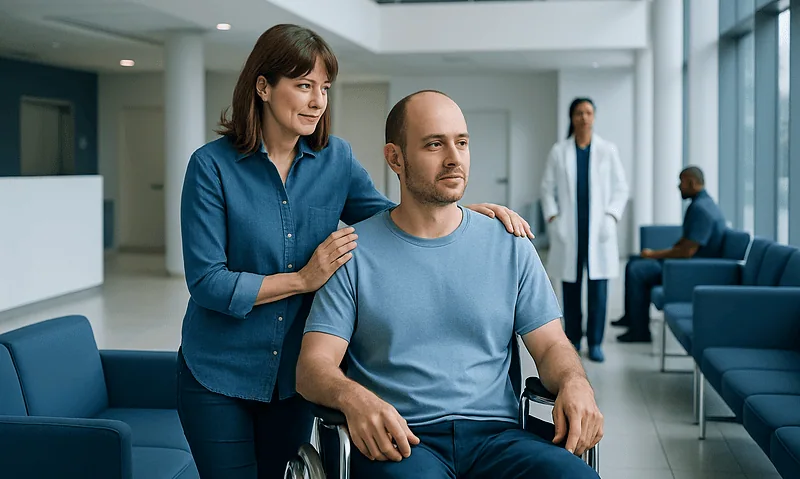
Medical Travel with a Companion: Who Should Come and Why
Medical travel with a companion can make treatment in Turkey easier by providing practical help, communication support and reassurance before and after…

How Family Members Can Help Without Disrupting Recovery
Family support during recovery helps when you listen, organize practical tasks and follow the care plan without taking over, in Turkey or…
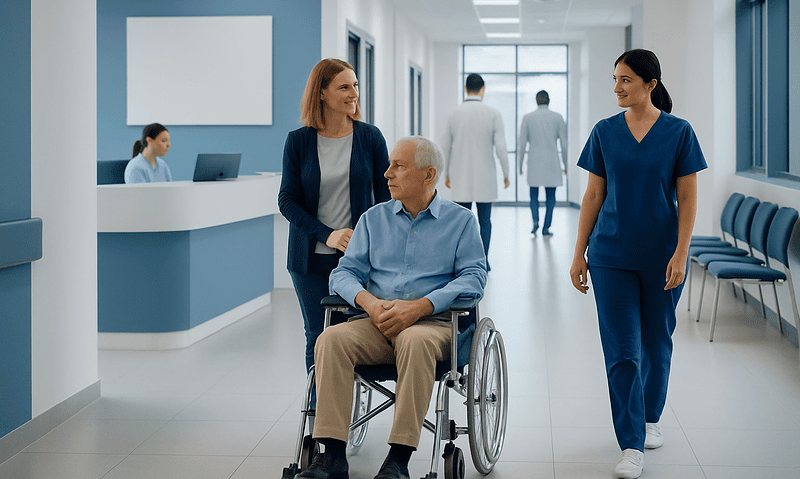
Need a Family Member to Travel With You? A Companion Decision Guide
A companion travel guide for treatment in Turkey: decide who should travel with you, plan practical support, and prepare for Istanbul care.

Unexpected Overnight Stay in Turkey: What Patients and Companions Should Be Ready For
Unexpected overnight stay in Turkey? Here is what patients and companions should prepare for, from essentials and updates to hospital logistics in…