

Why Did My Eye Surgery Quote Cost So Much?

An eye surgery quote usually covers far more than theatre time. It bundles consultations, diagnostic scans, the lens or implant category, the surgical and nursing team, medicines, follow-up checks and, for international patients, coordination support. Totals vary because procedures, technology and personal treatment plans vary. The way to judge a quote is not the headline figure but a clear list of what is included, excluded and optional.
You opened the email, scrolled to the total, and asked the obvious question: why did my eye surgery quote cost so much? It is a fair reaction, and it usually has a straightforward explanation once you see how the number is built.
An eye surgery quote rarely covers the procedure alone. In most cases the total also carries diagnostics, the lens or implant category, theatre time, the surgical and nursing team, medicines used during your stay, and the follow-up checks that happen before you fly home. Understanding those parts is the fastest way to work out whether a quote is high, fair, or simply more complete than the one sitting next to it.
At a glance
- Best for: Understanding why eye surgery quotes vary and how to read yours line by line
- Main cost drivers: Procedure type, lens or implant category, diagnostics, hospital standards, aftercare
- Good question to ask: What is included, excluded and optional in my quote, and what could change it?
- Travel factor: Transfers, accommodation, interpreting and extra nights may sit inside or outside the total
- Useful comparison tip: Compare like-for-like treatment plans, not headline figures
Why did my eye surgery quote cost so much? The short answer
A quote is a bundle, not a single fee. Behind the total sit consultations, diagnostic imaging, surgeon and anaesthetic fees where anaesthesia is needed, theatre and hospital use, lenses or implants, medicines, nursing care, discharge planning and follow-up arrangements. A higher quote does not automatically mean overcharging. It may simply include more of the care pathway upfront, while a lower quote leaves the same items to be billed later.
Eye treatment is also highly individual. Two people who both say they need “eye surgery” may need very different workups, technology and recovery plans. Cataract surgery, refractive laser procedures, corneal treatment, retinal surgery and oculoplastic procedures each involve different equipment, materials and specialist teams. Broad price comparisons between them, or between two patients with different eyes, tell you very little.
If you are travelling for care, the quote may also reflect practical support beyond the operating theatre. At Acibadem, international patient teams coordinate appointments, review medical documents, arrange interpreting and help plan transfers and accommodation. That support has a cost, and it can make a quote look more comprehensive than a bare procedure-only estimate from elsewhere. The guide to what a quote at Acibadem includes explains this structure in more detail.
So when you catch yourself asking why did my eye surgery quote cost so much, the most useful follow-up question is not “is this too expensive?” but “what exactly is inside this number?” The mechanics of how final cost quotes are calculated in Turkey apply to eye surgery just as much as to any other procedure.
What is usually included in an eye surgery quote
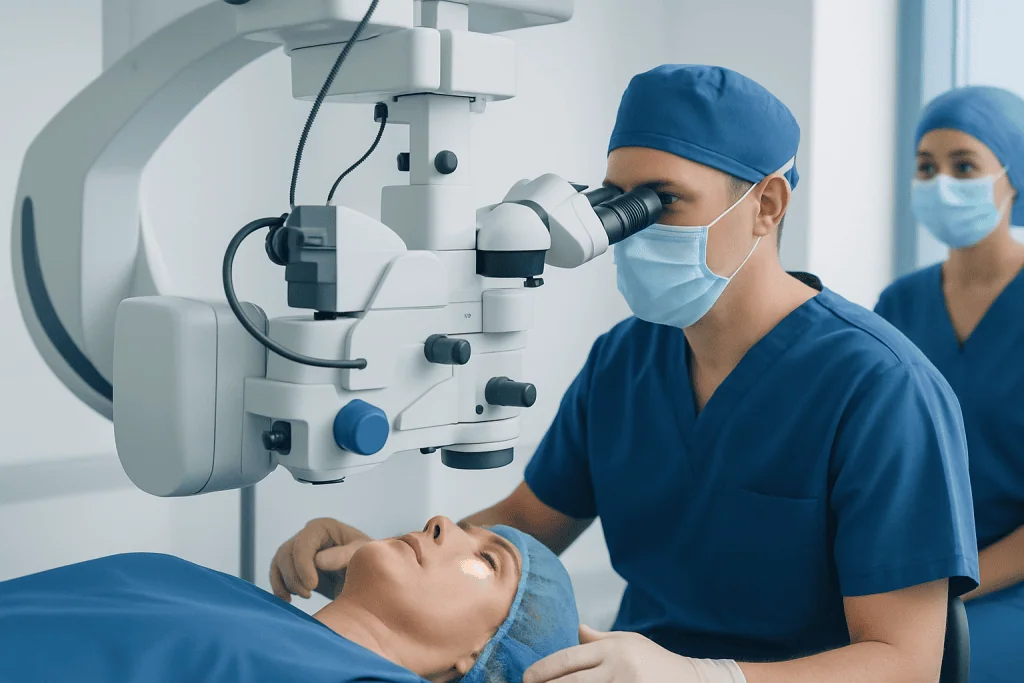
A well-prepared quote covers what is needed to deliver safe, organised care, not just the minutes in theatre. That typically means your pre-operative consultation, vision assessment, imaging, blood tests or other screening where appropriate, the procedure itself, standard consumables, nursing care and the first stage of follow-up. Medicines used during your hospital stay are often part of the estimate as well, though take-home eye drops and medicines may be listed separately.
If your treatment involves an intraocular lens or another implant, the quote should name the device category being planned. This is one of the biggest reasons totals differ between quotes for what sounds like the same operation. Some quotes are built around standard monofocal lenses; others include premium, toric or more customised lenses, advanced imaging guidance, or a more extensive surgical plan tailored to your eye measurements and visual goals. The guide to implant and medical device costs in Turkish treatment quotes explains why the device line deserves close attention.
For international patients, some hospitals also fold non-clinical support into the quote: interpreting, treatment coordination, help with records, or transport planning. None of this changes the surgery itself, but it does change what the total represents.
- Pre-treatment consultation and eligibility review
- Diagnostic eye tests and imaging, such as corneal mapping or retinal scans where relevant
- The procedure, theatre time and hospital use
- The lens, implant or disposable materials being planned, by category
- Immediate post-operative checks and the planned follow-up visits before travel home
- International patient coordination or interpreter support, where offered
The biggest factors that make eye surgery costs vary

The type of surgery matters most. A straightforward day-case procedure is a very different undertaking from surgery that needs advanced imaging, microsurgical techniques, sedation or anaesthesia support, or a longer observation period. More complex cases often involve a multidisciplinary review, particularly if you have diabetes, glaucoma, retinal disease, previous eye surgery or other conditions that affect planning. Each layer of complexity adds people, equipment and time, and each of those appears in the total.
Technology and materials are the second major driver. Eye care depends on highly specialised diagnostic and treatment equipment. If your quote includes premium intraocular lenses, customised laser planning, corneal mapping or detailed retinal imaging, the price rises because the treatment is not simply the surgeon’s time; it also rests on precise measurements taken with sophisticated devices. This is why one hospital’s quote for “cataract surgery” can differ substantially from another’s while both are internally consistent.
Hospital standards and staffing shape cost too. A quote from a large hospital may carry a broader support structure: experienced nursing teams, sterile processing systems, on-site imaging and laboratory services, pharmacy access, emergency backup and formal quality and safety protocols. These systems are largely invisible on paper, but they are part of what the quote is paying for, and they are part of why two totals from different settings are rarely comparing the same thing.
Finally, your personal treatment plan changes the number. One patient may need both eyes treated at separate sittings, a longer stay in Istanbul, additional follow-up checks before flying, or extra medical review because of other health issues. Two quotes for “the same” operation can legitimately differ because the patients differ. The most useful framing is not “why is this expensive?” but “which parts of my quote are essential, which are optional, and which depend on my specific medical situation?”
How to compare quotes fairly without missing hidden costs
The safest comparison starts with the treatment plan, not the total. Ask each provider to state what is included, what is excluded and what might be added after your in-person assessment. A lower quote may cover only the procedure, while a higher one already contains tests, post-operative visits, medicines and practical support. Without that detail, you are not comparing like with like, and the cheaper-looking option can end up costing more once the missing pieces are billed. The guide on comparing surgery quotes from Turkey and your home country walks through this line by line.
Pay particular attention to lenses, implants and diagnostics, because in eye surgery these move the total more than almost anything else. If one quote is based on a standard lens and another on a premium lens, the gap may be entirely appropriate rather than excessive. The same applies when one hospital recommends additional tests because of your age, prescription, previous surgery or an existing eye condition. A more thorough workup is a real difference in the plan, not padding.
Then ask about the usual triggers for extra charges: a change of plan after in-person examination, extra nights of observation, take-home medicines, or a second specialist being asked to review your case. A transparent provider should be able to name these triggers in advance. If a quote cannot tell you what might change it, treat the total as a starting point rather than a commitment. There is a separate guide on spotting hidden costs in medical travel quotes for Turkey if you want a full list of the common gaps.
- Request an itemised or clearly structured quote in writing
- Confirm whether the quote covers one eye or both eyes
- Check which lens, implant or laser option is being quoted, by name or category
- Ask whether pre-operative tests and post-operative visits are included, and how many
- Clarify whether hotel, transfers and interpreting sit inside or outside the total
- Ask what could increase the final amount after examination, and by roughly what mechanism
What a higher quote may be paying for in practice
Sometimes a higher quote reflects a more complete and more carefully managed patient journey: fuller diagnostics before surgery, access to a multidisciplinary specialist team, well-equipped hospital facilities, and closer post-operative observation. In eye care, where very small measurements shape the surgical plan, much of the value sits in planning and precision, and in the hospital’s ability to adjust if your in-person assessment changes the original recommendation.
For international patients, a higher quote can also reduce practical friction. When interpreting, scheduling, record translation, transfer coordination and accommodation guidance run through one system, you spend less time assembling separate pieces on your own. That does not replace scrutinising the medical detail, but it explains part of the difference between a bare procedure price and a coordinated package.
It also helps to keep the quote in proportion to the whole trip. Flights, hotel nights, meals, a companion’s costs and the days you spend in Turkey before you are cleared to fly all sit around the medical total. A quote that keeps your stay short and your follow-up organised can affect the overall trip budget as much as the surgical fee itself. The guide on surgery cost versus total trip cost covers what patients most often miss here.
Questions to ask before you accept any quote
If a quote feels expensive, ask for clarity before assuming the total is unjustified. Start with the essentials: which exact diagnosis or treatment plan the quote is based on, whether the price applies to one eye or both, and whether the recommendation could change after your in-person examination. That gives you the medical context behind the number, and it is the context that answers why your eye surgery quote cost so much in the first place.
Then move to the practical questions that shape your real out-of-pocket position. How many days should you plan to stay in Turkey? How many follow-up visits are expected before travel home? Are take-home medicines, eye drops, protective items or unplanned reviews included? If a companion travels with you, is any support for them built into the arrangement, or is that entirely separate?
Finally, ask how payment works. Some hospitals request a deposit, some settle after the final plan is confirmed, and some separate medical costs from travel and accommodation support. Ask when payment is due, what happens if the plan changes after examination, and how any adjustment would be documented. A good quote does more than state an amount; it tells you what you are agreeing to and what needs to happen next.
Step by step
- Read the quote line by line. Establish whether it covers a consultation, a diagnostic workup, a procedure or a full package. Look for tests, lenses or implants, medicines, follow-up visits, and non-medical services such as transfers or interpreting.
- Confirm your exact treatment plan. Ask which diagnosis or recommendation the quote is based on and whether it could change after in-person assessment. Eye surgery pricing only makes sense once you know which procedure and which materials are planned for you.
- Get inclusions and exclusions in writing. Request a simple written list of what is included, what is excluded and what is optional. Premium lenses, anaesthesia needs, extra tests and longer stays are the most common reasons totals shift.
- Compare like-for-like. If you have quotes from more than one provider, line up the same surgery type, the same lens category and the same number of follow-up visits. A lower number is not cheaper overall if key parts of care are billed later.
- Separate medical costs from travel costs. Confirm whether hotel, transfers, translation and companion arrangements are inside the quote or outside it. Budgeting the full trip early prevents the total creeping up in fragments.
- Understand the payment timeline. Find out when payment is due, whether a deposit is required and how a change of plan after examination would be handled financially, before you book flights or accommodation.
Your checklist
- Ask whether the quote covers one eye or both eyes
- Confirm the exact surgery or treatment being recommended
- Check which lens, implant or technology option is included, by category
- Request a list of included tests, medicines and follow-up visits
- Ask which situations could add costs after in-person examination
- Ask how long you should stay before flying home
- Keep medical costs and travel costs in separate columns of your budget
- Keep copies of every written quote and coordinator message
Key takeaways
- Eye surgery quotes usually bundle diagnostics, materials, hospital services and aftercare, not just the procedure.
- The largest differences between totals come from surgery type, lens or implant choice, technology and hospital standards.
- A lower quote may exclude tests, follow-up visits, medicines or travel support, so compare complete treatment plans, not numbers.
- Coordination, interpreting and logistics support for international patients explain part of the difference between a bare procedure price and a package.
- The strongest position is a written breakdown of inclusions, exclusions and the specific situations that could change the final amount.
Frequently asked questions
Why did my eye surgery quote cost so much more than the price I saw online?
Advertised figures are often starting points or simplified examples for straightforward cases. A personal quote reflects your actual eye condition and history, so it may include consultations, diagnostic tests, a specific lens or implant category, hospital fees and follow-up care that a headline figure leaves out.
Does a more expensive quote mean better care?
Not automatically. A higher quote may reflect a more complete package, more advanced technology, broader hospital infrastructure or more support services. What matters is whether the quote clearly explains what you are paying for and whether those elements are relevant to your treatment plan.
What are the most common extra costs around eye surgery?
Common additions include further tests after in-person examination, premium lens upgrades, take-home medicines and eye drops, extra follow-up visits, and additional accommodation nights if the plan lengthens your stay. For international patients, translation, transfers and companion logistics may also sit outside the initial medical quote unless they are specifically listed.
Should I ask for an itemised quote?
Yes, where possible. Even when a hospital uses package pricing, you can still ask for a written list of what is included, what is excluded, and which parts are optional or could change after your assessment. That list is what makes two quotes comparable.
Why would two hospitals in Turkey quote very different amounts for the same eye problem?
Because they may not be quoting the same pathway. Differences commonly come from the depth of the diagnostic workup, the lens or implant category, the surgical technique planned, the number of included follow-up visits, hospital infrastructure, and whether international patient support is built into the package.
Can my final cost change after I arrive?
It can, particularly if the in-person examination shows that a different procedure, additional tests or another lens choice suits your eyes better. A transparent provider should explain in advance which situations might change the price and how any change would be discussed and documented with you before treatment proceeds.
Is the quote for one eye or both eyes?
This is one of the first things to confirm, because it halves or doubles the effective price of everything else in the comparison. Some plans treat both eyes at one sitting, others at separate sittings with separate checks, and the quote should state clearly which arrangement it covers.
Add us as a Preferred Source to see more of our trusted health content across Google Search, AI Overviews and Discover.

Update history
- PublishedJuly 8, 2026
- Medical review approvedSeptember 1, 2026
- Last content updateSeptember 1, 2026
References1
- Cataract surgery — NHS — nhs.uk
More Patient Guides

Private MRI, CT and Check-Up Costs in Turkey: How Scans Are Priced
How private MRI, CT, PET-CT and full check-up packages are priced in Turkey — modality, region, contrast, reporting — and what a…

Cataract Surgery Cost in Turkey: Per-Eye Prices and Lens Options
Cataract surgery in Turkey is priced per eye and the lens decides the quote. Biometry, both eyes on one trip, and what…

Lip Filler Cost in Turkey: Per-ml Prices Explained
Lip filler in Turkey is priced per millilitre with licensed hyaluronic acid brands and physician injectors. Volume, product, dissolving, safety and what…
Botox Cost in Turkey: Per-Area and Per-Unit Prices
How Botox is priced in Turkey — per area or per unit, brand, physician injectors, medical indications — and what a serious…