

Treatment in Turkey: How Final Cost Quotes Are Calculated

A final cost quote for treatment in Turkey is built from your diagnosis, the planned procedure, expected hospital stay, any implants or devices, tests, and follow-up. It usually starts as a preliminary estimate based on the records you share, then firms up after specialist review. It can still change if in-person examination or new findings alter the medical plan.
How much will this actually cost, and can you trust the number you were given before you booked a flight? That is the question most international patients start with — and it deserves a straight answer about how quotes are actually built.
This guide explains how final cost quotes for treatment in Turkey are calculated for international patients. You will learn what information shapes the quote, what a package usually covers, where estimates stay flexible, and how to plan your trip with fewer surprises. It contains no figures, because an honest number can only come from your own medical file.
At a glance
- What this covers: The pre-travel planning and quotation process, not a medical procedure
- Purpose: To estimate the expected cost of your treatment based on your records and the likely clinical pathway
- Starting point: A preliminary estimate built from the medical information you share remotely
- When it firms up: After specialist review of your records and, where needed, in-person assessment in Turkey
- What can change it: New findings, a different technique, a longer hospital stay, or additional tests recommended for safety
- Hospital stay: Depends entirely on the treatment, your health, and your physician’s recommendation
- Suitable department: International Patient Services working with the relevant medical or surgical specialty
- Support available: Medical record coordination, interpreters, transfers, accommodation guidance and remote follow-up
What a final cost quote actually is
A final cost quote is not a medical treatment. It is the planning document that connects your diagnosis to a likely clinical pathway and a likely price. For treatment in Turkey, that quote is normally prepared after a specialist reviews your diagnosis, previous history, test results and imaging, and decides what the most probable course of care looks like.
Two things are worth understanding from the start. First, a quote begins as a preliminary estimate based on the information you share online, and it becomes more accurate as the medical picture becomes clearer. Second, an estimate and a final bill are related but not identical documents — the difference between them is explained in detail in our guide on the treatment cost estimate versus the final bill in Turkey.
At Acibadem, the quotation process is coordinated between International Patient Services and the relevant clinical department. The point of that coordination is simple: the financial estimate should match the medical plan, so that what you budget for and what your doctors intend to do are the same thing.
When a detailed quote matters most
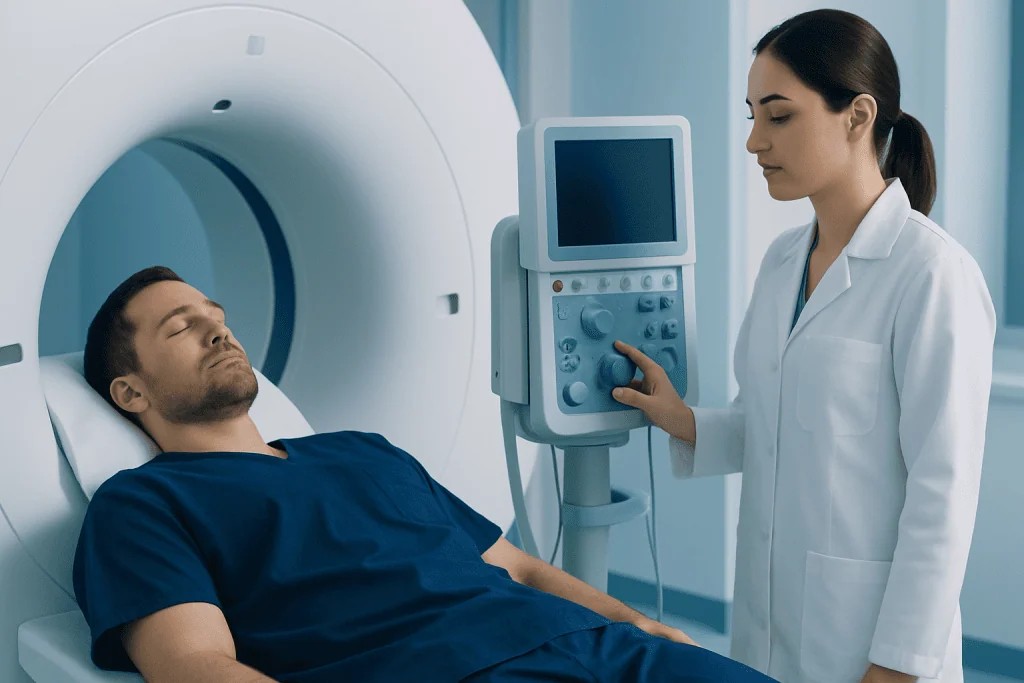
A detailed quote is worth insisting on whenever your care may involve surgery, anaesthesia, a hospital stay, implants or devices, pathology, repeated tests, or several specialists working together. These are the elements that vary most between patients, and they are the elements that most often separate a realistic quote from an optimistic one.
A careful quote review is especially important if you have a complex medical history, previous operations, chronic conditions, or a diagnosis that is still being confirmed. In those situations, a responsible provider will tell you that the estimate has to stay flexible until a physician has reviewed everything or examined you in person. Treat that honesty as a good sign, not a weakness.
For most international patients, the practical value of a clear quote goes beyond the headline figure. It helps you plan the length of stay, decide whether a companion should travel with you, arrange accommodation, and — most importantly — separate core medical costs from travel and personal expenses before you commit to anything.
Who gets the most accurate quotes

The single biggest factor in quote accuracy is the completeness of your medical information. If you can provide recent clinic notes, a confirmed diagnosis, biopsy or pathology reports, radiology images, laboratory results, a medication list and a clear summary of your current symptoms, the specialist reviewing your file has far less to guess about.
If your diagnosis is not yet confirmed, you can still receive an estimate — but expect it to remain preliminary. The more medical uncertainty there is, the more the final quote will depend on additional tests or examination after you arrive. That is not a sales tactic; it is how safe medicine works. A quote that pretends to be final when the diagnosis is not would be the misleading one.
Original reports and digital image files are more useful than brief summaries. A one-line note saying a scan was performed tells a specialist very little; the images themselves tell them a great deal.
How the treatment type shapes the quote
The way a quote is built depends on what kind of care you are likely to need. A single-day diagnostic procedure, major surgery, cancer care, IVF, cardiac treatment, robotic surgery and staged multi-visit plans are all quoted differently, because their cost drivers are different.
Some treatments are predictable enough to be quoted as a package. Others need item-by-item planning because the length of stay, implants, pathology, medicines or post-treatment monitoring can vary. The main distinctions that move a quote are:
- Diagnostic-only care versus diagnosis plus treatment
- Minimally invasive techniques versus open surgery
- Standard methods versus advanced technologies or special devices
- Single-specialty care versus multidisciplinary treatment
- Day-case treatment versus admission with intensive monitoring or a longer stay
- Primary treatment versus revision of treatment received elsewhere
Whatever route applies to you, ask one direct question: is this quote fixed, conditional, or subject to in-person findings? A trustworthy answer will usually contain the word “conditional” somewhere, and it will tell you exactly which items are conditional and why.
The online evaluation before you travel
Most quotes for treatment in Turkey begin with a remote evaluation. You share your medical reports, imaging, pathology results and medication details — and sometimes photographs, depending on the specialty — and the relevant department reviews them to decide whether a meaningful preliminary quote can be prepared.
This review does not normally carry a charge in itself; if you are unsure how that works, see our guide on whether medical quotes cost money in Turkey. What the review does require is your time: gathering complete records before you send anything saves weeks of back-and-forth later.
If more information is needed before a quote can be refined, you should be told so plainly. A provider that quotes confidently on thin information is not doing you a favour — it is deferring the uncertainty to your final bill.
Reading the quote before you book
Once you receive a preliminary or final quote, read it as a plan, not just a number. Check the proposed diagnosis, the treatment type, the estimated hospital stay, the tests it assumes, and whether it accounts for implants, devices, pathology review or intensive care contingency.
Then ask the practical questions. Is the quote based on your current test results only, or could imaging or laboratory work be repeated on arrival? Is it built around a standard recovery pathway, and what happens if the team recommends a different approach after seeing you in person? Which items would appear on the bill only if they become medically necessary?
Quotes from different providers rarely cover identical scopes, which makes headline comparisons unreliable. Before you compare numbers, learn how to spot hidden costs in medical travel quotes for Turkey — the gaps between quotes usually matter more than the totals.
What happens during treatment — and why bills can move
The final cost reflects what is medically performed, not only what was estimated. If your care goes exactly as planned, the final bill may sit very close to the confirmed quote. But medicine sometimes surprises even careful planners. A surgeon may need a different technique than anticipated. Your doctor may want further tests before proceeding. Pathology results or findings during a procedure can change the next stage of care. Recovery may justify a longer stay.
These changes happen for safety and clinical reasons, and a responsible provider will not promise you they can never occur. This is exactly why good quotes distinguish included items from conditional ones, and why the team should explain any medically necessary change — and its financial effect — clearly during your stay, before proceeding wherever that is possible.
Hospital stay and discharge
Length of stay is one of the main variables in any final bill. Some patients are treated as outpatients and return to their hotel the same day; others need overnight observation, several inpatient days, or higher-dependency monitoring in complex situations. The duration depends on the treatment, your overall health and how you recover — not on what the original estimate assumed.
A shorter or longer stay changes room charges, nursing care, in-hospital medicines and control visits, and it affects when you can safely fly. Before discharge, make sure you understand what follow-up is included in your quote, when your first control visit takes place, and whether your doctor recommends remaining in Turkey for an additional observation period before travelling home.
How the financial picture develops over time
The quote process has no recovery period of its own, but the final financial picture develops alongside your treatment and recovery. The table below shows how cost clarity typically evolves.
| Timeframe | What to expect |
|---|---|
| First 24 hours | Admission, final checks, immediate treatment-related care, and confirmation of whether the plan matches the pre-travel estimate. |
| First week | Early recovery, inpatient or outpatient monitoring, first control visits, and clarification of any additional tests, dressings or medicines. |
| Weeks 2–4 | Ongoing recovery after discharge, possible review of pathology or test results, and remote follow-up if you have returned home. |
| Months 1–3 | Assessment of progress, healing or treatment response depending on your condition. Some longer-term costs become clear only at this stage. |
| Final picture | Total treatment-related expenses are fully understood once treatment, follow-up and any medically necessary additions are complete. |
For predictable treatments, the final total usually stays close to the original quote. For care involving complex diagnosis or staged treatment, the total is confirmed only after recovery milestones and specialist review. Plan some flexibility in both time and budget: if your doctor recommends an extra review or a longer stay before flying, you want that decision to be a medical one, not a financial one.
Common planning mistakes to avoid
The most expensive mistakes international patients make are planning mistakes, not medical ones. Avoid booking a return flight before your doctor has confirmed a realistic travel window. Avoid assuming non-medical expenses are inside a medical package: hotel upgrades, companion costs, visa arrangements, airline changes and personal spending are usually separate unless the quote says otherwise.
From a clinical perspective, avoid cutting your stay short in ways that conflict with your discharge plan. Follow the aftercare instructions your treating doctor gives you, including wound care, mobility guidance, any prescribed medicines and scheduled control visits. A quote that looked accurate can be undone by a rushed departure that leads to preventable problems.
Risks and limits of any estimate
The quotation process itself is low risk, but it has one real vulnerability: incomplete or outdated records. If your file does not reflect your actual condition, the quote built on it will be less accurate than expected and may need revision after in-person evaluation.
Beyond that, every treatment carries its own clinical risks, and those risks can affect cost as well as recovery. Additional tests, a longer admission, different surgical findings, another specialty opinion or unexpected recovery needs can all influence the final bill. No responsible provider guarantees that every estimate will remain unchanged in every case. A safe process is transparent about what is known and honest about what is not — especially where your diagnosis is complex or the plan may need adapting after examination.
Aftercare and follow-up
Before you leave hospital, your treating team gives you written discharge instructions covering wound care, activity, medicines and what to monitor during recovery. Those instructions — prepared for your specific case — are the authoritative source on your aftercare, and they should travel home with you.
If you return home before your recovery is complete, remote follow-up can support communication with your treating team: recovery updates, review of test results, and guidance on scheduled next steps. Your local doctors remain part of the picture too, and it helps to bring home a full copy of your treatment records so they can pick up your care without gaps.
Travel planning around your quote
Your quote should always be read alongside a realistic travel timeline. Depending on the treatment, you may need time for consultation, pre-treatment tests, the procedure itself, initial recovery and at least one control visit before your doctor confirms you can travel safely. Building your itinerary around only the procedure date is the most common scheduling error in medical travel.
Many international patients also need airport–hospital transfers, interpreter services, accommodation guidance and coordination for a companion. These practical elements may or may not sit inside a package, so clarify them early rather than assume them. Acibadem supports patients through this stage by coordinating medical records, scheduling and practical arrangements, whether you are travelling to Istanbul or another Acibadem location for treatment in Turkey.
Cost and package information
No two final quotes are identical, but the factors behind them are consistent. A quote for treatment in Turkey typically reflects your diagnosis, the specialty involved, the number of doctors consulted, the type of treatment or surgery, anaesthesia needs, hospital stay length, room category, imaging, laboratory tests, pathology, implants or devices, in-hospital medicines and the expected follow-up schedule.
A package usually covers the core planned services: the main procedure, standard operating theatre use where relevant, routine inpatient nursing during the planned stay, and scheduled control visits within the package scope. Some international programmes also include transfer coordination or interpreter support.
The items most often outside a package — unless specifically stated — include extra hospital nights, intensive care if unexpectedly needed, treatment of unrelated conditions, additional specialist consultations, repeat or advanced tests not anticipated at quoting, blood products, revision procedures, extended medicines after discharge, personal expenses, companion costs, flights, visa arrangements and hotel services beyond the agreed scope. Our guides on common extra costs not shown in medical quotes and implant and device costs in Turkish treatment quotes cover the two areas where scope gaps appear most often.
Before confirming any booking, ask for a written breakdown of what is included, excluded and conditional — and ask what happens financially if the plan changes after examination or if your recovery requires additional care for safety. A provider that answers those two questions clearly is telling you how it will behave when it matters.
Why choose Acibadem
For international patients, a provider’s value shows in coordination as much as in clinical care. Acibadem runs an established international patient pathway in which the quote, the medical plan and the travel logistics are handled together rather than in separate silos. When a quote depends on input from several departments — consultation, testing, intervention, hospitalisation and follow-up — that coordination reduces delays and reduces the gap between what was estimated and what is understood.
Practical support runs alongside the clinical work: interpreters, transfer arrangements, accommodation guidance and remote follow-up after you return home. The aim throughout is a plan you understand before you travel, with the variables named rather than hidden.
Medical review and disclaimer
This guide has been reviewed by the Acibadem International medical team. It is intended to help you understand how final treatment cost quotes are commonly calculated for international patients considering care in Turkey.
The information here is for general educational purposes only and does not replace a personal medical consultation, hospital assessment or formal quotation. Every patient is different, and diagnosis, treatment planning and expected costs vary significantly between cases.
Your suitability for any treatment, and the accuracy of any estimate, requires evaluation by a qualified physician and review of your medical records. Your plan may change after in-person examination or additional testing to ensure safe and appropriate care.
Step by step
- Initial enquiry. The process begins when you describe the treatment or health concern you want assessed.
- Medical record submission. You share available reports, test results, imaging, medication details and, where relevant to the specialty, photographs.
- Preliminary medical review. The relevant department reviews your records to understand the likely diagnosis and treatment pathway.
- Treatment plan and quotation. A preliminary or detailed quote is prepared based on the available information and the expected care plan.
- Travel planning. Timing, expected stay, companion needs, accommodation and transfers are discussed and arranged.
- Arrival. You attend the hospital according to your scheduled appointments and admission plan.
- In-person consultation. The specialist examines you, confirms the treatment indication, and explains whether the original plan still applies.
- Pre-operative tests. If required, you complete blood tests, imaging, anaesthesia assessment or other safety checks.
- Treatment. The planned procedure, surgery or therapy takes place according to physician recommendation.
- Hospital stay. You remain under observation for the planned period, with any medically necessary adjustments explained during your stay.
- First control. Your doctor reviews your early progress and confirms aftercare instructions and travel readiness.
- Discharge and travel clearance. You are discharged when medically appropriate and advised when it is safe to travel home.
- Remote follow-up. After you return home, remote communication supports follow-up questions, recovery updates and next-step guidance.
Your checklist
- Passport copy
- Short summary of your current symptoms and main concern
- Past medical history and chronic conditions
- Current medication list, including supplements
- Known allergies or previous reactions
- Previous surgeries or hospitalisations
- Recent laboratory results
- Relevant imaging reports and image files where available
- Biopsy, pathology or specialist reports if relevant
- Insurance details if applicable
- Emergency contact information
- Photos related to the condition if requested by the medical team
Key takeaways
- Your final quote is built from your specific diagnosis, tests, treatment method and expected hospital needs — not from a generic price list.
- A preliminary quote can change after specialist review or in-person evaluation, and a responsible provider will say so plainly.
- Packages cover core planned medical items; extras and unexpected findings often sit outside the package unless stated in writing.
- Complete, recent medical records and original imaging are the single biggest factor in quote accuracy.
- Always confirm in writing what is included, excluded and conditional before booking anything.
Frequently asked questions
How much does dental treatment cost in Turkey?
There is no single figure, and any website that gives you one without seeing your mouth is guessing. A dental quote depends on the number of teeth involved, the materials chosen, whether implants or bone work are needed, laboratory work, and how many visits your plan requires. A meaningful quote follows a review of your dental records, X-rays or scans — and it should state materials and scope in writing.
Are zirconia crowns in Turkey worth it?
Zirconia is a widely used, well-established crown material, but whether it is the right choice depends on the tooth, your bite, aesthetics and your dentist’s clinical assessment — not on the destination. What matters in a quote is that the material, the laboratory work and the number of crowns are specified in writing, so you know exactly what you are comparing.
Can the NHS pay for dental treatment in Turkey?
Planned treatment in Turkey is normally paid for privately by the patient. The NHS does not routinely fund treatment arranged abroad, and the limited overseas funding routes that exist apply to specific circumstances and countries. If this matters to your planning, check current official UK government guidance before you budget, rather than relying on a clinic’s assurance.
How much is hair treatment in Turkey?
Hair restoration quotes vary with the technique used, the extent of the area being treated, the condition of the donor area and the clinical setting. A serious quote is prepared after an assessment — usually starting with photographs and a medical history — and states what the price covers, including consultations, the procedure itself and follow-up. Be cautious of flat prices offered before any assessment.
Do tourists get free healthcare in Turkey?
No. Visitors are not covered by the Turkish public health system and are treated as private patients, so any care you receive is billed to you or your insurer. Travel insurance that covers medical care abroad is strongly advisable for any trip — though note that standard travel policies generally exclude planned treatment, which is arranged and paid for separately.
Why can a preliminary quote differ from the final bill?
A preliminary quote is based on the information available before you travel. If your doctor needs additional tests, finds something different on examination, or recommends a changed approach for safety, the plan — and therefore the bill — can change. Good providers separate included items from conditional ones so you can see where movement is possible before you book.
What is usually included in a treatment package?
Packages typically cover the core planned services: the main procedure, standard theatre use where relevant, routine nursing during the planned stay, and scheduled follow-up within the package scope. Extra hospital nights, unanticipated tests, treatment of unrelated issues, flights, visas and companion costs usually sit outside the package unless the written quote says otherwise.
Can I receive a quote without travelling first?
In many cases, yes. A remote review of your records can produce a preliminary — and sometimes quite detailed — estimate. Some conditions, however, can only be properly assessed in person, and in those cases the honest answer is a conditional quote that firms up after examination and any required testing on arrival.
Add us as a Preferred Source to see more of our trusted health content across Google Search, AI Overviews and Discover.

Update history
- PublishedJune 22, 2026
- Medical review approvedAugust 31, 2026
- Last content updateAugust 31, 2026
References2
- CDC Travelers' Health — Medical Tourism — wwwnc.cdc.gov
- UK Government — Foreign travel advice: Turkey — gov.uk
More Patient Guides

HoLEP in Turkey: How It Compares With TURP and What Recovery Involves
HoLEP in Turkey treats enlarged prostate tissue with laser enucleation; learn how it compares with TURP, recovery, travel and follow-up.
13 min read
Porcelain Veneers in Turkey: Who Is Suitable and How Many Visits Are Needed?
Porcelain veneers in Turkey can enhance tooth shape and colour in two visits for suitable patients after a personalised dental assessment.
14 min read
How to Prepare for a Sedation Procedure in Turkey
Prepare safely for a sedation procedure in Turkey with guidance on fasting, medicines, travel, recovery and follow-up.
12 min read
Treatment Delays in Turkey: What Happens If Tests or Recovery Change Your Schedule
Treatment delays in Turkey can happen if tests or recovery change your plan. Learn how to manage appointments, travel, accommodation and follow-up.
8 min read