Peritoneal Dialysis
Peritoneal dialysis is a home-based kidney replacement therapy that uses the abdominal lining to filter waste and excess fluid when the kidneys can no longer work adequately.
Quick answer
Peritoneal dialysis is a home-based treatment for kidney failure. A soft catheter carries sterile fluid into your abdominal cavity, where the peritoneal lining filters waste products and excess water from your blood into the fluid. The used fluid is drained and replaced, either manually several times a day (CAPD) or overnight by a machine (APD).
What Is Peritoneal Dialysis?
Peritoneal dialysis is a form of dialysis: a treatment that takes over part of the filtering work of failed kidneys. It removes waste products, extra salt and excess water from your blood using the peritoneum, the thin membrane that lines the inside of your abdomen, as a natural filter. It is one of the two main types of kidney replacement therapy, alongside hemodialysis, and it is usually performed at home, by you or a trained caregiver, rather than in a clinic.
Learning that your kidneys can no longer filter your blood well enough is frightening. Most people’s first questions are practical ones: whether they can keep working or studying, how travel fits around treatment, what daily life will actually look like. Peritoneal dialysis answers some of those questions differently from centre-based treatment. Because it happens at home, in short exchanges during the day, or overnight while you sleep, many patients find it easier to fold into an ordinary routine. But it asks something of you in return: training, strict hygiene, and steady communication with a kidney care team. It is a medical decision and a lifestyle decision at the same time, and it deserves a clear-eyed look at both sides.
Be clear about one thing from the start: peritoneal dialysis does not restore kidney function or reverse kidney failure. It replaces some of the kidneys’ essential filtering work. Done well, it controls symptoms, steadies the body’s chemistry and supports a stable daily routine. It can be a long-term therapy in its own right, or a bridge while you are being assessed for a kidney transplant.
What is dialysis?
Dialysis is any treatment that does part of the work of healthy kidneys: clearing waste products from the blood, removing surplus fluid, and helping to keep salts and acids in balance. People often call it kidney dialysis, and you will see the word misspelt online, dealises, dialisis, but every version points to the same treatment. There are two established methods. Hemodialysis filters the blood through a machine outside the body, usually at a dialysis centre. Peritoneal dialysis filters the blood inside the body, using your own abdominal lining. Neither method competes with transplantation; all three sit on the same long-term kidney care pathway, and many patients move between them over the years.
How does peritoneal dialysis work?
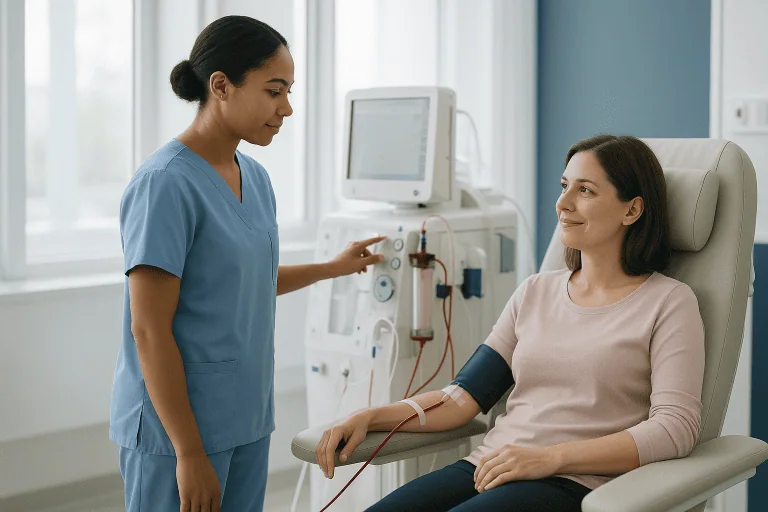
Peritoneal dialysis works by moving waste and water out of your blood and into a sterile fluid held inside your abdomen. A soft tube called a peritoneal dialysis catheter is placed through the abdominal wall during a minor procedure. Through this catheter, a prescribed volume of dialysis fluid flows into the abdominal cavity: the space around the organs in your belly. That cavity is lined by the peritoneal membrane, which is rich in tiny blood vessels.
While the fluid sits inside, a period called the dwell time, waste products cross from the blood vessels in the membrane into the fluid, and the glucose in the fluid draws excess water out of the bloodstream by osmosis. After the dwell, the used fluid is drained out through the same catheter and replaced with fresh fluid. Each drain-and-fill cycle is called an exchange, and your nephrologist prescribes how many exchanges you need, at what volumes, and with which fluid strengths.
The Two Types of Peritoneal Dialysis
There are two ways to run the exchanges. Both use the same catheter and the same principle; they differ in when the exchanges happen and who, or what, performs them.
Continuous ambulatory peritoneal dialysis (CAPD)
Continuous ambulatory peritoneal dialysis, usually shortened to CAPD, is the manual, daytime method. You or a caregiver connect a sterile fluid bag to the catheter, drain the used fluid, fill the abdomen with fresh fluid, and disconnect. No machine is needed; gravity does the work. This is repeated several times a day according to your prescription. Between exchanges you carry the fluid inside you and go about your day: the word “ambulatory” simply means you are up and moving while the treatment continues.
Automated peritoneal dialysis (APD)
Automated peritoneal dialysis, or APD, uses a bedside machine called a cycler. You connect before sleep, the machine performs a programmed series of exchanges overnight, and you disconnect in the morning. Some patients also need a daytime dwell, fluid left in the abdomen through the day, depending on their remaining kidney function, body size, laboratory results and fluid removal needs. Many people choose APD because it leaves the daytime largely free for work, school or caregiving. The choice between CAPD and APD is not purely personal preference: clearance targets, fluid control, sleep patterns and equipment availability all weigh in.
What Is the Difference Between Hemodialysis and Peritoneal Dialysis?
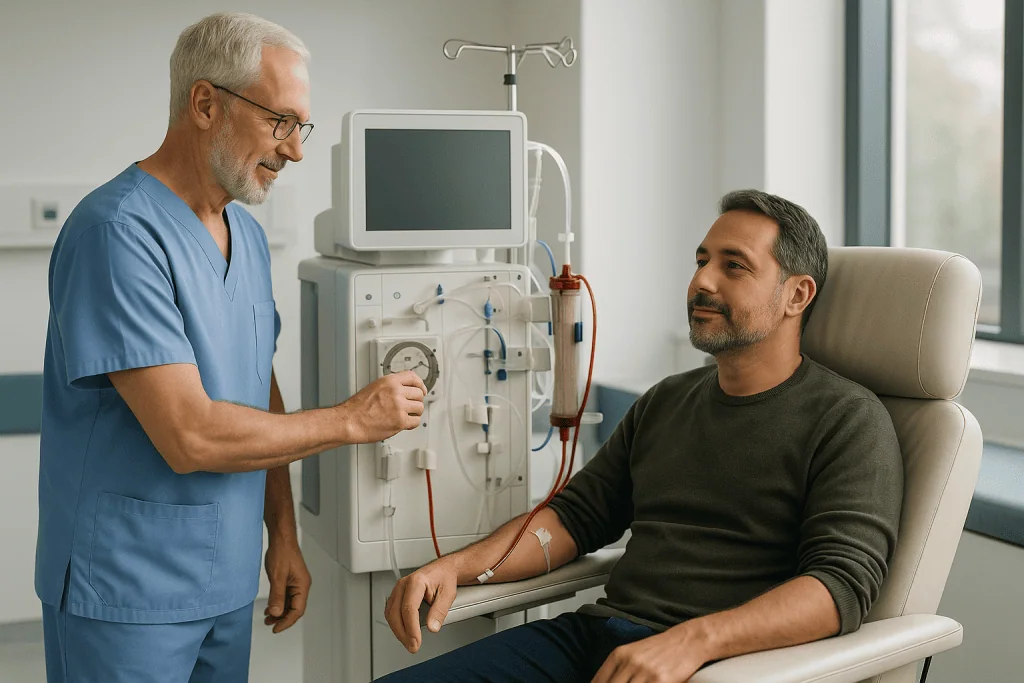
Hemodialysis filters your blood through a machine outside your body, typically at a dialysis centre several times a week; peritoneal dialysis filters your blood inside your body, at home, every day or every night. That single difference drives most of the practical contrasts between the two, where you are treated, how often, what kind of access your body needs, and how fluid removal feels.
| Hemodialysis | Peritoneal dialysis | |
|---|---|---|
| Where the blood is filtered | Outside the body, through a dialysis machine | Inside the body, across the peritoneal membrane |
| Usual setting | Dialysis centre (home hemodialysis is possible for some) | Your home, after training |
| Access | Vascular access, with needle placement at each session | A soft abdominal catheter; no routine needles |
| Rhythm | Intermittent sessions, several times a week | Continuous or nightly, so fluid removal is spread out gently |
| Who performs it | Dialysis nurses and technicians | You or a trained caregiver, with clinic follow-up |
| Main daily responsibility | Attending sessions; access care between them | Sterile exchange technique and catheter exit-site care |
Neither method is universally better. Hemodialysis suits people who prefer treatment handled by professionals, who cannot use the abdomen for dialysis, or who lack the home setup for supplies and exchanges. Peritoneal dialysis suits people who want independence, a flexible schedule, and gentler day-to-day fluid shifts. Because it works every day rather than in intermittent sessions, some patients notice fewer sudden swings in blood pressure and energy than with in-centre treatment. You can read about the machine-based alternative in detail on our hemodialysis page.
It is also worth knowing that the choice is rarely final. Patients switch from one method to the other when circumstances change: a membrane that stops filtering efficiently, a vascular access problem, a house move, a change in caregiver support. Your nephrology team’s job is to match the method to your life as it is now, and to revisit that match over time.
Who May Need Peritoneal Dialysis?
Peritoneal dialysis is considered for people with advanced chronic kidney disease or end-stage kidney disease: the point at which the body can no longer keep fluid, electrolytes and waste products at safe levels without kidney replacement therapy. The decision follows careful assessment: blood tests, urine tests where urine output remains, imaging, and an honest discussion of your circumstances and goals.
Symptoms of advanced kidney failure often build slowly. Some people feel unwell for months before dialysis is needed; others learn of severe kidney dysfunction only from blood tests. Common signs include persistent fatigue, poor appetite, nausea, swelling in the legs or around the eyes, breathlessness from fluid overload, difficulty concentrating, itching, changes in urination, muscle cramps and disturbed sleep. Blood pressure that becomes harder and harder to control can also signal worsening kidney disease.
Planning typically includes measurement of kidney function through blood creatinine and estimated glomerular filtration rate, urea and electrolyte levels, acid–base balance, anaemia testing, mineral and bone metabolism markers, and urine protein measurement when urine output remains. Ultrasound or other imaging may assess kidney size and structure, rule out urinary obstruction, and check whether the abdomen is suitable for catheter placement.
Peritoneal dialysis tends to suit people who want a home-based therapy and can perform exchanges safely after training. It can be particularly practical if you live far from a dialysis centre, want control over your own schedule, still produce urine, or prefer gentle daily treatment over intermittent sessions. It is also used in children, see our page on pediatric dialysisand in older adults, depending on medical suitability and the support available at home.
Not everyone is a good candidate, and it is better to know this early than late. Previous major abdominal surgery, extensive adhesions, active inflammatory bowel disease, recurrent abdominal infections, severe hernias, or a genuine inability to maintain sterile technique can make peritoneal dialysis harder, sometimes impractical. These factors do not always rule it out, but they need specialist evaluation. The team also weighs vision, hand function, cognition, the state of the home environment, caregiver availability, and how comfortable you are managing a medical therapy yourself.
How serious is being on dialysis?
Needing dialysis is serious: it means your kidneys have lost most of their filtering capacity, and the treatment that replaces them is life-sustaining, not optional. At the same time, seriousness is not the same as helplessness. With a well-adjusted prescription, good technique and regular follow-up, many people on peritoneal dialysis work, study, care for families and travel. How demanding life on dialysis feels depends heavily on the health of your heart and blood vessels, how much kidney function remains, nutrition, and how early treatment was planned. What dialysis does not do is fix the underlying kidney disease, which is why transplant assessment often runs alongside it for suitable patients.
Conditions and Indications Peritoneal Dialysis Addresses
The most common indication is end-stage kidney disease caused by long-term conditions: diabetes, high blood pressure, glomerulonephritis, polycystic kidney disease, reflux nephropathy, congenital kidney disorders, or autoimmune kidney disease. Dialysis is planned when laboratory findings, symptoms and overall clinical status show that kidney replacement therapy is genuinely needed, not on a single number, but on the whole picture.
Peritoneal dialysis addresses several consequences of kidney failure at once. It removes uraemic toxins: the waste products that cause nausea, loss of appetite, fatigue, itching, mental fogginess and inflammation. It removes extra water, which can ease swelling, support blood pressure control and relieve breathlessness caused by fluid overload. It helps regulate electrolytes such as potassium and supports correction of metabolic acidosis, the build-up of acid that accompanies kidney failure.
It may be your first dialysis method, chosen at a planned start. It may be a transition: some patients on hemodialysis move to home therapy once the abdomen is confirmed suitable and training is complete. And it is often used while awaiting kidney transplantation, because it preserves lifestyle flexibility and, in selected patients, may help maintain residual kidney function: the urine output your own kidneys still manage, which makes fluid balance easier.
Although peritoneal dialysis is mainly a chronic therapy, it can be considered in certain acute kidney injury situations in specialised settings. Suitability depends on the urgency, the condition of the abdomen, how rapidly toxins and fluid must be removed, and the resources available. For most patients treated abroad, the usual pathway is evaluation, catheter placement, training, and coordination with a dialysis provider at home for ongoing care.
How Peritoneal Dialysis Is Performed
Everything starts with a detailed nephrology assessment. The team reviews the cause of your kidney disease, current kidney function, symptoms, blood pressure, urine output, medications, heart health, diabetes control where relevant, infection risks, nutritional status and any previous abdominal surgery. The aim is twofold: to confirm that peritoneal dialysis is medically appropriate for you, and to design a prescription that matches your clearance and fluid removal needs rather than a generic template.
Preparation includes education, not as a formality but as the foundation of the therapy. You learn how peritoneal dialysis works, how exchanges are performed, which warning signs matter, and what changes to expect in diet, fluid intake, medications and daily routine. A dialysis nurse leads most of the practical preparation. For international patients, interpreters or multilingual coordinators are involved so that instructions are understood exactly, with a home therapy, approximate understanding is not good enough.
Placing the peritoneal dialysis catheter
The first procedural step is placing the catheter: a soft, flexible tube with an internal portion resting in the abdominal cavity and an external portion used for connections. Placement is a minor surgical or interventional procedure and may be done laparoscopically, through a small open incision, or under image guidance, depending on your anatomy and the physician’s judgement. Careful positioning matters, because a well-placed catheter drains reliably and a poorly placed one causes ongoing trouble.
The procedure is commonly performed under local anaesthesia with sedation, or under general anaesthesia, depending on the technique and on you. Some patients go home the same day; others stay for observation. The exit site, where the catheter leaves the skin, must heal before full-volume dialysis begins, so planned cases usually include a healing period to reduce the risk of leaks and infection. If dialysis is needed urgently before healing is complete, modified low-volume protocols can sometimes be used under close supervision.
Training before you start
Once healing is adequate, formal training begins. You and any caregiver practise hand hygiene, mask use, connection and disconnection technique, warming the fluid, checking the clarity of drained fluid, recording treatment data and caring for the exit site. You learn what to do if a connection is contaminated, if drainage is slow, or if symptoms suggest infection. Training continues until the team is confident you can run the therapy safely, not until a fixed number of sessions has been ticked off.
What does a CAPD exchange involve?
A typical manual exchange follows the same steps every time, and the repetition is the point, sterile routine is what keeps the therapy safe:
- Wash your hands thoroughly and prepare a clean, uncluttered work area.
- Check the dialysis fluid bag: strength, volume, expiry, clarity and temperature.
- Connect the bag system to your catheter using the sterile technique you were trained in.
- Drain the used fluid from your abdomen and check that it is clear.
- Fill the abdomen with the fresh fluid.
- Disconnect, cap the catheter, and dispose of the used fluid and packaging.
- Record the volumes and anything unusual for your care team to review.
The whole exchange often takes less than an hour, though timing varies. Between exchanges you can usually walk, work and carry on with normal activities while the fluid dwells inside.
What do patients do during dialysis?
Mostly, they live their lives. During a CAPD dwell you are free to move about: the treatment is happening quietly inside you while you cook, work or shop. During the exchange itself, people read, watch television or simply rest in a clean area at home. On APD, the cycler runs while you sleep; your active involvement is connecting in the evening and disconnecting in the morning. This is one of the sharpest contrasts with in-centre hemodialysis, where treatment means several hours seated at a machine per session.
The technology is designed for accuracy and traceability rather than spectacle. Cyclers regulate fill volumes, dwell times and drain cycles, and alarm when flow is obstructed. Sterile connection systems reduce contamination risk when used correctly. Laboratory monitoring lets the team fine-tune the prescription over time, and imaging is available if there are concerns about catheter position, hernias, leaks or drainage problems.
Follow-up never really ends, and that is by design. Regular blood tests track waste clearance, potassium, sodium, bicarbonate, calcium, phosphorus, albumin, haemoglobin and other markers. The prescription is adjusted when laboratory values, blood pressure, swelling, urine output or symptoms change. The team checks the exit site, screens for signs of peritonitis, reviews your technique periodically and provides nutrition counselling: a renal dietitian helps balance protein needs, salt restriction, potassium and phosphorus management, and fluid goals.
Recovery after catheter placement itself is gradual and practical rather than intensive. You will be asked to avoid heavy lifting and strenuous abdominal effort while the site heals, and mild discomfort is common early on. The team gives you specific instructions for showering, wound care and activity. Once training is complete and the prescription is stable, most patients manage the therapy at home with periodic clinic reviews.
Recovery Timeline After Starting Peritoneal Dialysis
The exact timeline depends on the catheter placement technique, how urgently dialysis is needed and your general health, but most patients follow a recognisable pathway from healing to independent home treatment.
| Time Period | What You Can Expect |
|---|---|
| Day 1 | After catheter placement, the team monitors pain, bleeding, catheter position and early recovery from anaesthesia or sedation. You receive instructions for protecting the exit site. |
| First week | Healing continues. Activity is limited to avoid strain on the abdomen. The exit site is checked, and education on technique and infection prevention begins or continues. |
| First month | In many planned cases training is completed, and exchanges begin or increase gradually according to the prescription. Blood tests and symptom review guide adjustments. |
| Longer term | You continue home dialysis with regular nephrology follow-up. The team monitors adequacy, fluid balance, nutrition, catheter function and any signs of infection or membrane change. |
Benefits of Peritoneal Dialysis
For suitable patients, peritoneal dialysis offers real medical and lifestyle advantages while providing ongoing kidney replacement therapy. None of them is automatic, each depends on good technique and consistent follow-up.
| Benefit | What It Means for You |
|---|---|
| Home-based treatment | You perform dialysis in your own environment after training, reducing the need for frequent visits to a dialysis centre. |
| Flexible scheduling | Manual or automated options let treatment fit around work, school, family responsibilities or sleep. |
| Gentle daily fluid removal | Because dialysis happens every day, some patients experience fewer sudden shifts in fluid and blood pressure than with intermittent hemodialysis. |
| Preservation of residual kidney function | In selected patients, peritoneal dialysis may help maintain remaining urine output for a period of time, which supports fluid balance and quality of life. |
| No routine needle access | Treatment uses an abdominal catheter rather than repeated needle placement into a vascular access. |
| Compatibility with transplant planning | Peritoneal dialysis can continue while you are evaluated for kidney transplantation or waiting for a suitable donor. |
Living With Peritoneal Dialysis
Day to day, peritoneal dialysis becomes a routine rather than an event. Supplies need dry, clean storage space, boxes of fluid arrive regularly and take up room. Exchanges need a clean area and undisturbed time. Work and study usually continue; many employers and schools accommodate the schedule once it is explained. Travel is possible with planning: supplies can often be delivered to a destination, and cyclers are portable, so treatment does not have to confine you to home.
How long can you live on peritoneal dialysis?
There is no single honest number, and you should be wary of anyone who offers one. People live on peritoneal dialysis for many years; how long depends on age, the health of the heart and blood vessels, how much of your own kidney function remains, nutrition, how consistently technique is maintained, and whether transplantation becomes possible. One nuance matters: the peritoneal membrane itself can change after years of exposure to dialysis fluid and may filter less efficiently over time. When that happens, patients often switch to hemodialysis and continue treatment there. A change of method is a change of tool, not a failure: the long-term plan is built around you, not around one technique.
How long do you stay on dialysis?
For chronic kidney failure, dialysis continues either until a kidney transplant is performed or indefinitely, as a lifelong therapy. Kidneys that have reached end-stage failure do not recover their function, so stopping dialysis is not a realistic goal in chronic disease. The exception is certain cases of acute kidney injury, where kidneys can recover and dialysis is temporary, but that is a different clinical situation with a different plan. What can change over the years is the method: peritoneal dialysis, hemodialysis and transplantation are stages on one pathway, and your team reassesses which stage fits as your circumstances evolve.
Does peritoneal dialysis cause your belly to get big?
It can make your abdomen feel and look fuller, and it is fair to say so plainly. During a dwell, you are carrying a prescribed volume of fluid inside the abdominal cavity, and some people notice a fuller waistline or a change in how clothes fit, more so with larger fill volumes and daytime dwells. Two other mechanisms contribute in some patients. The glucose in dialysis fluid is absorbed and adds calories, which can lead to gradual weight gain if diet is not adjusted. And the raised pressure inside the abdomen can bring out hernias, which appear as a bulge and may need repair. None of this is universal, and fill volumes, fluid strengths and diet can all be adjusted with your team.
What are the common side effects of kidney dialysis?
For peritoneal dialysis, the side effects and complications worth knowing are: peritonitis (infection inside the abdominal cavity, typically signalled by cloudy drained fluid, abdominal pain, fever or nausea); exit-site and tunnel infections around the catheter; hernias; fluid leaks; a feeling of fullness or bloating; weight gain and blood sugar effects from absorbed glucose; drainage problems, often related to constipation or catheter position; protein loss into the dialysis fluid; and tiredness, which usually reflects the underlying kidney failure more than the therapy. If you have seen the ICD-10 code T85.71 on medical paperwork, it refers to infection and inflammatory reaction due to a peritoneal dialysis catheter, precisely the complication your sterile technique training is designed to prevent. Hemodialysis has its own profile, including blood pressure drops, cramps and post-session fatigue. Your team’s job is to anticipate these problems, catch them early and treat them; your job is technique and honest reporting.
Why Acting Early Matters
Early planning changes the character of a dialysis start. When kidney failure is anticipated, there is time to compare methods properly, place the catheter under controlled conditions, allow it to heal, complete training and begin therapy before severe symptoms take hold. Planned starts are generally safer and far less disruptive than emergency ones.
Delay has real costs. Worsening fluid overload, uncontrolled blood pressure, dangerous potassium levels, severe acidosis, malnutrition, confusion and inflammation around the heart are all complications of untreated uraemia. In an emergency, patients often need urgent hemodialysis through a temporary central venous catheter, which carries its own infection and clotting risks. Some people who would have chosen peritoneal dialysis end up on temporary hemodialysis simply because the peritoneal catheter was not placed in time.
Early evaluation also finds correctable barriers while there is still time to correct them. Hernias can be repaired before they interfere with treatment. Constipation, which is a common cause of poor catheter drainage, can be managed. Your doctors can review diabetes and blood pressure treatment ahead of the start. The home environment can be checked for supply storage and cleanliness. And you can learn the technique while you still feel reasonably well, patients who train before severe symptoms develop tend to be more confident and make fewer errors.
If your care crosses borders, add time for logistics: transferring medical records, translation, scheduling the procedure, accommodation, and, most importantly, arranging the nephrology team and supply chain that will support you at home afterwards. A therapy you perform every day only works if continuity is planned before you travel, not after.
Factors That Influence Outcomes and a Good Result
A good result with peritoneal dialysis rests on two pillars: medical suitability, and consistent daily technique. The single most important controllable factor is infection prevention. Peritonitis, infection inside the abdominal cavity, is the best-known complication of this therapy. Patients are trained to recognise its signs, because it responds best when antibiotic treatment starts early. Careful hand hygiene, correct connection technique, mask use when instructed and proper exit-site care are what keep the risk down; they are not optional extras.
Catheter function is the second pillar. The catheter must fill and drain reliably, every time. Constipation, catheter migration, fibrin blockage, adhesions and hernias can all interfere. You will be advised to keep regular bowel habits and to report slow drainage, pain during fills or any change in flow. Some problems resolve with simple measures; others need imaging or catheter revision.
The prescription must be yours, not generic. Body size, the transport characteristics of your peritoneal membrane, residual kidney function, urine output, fluid intake, blood pressure, laboratory results and symptoms all shape it. A peritoneal equilibration test, or similar adequacy assessment, shows how your particular membrane moves solutes and fluid, and the prescription changes over time as kidney function declines or the membrane’s behaviour evolves. A prescription that fitted you a year ago may not fit you now, which is why follow-up testing is not bureaucracy.
Nutrition sits closer to the centre of this therapy than most people expect. Peritoneal dialysis removes protein along with waste, so adequate protein intake matters, while sodium, phosphorus, potassium and fluid still need managing. The glucose in dialysis fluid contributes calories and can affect blood sugar, particularly if you have diabetes. A renal dietitian can build a plan that is medically sound without being needlessly restrictive, restriction for its own sake helps no one.
Medication management matters too. Most patients take medicines for blood pressure, anaemia, phosphate control, vitamin D balance, diabetes, cholesterol or heart disease, and doses often change after dialysis begins. Tell your nephrologist about everything you take, including supplements and herbal products, some are unsafe in kidney failure, and only your treating doctor can judge what to adjust.
Home readiness and confidence shape long-term success. Supplies need storage. The exchange area must stay clean and practical. You need to feel able to ask questions and flag concerns early rather than sitting on them. Where a caregiver is involved, that person needs training too, and occasional retraining helps everyone keep technique sharp over the years.
Finally, underlying health conditions influence outcomes: heart disease, diabetes, vascular disease, obesity, frailty, prior abdominal surgery and recurrent infections all affect planning and complication risk. This is exactly why the assessment before choosing peritoneal dialysis is thorough. The goal is not simply to start dialysis: it is to choose the type of dialysis that genuinely fits your medical condition and your life.
Peritoneal Dialysis Care at Acibadem
International patients typically come to Acibadem for one of three reasons: a careful evaluation of kidney failure, a second opinion on dialysis options, or support in starting a home-based dialysis programme. Peritoneal dialysis is never just a catheter placement. It requires coordinated nephrology care, structured patient education, infection prevention, laboratory monitoring and a workable plan for life after discharge, and that multidisciplinary structure is how the service is built.
Patients are evaluated by physicians experienced in advanced kidney disease and dialysis planning. Nephrologists work with surgical or interventional teams for catheter placement, dialysis nurses for practical training, dietitians for renal nutrition, and, where the condition requires broader input, cardiologists, endocrinologists, infectious disease physicians or transplant teams. Complex cases are reviewed in specialist discussion so that decisions reflect the whole clinical picture rather than one department’s view.
Diagnostics support the planning rather than decorate it: laboratory testing, imaging, cardiac assessment, infection screening and abdominal evaluation together determine whether peritoneal dialysis is appropriate and how it should begin. The team reviews previous records, any dialysis history, medication lists and transplant considerations. For second opinions, this structured review often clarifies whether peritoneal dialysis, hemodialysis, transplant evaluation or a combined pathway makes most sense, and sometimes the honest answer is that the method you are already on is the right one.
Technology is used where it genuinely helps: imaging for catheter planning and troubleshooting, automated cycler therapy for patients suited to overnight treatment, laboratory monitoring for adequacy and fluid balance, and electronic documentation so results and changes are tracked through the stay and follow-up. The measure is whether a tool improves accuracy, safety and communication, not whether it impresses.
Because clear education is the backbone of a home therapy, language support matters. Acibadem International coordinates care in more than 20 languages, covering medical record transfer, interpretation, admission support and accommodation guidance. For patients returning home, the team prepares medical summaries, catheter information, prescription details, laboratory results and follow-up recommendations for the local nephrologist, so that supply arrangements, training continuity and local supervision are settled rather than assumed. For transplant candidates, peritoneal dialysis planning is integrated with transplant evaluation where appropriate, dialysis and transplantation are parts of the same long-term pathway, not rivals.
Choosing Between Your Treatment Options
Kidney failure narrows some choices and opens others, and the decision between peritoneal dialysis, hemodialysis and transplantation is rarely obvious from a list of features. The questions that actually decide it are concrete. Can your abdomen be used, given your surgical history? Can you, or someone close to you, run a sterile procedure at home, day after day? Does your work, sleep or family life fit better around overnight cycles, daytime exchanges or centre sessions? Is transplantation realistic for you, and on what timescale? How much of your own kidney function remains, and how much is the plan trying to protect?
A useful evaluation works through those questions with your test results in front of it, states the trade-offs plainly, and tells you not only what a method offers but what it will demand of you. Peritoneal dialysis rewards preparation more than almost any other therapy in kidney medicine: patients who understand it before they need it start it more safely, run it more confidently, and adapt more easily when the plan eventually changes, as, over a life with kidney disease, it usually does.
Preparation
- Before starting peritoneal dialysis, a nephrologist reviews blood tests, kidney function, infection risk, and abdominal health. A soft dialysis catheter is usually placed in the abdomen before treatment begins. Patients receive practical training on sterile technique, fluid exchanges, storage, and recognizing warning signs.
Aftercare
- Aftercare focuses on keeping the catheter exit site clean and performing exchanges exactly as taught. Regular follow-up checks blood results, fluid balance, nutrition, and dialysis adequacy. Patients should report fever, abdominal pain, cloudy drainage, redness, or swelling promptly because these may indicate infection.
Frequently Asked Questions
What affects the cost of peritoneal dialysis in Turkey?
The final cost depends on the nephrology evaluation, catheter insertion needs, dialysis prescription, training, consumables, laboratory monitoring, medications, and follow-up plan. Travel, accommodation, interpretation, and any treatment for complications may also affect the overall budget.
How can I get a personalised quote?
You can request a free consultation and share recent medical records, kidney function tests, imaging, current medications, and dialysis history if available. The nephrology team can then review suitability and provide a personalised plan and quote.
Is catheter placement included in a peritoneal dialysis package?
It depends on the patient’s situation and the hospital package. Some patients already have a catheter, while others need surgical or interventional placement before training and home therapy can begin.
Does the type of peritoneal dialysis change the cost?
Yes. Manual peritoneal dialysis and cycler-based peritoneal dialysis can involve different equipment, training, supply, and follow-up requirements. A specialist decides which option is clinically suitable.
Are international patient services relevant for peritoneal dialysis?
Yes. Because peritoneal dialysis requires education, supply coordination, follow-up, and sometimes ongoing communication after travel, services such as interpretation, appointment planning, medical documentation, and care coordination can be important.
Medically reviewed by the Acıbadem International Medical Board August 31, 2026
See our medical review board →
Update history
- PublishedJune 8, 2026
- Medical review approvedAugust 31, 2026
- Last content updateAugust 31, 2026
References1
- Dialysis nhs.uk
Trusted care for international patients
From the Acibadem Blog

Peritoneal Dialysis or Hemodialysis: Which Fits Your Life, Health and Home Setup?
For most people with kidney failure, peritoneal dialysis and hemodialysis are considered equally effective, so the choice usually rests on lifestyle, home setup and…