Therapeutic Apheresis
Therapeutic apheresis is a blood-filtering treatment that removes or exchanges harmful plasma components, cells, or antibodies. It is used for selected hematologic, immune, kidney, and neurologic conditions.

Quick answer
Therapeutic apheresis is a treatment that draws blood from your body, separates it into components inside a machine, removes or exchanges the part driving disease, such as harmful antibodies, abnormal plasma proteins or excess blood cells, and returns the rest to your circulation. It is used in selected blood, nerve, kidney, immune and transplant conditions, usually alongside medication, and may involve a single session or a planned course.
What Is Therapeutic Apheresis?
Therapeutic apheresis is a treatment in which blood is drawn from your body, separated into its components by a machine, selectively treated, and returned to your circulation. Its purpose is to remove or exchange the specific blood component that is driving disease, harmful antibodies, abnormal plasma proteins, inflammatory factors or excess blood cells. It is used in carefully selected conditions across haematology, neurology, nephrology, rheumatology, lipid medicine, intensive care and transplant medicine, and it almost always works alongside other treatment rather than instead of it.
If apheresis has been recommended as part of your care, the idea can feel unfamiliar. Blood leaves the body, passes through a machine and comes back. Reasonable questions follow: why is this needed, is it safe, how long does a session take, will you need one treatment or a course, and what does it actually change in your illness? This page answers those questions as plainly as the evidence allows.
Apheresis is not a routine blood test and it is not a standard transfusion. Your blood contains red cells, white cells, platelets, plasma, antibodies, clotting proteins, inflammatory mediators and many other substances. In certain diseases, one or more of these components becomes harmful: antibodies attack nerve, muscle or kidney tissue, abnormal proteins thicken the blood, or cell counts rise to levels that threaten circulation and breathing. Therapeutic apheresis is designed to reduce that specific component faster than the body, or medication alone, can manage.
The treatment works best when the problem is genuinely present in the bloodstream and can be removed by filtration or exchange. If your symptoms come from permanent tissue damage, or from a process the machine cannot reach, apheresis will not help, and a careful team will say so. The decision rests on precise diagnosis, not on the availability of equipment.
What does therapeutic apheresis mean?
The apheresis meaning is straightforward: the word comes from a Greek term for “taking away” or “removal”. To define apheresis in one sentence, it is the process of withdrawing blood, separating out one targeted component, and returning everything else to the person it came from. The word “therapeutic” distinguishes it from donor apheresis, in which healthy volunteers give platelets, plasma or red cells for others. In therapeutic apheresis, your own blood is processed in real time, and the removal itself is the treatment.
You may also hear related terms. Plasmapheresis refers to removing plasma; therapeutic plasma exchange means plasma is removed and replaced with a substitute fluid. Cytapheresis refers to removing cells. Clinicians sometimes use these words loosely, so it is worth asking your team exactly which procedure is planned and why.
What is the purpose of apheresis?
The purpose of apheresis is to lower the level of a harmful blood component quickly, so that symptoms can be controlled and vulnerable organs protected while the underlying disease is treated by other means. Medications that suppress the immune system or stop abnormal antibody production take time to act. Apheresis can bridge that gap: it removes what is already circulating while the medication works on what would otherwise be produced next.
There are two broad patterns of use. In the first, apheresis is an urgent or short-course intervention during a serious flare or emergency, for example, a rapidly worsening autoimmune neurological condition or a dangerous blood disorder. In the second, it is a planned, repeated treatment used for long-term disease control, as in lipid apheresis for severe inherited cholesterol disorders. Your diagnosis determines which pattern applies to you.
How is apheresis different from dialysis?
Apheresis and dialysis are both extracorporeal treatments, blood leaves the body, passes through a machine and returns, but they solve different problems. Dialysis takes over part of the kidneys’ work, clearing small waste molecules, correcting electrolytes and removing excess fluid across a fine membrane. Apheresis targets much larger elements that dialysis cannot remove: whole antibodies, large abnormal proteins, or entire blood cells. The machinery, the separation method and the indications are all different, and one cannot substitute for the other. Some patients, for example, those with antibody-mediated kidney disease, receive both treatments during the same illness, each doing its own job, scheduled around one another by the treating team.
The Main Types of Therapeutic Apheresis
The type of apheresis is chosen to match the component being removed. Broadly, procedures target either the plasma, the liquid part of blood, or specific cells within it. A small number of specialised techniques target particular molecules, such as cholesterol-rich particles.
What is plasmapheresis treatment?
Plasmapheresis treatment, more precisely called therapeutic plasma exchange, removes the plasma from your blood and replaces it with an appropriate substitute fluid. Because plasma carries antibodies, immune complexes, abnormal proteins, clotting factors and inflammatory mediators, exchanging it can reduce the level of a harmful factor rapidly. It is the most widely used form of therapeutic apheresis and the one most people mean when they say “plasmapheresis”.
The replacement fluid matters. Albumin solution is frequently used in many settings. Donor plasma may be required for specific conditions, for example, thrombotic thrombocytopenic purpura, where the donor plasma itself supplies a missing protein activity, or when clotting factors need to be replaced. Sometimes a combination is chosen. Each option carries different benefits and risks, so the choice is individualised to your diagnosis and your clotting status.
Cytapheresis: removing selected blood cells
Cytapheresis removes specific blood cells rather than plasma. The three main forms are:
- Red cell exchange: a portion of your red blood cells is removed and replaced with compatible donor red cells. It is used in selected complications of sickle cell disease, where lowering the proportion of abnormal red cells can relieve or prevent serious problems.
- Leukapheresis: excess white blood cells are removed when dangerously high counts, usually in certain leukaemias, create risks to circulation, breathing or the brain.
- Plateletpheresis: excess platelets are removed in selected cases of extreme platelet elevation with symptoms or high clotting risk.
In each case, the aim is to reduce an immediate danger created by the cells themselves while treatment of the underlying disease begins or continues.
Lipid apheresis and other specialised techniques
Lipid apheresis removes certain cholesterol-rich particles from the blood. It is considered for carefully selected patients with severe lipid disorders, typically inherited conditions, in whom diet, lifestyle measures and medication do not achieve adequate control. Unlike most other forms of apheresis, it is usually a planned, repeated treatment at regular intervals rather than an emergency intervention.
Other specialised apheresis techniques exist for specific immune, neurological, kidney and transplant-related indications. These use selective columns or filters to remove particular antibodies or molecules while returning more of the plasma. Whether such a technique is appropriate for you depends on your exact diagnosis and on the evidence supporting it in that condition.
Who May Need Therapeutic Apheresis?
You may be considered for therapeutic apheresis when symptoms, laboratory findings or organ complications suggest that a harmful blood component is causing active disease. The need can arise suddenly, a neurological emergency, a severe blood disorder, or it can be identified through planned specialist evaluation. Most people who need apheresis are already under the care of haematology, neurology, nephrology, rheumatology, oncology, intensive care or transplant teams.
The symptom picture varies widely with the underlying condition. Some patients have neurological problems: weakness, difficulty speaking or swallowing, vision changes, numbness, severe fatigue, breathing difficulty related to muscle weakness, or rapid worsening of a known autoimmune neurological disease. Others have kidney-related findings: reduced urine output, swelling, high blood pressure, or laboratory results suggesting immune injury to the kidneys.
In haematological conditions, the picture may involve abnormal blood thickness, low blood counts, clotting problems, bruising, bleeding, chest discomfort, shortness of breath, confusion, severe headache, or complications from very high blood cell counts. In transplant medicine, apheresis is considered when antibodies contribute to organ rejection risk, or when antibody reduction is needed as part of a desensitisation strategy before transplantation.
Diagnosis comes first, and it is thorough. Blood tests may include a complete blood count, kidney and liver function, coagulation studies, antibody panels, protein studies, inflammatory markers, haemolysis tests, blood smear examination and disease-specific markers. Depending on the condition, physicians may also request imaging, nerve conduction studies, lumbar puncture, kidney biopsy, bone marrow evaluation, genetic testing or transplant immunology testing.
Apheresis is not appropriate for every patient who carries one of these diagnoses. International guidelines, published evidence and your individual condition are weighed together. The team assesses the severity of illness, the timing of symptoms, the expected benefit, the urgency, bleeding and clotting risk, vascular access options, blood pressure stability, current medications, pregnancy status, infection risk and the need for intensive monitoring.
Previous medical records carry real weight in this assessment. Recent laboratory results, imaging reports, pathology or biopsy findings, medication lists, hospital summaries, transfusion history and any earlier apheresis records help a specialist team judge whether treatment is indicated and how quickly it should begin. This is true wherever in the world you are treated.
What Is Therapeutic Apheresis Used For?
Therapeutic apheresis is used for selected conditions in haematology, neurology, nephrology, rheumatology, lipid disorders, intensive care and transplant medicine, situations where a circulating blood component is actively driving disease. The indication must be specific: the same diagnosis may call for apheresis in one situation and not in another, and timing matters, because some conditions respond best when treatment starts early in the disease course.
In haematology, therapeutic plasma exchange is closely associated with thrombotic thrombocytopenic purpura, where rapid removal of harmful plasma factors and replacement of a deficient protein activity can be life-saving. Other haematological uses include hyperviscosity syndromes caused by abnormal proteins, selected cases of severe autoimmune haemolytic anaemia, complications of certain plasma cell disorders, and cell-reduction procedures, leukapheresis or plateletpheresis, when dangerously high counts create immediate risk.
In neurology, plasma exchange may be used for selected immune-mediated conditions: severe or rapidly worsening myasthenia gravis, Guillain-Barré syndrome, chronic inflammatory demyelinating polyneuropathy in certain circumstances, and acute relapses of demyelinating disease when other treatments are insufficient or unsuitable. The goal is to reduce the circulating antibodies or immune mediators that are disrupting nerve or muscle function. Apheresis in these conditions sits within a broader field of neurotherapeutics, and it is planned together with the neurologist managing the underlying disease.
In kidney and autoimmune disease, apheresis may be considered in selected cases of antibody-mediated kidney injury, anti-glomerular basement membrane disease, certain forms of vasculitis, severe lupus-related complications, and other immune-mediated processes in which harmful antibodies play a demonstrable role. It is usually combined with corticosteroids, immunosuppressive medication, dialysis or supportive care rather than used alone.
In transplant medicine, apheresis can form part of treatment for antibody-mediated rejection, or part of desensitisation protocols before kidney transplantation and other transplants in carefully selected patients. Here it is coordinated with immunology testing and with medications that reduce antibody production or immune activation, in a defined sequence.
In lipid disorders, lipid apheresis is reserved for severe inherited cholesterol conditions or very high cardiovascular risk when medical therapy has not achieved adequate control. It is a maintenance treatment, scheduled at regular intervals over the long term.
Indications evolve as evidence changes, and specialist review is essential. A diagnosis alone does not determine the need for apheresis; the decision depends on severity, timing, available alternatives, the expected response and your overall medical condition.
How Therapeutic Apheresis Is Performed
Evaluation and preparation
Before treatment begins, the medical team confirms the indication and defines the goal in concrete terms: remove harmful antibodies, lower abnormal protein levels, exchange red blood cells, reduce a dangerously high white cell count, or prepare for transplant-related treatment. That goal determines the type of apheresis, the replacement fluid, the frequency of sessions and the monitoring plan. A course without a defined goal is a warning sign, wherever you are treated.
Preparation includes a detailed medical review, physical examination and laboratory testing. The team reviews your current medications with particular care, blood thinners, blood pressure medicines, immune therapies and drugs whose blood levels can be affected by plasma exchange. Some medicines are partially removed by the procedure, so their timing may need to be planned around sessions. All decisions about pausing, timing or adjusting any medicine sit with your treating doctor; the apheresis plan is built around them, not the other way round.
Baseline tests often include a complete blood count, electrolytes, calcium level, kidney and liver function, a coagulation profile, blood type and antibody screen when donor plasma or red cells may be used, and disease-specific markers. In some cases, cardiac monitoring, imaging or an intensive care assessment is needed before the first session.
The practical side of preparation is simpler than most patients expect. Unless your team advises otherwise, you eat and drink normally beforehand, being well hydrated makes vein access easier and sessions smoother. Comfortable clothing with sleeves that roll up easily helps when peripheral veins are used, and because a session lasts a few hours, many patients bring something to read or listen to. Your team will tell you whether anything specific applies to your situation.
Is therapeutic apheresis invasive?
Therapeutic apheresis is a minimally invasive procedure: it requires needle or catheter access to your veins, but no incision and no anaesthetic beyond local measures. Some patients can be treated through large peripheral veins in the arms, one line drawing blood and another returning it. That is comparable in feel to blood donation, though the session is longer and the monitoring closer.
Other patients need a central venous catheter, a larger line placed in a big vein, particularly when arm veins are small, treatment is urgent, flow requirements are high, or many sessions are expected. Placing a central line is a small procedure with its own risks, mainly infection and clotting, which is why the team weighs it carefully and gives clear instructions on catheter care. The access route is part of the treatment plan, not an afterthought.
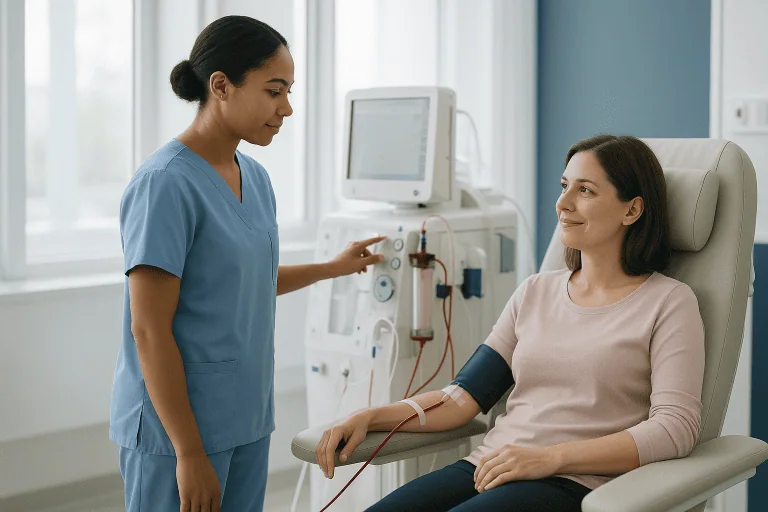
What happens during a session?
A session follows a consistent sequence, whichever type of apheresis you are having:
- Lines are connected to your peripheral veins or central catheter, and the circuit is prepared with an anticoagulant to stop blood clotting inside the tubing.
- Blood is drawn continuously through one line into the apheresis device.
- The device separates the blood into components, using controlled centrifugation, membrane filtration or another specialised separation method.
- The targeted component, plasma, red cells, white cells or platelets, is removed or exchanged according to the prescription.
- The remaining components, together with any replacement fluid, are returned to you through the second line.
- Throughout, the team monitors your blood pressure, pulse, symptoms, fluid balance and the function of the access lines.
For plasma exchange, the removed plasma is replaced with the prescribed fluid, albumin, donor plasma or a combination, as decided at planning. For red cell exchange, compatible donor red cells replace a portion of your own. For leukapheresis or plateletpheresis, the excess cells are simply removed, and no cellular replacement is needed.
Most sessions last a few hours. The exact duration depends on your size and blood volume, the quality of vascular access, the diagnosis and the type of procedure. Some patients need a single urgent treatment; others need daily or alternate-day sessions for a defined period; long-term treatments such as lipid apheresis are scheduled at regular intervals. You are awake throughout and can usually read, rest or talk.
What are the side effects of apheresis?
The most common side effect of apheresis is tingling around the lips or fingers, caused by a temporary drop in calcium related to the citrate anticoagulant used in the circuit. It is usually managed promptly with calcium supplementation or an adjustment to the machine settings, and it settles fastest when you mention it early rather than waiting for it to pass. Some patients feel tired, chilled, lightheaded or mildly nauseated during or after a session; slowing the procedure and adjusting fluids typically settles this.
More serious reactions are uncommon but real, and you should know what they are before consenting: bleeding, infection related to vascular access, allergic reaction to donor plasma products, low blood pressure, and clotting concerns. This is one reason apheresis belongs in a hospital environment with continuous monitoring and immediate access to the teams that manage such events. Fatigue for the rest of the day is common and expected; it is not a complication.
Apheresis machines and plasmapheresis machines
An apheresis machine draws blood continuously, separates it into components with high precision, and returns the elements you need while diverting the component being removed. Modern systems let clinicians control blood flow rate, anticoagulation, replacement volume, fluid balance and the exact amount of plasma or cells removed. Built-in monitoring detects pressure changes, access flow problems, air in the line and other technical issues during treatment, pausing the circuit before a problem reaches you.
A plasmapheresis machine is an apheresis machine configured for plasma removal or exchange, using either centrifugal separation or a plasma-permeable membrane filter. Laboratory support around the machine matters as much as the device itself: rapid, reliable testing lets physicians follow blood counts, coagulation status, antibody and protein levels, kidney function, electrolytes and disease-specific markers between sessions, and adjust the course accordingly. In complex cases, the procedure is coordinated with intensive care monitoring, transfusion medicine, nephrology, neurology, haematology, transplant immunology or imaging services.
What is a therapeutic apheresis nurse?
A therapeutic apheresis nurse is a nurse with specific training in operating apheresis equipment and caring for patients during extracorporeal procedures. During your session, this nurse sets up and runs the machine, manages the anticoagulation and replacement fluids, watches your vital signs and symptoms, responds to early side effects such as citrate tingling or a dip in blood pressure, and keeps the treating physician informed. In many centres, apheresis nurses also manage vascular access care and teach patients what to expect between sessions.
The presence of dedicated, trained apheresis nursing is a reasonable marker of a centre’s experience with the procedure, and a fair thing to ask any hospital about.
After treatment and early recovery
After each session, you are observed until you are stable. The team checks for dizziness, bleeding at the access site, allergic symptoms, changes in blood pressure, and any new neurological or breathing concerns. Repeat laboratory tests often guide the next session. If a central catheter remains in place, you receive clear care instructions from the team before you leave the unit.
Between sessions, the biology keeps moving. In antibody-driven diseases, the body continues to produce the antibodies that apheresis removes, and levels can partially rebound before the next treatment. This is expected: it is why courses are prescribed as a series rather than a single session, why medication that suppresses production runs alongside, and why laboratory monitoring between sessions shapes the schedule rather than following it.
Recovery after the session itself is usually straightforward: many patients eat, walk and resume light activity the same day, though fatigue is common. What determines the wider picture is the underlying disease. Patients being treated for severe neurological, kidney, haematological or intensive care conditions may remain in hospital because the illness, not the apheresis, requires close monitoring. Your treating team explains when travel is safe and what follow-up is needed afterwards.
Why Timing Matters
Therapeutic apheresis is often considered when a condition is progressing quickly or when organ function is at risk. In these situations, delay allows harmful antibodies, abnormal proteins, inflammatory mediators or excess cells to keep damaging tissue. The possible consequences include worsening neurological function, kidney failure, clotting or bleeding complications, respiratory compromise, visual problems, cardiac strain and life-threatening blood disorders. Some conditions, certain immune neurological disorders and thrombotic microangiopathies among them, respond better when treatment begins before severe organ damage has developed.
Acting early does not mean every patient starts apheresis immediately. It means that patients with warning features are evaluated promptly by specialists who can decide whether apheresis is appropriate, and clinicians treat presentations such as rapidly progressing weakness in myasthenia gravis, quickly rising creatinine in antibody-mediated kidney disease, combined low platelets and haemolysis suggesting thrombotic microangiopathy, or hyperviscosity symptoms as urgent. Speed never replaces accurate diagnosis; the two have to run together.
Timing also shapes coordination. Some conditions require apheresis and medication in a specific sequence. In plasma exchange, certain medicines can be partially removed by the procedure, so dosing may be scheduled after treatment. In transplant care, antibody monitoring and immunosuppression must be synchronised with the apheresis course. In haematological emergencies, transfusion decisions are coordinated carefully with the exchange plan, because giving the wrong product at the wrong moment can undermine both.
Early review of existing records prevents avoidable delay wherever treatment takes place. Laboratory values, diagnosis details, previous treatments and the current symptom timeline let a receiving team assess urgency and prepare the right specialists, blood products, vascular access support and monitoring environment before the first session.
Benefits of Therapeutic Apheresis
The potential benefits depend entirely on the diagnosis and the timing, but for the right indication, apheresis offers advantages that medication alone cannot match.
| Benefit | What It Means for You |
|---|---|
| Rapid reduction of harmful blood components | Apheresis can remove antibodies, abnormal proteins, inflammatory factors or excess cells more quickly than many medications can act on their own. |
| Support during serious disease flares | In selected neurological, kidney, haematological and immune conditions, treatment may help stabilise symptoms while other therapies take effect. |
| Protection of vulnerable organs | By lowering disease-driving factors in the bloodstream, apheresis may help limit ongoing injury to the kidneys, nerves, brain, lungs or circulation. |
| A treatment tailored to the mechanism | The type of apheresis, replacement fluid, session frequency and monitoring plan are all adapted to your diagnosis and current condition. |
| Integration with other therapies | Apheresis can be coordinated with immunosuppressive medicines, transfusion support, dialysis, chemotherapy, transplant care or intensive care when needed. |
Recovery Timeline After Therapeutic Apheresis
Recovery varies because patients receive apheresis for very different conditions, but the following timeline describes what many patients experience around treatment.
| Time Period | What Patients Can Expect |
|---|---|
| Day 1 | You are monitored during and after the session for blood pressure changes, tingling, fatigue, access-site issues and allergic symptoms. Some patients return to light routine activity the same day; others remain in hospital because of the underlying illness. |
| First week | If multiple sessions are needed, they may run daily or on alternate days. Laboratory tests and symptom checks guide whether the plan continues, changes or stops. |
| First month | Progress depends on how the disease responds and on the accompanying treatments. Some patients move to outpatient follow-up; others continue specialist care, rehabilitation, dialysis, immune therapy or transplant-related monitoring. |
| Longer term | Some conditions need no further apheresis after the acute episode. Others require scheduled maintenance sessions or close monitoring for relapse. The long-term plan is individual and is revisited as your results come in. |
What Influences Outcomes and a Good Result
A good result in therapeutic apheresis depends first on whether the treatment matches the disease mechanism. Apheresis is most useful when the harmful factor circulates in the blood and removing it is expected to change the disease course. If symptoms are caused by permanent tissue damage, or by factors the bloodstream cannot reach, the benefit will be limited, and it is better to know that before a course begins than after it fails.
Timing is the second major factor. Some conditions respond better when treatment starts before severe organ damage develops, yet urgent treatment still demands accurate diagnosis and attention to safety. The team has to balance speed against appropriate testing, vascular access planning, and the management of bleeding, infection and cardiovascular risk. A rushed course on an uncertain diagnosis serves no one.
The underlying diagnosis determines how many sessions are needed and how improvement is measured. In some disorders, physicians follow clinical signs: muscle strength, breathing function, vision, neurological symptoms, urine output or mental status. In others, laboratory markers lead: platelet count, haemolysis indicators, creatinine, antibody levels, protein levels, blood viscosity or cell counts. You should know, before the course starts, which measure your team will use to judge response.
Replacement fluid selection affects both outcomes and safety. Albumin, donor plasma, saline combinations, red blood cells or other products may be used depending on the procedure, and each carries specific considerations, clotting factor replacement, allergy risk, volume status and compatibility. Transfusion medicine expertise matters whenever donor blood products form part of the plan.
Vascular access quality shapes both comfort and technical success. Poor access can prolong sessions, reduce blood flow or force a switch to a central catheter mid-course. When a central line is needed, infection prevention and careful maintenance are essential, and the team should explain exactly how the line will be looked after between sessions.
Medication timing is particularly important in plasma exchange. Certain antibody-based therapies, immune treatments, antibiotics and anti-seizure medicines can be partially removed during the procedure. Your physician may schedule key doses after apheresis or monitor levels more closely. This is a central reason multidisciplinary coordination matters more here than in many treatments.
Your overall health plays its part. Heart disease, low blood pressure, bleeding disorders, active infection, pregnancy, severe anaemia, kidney failure or intensive care needs may all require additional precautions. Age alone does not determine eligibility; physiological stability and realistic treatment goals do.
Finally, apheresis is rarely the whole plan. It is usually one component of care that includes disease-specific therapy, rehabilitation, dialysis, transfusion support, immune suppression, oncology treatment, infection management or long-term preventive medicine. Clear follow-up after the apheresis course is what preserves the gains and reduces the risk of relapse where ongoing disease control is needed.
Is Therapeutic Apheresis Expensive?
The cost of therapeutic apheresis varies widely, because the treatment itself is only part of what you pay for. This page carries no price figures, deliberately: a meaningful number depends on your diagnosis, your country, the hospital and the shape of your course, and any single figure quoted out of that context would mislead more than it informs.
What you can usefully understand are the cost drivers. The number of sessions matters most: a single urgent exchange and a long maintenance programme are very different undertakings. The type of procedure and the replacement fluid follow: courses that require donor plasma or donor red cells involve blood bank costs that albumin-based exchanges do not. Vascular access adds cost if a central catheter must be placed and maintained. Finally, the setting matters: outpatient sessions in a stable patient cost less than treatment delivered during a hospital admission with intensive care monitoring, and for many patients the admission is driven by the underlying illness rather than by the apheresis itself.
When you receive a quotation, check what it actually covers: physician fees, laboratory monitoring between sessions, blood products, catheter placement, and what happens financially if the course is extended or complications need treatment. Ask for an itemised, written breakdown rather than a single headline figure, and put the same questions to every centre you compare: that way, the differences you see reflect the care itself rather than what each quotation chose to leave out.
Is apheresis covered by insurance?
In many health systems, apheresis is covered when it is performed for an indication supported by clinical guidelines, and not covered, or covered only after review, when the indication is weaker. Insurers commonly ask for the diagnosis, the evidence category of the indication, the planned number of sessions and the treating specialist’s rationale before authorising a course. If you hold private or travel-linked cover, confirm in writing whether the policy covers the procedure, the blood products, the hospital stay and any repeat sessions, since these are sometimes assessed separately. Coverage rules differ by country and by policy, so the only reliable answer comes from your own insurer, in advance.
How Acibadem Approaches Therapeutic Apheresis
Apheresis is a hospital-level treatment, and the environment around the machine matters as much as the machine. Because the procedure is used in urgent and complex illnesses, it needs accurate diagnosis, the right specialists, reliable laboratory support and a clear plan for what happens after the course ends.
At Acibadem, therapeutic apheresis is delivered as part of an integrated clinical pathway rather than as an isolated procedure. Depending on your diagnosis, care may involve haematologists, neurologists, nephrologists, rheumatologists, transplant specialists, intensivists, transfusion medicine teams, laboratory medicine, interventional radiology and nursing teams trained in apheresis. Complex cases are discussed across specialties so that the indication, the timing and the accompanying treatments are aligned before the first session.
The clinical approach follows evidence-informed treatment protocols. Physicians assess whether apheresis is appropriate for your condition, whether it should be urgent or planned, what replacement fluid is needed and how response will be measured. Careful selection cuts both ways: it avoids unnecessary procedures, and it means patients who are likely to benefit are treated without delay.
Diagnostic depth supports those decisions. Laboratory services, imaging, intensive care monitoring, transfusion support, kidney care, neurological assessment and transplant immunology resources are drawn in as the case requires, not to establish whether apheresis is technically possible, but whether it is medically the right intervention at that point in your illness.
Continuity is treated as part of the treatment itself. A written summary of the course, the laboratory trend and the follow-up plan is prepared so that the physicians who manage your long-term care can see exactly what was done, how you responded and what monitoring the course requires afterwards.
Practical questions get individual answers rather than standard ones: how long you may need to stay, whether repeat sessions are expected, whether a caregiver’s support will be useful during the course, and when normal activity is medically sensible. These depend on the condition being treated, not just on the procedure. Patients with neuromuscular conditions such as myasthenia gravis sometimes use night-time breathing support at home; if that applies to you, raise it early in planning so the equipment side of any admission is arranged well in advance.
Preparing for a Specialist Review
Whether apheresis has been recommended to you or you are weighing a second opinion, the decision ultimately rests on a specialist review of your diagnosis, symptoms, laboratory results and current treatment. In many cases, physicians can form a meaningful view from records alone.
The records that carry the most weight in that review are:
- Recent blood test results, including full counts, kidney function, coagulation and any antibody or protein studies
- Imaging reports and, where relevant, biopsy or pathology findings
- Hospital discharge summaries and specialist letters describing the disease course
- A current medication list, with doses and timing
- Transfusion history and any previous apheresis records, including how you responded
Before agreeing to a course anywhere, it is worth understanding five things clearly: which blood component is being targeted and why; how response will be measured; how many sessions are anticipated and what would extend or shorten the course; which replacement fluid will be used and what its specific risks are; and what the plan is if apheresis does not produce the expected response. A team that answers these questions specifically, in terms of your own results, is a team taking the decision seriously.
Therapeutic apheresis can be an important treatment for selected serious conditions. Used with a precise purpose, at the right time, inside a coordinated care plan, it can protect organs and stabilise disease while longer-acting treatment takes hold. Used without one, it is a procedure in search of a reason. The difference lies entirely in the quality of the evaluation that comes first.
Preparation
- Before therapeutic apheresis, the care team reviews your diagnosis, medications, blood tests, and vascular access needs. You may be asked to hydrate well, eat a light meal, and temporarily adjust blood thinners or certain medicines. Informed consent is obtained and vital signs are checked before the session.
Aftercare
- After treatment, blood pressure and general condition are monitored for dizziness, bleeding, tingling, or allergic reactions. Patients are usually advised to rest, drink fluids, and protect the catheter or needle site if used. Follow-up sessions and blood tests are scheduled according to the underlying condition and response.
Frequently Asked Questions
What affects the cost of therapeutic apheresis?
The final cost depends on the diagnosis, chosen apheresis technique, urgency of treatment, laboratory monitoring, vascular access needs, replacement fluids or blood products, medication use, and whether care is outpatient or inpatient. A personalised quote can be prepared after medical records are reviewed by the relevant specialist team.
How can I get a personalised quote from Acibadem?
You can request a free consultation by sharing your diagnosis, recent laboratory results, imaging or biopsy reports if available, current medications, and the treating physician’s notes. The international patient team can coordinate specialist review and explain the proposed package inclusions.
Is therapeutic apheresis always done as a single visit?
Not necessarily. Some patients need planned repeated treatments, while others require urgent treatment followed by reassessment. The schedule is determined by the specialist according to the condition, clinical response, and safety monitoring.
What is usually included in an international patient package?
Depending on the care plan, a package may include specialist consultation, procedure-related hospital services, nursing care, laboratory monitoring, medicines used during the procedure, interpreter support, and care coordination. It is important to confirm what is included before travel.
Will travel and accommodation be included in the medical quote?
Medical quotes usually focus on hospital and treatment-related services. Travel, accommodation, companion arrangements, and personal expenses may be separate, although international patient coordinators can provide guidance and logistical support.
Is this information medical or financial advice?
No. This is general educational information. Treatment suitability, expected care pathway, and cost estimate should be confirmed through a specialist assessment and a personalised quotation.
Medically reviewed by the Acıbadem International Medical Board September 13, 2026
See our medical review board →
Update history
- PublishedJune 8, 2026
- Medical review approvedSeptember 13, 2026
- Last content updateSeptember 12, 2026
References1
- Therapeutic Plasma Exchange ncbi.nlm.nih.gov