Understanding Raynaud’s Syndrome: A Complete Patient Guide

Raynaud's syndrome causes brief episodes of reduced blood flow, most often in the fingers and toes. Typical attacks bring color changes such as white, blue, and then red, along with numbness, tingling, or throbbing.
Key Takeaways
- Raynaud's syndrome causes brief episodes of reduced blood flow, most often in the fingers and toes.
- Typical attacks bring color changes such as white, blue, and then red, along with numbness, tingling, or throbbing.
- Primary Raynaud's is usually less serious, while secondary Raynaud's may be linked to autoimmune or vascular disease.
- Avoiding cold exposure, stopping smoking, and managing stress can reduce attacks.
- Medical evaluation is important if symptoms are severe, one-sided, painful, or associated with skin sores.
Raynaud's syndrome is a condition in which small blood vessels temporarily narrow, usually in the fingers or toes, causing color changes, numbness, and discomfort in response to cold or stress. It can occur on its own or alongside another health condition, and most people improve with trigger avoidance, self-care, and tailored medical treatment when needed.
What Raynaud's Syndrome Means
Raynaud’s syndrome is a circulation problem that causes small blood vessels, usually in the fingers and toes, to narrow too much for a short time. During an attack, the affected area may turn white or pale, then blue, and later red as blood flow returns. Many people also notice numbness, tingling, stiffness, or a throbbing feeling during recovery.
The condition is often triggered by cold temperatures, handling chilled objects, moving from a warm room into cold air, or emotional stress. For many people, episodes are brief and improve once the hands or feet are warmed. Although the symptoms can be uncomfortable, Raynaud’s syndrome is often manageable with practical day-to-day measures.
Doctors commonly divide Raynaud’s into two types. Primary Raynaud’s happens on its own and is usually milder. Secondary Raynaud’s develops in relation to another underlying medical condition or exposure, and it may need closer investigation because it can be more persistent or more severe.
How Symptoms Usually Feel and Look
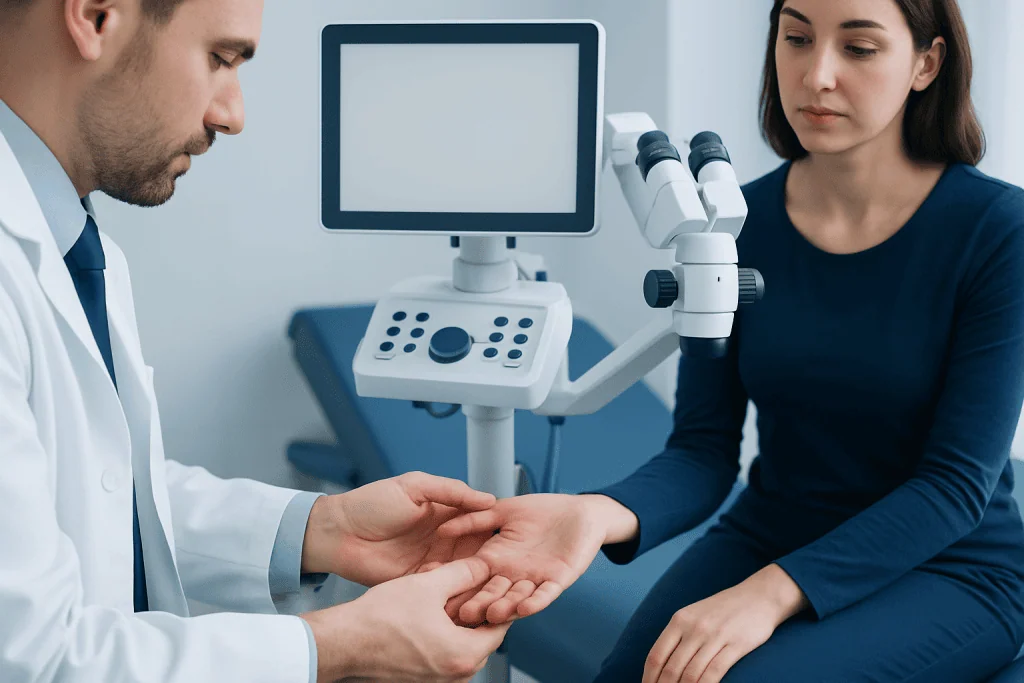
Symptoms tend to follow a pattern. An attack may begin with sudden coldness in one or more fingers or toes, followed by a pale or white color as blood flow decreases. In some people, the skin then turns bluish because the tissue is receiving less oxygen. When circulation returns, the skin often becomes red and may feel warm, tingly, swollen, or painful for a short time.
Not everyone experiences every color change, and attacks vary from person to person. Some people have only mild numbness and color changes a few times each winter. Others notice more frequent episodes, especially if they work in cold settings or use vibrating tools. Symptoms may also affect the nose, ears, lips, or nipples, although the fingers and toes are the most common sites.
Features that suggest a more serious problem include severe pain, sores on the fingertips or toes, skin breakdown, or symptoms that affect one side much more than the other. If these occur, a doctor may evaluate for related vascular or autoimmune conditions such as lupus.
Why Raynaud's Happens: Causes and Risk Factors

Raynaud’s syndrome happens because the small blood vessels overreact to cold or stress. Instead of narrowing only slightly, they go into a temporary spasm and reduce blood flow more than necessary. The exact reason for this heightened sensitivity is not always clear, especially in primary Raynaud’s.
Primary Raynaud’s is more common in younger people and often begins without another identifiable illness. Secondary Raynaud’s is associated with conditions that affect blood vessels or connective tissue. Examples include autoimmune diseases, thyroid disorders, certain blood vessel disorders, and repeated injury from vibrating equipment. Some medicines can also contribute, including some migraine treatments, stimulants, and drugs that narrow blood vessels.
Risk factors include living in a cold climate, smoking, a family history of Raynaud’s, and occupational exposure to vibration. In some people, Raynaud’s may be part of a broader circulation issue, so a doctor may consider whether there are signs of vasculitis or another inflammatory condition.
How Doctors Confirm the Diagnosis
Diagnosis begins with a careful history of the attacks: what triggers them, how long they last, which body parts are involved, and whether there is pain, skin damage, or other symptoms such as joint pain, rashes, dry eyes, or muscle weakness. A doctor also examines the skin, nails, pulses, and circulation in the hands and feet.
One important step is deciding whether Raynaud’s is primary or secondary. Blood tests may be recommended if there are signs of an autoimmune or inflammatory condition. A doctor may also use nailfold capillaroscopy, a simple examination of the tiny blood vessels at the base of the fingernails, to look for changes that suggest connective tissue disease.
In selected cases, additional vascular assessment may be helpful if symptoms are severe, unusual, or associated with ulcers. This can include circulation studies and specialist review in rheumatology, dermatology, or vascular medicine. When blood flow problems need more detailed assessment, doctors may also consider vascular evaluation and check-up as part of the workup.
Treatment Options and What They Aim to Do
Treatment focuses on reducing the number of attacks, making episodes less severe, and protecting the skin and tissues. For many people with primary Raynaud’s, lifestyle changes are the main treatment. Keeping the whole body warm, wearing gloves and layered clothing, using insulated drink containers, and avoiding rapid temperature changes can make a meaningful difference.
If lifestyle measures are not enough, a doctor may prescribe medicine to help blood vessels relax and improve circulation. The exact choice depends on the person’s symptoms, overall health, and whether there is an underlying disease. Treatment of secondary Raynaud’s also includes treating the related condition whenever possible, because better control of the underlying illness can reduce attacks.
Severe cases with skin ulcers or threatened tissue damage may need specialist care. Depending on the cause, management may involve wound care, medication adjustment, or advanced vascular approaches. In carefully selected patients, evaluation by specialists in cardiovascular surgery or rheumatology care may be appropriate as part of a broader treatment plan.
Daily Prevention and Self-care Strategies
Self-care plays a central role in living well with Raynaud’s syndrome. Preventive steps usually work best when they become part of a routine rather than something tried only during an attack. Warm socks, gloves, hand warmers, and weather planning can help avoid sudden cold exposure. Many people also benefit from warming the car, wearing gloves when reaching into the refrigerator or freezer, and dressing in layers so the core body temperature stays stable.
Smoking cessation is especially important because nicotine narrows blood vessels and can worsen symptoms. Stress management may also help, since emotional stress can trigger attacks in some people. Techniques such as paced breathing, mindfulness, regular movement, and adequate sleep can support overall symptom control.
During an attack, it may help to move to a warmer place, gently swing the arms, wiggle the fingers or toes, and place the hands under comfortably warm water. The water should be warm rather than hot to avoid burns, especially if the area is numb. Skin care matters as well: moisturizing regularly and treating small cracks early can lower the chance of irritation or infection.
When to Seek Medical Care
Medical advice is important if Raynaud’s symptoms are new, getting worse, or interfering with daily life. A doctor should also evaluate attacks that are very painful, last longer than usual, or occur without a clear cold or stress trigger. Symptoms that begin later in adulthood may be more likely to need investigation for an underlying cause.
Prompt assessment is recommended if there are sores, ulcers, signs of infection, or dark areas on the skin. One-sided symptoms, weak pulses, or major differences between the hands or feet also deserve attention. These features can suggest a circulation problem beyond typical primary Raynaud’s.
People with joint pain, skin thickening, rashes, shortness of breath, or other systemic symptoms should also speak with a doctor because these may point to a related autoimmune condition. Near the end of the care pathway, some patients may benefit from multidisciplinary assessment; Acibadem International’s specialists in JCI-accredited hospitals diagnose and treat Raynaud’s syndrome and related vascular or autoimmune conditions for international patients.
Frequently asked questions
Is Raynaud's syndrome the same as poor circulation?
Not exactly. Raynaud's syndrome is a specific type of circulation problem in which small blood vessels temporarily narrow too much in response to cold or stress. Other circulation disorders can cause similar symptoms, so a doctor may look for other causes if the pattern is unusual.
What is the difference between primary and secondary Raynaud's?
Primary Raynaud's happens on its own and is usually milder. Secondary Raynaud's is linked to another condition, medicine, or exposure, and it may cause more severe or persistent symptoms. Distinguishing between the two helps guide testing and treatment.
Can Raynaud's syndrome go away on its own?
Some people have mild symptoms that become less troublesome over time, especially with good trigger avoidance. However, Raynaud's often tends to be a recurring condition rather than something that completely disappears. A doctor can help if attacks are frequent or worsening.
Does Raynaud's syndrome always need medication?
No. Many people manage well with warming strategies, avoiding triggers, stopping smoking, and reducing stress. Medication is more often considered when attacks are frequent, painful, affecting daily life, or causing skin problems.
Can stress trigger Raynaud's attacks?
Yes. Emotional stress can activate the body's normal vessel-tightening response, and in people with Raynaud's this response may be exaggerated. Stress management does not replace medical care, but it can be a helpful part of symptom control.
When should someone worry about Raynaud's symptoms?
Medical review is important if attacks are severe, one-sided, or associated with sores, skin color that does not recover, or strong pain. It is also wise to seek care if symptoms start later in life or come with rashes, joint pain, or other whole-body symptoms.
References
- National Heart, Lung, and Blood Institute
- National Institute of Arthritis and Musculoskeletal and Skin Diseases
- American College of Rheumatology
- Mayo Clinic
- Cleveland Clinic
This article is for general information only and is not a substitute for professional medical advice. Please consult a qualified doctor about your individual situation.
Explore treatments in Turkey — costs, top hospitals & a free quote
JCI-accredited · board-certified surgeons · reply within 24h
Add us as a Preferred Source to see more of our trusted health content across Google Search, AI Overviews and Discover.