

Sitting at the Toilet — Explained by Medical Evidence, Not Myths

Brief, unforced toilet sitting is generally normal for bowel movements. Long periods on the toilet can increase straining and may worsen hemorrhoids or pelvic floor symptoms.
Key Takeaways
- Brief, unforced toilet sitting is generally normal for bowel movements.
- Long periods on the toilet can increase straining and may worsen hemorrhoids or pelvic floor symptoms.
- The urge to go, good hydration, fiber intake, and relaxed posture are more important than myths about perfect timing.
- Pain, bleeding, ongoing constipation, or a major change in bowel habits should be assessed by a doctor.
- Healthy bowel habits focus on routine, diet, movement, and avoiding unnecessary pushing.
Sitting at the toilet is usually safe when it is brief and comfortable, but staying seated for a long time or straining is not ideal for bowel health. Medical evidence suggests that bathroom habits, posture, and stool consistency matter more than common myths about exact timing or position.
Overview: what medical evidence says about sitting at the toilet
Sitting at the toilet is a normal part of having a bowel movement, and for most people it is not harmful when it is brief and unforced. The main concern is not simply the act of sitting, but sitting for too long, repeatedly straining, or ignoring symptoms such as pain, bleeding, or a persistent feeling of incomplete emptying.
Many myths suggest that everyone must use one exact toilet posture, spend a fixed number of minutes, or have a daily bowel movement to be healthy. In reality, normal bowel habits vary from person to person. What matters most is whether bowel movements are comfortable, regular for that individual, and free from concerning symptoms.
From a medical point of view, prolonged toilet sitting may put extra pressure on the anal and pelvic tissues, especially when combined with straining. This may contribute to problems such as hemorrhoids, irritation, or worsening constipation patterns. A balanced, evidence-based approach focuses on body signals, diet, hydration, movement, and prompt evaluation of persistent symptoms.
What is normal during a bowel movement
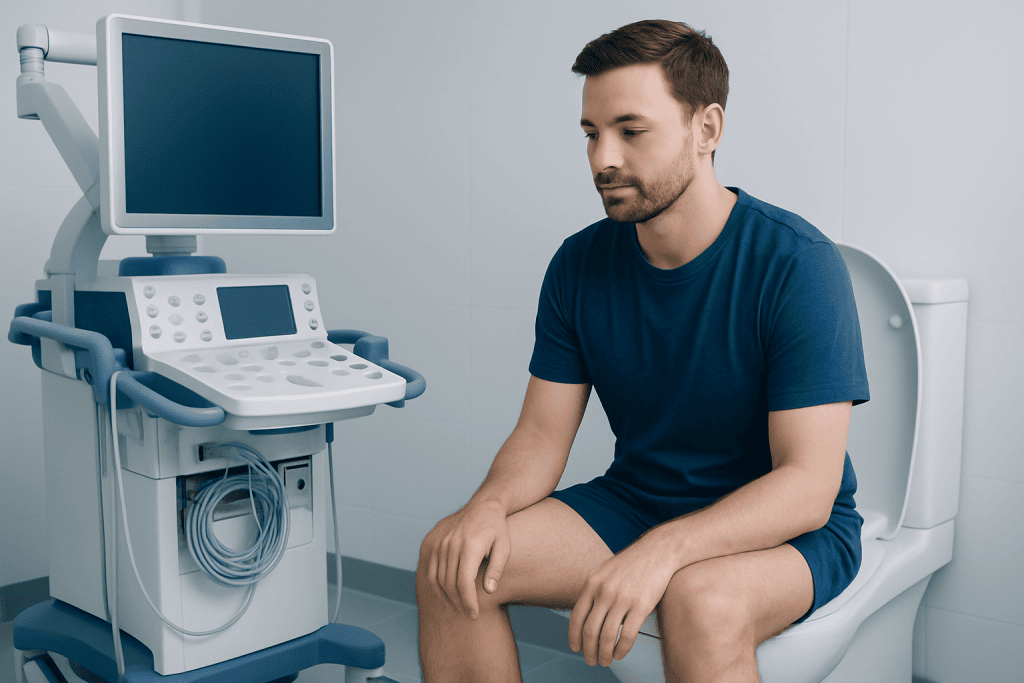
A healthy bowel movement usually happens when the urge comes naturally, without significant effort. It should not require intense pushing, prolonged waiting, or repeated attempts over a long period. Stool is ideally soft and formed, making it easier to pass.
Normal frequency varies widely. Some people have bowel movements several times a day, while others go every other day. Both can be normal if the pattern is stable and there is no pain, hard stool, bloating, or difficulty passing stool.
It can help to think less about the clock and more about the overall experience. If a person sits down, responds to a natural urge, and finishes without straining, that is generally considered healthy. If bathroom visits are prolonged because of distraction, pressure to “make something happen,” or a sense that the bowel never fully empties, that pattern may deserve attention.
- Comfortable passage of stool is a good sign.
- Soft, formed stool is usually easier to pass than very hard or very loose stool.
- A stable bowel routine is often more important than matching someone else’s schedule.
Why long toilet sitting can be a problem
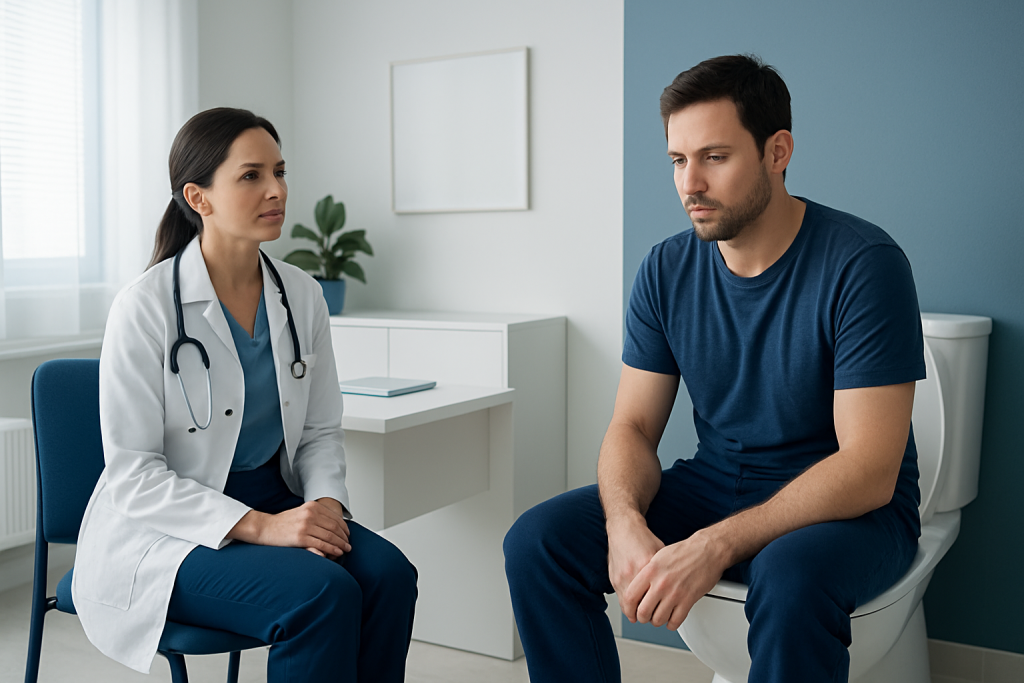
Long periods of sitting at the toilet may increase downward pressure in the rectal and anal area. This pressure can become more significant when a person reads, scrolls on a phone, or continues sitting long after the body’s natural urge has passed. Over time, this habit may aggravate hemorrhoids or contribute to local discomfort.
Prolonged sitting also encourages straining. Straining can make it harder for the pelvic floor muscles to coordinate properly, especially in people who already have constipation or pelvic floor dysfunction. Instead of helping, repeated pushing may tighten the wrong muscles and make emptying less effective.
Another issue is habit formation. If a person trains themselves to spend a long time on the toilet every day, they may become less responsive to natural bowel signals and more dependent on effort. In some cases, this pattern overlaps with constipation or with symptoms linked to hemorrhoids, both of which may benefit from medical assessment if ongoing.
Common causes of difficulty when sitting at the toilet
The most common reason people spend too long on the toilet is constipation. Constipation may involve infrequent bowel movements, hard stools, a feeling of blockage, or the need to strain. Causes can include low fiber intake, dehydration, low physical activity, travel, certain medications, or changes in routine.
Pelvic floor dysfunction is another possible cause. In this situation, the muscles that should relax during a bowel movement may tighten instead. A person may feel the urge to go but still struggle to pass stool, even after sitting for a while. This can lead to repeated attempts and frustration.
Other causes include hemorrhoids, anal fissures, irritable bowel syndrome, and less commonly structural problems in the rectum or colon. Pain during bowel movements may make a person tense up and delay passing stool, creating a cycle of fear and straining. If symptoms are persistent, a doctor may investigate digestive conditions such as colon cancer when clinically appropriate, especially in older adults or in those with warning signs like bleeding or unexplained weight loss.
In some people, lifestyle habits are the main factor. Ignoring the urge to have a bowel movement, rushing through meals, low fluid intake, high intake of ultra-processed foods, and frequent sedentary time can all affect bowel regularity.
Best toilet habits: posture, timing, and routine
Medical guidance generally supports going to the toilet when the urge appears rather than delaying it repeatedly. A relaxed, unhurried visit is more helpful than forcing a bowel movement on a strict schedule. For many people, the body is naturally more ready after breakfast or other meals because eating stimulates movement in the intestines.
Posture may also help. Sitting with the knees slightly higher than the hips, leaning forward gently, and keeping the abdominal wall relaxed may support easier emptying. Some people use a small footstool to create a more natural angle, although this is a comfort strategy rather than a universal medical requirement.
It is usually wise to avoid staying seated for long periods if nothing is happening. Brief, focused toilet time is often better than repeated straining. Limiting distractions such as phones or tablets may also help a person stay more aware of body signals and avoid unnecessary prolonged sitting.
- Go when the urge is present.
- Do not force or hold your breath while pushing.
- Try a forward-leaning, relaxed posture.
- Avoid extended toilet sitting out of habit or distraction.
How bowel health can be improved
Healthy bowel habits start outside the bathroom. Adequate fiber from vegetables, fruit, legumes, and whole grains can help stool stay soft and easier to pass. Fluids also matter, especially when fiber intake increases. Regular physical activity supports the natural movement of the intestines and can reduce sluggish bowel patterns.
Routine can be helpful as well. Many people benefit from setting aside unhurried time after meals, especially breakfast, to allow the body’s normal digestive reflexes to work. Responding to the urge early is often more effective than postponing it until later.
If constipation is ongoing, a doctor may recommend further evaluation or treatment. Depending on the cause, care may include dietary counseling, bowel habit training, medicines, or targeted assessment through services such as gastroenterology evaluation or colonoscopy when clinically indicated. In selected cases with pelvic floor issues or complex bowel symptoms, a specialist may suggest more advanced testing or therapies.
Near the end of the care pathway, patients who need coordinated assessment may also be seen by multidisciplinary specialists at Acibadem International, where JCI-accredited hospitals diagnose and treat digestive and colorectal conditions for international patients.
When to seek medical care
Medical care is advisable if sitting at the toilet becomes regularly difficult, painful, or unusually time-consuming. A person should not assume that all bowel problems are minor or due to stress alone, especially when symptoms continue for several weeks or affect daily life.
Warning signs include blood in the stool, black stools, persistent abdominal pain, unexplained weight loss, ongoing constipation, a major change in bowel habits, fever, or a feeling that the bowel never fully empties. These symptoms do not always mean a serious disease, but they do deserve proper medical assessment.
A doctor may review diet, medications, fluid intake, bowel routine, and associated symptoms, then decide whether examination or testing is needed. Some people may benefit from specialist care in proctology or related digestive services, particularly if hemorrhoids, fissures, pelvic floor disorders, or recurrent rectal symptoms are suspected.
Frequently asked questions
How long should a person sit at the toilet?
There is no exact universal number of minutes, but bowel movements are generally best when they are brief and not forced. If someone is sitting for a long time waiting or straining, that may suggest constipation, poor bowel habits, or another issue worth addressing.
Is sitting at the toilet too long bad for hemorrhoids?
It can be. Long toilet sitting may increase pressure in the anal area and may worsen hemorrhoid-related discomfort in some people, especially when combined with straining. Shorter, more natural bathroom visits are usually better.
Does the right toilet posture really matter?
Posture can help, but it is not a cure-all. Leaning forward slightly and raising the knees a bit above the hips may make bowel movements easier for some people by supporting a more relaxed angle for emptying.
Why does a person feel the urge to go but then nothing happens?
This can happen with constipation, pelvic floor dysfunction, anxiety-related muscle tension, or stool that is too hard to pass easily. If the feeling happens often, medical evaluation can help identify the cause and guide treatment.
Should a person push or strain to finish a bowel movement?
Regular straining is not recommended. Strong pushing can irritate the anal area, worsen hemorrhoids, and make pelvic floor coordination more difficult. It is better to support bowel health with fiber, fluids, movement, and timely response to natural urges.
When is sitting at the toilet a sign of a medical problem?
It may point to a problem when bathroom visits are repeatedly prolonged or associated with pain, bleeding, hard stool, or a persistent sense of incomplete emptying. A doctor should also be consulted for a clear change in bowel habits or any warning signs such as weight loss or black stools.
References
- National Institute of Diabetes and Digestive and Kidney Diseases
- American Gastroenterological Association
- National Health Service
- Mayo Clinic
- Cleveland Clinic
This article is for general information only and is not a substitute for professional medical advice. Please consult a qualified doctor about your individual situation.
Persistent digestive symptoms? Get evaluated in Turkey
JCI-accredited · board-certified surgeons · reply within 24h
Add us as a Preferred Source to see more of our trusted health content across Google Search, AI Overviews and Discover.

More from the Health Library



Related Specialists

Assoc. Prof. Dr. Alpay Yılmaz
Gynecologic Oncology
Dr. Aslı Saran İkizler
Radiation Oncology
Dr. Bülent Özmen
Orthopedic Surgery & Traumatology
Prof. Dr. Tarik Zafer Nursal
General Surgery