Ecchymosis: Symptoms, Causes, and Treatment Options

Ecchymosis is a type of bruise that appears as a flat blue, purple, or black patch under the skin. Most cases happen after minor trauma, but medicines, aging, bleeding disorders, or liver disease can also contribute.
Key Takeaways
- Ecchymosis is a type of bruise that appears as a flat blue, purple, or black patch under the skin.
- Most cases happen after minor trauma, but medicines, aging, bleeding disorders, or liver disease can also contribute.
- Treatment usually focuses on comfort and allowing the body to reabsorb the trapped blood over time.
- Medical review is important if bruising is unexplained, very painful, keeps returning, or occurs with other bleeding symptoms.
- Diagnosis may include a physical exam, medication review, and blood tests to look for clotting or platelet problems.
Ecchymosis is a larger area of skin discoloration caused by bleeding beneath the skin. It often follows a minor injury and fades on its own, but frequent, unexplained, or severe bruising may point to an underlying medical issue that needs evaluation.
Overview
Ecchymosis is a bruise: a flat area of blue, purple, brown, or black discoloration that develops when small blood vessels break and blood leaks into the tissues under the skin. In many cases, it appears after a bump, fall, sports injury, blood draw, or other minor trauma. Although the color can look dramatic, ecchymosis is often harmless and improves gradually as the body clears the blood.
The term is sometimes used more specifically for a larger bruise, usually more than about 1 centimeter across. Unlike a raised blood collection, ecchymosis is generally not a bulging lump. It is also different from tiny pinpoint spots called petechiae and the slightly larger spots called purpura, though all three can be related to bleeding under the skin.
What makes ecchymosis worth understanding is that it can have more than one cause. A simple knock against furniture is the most common explanation, but some people bruise more easily because of age, medication use, fragile blood vessels, or conditions that affect platelets, clotting factors, or the liver. Looking at the size, pattern, location, and frequency of bruising helps guide whether it is likely to be routine or whether it deserves further medical attention.
How Ecchymosis Looks and Feels
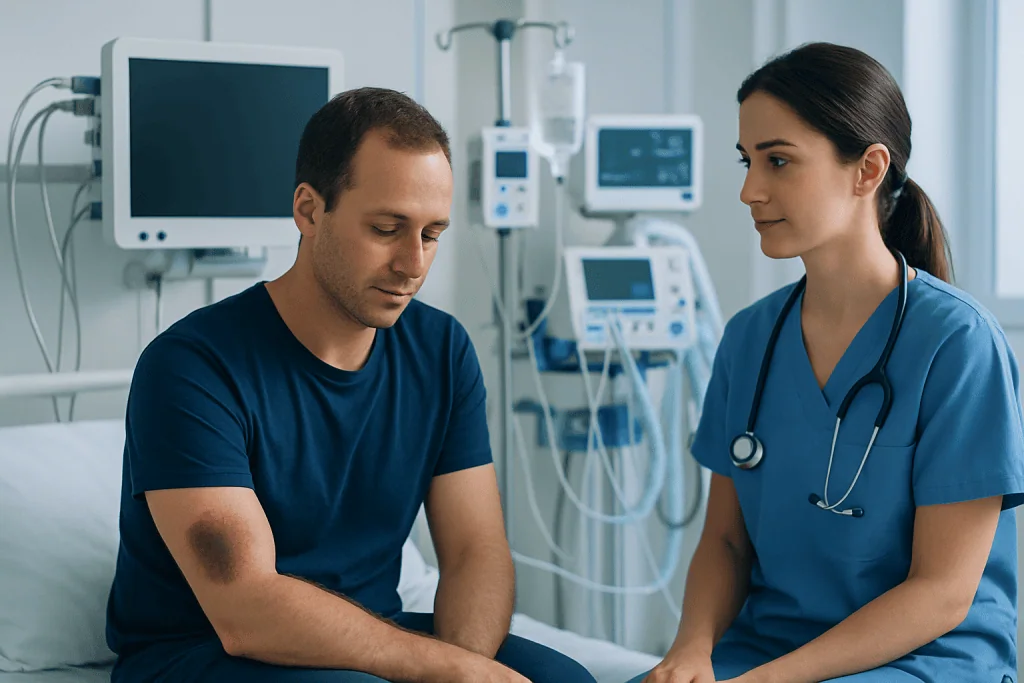
Ecchymosis usually begins as a reddish or purplish patch and then changes color over several days. It may turn dark blue or black, then fade to green, yellow, or brown as the trapped blood breaks down and is reabsorbed. This color change is a normal part of healing and can vary with skin tone, bruise depth, and the amount of bleeding under the skin.
The area may be tender, sore, or mildly swollen, especially in the first 24 to 48 hours if it follows an injury. Some bruises feel stiff or uncomfortable when the nearby joint or muscle is used. However, a simple ecchymosis does not usually cause severe pain, marked warmth, or rapidly worsening swelling. Those features can suggest a deeper injury or another problem.
People often notice ecchymosis on the arms or legs, where bumps and impacts are common. Bruising can also appear after medical procedures such as injections, intravenous lines, or blood tests. Bruises around the eyes, chest, abdomen, or back may need more attention because they can be associated with stronger trauma or internal injury, depending on the situation.
- Common colors: red, purple, blue, black, green, yellow, brown
- Common symptoms: tenderness, mild swelling, soreness to touch
- Typical course: appears within hours, then slowly fades over 1 to 3 weeks
Causes and Risk Factors

The most common cause of ecchymosis is direct trauma. Even a small impact can break tiny blood vessels, especially in areas where the skin is thin or close to bone. Sports activities, accidental falls, tight equipment, or pressure from medical instruments can all lead to bruising. In many people, the exact bump is forgotten by the time the bruise becomes noticeable.
Some individuals are more likely to develop ecchymosis because their skin and blood vessels are more delicate. Older adults often bruise more easily as the skin becomes thinner and supportive tissue decreases with age. Long-term sun exposure may also make blood vessels more fragile. In addition, certain medicines can reduce the blood’s ability to clot or increase bleeding from minor injury. Examples include anticoagulants, antiplatelet medicines, some anti-inflammatory drugs, and corticosteroids.
Less commonly, ecchymosis may be linked to an underlying medical condition. Problems with platelets, clotting factors, vitamin deficiencies, liver disease, kidney disease, or blood disorders can interfere with normal bleeding control. Infections, inflammatory conditions, and some cancers may also play a role in unusual bruising patterns. If bruises occur often, seem out of proportion to minor contact, or happen together with nosebleeds, gum bleeding, or unusually heavy periods, a doctor may consider evaluation for bleeding disorders or other causes.
- Minor injury or repeated pressure
- Aging skin and fragile blood vessels
- Anticoagulants, antiplatelet drugs, NSAIDs, or corticosteroids
- Platelet or clotting disorders
- Liver disease, vitamin deficiency, or other systemic illness
How Doctors Diagnose the Cause
Diagnosis starts with a medical history and physical examination. A doctor will ask when the bruising began, whether there was an injury, how often bruises occur, and whether there are other symptoms such as fatigue, fever, joint pain, bleeding gums, or blood in urine or stool. A careful medication review is especially important because many prescribed and over-the-counter medicines can make bruising more likely.
The pattern of ecchymosis can offer clues. Bruises limited to areas of known impact are usually straightforward. In contrast, multiple unexplained bruises, bruising in unusual locations, or bruises of very different ages may need closer evaluation. Doctors may also check for enlarged lymph nodes, liver or spleen enlargement, signs of anemia, or evidence of skin fragility.
If an underlying problem is suspected, blood tests may be recommended. These can include a complete blood count, platelet count, clotting studies, and sometimes liver function tests or other targeted investigations. Imaging is not needed for most simple bruises, but it may be useful when deeper bleeding, muscle injury, fracture, or internal trauma is possible. Depending on the findings, further assessment by specialists in hematology, internal medicine, or check-up and screening services may be appropriate.
Treatment Options and Healing
Most uncomplicated ecchymosis does not need specific medical treatment. The body gradually breaks down and reabsorbs the pooled blood under the skin. Discomfort usually improves before the discoloration fully fades. Recovery time depends on the size of the bruise, the body area involved, and whether the person takes medicines that affect clotting.
In the first day or two after an injury, simple supportive care can help reduce pain and limit swelling. Resting the affected area, applying a cold pack wrapped in cloth for short periods, and elevating the area when possible are commonly advised. After the early phase, gentle movement may help comfort and stiffness as long as it does not worsen pain. People should avoid massaging a fresh bruise aggressively, because this may irritate the tissues.
When ecchymosis is related to a medical condition or medication, treatment focuses on the underlying cause. A doctor may review whether medicines need adjustment, investigate for a clotting problem, or treat an associated illness such as liver disease. If bruising follows a significant injury and there is concern for deeper damage, imaging and specialty care may be needed. In selected cases, evaluation in hematology or advanced medical imaging services can help clarify the reason for recurrent or severe bruising.
Prevention and Self-care
Not every bruise can be prevented, but practical steps can lower the risk. Wearing protective gear during sports, keeping walkways clear, and improving lighting at home may reduce accidental impacts. Older adults who bruise easily may benefit from reviewing fall risks, footwear, and home safety with a clinician or therapist.
Skin protection matters as well. Long sleeves, shin guards, or padded clothing may be helpful for people whose work or hobbies involve frequent bumps. Good nutrition supports normal healing, and a doctor may assess for deficiencies if bruising is common. People should not start or stop blood-thinning medicines on their own, but they can discuss frequent bruising with the prescribing doctor to make sure the treatment plan is balanced and safe.
It is useful to monitor bruises over time. Taking note of how long they last, where they appear, and whether they follow obvious minor trauma can provide helpful information if medical advice is needed. Seeking care early is wise if the bruising pattern changes noticeably, if bruises become larger or more numerous, or if they occur alongside symptoms such as unusual bleeding or severe fatigue.
When to Seek Medical Care
Most ecchymosis can be observed at home, but some situations deserve prompt medical assessment. A person should seek care if the bruise appears without a clear injury, keeps recurring, is unusually large, or causes significant pain or swelling. Medical advice is also important if bruising occurs while taking anticoagulants or if there are signs of bleeding elsewhere in the body.
Urgent evaluation is needed after a major fall, head injury, or blow to the abdomen or chest, especially if there is dizziness, shortness of breath, fainting, confusion, or worsening pain. These features may suggest more than a simple surface bruise. Bruising around the eyes after trauma, or extensive bruising with weakness or paleness, should not be ignored.
A doctor may also look more closely when ecchymosis occurs together with fever, unintended weight loss, night sweats, or frequent infections, because these can point to a broader medical issue. For international patients who need coordinated assessment, Acibadem International’s multidisciplinary specialists and JCI-accredited hospitals diagnose and treat conditions related to unexplained bruising and bleeding with an individualized approach.
Frequently asked questions
Is ecchymosis the same as a bruise?
Yes. Ecchymosis is the medical term for a larger flat bruise caused by bleeding under the skin. It usually happens after small blood vessels are damaged by minor trauma.
How long does ecchymosis take to heal?
Many bruises improve over 1 to 3 weeks, although larger bruises can take longer. The color often changes from purple or blue to green, yellow, and brown as healing progresses.
Can ecchymosis happen without an injury?
Yes. Some people develop ecchymosis more easily because of age, fragile skin, medications, or conditions that affect platelets or blood clotting. Unexplained or frequent bruising should be discussed with a doctor.
What is the difference between ecchymosis, purpura, and petechiae?
All three involve bleeding under the skin, but they differ mainly by size. Petechiae are tiny pinpoint spots, purpura are somewhat larger, and ecchymosis refers to a broader bruise-like patch.
Should a person stop blood thinners if bruising appears?
No, medicines such as anticoagulants should not be stopped without medical advice. A doctor can decide whether the bruising is expected, whether testing is needed, or whether treatment should be adjusted.
When is ecchymosis an emergency?
Urgent care is important after major trauma, especially if there is head injury, chest pain, abdominal pain, fainting, confusion, or difficulty breathing. Emergency evaluation is also wise if bruising is accompanied by heavy bleeding or signs of shock.
References
- National Institutes of Health
- American Academy of Dermatology
- Merck Manual Consumer Version
- Cleveland Clinic
- Mayo Clinic
This article is for general information only and is not a substitute for professional medical advice. Please consult a qualified doctor about your individual situation.
Explore treatments in Turkey — costs, top hospitals & a free quote
JCI-accredited · board-certified surgeons · reply within 24h
Add us as a Preferred Source to see more of our trusted health content across Google Search, AI Overviews and Discover.

More from the Health Library


Related Specialists

Assoc. Prof. Dr. Dilek Altun
Anesthesiology
Dr. Özgün Barış Çolak
Physical Medicine & Rehabilitation
Prof. Dr. Zeynep Güven
Physical Medicine & Rehabilitation
Dr. Nihan Özcan
Gynecology & Obstetrics