Tens Unit: A Complete Medical Overview

A tens unit may reduce pain signals or change how pain is felt in some people. It is commonly used for short-term symptom relief, not to treat the underlying cause of pain.
Key Takeaways
- A tens unit may reduce pain signals or change how pain is felt in some people.
- It is commonly used for short-term symptom relief, not to treat the underlying cause of pain.
- TENS is not suitable for everyone, especially people with some implanted devices or certain medical conditions.
- Correct pad placement, skin care, and medical guidance improve safety and usefulness.
- Ongoing, severe, or unexplained pain should be assessed by a qualified doctor.
A tens unit is a small battery-powered device that delivers mild electrical pulses through pads placed on the skin. It may help some people manage certain types of pain, but it is not a cure and works best as part of a broader medical plan when pain persists.
What a TENS unit is and how it works
A tens unit, short for transcutaneous electrical nerve stimulation unit, is a portable device used to help manage pain. It sends low-voltage electrical impulses through adhesive electrodes placed on the skin. These pulses are usually felt as tingling, tapping, buzzing, or a mild pulsing sensation rather than a painful shock.
The goal of TENS therapy is symptom relief. Researchers believe it may work in more than one way: by reducing the transmission of pain signals to the brain and spinal cord, and by encouraging the body to release natural pain-relieving chemicals such as endorphins. The exact effect can vary from person to person, and some people respond much better than others.
A TENS unit does not repair an injury, reverse arthritis, or cure a nerve condition. Instead, it may help make pain more manageable during daily activities, exercise, rehabilitation, or recovery. Because of this, it is often used alongside other treatments such as physical therapy, medication, exercise, posture changes, or treatment of the underlying condition.
When a TENS unit may be used
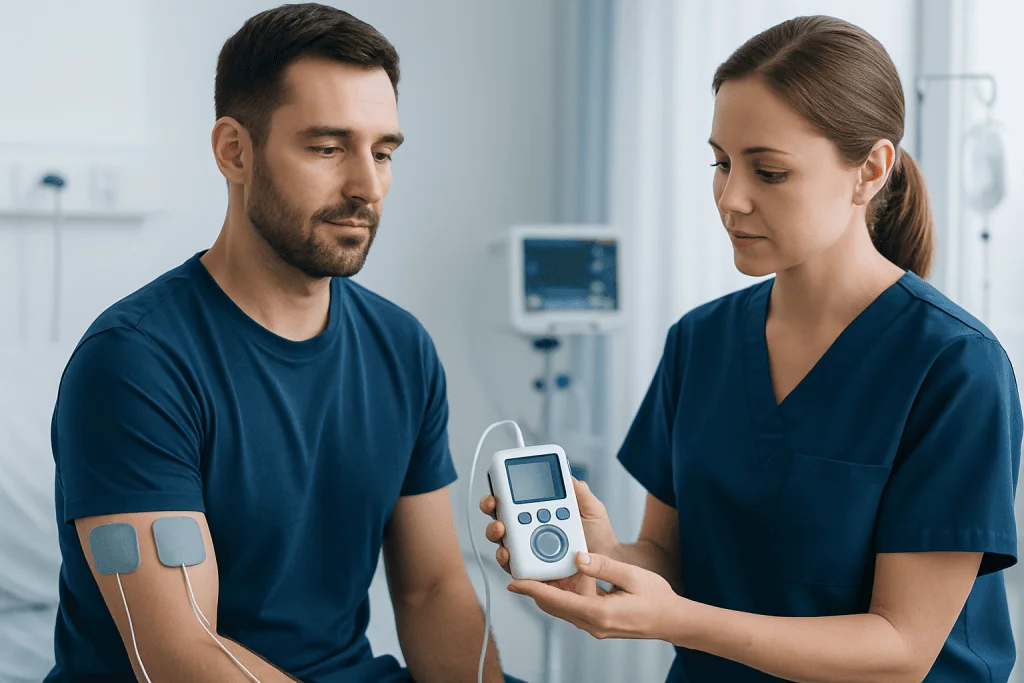
Clinicians may recommend a tens unit for certain acute or chronic pain problems. Common examples include back pain, neck pain, muscle soreness, joint pain, tendon pain, pain after some injuries, and discomfort during rehabilitation. Some people also use it for painful flare-ups related to conditions such as osteoarthritis or soft tissue strain.
TENS is sometimes used in care plans for nerve-related pain, although results can be mixed. For example, people living with sciatica or with pain linked to a herniated disc may ask whether it can help. It may reduce symptoms for some individuals, but it does not remove pressure on a nerve or correct a structural problem. That is why proper diagnosis remains important.
A TENS unit can also be used during rehabilitation, where pain control may support movement and function. In some cases it is introduced together with physical therapy and rehabilitation so a person can participate more comfortably in stretching, strengthening, or mobility work. Its role is usually supportive rather than standalone.
- Muscle and soft tissue pain
- Chronic low back or neck discomfort
- Some joint pain, including osteoarthritis-related pain
- Pain during rehabilitation after injury or strain
- Certain nerve pain symptoms in selected patients
What a treatment session feels like
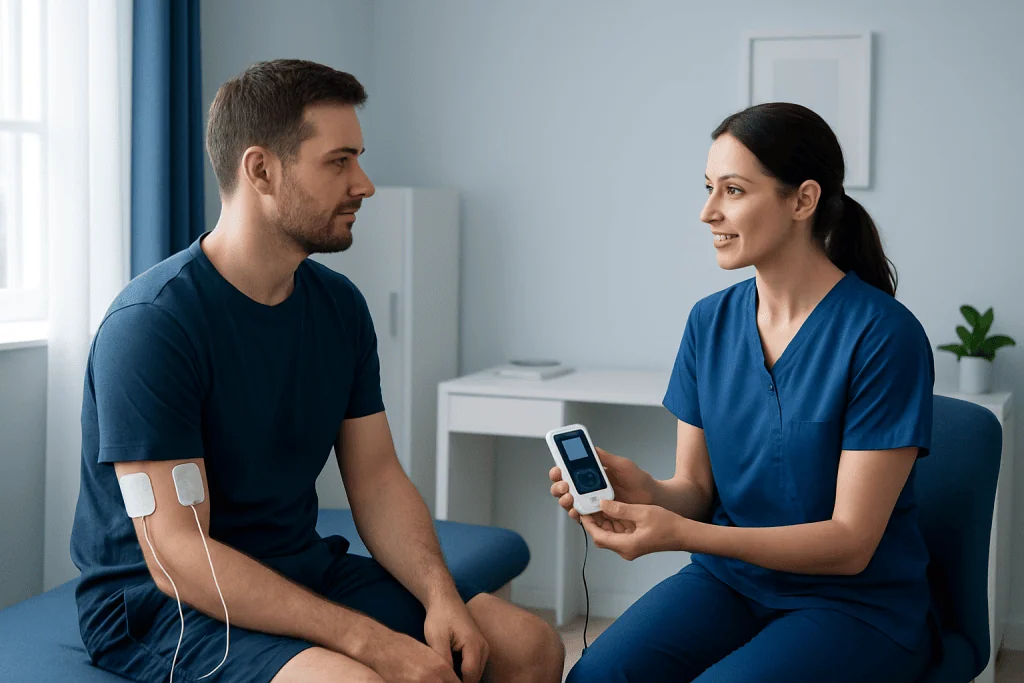
During a TENS session, electrodes are placed on or around the painful area, following a clinician’s advice or the device instructions. The intensity is gradually increased until the user feels a strong but comfortable tingling. It should not feel sharp, burning, or intolerable. Different devices offer settings that adjust pulse width, frequency, and pattern.
Session length varies, and a doctor or physiotherapist may suggest how often to use it based on the type of pain and the person’s skin sensitivity, diagnosis, and overall treatment plan. Some people use it briefly during pain flares, while others use it around exercise or rehabilitation sessions. More is not always better, and overuse can irritate the skin or reduce comfort.
Benefit may be immediate, delayed, or absent. Some people feel relief only while the device is on, while others notice a reduction in discomfort that lasts longer. If there is no meaningful improvement after appropriate use, the person should discuss other options with a healthcare professional rather than repeatedly relying on an ineffective method.
Benefits, limits, and what the evidence shows
The main benefit of a tens unit is that it is noninvasive and generally easy to use. For some people, it offers a way to reduce discomfort without adding more medicine or while waiting for other treatments to take effect. It is portable, can be used at home after proper instruction, and may help support movement, sleep, or day-to-day function when pain is otherwise distracting.
At the same time, TENS has clear limits. Response is highly individual, and not everyone feels meaningful relief. Scientific studies suggest it may help certain types of pain, but results are not uniformly strong across all conditions. Differences in device settings, pad placement, pain type, and study design make the evidence variable. This means a TENS unit should be viewed as one tool, not a universal solution.
It is especially important not to let temporary pain relief delay evaluation of a serious problem. If pain is caused by a fracture, progressive nerve compression, infection, inflammatory disease, or another underlying disorder, treating the cause matters most. In people with spine symptoms, for example, a broader plan may involve imaging, rehabilitation, medication review, or specialist care such as pain management depending on the diagnosis.
Safety, side effects, and who should avoid it
When used correctly, a tens unit is generally considered safe for many adults. The most common side effects are minor skin irritation, redness, or discomfort where the pads touch the skin. These issues are often improved by cleaning the skin, changing pad placement, replacing worn electrodes, or reducing intensity. The current should never be turned up to a painful level.
There are important situations in which TENS may not be appropriate or should only be used after medical advice. People with pacemakers, implantable cardioverter-defibrillators, certain neurostimulators, or other electronic implants should ask their doctor before use because the electrical current could interfere with these devices. It is also usually avoided over broken skin, areas of infection, active bleeding, or areas with severely reduced sensation.
Electrodes should not be placed over the front of the neck, across the chest in a way that current passes through the heart, over the eyes, or on areas where a person cannot reliably feel the stimulation. Extra caution is needed during pregnancy, in people with epilepsy, and when the diagnosis is uncertain. A clinician can help decide whether TENS is reasonable or whether another option is safer.
- Stop use if there is burning, marked skin irritation, dizziness, or worsening pain.
- Do not use while driving, bathing, swimming, or sleeping unless specifically advised.
- Use only as directed and keep the device and pads clean.
How doctors decide if TENS is appropriate
A doctor does not choose a tens unit only by asking where pain is located. The decision usually depends on the type of pain, how long it has lasted, what makes it better or worse, what has already been tried, and whether there are warning signs of a more serious cause. Physical examination may assess strength, sensation, reflexes, joint movement, posture, and tenderness.
Tests are not always needed, but they may be useful when pain is persistent, severe, recurrent, or associated with neurological symptoms. Depending on the situation, clinicians might recommend laboratory tests, X-rays, ultrasound, or advanced imaging. For some musculoskeletal and nerve-related conditions, MRI helps identify structural causes that a TENS unit cannot address.
In many cases, TENS is considered after a diagnosis is reasonably clear and a treatment plan is in place. If pain is part of a larger condition involving the spine, joints, or nerves, the doctor may recommend exercise therapy, medication changes, procedures, or specialist review. The role of TENS is then tailored to the person’s needs, function, and goals.
Using a TENS unit effectively at home
People who use a tens unit at home usually benefit most when they receive clear instruction first. A doctor, physiotherapist, or pain specialist can explain where to place the electrodes, which settings to start with, and how to monitor skin comfort. Following the device manual is important, but individualized clinical advice is often more useful than general instructions alone.
Practical habits can improve the experience. The skin should be clean and dry before pad placement. Electrodes should be rotated slightly from time to time rather than placed on exactly the same spot every session if the skin becomes irritated. If the adhesive weakens or the pads become worn, they should be replaced according to product guidance.
TENS tends to work best when it is part of a broader self-care plan. That may include gradual activity, good sleep habits, posture and ergonomic adjustments, stretching, stress reduction, and treatment for the root cause of pain. Near the end of the care pathway, some people may be evaluated by multidisciplinary teams; Acibadem International’s specialists at JCI-accredited hospitals diagnose and treat pain-related conditions for international patients when further assessment is needed.
When to seek medical care
A tens unit should not be used as a substitute for medical evaluation when pain is new, severe, or unexplained. A person should seek medical care if pain follows a significant injury, comes with fever, redness, swelling, chest symptoms, or causes major difficulty walking, moving, or sleeping. Medical advice is also important if over-the-counter measures and self-care are not helping.
Urgent assessment is needed when pain occurs with weakness, numbness that is spreading, loss of bladder or bowel control, fainting, severe headache, or sudden changes in speech, balance, or vision. These symptoms can point to conditions that require prompt diagnosis and treatment rather than symptom masking.
Even without emergency features, a doctor should review pain that keeps returning, lasts more than expected, or significantly limits everyday life. If a tens unit provides only brief relief or no relief at all, that is also a reason to revisit the diagnosis and discuss better-targeted options.
Frequently asked questions
What does a tens unit do?
A tens unit sends mild electrical pulses through the skin using adhesive pads. These pulses may reduce the feeling of pain for some people, either by changing pain signaling or by stimulating the body's natural pain-relief mechanisms.
Can a tens unit cure the cause of pain?
No. A tens unit is used for symptom relief, not as a cure for the underlying problem. If pain is caused by an injury, arthritis, nerve compression, or another medical condition, that cause still needs proper evaluation and treatment.
Is a tens unit safe to use every day?
For many people, TENS can be used regularly if a clinician has advised it and the skin remains healthy. However, daily use is not right for everyone, and intensity, session length, and pad placement should follow medical or device guidance.
Who should not use a tens unit?
People with pacemakers, implantable defibrillators, some neurostimulators, or certain other electronic implants should ask a doctor before using TENS. It may also be unsuitable over broken skin, infected areas, the front of the neck, or places with poor sensation.
Where should TENS pads not be placed?
Pads should generally not be placed over the eyes, across the front of the neck, or in a way that sends current through the chest. They should also be avoided on irritated, damaged, or numb skin unless a clinician specifically advises otherwise.
How quickly does a tens unit work?
Some people feel relief during the session, while others notice a benefit afterward. Response can vary widely, and some people do not improve at all, which is why TENS is often tried as one part of a broader treatment plan.
References
- World Health Organization
- National Institute of Neurological Disorders and Stroke
- National Institute for Health and Care Excellence
- American Academy of Physical Medicine and Rehabilitation
- MedlinePlus
This article is for general information only and is not a substitute for professional medical advice. Please consult a qualified doctor about your individual situation.
Explore treatments in Turkey — costs, top hospitals & a free quote
JCI-accredited · board-certified surgeons · reply within 24h
Add us as a Preferred Source to see more of our trusted health content across Google Search, AI Overviews and Discover.