Brain Bleed — Explained by Medical Evidence, Not Myths

A brain bleed means bleeding within the brain tissue or in the spaces around the brain. Common warning signs include sudden severe headache, weakness, confusion, trouble speaking, vomiting, seizures, or loss of consciousness.
Key Takeaways
- A brain bleed means bleeding within the brain tissue or in the spaces around the brain.
- Common warning signs include sudden severe headache, weakness, confusion, trouble speaking, vomiting, seizures, or loss of consciousness.
- Head injury, uncontrolled high blood pressure, aneurysms, blood thinners, and abnormal blood vessels are common causes.
- Diagnosis usually involves urgent brain imaging, especially CT scanning, and treatment depends on the location and cause of the bleed.
- Any suspected brain bleed needs immediate emergency assessment rather than home monitoring.
A brain bleed is bleeding in or around the brain, usually caused by trauma, high blood pressure, a ruptured blood vessel, or blood-thinning medicines. It is a medical emergency because the bleeding can damage brain tissue or raise pressure inside the skull, but prompt diagnosis and treatment can improve outcomes.
What a brain bleed is
A brain bleed is bleeding in or around the brain. Doctors may also call it a brain hemorrhage or intracranial bleeding. It is not a single disease but a medical event with several possible causes, and the exact location of the bleeding strongly affects symptoms, treatment, and recovery.
Bleeding can happen inside the brain tissue itself or in the spaces that surround the brain. These include subdural, epidural, subarachnoid, and intracerebral hemorrhages. Some are more often linked to head injury, while others are more often related to high blood pressure, a ruptured aneurysm, or fragile blood vessels.
What makes a brain bleed serious is not only blood loss. The skull is a closed space, so extra blood can increase pressure on the brain, reduce normal blood flow, and irritate or damage nearby tissue. Even a small bleed in a critical area can affect speech, movement, vision, memory, or consciousness.
Because the symptoms may overlap with stroke, severe migraine, concussion, or other neurological conditions, medical imaging is essential. A person should not try to decide at home whether symptoms are “just a headache” or something more serious if warning signs are sudden or severe.
Symptoms and warning signs
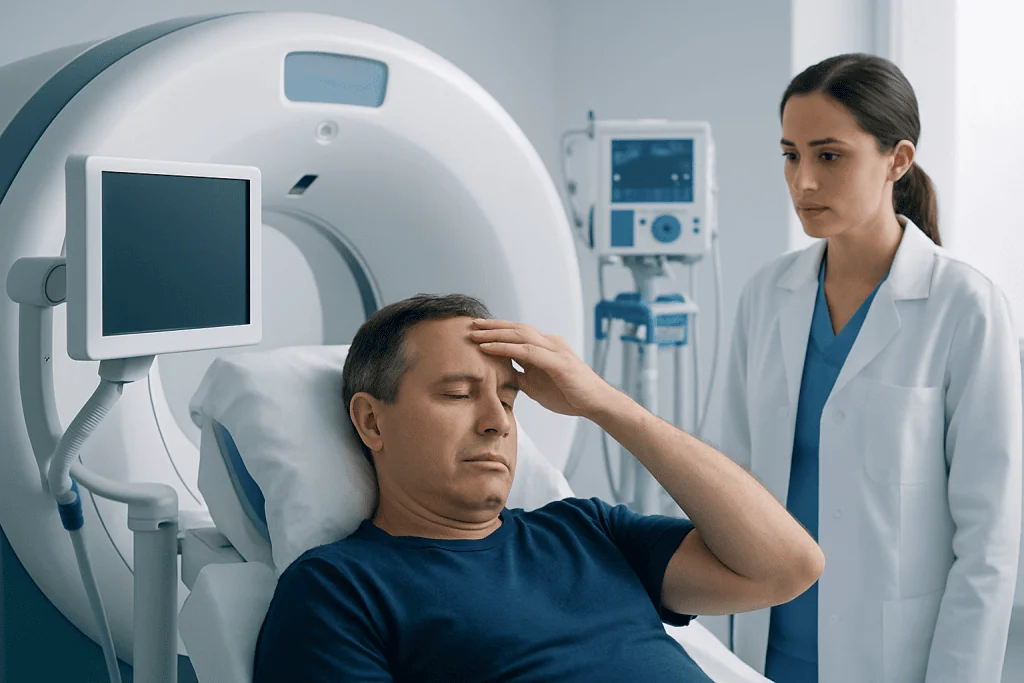
Brain bleed symptoms often begin suddenly, although in some cases they can evolve over hours or days. The pattern depends on where the bleeding is, how quickly it develops, and whether it follows an injury. Symptoms may be mild at first and then worsen as pressure builds.
Possible warning signs include:
- Sudden severe headache, often described as the worst headache of a person’s life
- Weakness or numbness on one side of the body
- Trouble speaking or understanding speech
- Confusion, drowsiness, or personality change
- Loss of balance, dizziness, or difficulty walking
- Blurred or double vision
- Nausea and vomiting
- Seizures
- Loss of consciousness
Symptoms after a head injury deserve particular attention. A person may seem well at first and then become increasingly sleepy, confused, or hard to wake. This can happen with some types of bleeding around the brain, especially in older adults or in people taking blood-thinning medication.
Not every headache or bump to the head means a brain bleed. However, sudden neurological symptoms, worsening alertness, repeated vomiting, seizure, or weakness should always be treated as urgent until a clinician has ruled out bleeding.
Causes and risk factors

Brain bleeds have several well-established causes. Head trauma is one of the most common, especially after falls, road traffic accidents, sports injuries, or direct blows to the head. In older adults, even a relatively minor fall can sometimes lead to bleeding, particularly if the brain has naturally shrunk slightly with age, making veins more vulnerable to tearing.
Another major cause is chronic high blood pressure. Over time, uncontrolled blood pressure can weaken small arteries in the brain and make them more likely to rupture. Abnormal blood vessels such as arteriovenous malformations, as well as weakened artery walls called aneurysms, can also bleed. A ruptured aneurysm may cause a sudden, explosive headache and is a common cause of subarachnoid hemorrhage.
Medicines and medical conditions can increase risk too. Blood thinners, antiplatelet drugs, bleeding disorders, liver disease, and very low platelet counts may make bleeding more likely or more severe. Less common causes include brain tumors, certain infections, illicit stimulant drug use, and a condition called cerebral amyloid angiopathy, in which proteins build up in vessel walls and make them fragile.
Risk does not mean certainty. Many people with risk factors never have a brain bleed, and some people have a bleed without a known warning. Still, addressing preventable factors such as blood pressure control, fall prevention, and medication review can lower risk over time.
How doctors diagnose a brain bleed
Diagnosis starts with an urgent clinical assessment. Doctors ask when symptoms began, whether there was trauma, which medicines are being taken, and whether there is a history of high blood pressure, aneurysm, stroke, or bleeding disorders. A neurological examination helps identify changes in strength, sensation, speech, alertness, and eye movements.
The most important early test is usually a non-contrast CT scan of the head, which can quickly show fresh blood and help doctors identify the type and location of the bleed. In some situations, MRI may provide more detail, especially if the diagnosis is not clear or if doctors need to look more closely at the brain tissue.
Additional tests may include CT angiography, MR angiography, or catheter angiography to look for an aneurysm or abnormal blood vessel. Blood tests can check clotting, platelet levels, kidney function, and other factors that influence treatment decisions. If a head injury is involved, the team also evaluates for skull fracture or other trauma.
Rapid diagnosis matters because treatment differs depending on the cause. A traumatic subdural hematoma is managed differently from a spontaneous bleed due to high blood pressure or a ruptured aneurysm. In complex cases, a patient may be assessed by emergency physicians, neurologists, neurosurgeons, and intensive care specialists working together.
Treatment options and what recovery may involve
Brain bleed treatment depends on the size of the bleed, its location, the patient’s symptoms, and the underlying cause. Early care focuses on protecting the brain and preventing the bleeding from worsening. This may include close monitoring, oxygen support if needed, blood pressure management, seizure treatment when appropriate, and reversal of blood-thinning medication in selected cases.
Some small bleeds can be managed without surgery if the patient is stable and the bleed is not causing dangerous pressure. Others require urgent procedures to remove accumulated blood, relieve pressure, repair a ruptured vessel, or drain fluid. Depending on the situation, doctors may consider neurosurgery, endovascular procedures, or care in a neuro-intensive setting. If the bleed is related to an aneurysm, treatment may overlap with approaches used for brain aneurysm.
Recovery varies widely. Some people improve quickly, while others need prolonged rehabilitation for speech, mobility, memory, or daily activities. Fatigue, headaches, mood changes, and concentration difficulties can persist for some time even after hospital discharge. Rehabilitation may involve physiotherapy, occupational therapy, speech therapy, and follow-up in neurology or neurosurgery clinics.
Near the end of the care pathway, ongoing follow-up is important to manage risk factors and prevent complications. In suitable cases, Acibadem International’s multidisciplinary specialists and JCI-accredited hospitals diagnose and treat brain bleed and related neurological conditions for international patients.
Prevention and self-care after treatment
Not every brain bleed can be prevented, but some steps clearly reduce risk. Managing blood pressure is one of the most important. Regular check-ups, taking prescribed medicines as directed, limiting excess salt, maintaining a healthy weight, and staying physically active can all support better blood pressure control.
Head protection also matters. Using seat belts, helmets for appropriate sports or cycling, safe footwear, handrails, and fall-prevention measures at home can reduce traumatic bleeding. Older adults may benefit from vision checks, medication reviews, balance training, and home safety adjustments such as better lighting and removal of trip hazards.
People who take blood thinners should not stop them on their own, but they should understand why the medicine is prescribed, how it is monitored, and when to seek help after a fall or head injury. It is also sensible to avoid illicit stimulant drugs and to discuss any unusual bruising or bleeding with a doctor.
After a brain bleed, self-care usually includes rest, gradual return to activity, medication adherence, follow-up appointments, and rehabilitation exercises if prescribed. Driving, work, travel, or exercise restrictions may apply for a period of time, so it is important to follow individualized advice rather than general online guidance.
When to seek medical care
Any suspected brain bleed needs urgent medical attention. A person should call emergency services immediately for sudden severe headache, one-sided weakness, facial drooping, speech difficulty, seizure, collapse, or loss of consciousness. It is safer to be assessed promptly than to wait for symptoms to pass.
Medical care is also important after a head injury if the person becomes unusually sleepy, confused, repeatedly vomits, has worsening headache, develops weakness, behaves out of character, or is difficult to wake. This is especially important for older adults and anyone taking anticoagulants or antiplatelet medicine.
Even when symptoms seem less dramatic, persistent new neurological symptoms should be evaluated. New numbness, balance problems, visual changes, or unusual confusion may reflect a bleeding event or another urgent neurological problem such as stroke.
A clinician can decide whether observation, imaging, specialist review, or immediate treatment is needed. Delays can allow pressure on the brain to increase, so timely assessment is the most important first step.
Frequently asked questions
Is a brain bleed the same as a stroke?
A brain bleed is one type of stroke, called a hemorrhagic stroke, but not all strokes are caused by bleeding. Many strokes happen because a blood vessel is blocked rather than ruptured. Both situations are medical emergencies and can cause similar symptoms.
Can a brain bleed happen without a head injury?
Yes. Brain bleeds can happen spontaneously due to high blood pressure, a ruptured aneurysm, abnormal blood vessels, blood-thinning medicines, or fragile vessels in older age. That is why sudden neurological symptoms need medical assessment even if there was no accident.
What does a brain bleed headache feel like?
Some people describe it as a sudden, severe, unusual headache that reaches maximum intensity very quickly. Others may have headache along with vomiting, neck pain, confusion, or sensitivity to light. A severe new headache with neurological symptoms should be treated urgently.
Can someone recover fully from a brain bleed?
Some people do recover very well, especially when the bleed is small, treated promptly, and does not affect a critical area of the brain. Others may have lasting problems with movement, speech, memory, or fatigue. Recovery depends on the size, location, cause, age, and overall health of the patient.
How long does recovery from a brain bleed take?
Recovery time varies widely. Some people improve over days to weeks, while others need months of rehabilitation. Progress is often not linear, and regular follow-up helps guide return to daily activities safely.
Should a person go to the hospital after hitting their head if they feel fine?
Not every head injury requires emergency treatment, but certain situations deserve prompt evaluation. Medical advice is especially important if the person is older, takes blood thinners, lost consciousness, has worsening headache, vomits, becomes confused, or later seems unusually sleepy.
This article is for general information only and is not a substitute for professional medical advice. Please consult a qualified doctor about your individual situation.
Explore treatments in Turkey — costs, top hospitals & a free quote
JCI-accredited · board-certified surgeons · reply within 24h
Add us as a Preferred Source to see more of our trusted health content across Google Search, AI Overviews and Discover.
Check your numbers in seconds
BMI, calories, due date, blood pressure and 30+ more clinical calculators — free, instant, doctor-reviewed ranges.

More from the Health Library

Finger Pussing — Explained by Medical Evidence, Not Myths

Broke the Arm: What Patients Need to Know

Organs on Right Side of Body: An Evidence-Based Guide for Patients

Knock Knees: A Complete Medical Overview

Methenamine: What Patients Need to Know