Cluster Headaches Explained: Common Triggers and Red Flags

Cluster headaches cause intense attacks of pain, usually around one eye, that occur in clusters over days to weeks. Typical symptoms include eye watering, eye redness, nasal congestion, drooping eyelid, and marked restlessness during an attack.
Key Takeaways
- Cluster headaches cause intense attacks of pain, usually around one eye, that occur in clusters over days to weeks.
- Typical symptoms include eye watering, eye redness, nasal congestion, drooping eyelid, and marked restlessness during an attack.
- Common triggers during an active cluster period may include alcohol, strong smells, heat, and disrupted sleep.
- Diagnosis is clinical but may require brain imaging to exclude other conditions, especially when symptoms are new or atypical.
- Fast-acting treatments can stop attacks, and preventive treatments can reduce how often they occur.
- Urgent medical care is important for a first severe headache, neurological symptoms, fever, confusion, or a sudden thunderclap headache.
Cluster headaches are a primary headache disorder that causes extremely severe, one-sided head pain in repeated attacks, often around the eye and often with tearing, redness, or nasal congestion on the same side. Although they are not usually dangerous by themselves, sudden or unusual headache symptoms should be assessed promptly to confirm the diagnosis and rule out more serious causes.
Overview: what cluster headaches are
Cluster headaches are a type of primary headache disorder, meaning the headache itself is the condition rather than a symptom of another illness. They cause sudden attacks of very severe pain, usually centered behind or around one eye on one side of the head. The attacks tend to happen in patterns, or “clusters,” with frequent headaches over weeks or months followed by periods of remission.
What often sets cluster headaches apart is not only the intensity of pain but also the combination of eye and nose symptoms on the same side as the pain. A person may have tearing, a red eye, a blocked or runny nostril, facial sweating, or a drooping eyelid. Unlike migraine, people with cluster headaches are often unable to stay still and may pace, rock, or feel intensely agitated during an attack.
Because the pain is so severe, cluster headaches can be frightening and disruptive. Even so, effective treatments are available. A careful medical assessment is important to confirm that the symptoms fit cluster headaches and not another condition such as migraine or a secondary cause of severe head pain.
How cluster headaches feel and the symptoms they cause
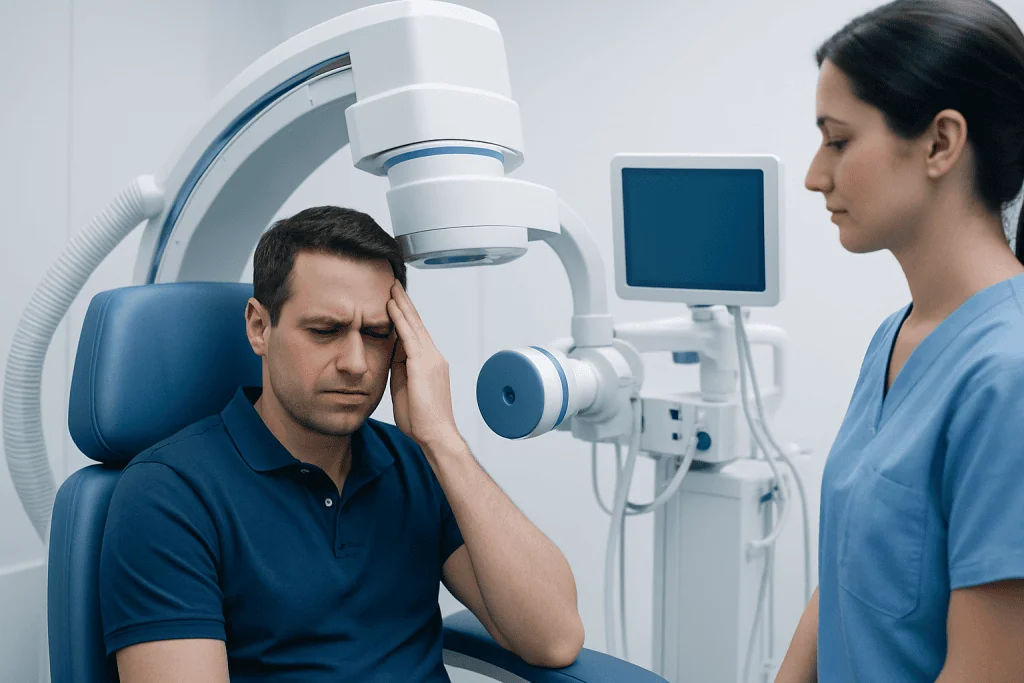
A cluster headache attack usually begins quickly and reaches peak intensity within a short time. The pain is often described as piercing, burning, drilling, or stabbing. It typically affects one side of the head, especially around the eye, temple, or forehead, and each attack can last from about 15 minutes to 3 hours if untreated.
Attacks may occur once every other day or several times a day, often at similar times. Many people notice that headaches wake them from sleep, particularly during the night. During a cluster period, the pattern can be remarkably regular, which is one reason this condition is linked to the body’s internal biological clock.
Common symptoms during an attack include:
- Severe one-sided pain around or behind the eye
- Watery or red eye on the painful side
- Blocked or runny nostril on the same side
- Drooping eyelid or a smaller-looking pupil
- Facial sweating or flushing
- Restlessness, pacing, or inability to lie still
- Sensitivity to light or sound in some people
Some people have episodic cluster headaches, with active periods followed by headache-free months or longer. Others have chronic cluster headaches, in which attacks continue for a year or more with very short remissions or none. A neurologist may help distinguish these patterns and tailor treatment accordingly.
Common triggers and why attacks seem to come in patterns

Cluster headaches are not caused by a single known factor, but they appear to involve the hypothalamus, an area of the brain that helps regulate sleep, hormones, and circadian rhythms. This may explain why attacks often happen at the same time of day and why cluster periods can appear seasonally in some people.
During an active cluster period, certain triggers may provoke an attack. Alcohol is one of the best-known examples, and even a small amount may trigger pain while the cluster is active, though it may not do so during remission. Strong smells such as solvents or perfumes, cigarette smoke, overheating, high altitude, and disrupted sleep can also be relevant for some people.
Commonly reported triggers or aggravating factors include:
- Alcohol during a cluster period
- Irregular sleep or sleep deprivation
- Strong odors, smoke, or chemical fumes
- Heat, hot baths, or vigorous exertion in some people
- Stress changes or abrupt shifts in routine
Triggers vary from person to person, and having a trigger does not mean it caused the condition. A headache diary can help identify patterns in timing, sleep, exposures, and symptoms. This record can also help a specialist distinguish cluster headaches from other forms of recurring head pain, including other headache disorders.
How doctors diagnose cluster headaches
Diagnosis starts with a detailed history. A doctor will ask where the pain occurs, how long attacks last, how often they happen, whether eye or nasal symptoms occur on the same side, and whether the person becomes restless during an attack. These details are often highly characteristic and can strongly point toward cluster headaches.
A physical and neurological examination is also important. Although cluster headaches are a primary headache disorder, doctors must consider other causes of severe one-sided head pain, especially if symptoms are new, if the pattern has changed, or if there are neurological abnormalities. Depending on the situation, brain imaging such as MRI may be recommended to exclude structural or vascular problems.
Tests are not always needed for every person with a classic history, but they are common when symptoms are atypical. Red flags that may prompt urgent assessment include a sudden “worst headache,” fever, fainting, new weakness, confusion, vision loss, or headaches that begin after head injury. In some cases, a doctor may also review sleep symptoms or consider conditions that can overlap with headache disorders.
Specialist assessment may be especially helpful if attacks are frequent, the diagnosis is uncertain, or treatment is not working well. At centers with multidisciplinary neurological care, patients may be evaluated for advanced options such as specialist neurology care and, when needed, related imaging or pain-management strategies.
Treatment options: stopping an attack and preventing the next one
Cluster headache treatment usually has two goals: stopping individual attacks quickly and reducing the number of attacks over time. Because the pain rises fast, standard oral painkillers often work too slowly to be very helpful. Doctors typically use treatments that act quickly and are matched to the person’s health history.
For many patients, high-flow oxygen given through a mask can relieve an attack within a short time. Another common acute treatment is a triptan medicine, often given as an injection or nasal form because these routes work faster than tablets. A doctor will decide whether these options are appropriate, particularly in people with certain cardiovascular conditions.
Preventive treatment aims to shorten the cluster period and reduce how often attacks happen. Depending on the patient, this may include medicines started at the beginning of a cluster cycle and adjusted under medical supervision. In selected cases, procedures or device-based therapies may be considered by headache specialists if standard treatment is not enough.
When symptoms are persistent or difficult to control, coordinated care may involve pain management support and imaging or specialist review. Acibadem International’s multidisciplinary specialists and JCI-accredited hospitals diagnose and treat headache disorders for international patients when further evaluation is needed.
Prevention and self-care between attacks
Self-care does not replace medical treatment, but it can support better control of cluster headaches. The most practical step is learning personal patterns. Keeping a diary of attack timing, sleep habits, alcohol use, smell exposures, and response to treatment can help identify avoidable triggers and improve discussions with a doctor.
Sleep regularity is especially important. Going to bed and waking at consistent times may help reduce circadian disruption. During an active cluster period, many specialists advise avoiding alcohol completely because it can trigger attacks very reliably in some people. Limiting smoke exposure and strong chemical odors may also help.
Helpful self-care steps may include:
- Keeping a consistent sleep schedule
- Avoiding alcohol during active cluster periods
- Reducing exposure to smoke and strong odors
- Using prescribed treatments as directed at the first sign of an attack
- Bringing a headache diary to appointments
It is also important to protect emotional well-being. Recurrent severe pain can affect sleep, work, and mood. Support from family, employers, and healthcare professionals can make treatment plans easier to follow and reduce the isolation that many people feel with severe headache disorders.
When to seek medical care
Any first episode of a severe headache deserves medical attention, especially if it is sudden, unusually intense, or different from prior headaches. Prompt assessment is also important when severe one-sided eye pain is accompanied by visual changes, persistent vomiting, or symptoms that do not fit a known pattern.
Emergency care is needed for a thunderclap headache that peaks in seconds to minutes, headache with fever or neck stiffness, weakness or numbness, confusion, seizures, fainting, or trouble speaking. These signs can point to causes other than cluster headaches and should not be attributed to stress or a “normal” headache.
Medical review is also advised if attacks are becoming more frequent, waking a person repeatedly from sleep, or interfering with daily function despite treatment. If the diagnosis is unclear, doctors may arrange further evaluation with MRI imaging or referral to a neurologist to rule out other conditions and confirm the best treatment plan.
Frequently asked questions
Are cluster headaches the same as migraines?
No. Both can be severe, but cluster headaches usually cause shorter attacks of extreme one-sided pain with tearing, eye redness, nasal symptoms, and marked restlessness. Migraine more often lasts longer and may involve nausea, light sensitivity, and a preference to lie quietly in a dark room.
How long does a cluster headache attack last?
A single untreated attack commonly lasts from about 15 minutes to 3 hours. Some people have one attack every few days, while others may have several in one day during an active cluster period.
What is the most common trigger for cluster headaches?
Alcohol is one of the best-known triggers during an active cluster period. However, triggers vary, and some people also notice attacks with irregular sleep, strong smells, smoke exposure, or heat.
Can cluster headaches go away on their own?
Yes, episodic cluster headaches can stop for months or longer between active periods. Even so, medical evaluation is still important because the pain is severe and because treatment can reduce attacks and help rule out other causes.
Do cluster headaches always happen at night?
Not always, but nighttime attacks are common. Many people notice headaches at predictable times, including during sleep, which reflects the condition’s link to the body’s internal clock.
What should a person do during a suspected cluster headache attack?
They should use any prescribed fast-acting treatment exactly as directed and seek medical advice if the diagnosis has not been confirmed. If the headache is sudden, new, or accompanied by weakness, confusion, fever, vision loss, or collapse, emergency care is needed.
References
- National Institute of Neurological Disorders and Stroke
- American Migraine Foundation
- Mayo Clinic
- National Health Service
- International Headache Society
This article is for general information only and is not a substitute for professional medical advice. Please consult a qualified doctor about your individual situation.
Explore treatments in Turkey — costs, top hospitals & a free quote
JCI-accredited · board-certified surgeons · reply within 24h
Add us as a Preferred Source to see more of our trusted health content across Google Search, AI Overviews and Discover.