Wasp Sting — Explained by Medical Evidence, Not Myths

Most wasp stings cause short-term pain, redness, and swelling at the sting site. Unlike honeybees, wasps usually do not leave a stinger behind and may sting more than once.
Key Takeaways
- Most wasp stings cause short-term pain, redness, and swelling at the sting site.
- Unlike honeybees, wasps usually do not leave a stinger behind and may sting more than once.
- Cold compresses, gentle cleaning, and over-the-counter symptom relief are often enough for mild cases.
- Breathing difficulty, dizziness, widespread hives, or swelling of the face or throat require emergency care.
- Repeated stings or delayed worsening should be assessed by a qualified doctor.
A wasp sting usually causes immediate burning pain, redness, and localized swelling that improve within hours to a few days. Most stings can be managed with simple first aid, but urgent medical care is important if symptoms suggest a severe allergic reaction or involve the mouth, throat, or widespread body symptoms.
Overview
A wasp sting is an insect sting that typically causes sudden sharp pain, followed by redness, swelling, and tenderness around the affected skin. In most people, this is a short-lived local reaction rather than a dangerous event. The main medical concern is not the sting itself, but whether it triggers a larger local reaction, an infection-like irritation, or a true allergic response.
Wasp venom contains substances that irritate tissue and activate the immune system. This is why symptoms can feel intense right away, even when the sting is not medically serious. Unlike some common myths, a stronger burning sensation does not automatically mean the reaction is dangerous, and a large area of swelling does not always mean infection.
It also helps to distinguish a wasp sting from a bee sting. Honeybees often leave a barbed stinger in the skin, while wasps usually do not. Because of this, wasps may sting repeatedly. If symptoms seem severe or unclear, a clinician may also consider other possibilities such as allergy or skin inflammation that can resemble a sting reaction.
What a Wasp Sting Feels Like and Common Symptoms
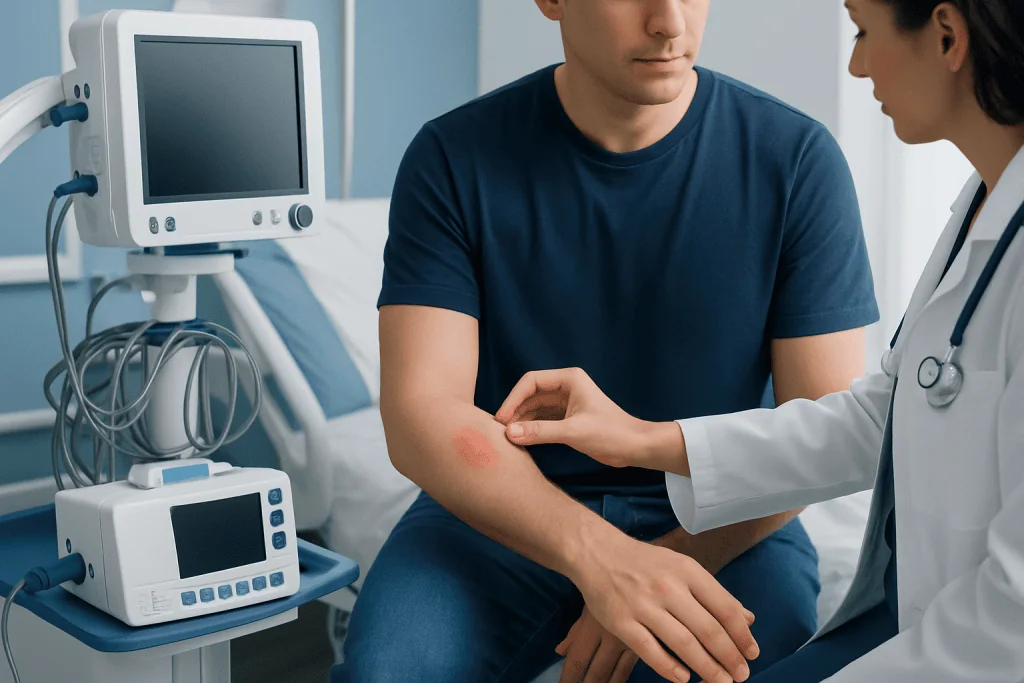
The most common symptoms begin within seconds. A person may feel a sharp or burning pain, then notice a small raised area with redness and mild swelling. The spot can remain sore, itchy, or warm for several hours. For many people, symptoms peak early and then gradually settle.
Some reactions are larger but still localized. Swelling may spread several centimeters from the sting site over the next 24 to 48 hours, especially on the hands, feet, eyelids, or lips, where tissue is looser. This can look dramatic but is not always an emergency if breathing is normal and there are no body-wide symptoms.
Symptoms that may occur with a more significant reaction include:
- Increasing redness and swelling around the sting
- Itching beyond the immediate sting site
- Warmth and tenderness of the skin
- Nausea or feeling unwell after multiple stings
- Hives on other parts of the body
- Swelling of the face, tongue, or throat
- Wheezing, shortness of breath, dizziness, or fainting
Body-wide symptoms suggest an allergic reaction and need urgent attention. Severe allergy can overlap with anaphylaxis, a rapid medical emergency that requires immediate treatment.
Why Reactions Vary: Causes and Risk Factors

A wasp sting causes symptoms because venom enters the skin and triggers pain fibers, inflammation, and an immune response. The size of the reaction depends on several factors, including the sting location, the amount of venom, the number of stings, and the person’s individual sensitivity.
Many people have a small local reaction, while others develop a large local reaction that expands over a day or two. This can happen without a true venom allergy. In contrast, a systemic allergic reaction involves symptoms away from the sting site, such as generalized hives, throat tightness, wheezing, or low blood pressure.
Risk factors for more serious problems include:
- A previous allergic reaction to a sting
- Multiple stings at the same time
- Stings inside the mouth or throat
- Underlying asthma or other breathing problems
- Known mast cell disorders or severe allergy history
- Young children, older adults, or people unable to describe symptoms clearly
Repeated exposure does not always make future reactions worse, but it can increase the risk in some people. For that reason, anyone with a history of severe sting allergy should discuss prevention and emergency planning with a doctor.
First Aid and Medical Treatment Options
Initial care focuses on reducing pain, limiting swelling, and watching for warning signs. The area should be washed gently with soap and water. If a stinger is visible, it can be removed carefully, although this is more often relevant to bee stings than wasp stings. A cold pack wrapped in cloth may help reduce swelling and discomfort when applied for short intervals.
For mild reactions, general self-care may include rest, elevating the affected limb if possible, and using non-prescription pain relief or an oral antihistamine if a clinician or pharmacist considers it appropriate. Scratching should be avoided because it can worsen irritation and increase the chance of a skin infection.
Medical treatment depends on the severity of the reaction. A doctor may recommend medicines to reduce itching, pain, or inflammation when the local reaction is extensive. If the sting triggers a severe allergic reaction, emergency treatment is required, and some patients may need allergy testing later to clarify venom sensitivity and long-term risk. In selected patients with repeated serious reactions, referral for specialist allergy care may be appropriate.
If the skin reaction is unusually prolonged or difficult to interpret, clinicians may assess for other causes of rash or swelling and, when necessary, involve dermatology specialists to rule out infection, dermatitis, or another skin condition.
How Doctors Diagnose a Wasp Sting Reaction
Diagnosis is usually based on the story of the sting and the pattern of symptoms. Doctors ask when the sting happened, whether the insect was seen, how quickly symptoms started, and whether there have been previous reactions. The physical examination helps distinguish a simple local reaction from a larger local reaction, an infection, or an allergic emergency.
Most people do not need blood tests or scans. Testing is more relevant when a person had symptoms suggestive of systemic allergy, such as breathing difficulty, widespread hives, collapse, or swelling affecting the airway. In these cases, an allergy specialist may consider further assessment after recovery, rather than during the immediate event.
When the presentation is severe or uncertain, clinicians focus on airway, breathing, circulation, and rapid symptom control. In patients with a concerning allergy history, evaluation may be linked to broader care pathways for immunology or allergy assessment. The goal is to identify who is at risk of future severe reactions and who can be managed with routine first aid alone.
Prevention and Self-care After a Sting
After a mild sting, symptoms often improve over one to three days, although itching and swelling can last longer in some people. The skin should be kept clean, and tight jewelry or clothing near a swollen area should be removed early. If swelling increases noticeably over 24 to 48 hours but remains limited to the area around the sting, this may still be a large local reaction rather than an emergency.
To help prevent future stings, it is sensible to avoid provoking insects and reduce exposure outdoors. Wasps are attracted to sweet foods, drinks, and open trash, especially in warm months. Calm movement is safer than swatting, which can make insects more defensive.
Practical prevention steps include:
- Keeping food and sugary drinks covered outdoors
- Wearing shoes on grass or near gardens
- Avoiding strong fragrances when insects are active
- Using caution around bins, fruit trees, and picnic areas
- Checking clothing and car interiors before use
- Seeking professional nest removal rather than attempting it personally
People who have had a severe allergic reaction should ask their doctor about a personalized emergency plan. They may be advised to carry emergency medication and wear medical identification, depending on their risk and medical history.
When to Seek Medical Care
Urgent medical care is needed if a person develops trouble breathing, wheezing, faintness, confusion, generalized hives, repeated vomiting, or swelling of the lips, tongue, or throat after a wasp sting. These signs can indicate a severe allergic reaction that needs immediate treatment. Emergency assessment is also important after many stings at once, especially in children or older adults.
Medical review is also advisable if the sting is inside the mouth, nose, or near the eye; if pain or swelling becomes severe; or if the skin becomes increasingly red, hot, and tender after the first day. A doctor should assess symptoms that are not improving, are spreading unexpectedly, or are difficult to distinguish from infection or another condition.
Even when the reaction is not an emergency, follow-up can be helpful after a previous severe sting reaction or if there is uncertainty about future risk. Near the end of care planning, patients may wish to know that Acibadem International’s multidisciplinary specialists and JCI-accredited hospitals diagnose and treat allergic and skin-related conditions for international patients when further evaluation is needed.
Frequently asked questions
How long does a wasp sting usually last?
Pain from a wasp sting is often strongest in the first minutes to hours. Mild redness and swelling commonly improve within one to three days, although itching or a larger local reaction can last longer. If symptoms keep worsening or spread beyond what seems expected, medical advice is sensible.
Do wasps leave their stinger in the skin?
Usually, wasps do not leave a stinger behind, which is one reason they may sting more than once. If something appears embedded in the skin, it should be looked at carefully, as it may be from another insect or be a small fragment of debris. Gentle cleaning is appropriate, but digging into the skin should be avoided.
Is swelling after a wasp sting always an allergy?
No. Many people develop swelling because venom causes local inflammation, not because they have a dangerous allergy. A true systemic allergic reaction usually includes symptoms away from the sting site, such as widespread hives, breathing difficulty, dizziness, or throat swelling.
Can a wasp sting become infected?
A simple sting reaction can look red, swollen, and warm, so it may resemble infection at first. True infection is less common and is more likely if redness continues to spread after the first day, the area becomes increasingly painful, or pus develops. A doctor can help tell the difference.
What should be avoided after a wasp sting?
It is best to avoid scratching, applying harsh chemicals, or using unproven home remedies that may irritate the skin. Tight rings, watches, or clothing near a swollen area should also be removed early. If there are any signs of a serious allergic reaction, waiting at home is not safe.
When is a wasp sting an emergency?
A wasp sting is an emergency if it causes breathing trouble, wheezing, fainting, severe dizziness, widespread hives, or swelling of the face, tongue, or throat. It is also urgent if there are multiple stings or if the sting is inside the mouth or throat. These situations need prompt medical attention.
References
- American Academy of Allergy, Asthma & Immunology
- Centers for Disease Control and Prevention
- National Health Service
- Mayo Clinic
- Merck Manual
This article is for general information only and is not a substitute for professional medical advice. Please consult a qualified doctor about your individual situation.
Explore treatments in Turkey — costs, top hospitals & a free quote
JCI-accredited · board-certified surgeons · reply within 24h
Add us as a Preferred Source to see more of our trusted health content across Google Search, AI Overviews and Discover.
Check your numbers in seconds
BMI, calories, due date, blood pressure and 30+ more clinical calculators — free, instant, doctor-reviewed ranges.