

Complex Regional Pain Syndrome: Common Causes, Related Conditions, and When to See a Doctor

Complex regional pain syndrome most often starts after an injury or procedure and usually affects one limb. Pain is typically more intense or longer lasting than expected and may occur with swelling, sensitivity, and skin changes.
Key Takeaways
- Complex regional pain syndrome most often starts after an injury or procedure and usually affects one limb.
- Pain is typically more intense or longer lasting than expected and may occur with swelling, sensitivity, and skin changes.
- Doctors diagnose CRPS mainly from symptoms, physical examination, and tests that help rule out other causes.
- Treatment often works best when started early and usually combines pain management, rehabilitation, and targeted therapies.
- New or worsening severe limb pain, especially with color, temperature, or movement changes, should be assessed by a doctor.
Complex regional pain syndrome is a chronic pain condition that usually affects an arm, hand, leg, or foot after an injury, surgery, stroke, or other health event. It is known for pain that seems out of proportion to the original problem and may come with swelling, temperature changes, skin color changes, and movement difficulties, so early medical evaluation matters.
Overview
Complex regional pain syndrome, often called CRPS, is a long-lasting pain condition that usually develops in an arm or leg after an injury, surgery, fracture, sprain, or sometimes a stroke or nerve injury. The pain is often described as burning, throbbing, stabbing, or deeply aching, and it may feel much stronger than would normally be expected from the original event.
CRPS involves changes in how the nervous system processes pain signals. It can also affect blood flow, sweating, skin temperature, and movement in the affected limb. This is why a person may notice not only pain, but also swelling, unusual warmth or coolness, color changes, stiffness, tremor, or difficulty using the limb normally.
Doctors generally describe two forms. In CRPS type 1, there is no confirmed major nerve injury; in CRPS type 2, symptoms occur after a known nerve injury. In day-to-day care, however, the main focus is less on the label and more on recognizing symptoms early, confirming that another condition is not responsible, and beginning treatment that supports pain control and function.
How complex regional pain syndrome feels and looks
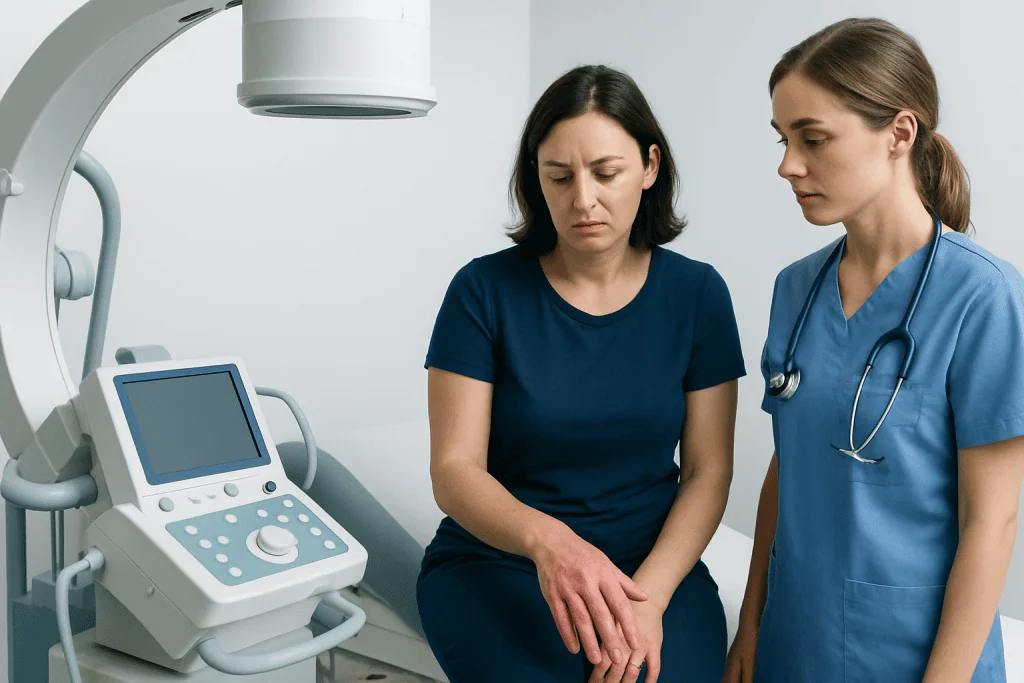
The hallmark symptom is persistent pain that is out of proportion to the initial injury or event. Even light touch, clothing, or a breeze may feel painful, a symptom called allodynia. Some people also notice exaggerated pain from pressure or movement, and the pain may spread beyond the exact area of the original injury over time.
CRPS can also change the appearance of the affected limb. The skin may look red, purple, pale, shiny, or blotchy. It may feel warmer or colder than the opposite side. Swelling can be constant or come and go. Nails may grow faster or become brittle, hair growth can change, and the skin texture may look thin or glossy.
Movement problems are also common. The limb may become stiff, weak, shaky, or difficult to coordinate. Joints can lose range of motion, and some people begin to avoid using the limb because movement increases pain. Over time, this can lead to muscle loss and more disability if treatment is delayed.
- Burning or deep aching pain
- Extreme sensitivity to touch or cold
- Swelling in the hand, foot, arm, or leg
- Skin color or temperature changes
- Joint stiffness and reduced range of motion
- Tremor, weakness, or changes in nail and hair growth
Common causes and related conditions

Complex regional pain syndrome most often begins after a physical trigger. Common examples include fractures, sprains, soft-tissue injuries, surgery, casting or immobilization, and sometimes minor trauma that seemed straightforward at first. In some cases, the exact trigger is not obvious, but symptoms still follow a clear pattern of abnormal pain, swelling, and autonomic changes.
Researchers believe CRPS develops from a combination of factors rather than a single cause. These can include altered pain signaling in the brain and spinal cord, inflammation, abnormal activity in the nerves that regulate blood vessels and sweating, and in some cases direct nerve injury. Emotional stress does not cause CRPS, but ongoing pain can understandably affect mood, sleep, and coping.
Several conditions can resemble or overlap with CRPS and should be considered during evaluation. These include peripheral nerve injuries, peripheral neuropathy, arthritis, tendon injuries, infection, blood clots, and circulation problems. CRPS can also occur after neurological events such as stroke, which may make diagnosis more complex if weakness or sensory changes are already present. In a broader pain assessment, doctors may also consider related chronic pain conditions such as fibromyalgia when symptoms are widespread rather than limited to one region.
How doctors diagnose CRPS
There is no single blood test or scan that proves a person has CRPS. Diagnosis is mainly clinical, meaning it is based on the history of symptoms and a physical examination. Doctors look for ongoing pain that is disproportionate to the triggering event along with sensory, skin, swelling, sweating, or movement changes in the affected area.
To support the diagnosis, clinicians often use established criteria that consider both reported symptoms and observed signs. They also check whether another diagnosis could better explain the problem. This is important because CRPS can mimic several other conditions, and some of those need different treatment.
Tests may be used to rule out other causes or to look for complications. Depending on the situation, these can include X-rays, MRI, bone scans, nerve studies, blood tests, or vascular tests. If swelling, weakness, or severe pain is present after an injury or surgery, imaging may be especially useful to exclude fracture complications, infection, or problems affecting bones, joints, or nerves.
Because symptoms can evolve, diagnosis is sometimes not immediate. A person may first be treated for a sprain, fracture, or postoperative pain and then later be reassessed if pain remains unusually intense or the limb develops temperature, color, or movement changes. Early re-evaluation can help avoid unnecessary delays.
Treatment options and why early care matters
Treatment for complex regional pain syndrome is usually individualized and works best when started early. The main goals are to reduce pain, restore movement, improve daily function, and prevent long-term stiffness or disuse. Most people benefit from a combination of approaches rather than a single treatment.
Rehabilitation is central to care. Gentle, guided movement and desensitization exercises can help the nervous system tolerate touch and motion again. Many patients are referred for physical therapy and rehabilitation and sometimes occupational therapy to improve range of motion, strength, and everyday hand or limb use.
Pain management may include medications chosen according to symptoms and the person’s medical history. Depending on the case, doctors may consider medicines used for nerve pain, anti-inflammatory treatments, topical options, or other supportive therapies. In selected patients with persistent symptoms, procedures such as nerve blocks, infusion-based treatments, or other pain management interventions may be discussed.
If there is concern for structural injury, trapped nerves, or ongoing problems after surgery or trauma, further evaluation may involve specialists in orthopedics, neurology, rehabilitation, or pain medicine. Some patients also benefit from neurology assessment when symptoms are complex or overlap with other nerve-related conditions. Psychological support can be helpful as well, not because the pain is imagined, but because chronic pain often affects sleep, mood, and quality of life.
Prevention, self-care, and living with CRPS
Not every case of CRPS can be prevented, but timely treatment after injuries and surgery may reduce the risk of prolonged disability. Following a clinician’s guidance on safe movement, swelling control, and rehabilitation is often important. Long periods of complete immobilization, when not medically necessary, may make stiffness and pain harder to reverse.
At home, self-care usually focuses on staying as active as possible within medical advice. Gentle movement, pacing activities, protecting the limb without over-guarding it, and practicing therapy exercises consistently can all support recovery. Heat or cold should only be used with caution and according to professional advice, because affected limbs may have altered temperature sensation.
Stress management, sleep support, and attention to mental well-being are also worthwhile. Chronic pain can be exhausting, and frustration is common when symptoms are not visible to others. A structured care plan and regular follow-up can help people track progress, adjust treatment, and set realistic rehabilitation goals.
For international patients who need coordinated evaluation, Acibadem International’s multidisciplinary specialists and JCI-accredited hospitals diagnose and treat complex pain and nerve-related conditions with individualized care plans.
When to seek medical care
A person should seek medical care if pain after an injury, surgery, or fracture seems unusually severe, lasts longer than expected, or makes it hard to move the limb. Medical review is also important when pain is accompanied by swelling, skin color changes, unusual warmth or coldness, or increasing sensitivity to touch.
Prompt assessment matters because early treatment may improve comfort and function and may lower the chance of long-term stiffness or disability. A doctor should also evaluate symptoms that suddenly worsen, spread, or interfere with sleep, work, or daily activities.
Urgent care may be needed if there are warning signs that suggest another serious problem, such as fever, significant redness, drainage from a wound, chest pain, shortness of breath, sudden severe weakness, or a limb that becomes acutely pale, blue, or numb. These symptoms are not typical of uncomplicated CRPS and should not be ignored.
Frequently asked questions
Is complex regional pain syndrome permanent?
Not always. Some people improve substantially, especially when CRPS is recognized early and treated with rehabilitation and pain-directed care. Others may have symptoms that last longer and need ongoing management.
Can CRPS start after a minor injury?
Yes. CRPS can develop after relatively minor trauma such as a sprain, a small fracture, or even a procedure that initially seemed routine. What stands out is that the pain and associated changes become more severe or persistent than expected.
How is CRPS different from normal healing pain?
Normal healing pain usually gradually improves over time. In CRPS, pain may remain intense or worsen, and it is often accompanied by unusual sensitivity, swelling, temperature differences, skin color changes, or stiffness that go beyond typical recovery.
What kind of doctor treats complex regional pain syndrome?
CRPS is often managed by a team rather than one specialist alone. Depending on the symptoms, care may involve pain medicine, physical medicine and rehabilitation, neurology, orthopedics, and sometimes psychology or occupational therapy.
Can exercise make CRPS worse?
Unsupervised overexertion may increase pain, but carefully guided movement is usually an important part of treatment. A clinician or therapist can help design exercises that improve function without pushing the limb beyond what is appropriate.
Is CRPS the same as nerve damage?
Not exactly. Some cases involve a known nerve injury, but others occur without clear major nerve damage. CRPS is better understood as a disorder of pain processing and nervous system regulation that may or may not include direct nerve injury.
References
- National Institute of Neurological Disorders and Stroke
- National Institute of Arthritis and Musculoskeletal and Skin Diseases
- Cleveland Clinic
- Mayo Clinic
- American Academy of Orthopaedic Surgeons
This article is for general information only and is not a substitute for professional medical advice. Please consult a qualified doctor about your individual situation.
Joint and spine care in Turkey — expert assessment & treatment
JCI-accredited · board-certified surgeons · reply within 24h
Add us as a Preferred Source to see more of our trusted health content across Google Search, AI Overviews and Discover.

More from the Health Library



Related Specialists

Dr. Serhat Konar
Anesthesiology
Dr. Ulambadrakh Khenchbish
Orthopedic Surgery & Traumatology
Prof. Dr. Sefa Müezzinoğlu
Orthopedic Surgery & Traumatology
Melek Ateş
Physical Medicine & Rehabilitation