Jaw Pain: Possible Causes and When to Seek Care

Jaw pain can come from the temporomandibular joint, muscles, teeth, gums, sinus disease, or nerve irritation. Common triggers include teeth grinding, jaw clenching, dental infection, injury, arthritis, and stress-related muscle tension.
Key Takeaways
- Jaw pain can come from the temporomandibular joint, muscles, teeth, gums, sinus disease, or nerve irritation.
- Common triggers include teeth grinding, jaw clenching, dental infection, injury, arthritis, and stress-related muscle tension.
- Red flags include jaw pain with chest pressure, fever, facial swelling, trouble opening the mouth, or numbness.
- Diagnosis usually depends on a history, physical examination, dental assessment, and sometimes imaging.
- Treatment varies by cause and may include self-care, mouthguards, dental treatment, medication, physical therapy, or specialist care.
Jaw pain is a symptom rather than a diagnosis, and it can start in the jaw joint, chewing muscles, teeth, gums, sinuses, or nearby nerves. Many causes are manageable, but persistent, severe, or sudden jaw pain should be assessed by a qualified clinician to identify the source and guide treatment.
Overview: what jaw pain can mean
Jaw pain is discomfort felt in the lower face, around the jaw joint, in the chewing muscles, or near the teeth and gums. It is a common symptom with many possible causes, ranging from muscle strain and teeth grinding to dental infections, joint disorders, and less often nerve or heart-related conditions. In many people, the source is not dangerous, but the pattern of pain helps guide what kind of care is needed.
A useful way to think about jaw pain is by where it starts. Pain in front of the ear often points to the temporomandibular joint, sometimes called the TMJ. Pain in the teeth or gums may suggest a dental cause. Aching across the cheeks or temples can come from overworked chewing muscles, while sharp, electric-shock-like pain may suggest nerve irritation. Some people also notice jaw pain together with clicking, locking, headache, ear discomfort, or neck tension.
Because jaw pain can overlap with several conditions, a careful evaluation matters more than guessing based on one symptom alone. A dentist, primary care doctor, oral and maxillofacial specialist, or ENT specialist may help identify the cause. In some cases, jaw pain is related to temporomandibular joint disorders, while in others it may be linked to a dental abscess, sinus inflammation, arthritis, or teeth clenching during sleep.
Common symptoms that can occur with jaw pain
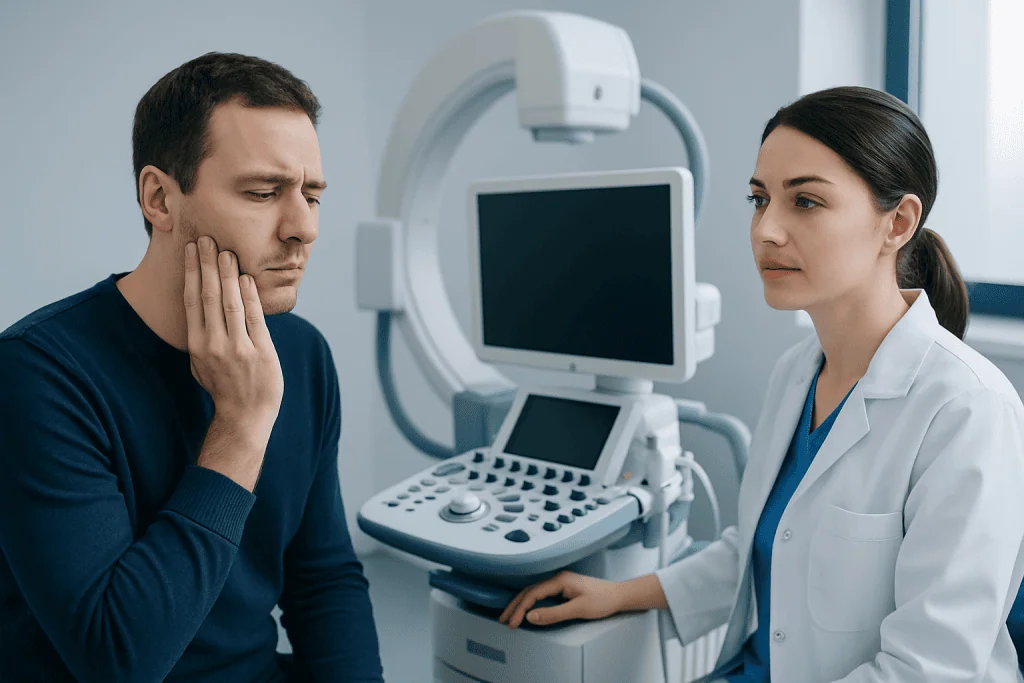
Jaw pain may feel dull, sore, tight, throbbing, or sharp. It can occur on one side or both sides and may worsen when chewing, talking, yawning, or waking up in the morning. Some people describe a tired or heavy feeling in the face, while others notice sudden pain when opening the mouth wide.
Associated symptoms can offer important clues. Clicking or popping near the ear may happen when the jaw joint moves unevenly. Locking, catching, or reduced ability to open the mouth can suggest joint dysfunction or muscle spasm. Pain that radiates into the temple, ear, neck, or shoulder may come from jaw muscles or referred pain from nearby structures.
Other symptoms point to different causes. Tooth sensitivity, swollen gums, bad taste in the mouth, or facial swelling may indicate dental infection. Nasal congestion or pressure over the cheeks may suggest sinus involvement. Burning, tingling, or sudden stabbing pain can be nerve-related. If jaw pain occurs along with chest pressure, shortness of breath, sweating, or pain spreading to the arm, urgent medical assessment is important because some heart problems can present this way.
- Jaw clicking or popping
- Pain with chewing or yawning
- Difficulty opening the mouth fully
- Morning jaw soreness or headache
- Tooth pain, gum swelling, or facial swelling
- Ear fullness, temple pain, or neck tension
Possible causes and risk factors

One of the most common causes of jaw pain is strain in the muscles used for chewing. This can happen with stress-related jaw clenching, nighttime teeth grinding, frequent gum chewing, nail biting, or holding the mouth open for long periods during dental procedures. Muscle overuse may lead to aching, tightness, and morning discomfort, even without obvious joint disease.
Temporomandibular joint problems are another common source. The TMJ connects the lower jaw to the skull and helps with speaking and chewing. Pain may occur if the joint is irritated, inflamed, misaligned, or affected by disc movement inside the joint. Some people have a history of arthritis, previous injury, or chronic clenching that contributes to symptoms. When joint structure needs closer assessment or intervention, doctors may consider options related to temporomandibular joint surgery, though surgery is usually reserved for select cases after conservative treatment.
Dental causes are especially important because they are treatable and can worsen if delayed. Tooth decay, cracks, impacted teeth, gum disease, and dental abscesses may all cause jaw pain. Infection may spread into surrounding tissues and produce swelling, fever, or pain when biting. Conditions involving surrounding facial structures can also contribute, including sinusitis, especially when upper jaw pain comes with congestion or facial pressure.
Less common causes include inflammatory arthritis, nerve pain such as trigeminal neuralgia, salivary gland problems, and trauma such as a dislocation or fracture after injury. Risk factors for jaw pain include stress, poor sleep, teeth grinding, recent dental work, arthritis, facial injury, and untreated dental disease. A clinician will consider all of these when deciding what evaluation is most appropriate.
How jaw pain is diagnosed
Diagnosis starts with a detailed history. The clinician will ask where the pain is located, whether it is constant or comes and goes, what makes it worse, and whether there are symptoms such as clicking, locking, tooth pain, headache, swelling, or fever. Timing also matters. Pain that is worse on waking may suggest grinding at night, while pain after meals could point to chewing strain or salivary gland problems.
The physical examination often includes checking how wide the mouth opens, whether the jaw moves evenly, and whether there is tenderness in the joint or chewing muscles. The teeth, gums, bite pattern, ears, and neck may also be examined. If a dental source is suspected, a dentist may perform a focused oral evaluation and dental X-rays.
Imaging is not needed for every case, but it can be useful when pain is persistent, severe, linked to trauma, or associated with locking or structural concerns. Depending on the situation, doctors may request plain X-rays, CT scans, MRI, or dental imaging. If symptoms suggest a broader problem in the mouth or throat, evaluation in oral and facial surgery may be helpful, and in selected cases a specialist may discuss care within oral and maxillofacial surgery.
Treatment options for jaw pain
Treatment depends on the cause, so the first goal is to identify whether the pain is muscular, joint-related, dental, infectious, inflammatory, or nerve-related. Many cases improve with conservative care. Resting the jaw, choosing softer foods for a short period, avoiding wide yawning and gum chewing, and applying warm compresses may help reduce muscle tension and joint irritation.
Doctors may recommend medication such as pain relievers or anti-inflammatory drugs when appropriate. If teeth grinding is contributing, a dentist may advise a nighttime mouthguard to protect the teeth and reduce strain on the jaw. Physical therapy, posture work, and relaxation techniques can be useful when the neck, shoulders, and facial muscles are involved. If stress is a trigger, addressing sleep quality and stress management can support recovery.
When a dental problem is the source, treating the tooth or gum condition is essential. This may involve fillings, root canal treatment, drainage of infection, or removal of a problematic tooth. If a wisdom tooth is impacted or repeatedly inflamed, the care plan may include wisdom tooth extraction. Infections may require antibiotics when prescribed by a clinician, especially if there is swelling or spreading redness.
More persistent or complex cases may need specialist treatment. This can include targeted therapy for arthritis, management of nerve pain, injections in carefully selected situations, or procedures for structural jaw problems. Treatment is individualized, and most people do not need invasive intervention. Near the end of the care pathway, if symptoms are chronic or function is limited, a multidisciplinary evaluation can help coordinate dental, ENT, pain, and surgical expertise.
Self-care and prevention
Simple habits can reduce strain on the jaw and help prevent recurring pain. Eating softer foods for a few days during a flare, cutting food into small pieces, and avoiding hard, sticky, or chewy items can give irritated muscles and joints time to settle. It also helps to avoid chewing gum, biting pens, clenching the jaw, or opening the mouth excessively wide.
Jaw awareness is useful because many people tense their face without realizing it. Relaxing the shoulders, keeping the lips closed and teeth slightly apart, and taking breaks from prolonged screen time can help reduce muscle overactivity. Good sleep habits matter as well, since poor sleep is linked with clenching and pain sensitivity.
Regular dental care is one of the best preventive steps. Routine checkups can identify cavities, gum disease, cracked teeth, and bite issues before they become painful. A dentist may suggest a custom mouthguard if grinding is suspected. Gentle jaw exercises or physical therapy may also be recommended in some cases, but these should follow professional advice rather than forceful stretching at home.
If symptoms are ongoing, keeping a brief symptom diary can help. Noting when the pain happens, which foods worsen it, whether there is morning soreness, and whether headaches or stress are present can make appointments more informative. Persistent symptoms deserve medical or dental review rather than repeated self-treatment alone.
When to seek medical care
Jaw pain should be assessed promptly if it is severe, keeps returning, lasts more than a short period, or interferes with eating, speaking, or opening the mouth. Medical or dental review is also important if there is facial swelling, fever, pus from the gums, an injured or dislocated jaw, numbness, or sudden changes in the bite. These features can suggest infection, structural injury, or another condition that should not be left untreated.
Urgent care is needed if jaw pain happens together with chest pain, pressure, shortness of breath, sweating, nausea, or pain spreading to the arm or back. Although not every case is heart-related, it is safer to treat these symptoms as an emergency until a clinician says otherwise. Immediate evaluation is also important after trauma if the jaw looks uneven, cannot close properly, or there is heavy bleeding.
For people with ongoing or complex symptoms, coordinated specialist care can be helpful. Acibadem International’s multidisciplinary specialists and JCI-accredited hospitals evaluate and treat jaw-related conditions for international patients, including dental, ENT, and maxillofacial causes when needed.
Frequently asked questions
Is jaw pain usually caused by TMJ problems?
Not always. TMJ disorders are common, but jaw pain can also come from teeth grinding, dental infections, gum disease, sinus problems, arthritis, or nerve irritation. A proper examination helps distinguish among these causes.
Can stress cause jaw pain?
Yes. Stress can lead to jaw clenching, teeth grinding, and muscle tension in the face and neck, all of which may cause jaw pain. Stress management and better sleep can be an important part of treatment.
How can someone relieve mild jaw pain at home?
Short-term self-care may include eating softer foods, avoiding gum and very wide mouth opening, and using warm compresses. Over-the-counter pain relief may help for some people, but persistent or worsening pain should be evaluated by a clinician.
When is jaw pain an emergency?
Jaw pain needs urgent assessment if it occurs with chest pain, shortness of breath, sweating, or pain radiating to the arm or back. It is also urgent after significant injury, with facial swelling and fever, or if the jaw cannot open or close properly.
Can a tooth problem cause pain in the jaw joint area?
Yes. Tooth decay, an abscess, a cracked tooth, or an impacted wisdom tooth can cause pain that feels like it is coming from the jaw or ear area. Dental examination is often needed when the source is not obvious.
Do all TMJ-related cases need surgery?
No. Most TMJ-related jaw pain is treated with conservative measures such as jaw rest, mouthguards, physical therapy, and pain control. Surgery is considered only in selected cases when symptoms are persistent and there is a clear structural problem.
References
- National Institute of Dental and Craniofacial Research
- American Dental Association
- Mayo Clinic
- Cleveland Clinic
- National Health Service
This article is for general information only and is not a substitute for professional medical advice. Please consult a qualified doctor about your individual situation.
Joint and spine care in Turkey — expert assessment & treatment
JCI-accredited · board-certified surgeons · reply within 24h
Add us as a Preferred Source to see more of our trusted health content across Google Search, AI Overviews and Discover.