Tick Bite: A Complete Medical Overview

Most tick bites cause only minor local skin irritation, but some can transmit infection. Ticks should be removed promptly with fine-tipped tweezers, pulling steadily upward without twisting.
Key Takeaways
- Most tick bites cause only minor local skin irritation, but some can transmit infection.
- Ticks should be removed promptly with fine-tipped tweezers, pulling steadily upward without twisting.
- A spreading rash, fever, body aches, headache, or unusual fatigue after a tick bite should be medically assessed.
- Not every tick bite requires antibiotics; treatment depends on the tick type, region, timing, and symptoms.
- Prevention includes protective clothing, repellents, tick checks, and showering after outdoor activities.
A tick bite is often harmless, but it can occasionally lead to skin irritation, local infection, or transmission of a tick-borne illness. Prompt, careful tick removal and monitoring for symptoms over the following days to weeks are the most important steps.
Overview: what a tick bite means
A tick bite happens when a small blood-feeding parasite attaches to the skin, usually after contact with grass, brush, wooded areas, or animals. In many cases, a tick bite causes only a small red bump or mild itching and does not lead to further problems. The main medical concern is that some ticks can carry germs that spread diseases to humans.
Because symptoms do not always appear right away, the safest approach after a tick bite is simple: remove the tick carefully, clean the skin, and monitor for changes. The chance of illness depends on several factors, including the type of tick, how long it was attached, and whether tick-borne infections are common in the area where the bite occurred.
Ticks vary by region, and they can transmit different infections. Examples include Lyme disease, ehrlichiosis, anaplasmosis, babesiosis, Rocky Mountain spotted fever, and, less commonly, viral illnesses. Not every attached tick is infected, and not every infected tick transmits disease, so a calm, informed response is usually the most helpful one.
How a tick bite looks and feels
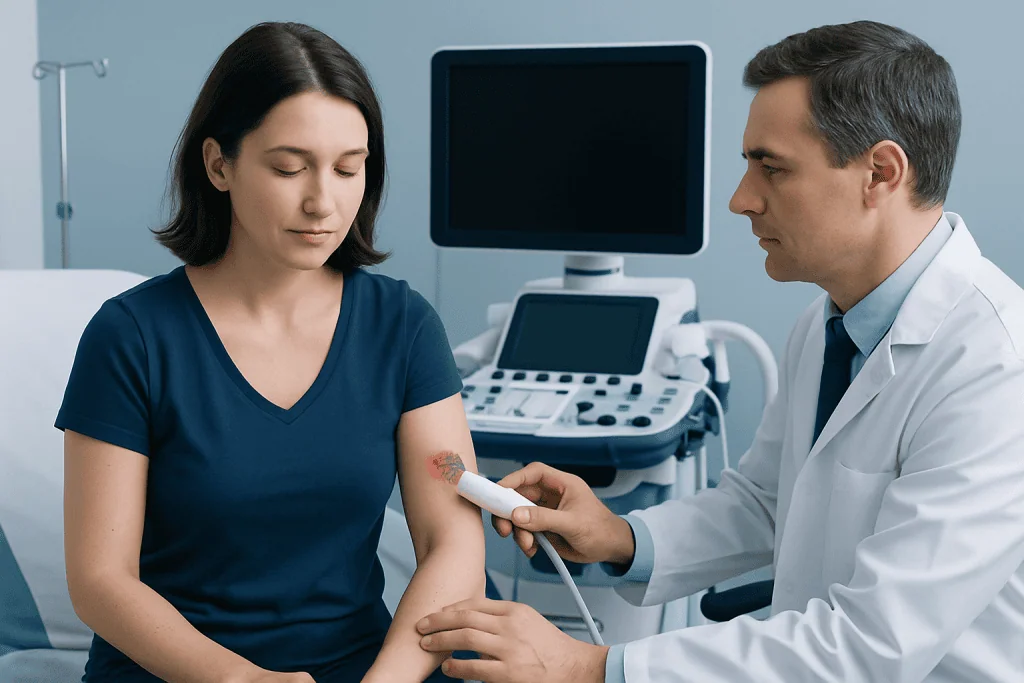
A tick bite may go unnoticed at first because the bite is usually painless. Some people discover the tick while showering, dressing, or checking the skin after spending time outdoors. Others notice only a small red spot after the tick has detached or been removed.
Typical local reactions can include mild redness, slight swelling, itchiness, or tenderness around the site. These mild skin changes often settle on their own over several days. A small bump does not necessarily mean infection, and some irritation can result simply from the skin’s response to the tick’s saliva.
Symptoms that deserve more attention are those that go beyond a simple local reaction. These include an expanding rash, warmth and worsening pain around the site, pus, fever, chills, headache, muscle aches, joint pain, unusual tiredness, or swollen lymph nodes. In some people, a characteristic expanding rash may suggest Lyme disease, while fever and flu-like symptoms can be linked to other tick-borne illnesses.
- Common mild signs: small red bump, itching, minor swelling
- Possible warning signs: spreading rash, fever, severe headache, body aches
- Urgent allergy signs: trouble breathing, facial swelling, dizziness
Safe tick removal and immediate first aid

The best way to remove a tick is with clean, fine-tipped tweezers. The tick should be grasped as close to the skin’s surface as possible, then pulled upward with steady, even pressure. Twisting, jerking, squeezing the body of the tick, or using substances such as petroleum jelly, nail polish, oils, alcohol, or heat is not recommended, because these methods may make removal harder and may increase skin irritation.
After the tick is removed, the bite area and hands should be washed with soap and water. An antiseptic can also be used. If a tiny mouthpart remains in the skin, it may work its way out naturally like a small splinter, though persistent retained material or ongoing irritation may need medical evaluation.
It can be helpful to note the date of the bite, where on the body it occurred, and where the possible exposure happened. If practical, the tick may be saved in a sealed container or clear tape for identification, although routine testing of ticks is not always necessary or useful. If a person has difficulty removing the tick or if the bite area becomes increasingly inflamed, a clinician may assist with wound care and assessment.
Possible complications and tick-borne diseases
The main reason clinicians pay attention to a tick bite is the possibility of tick-borne disease. Different ticks carry different bacteria, parasites, or viruses. The risk varies by geography and season, and transmission often becomes more likely the longer a tick remains attached. Even so, many people who are bitten never develop any infection.
Some illnesses begin with vague symptoms such as fever, headache, fatigue, muscle pain, or nausea. Others may cause a distinctive rash. Lyme disease is one of the best known, but there are several others depending on the region. In some cases, untreated infection can affect joints, the nervous system, blood cells, or the heart. For example, a doctor may consider infections such as Lyme disease or assess symptoms that overlap with other skin infections when the bite area becomes increasingly red, painful, or swollen.
Not all complications are infectious. A tick bite can also trigger a local skin reaction, secondary bacterial infection from scratching, or, rarely, an allergic reaction. In uncommon situations, certain tick species have been linked to tick paralysis, a neurological condition caused by toxins in tick saliva that improves after the tick is removed. Severe weakness, difficulty walking, or breathing symptoms require urgent care.
How doctors diagnose problems after a tick bite
Diagnosis begins with a clinical history. A doctor will ask when the bite occurred, how long the tick may have been attached, what region the exposure happened in, and whether symptoms developed afterward. The appearance of the skin lesion, the presence or absence of fever, and any neurological, joint, or flu-like symptoms all help guide the next steps.
There is no single test that is useful immediately after every tick bite. Blood tests are usually considered when symptoms suggest a tick-borne illness rather than for a bite alone. In some diseases, tests may not become positive right away, so timing matters. This is one reason self-diagnosis can be misleading and why medical review is important if symptoms appear over the following days or weeks.
Doctors may also evaluate for other causes of a rash or illness, especially if the tick was not seen directly. In selected cases, imaging or specialist assessment may be needed if complications involve the joints, nerves, or heart. When symptoms are complex, evaluation through infectious diseases care or dermatology assessment may help clarify whether the findings fit a tick-borne condition or another diagnosis.
Treatment options after a tick bite
Treatment depends on what is happening clinically. For a simple bite with no concerning symptoms, treatment is usually limited to proper removal, cleaning the site, and watching for changes. Mild itching or discomfort may improve with general skin care and, if suitable for the individual, over-the-counter symptom relief advised by a healthcare professional.
Antibiotics are not automatically needed after every tick bite. In some circumstances, a doctor may consider preventive antibiotics after a high-risk exposure, but this decision depends on the tick type, how long it was attached, local disease patterns, and the person’s medical history. If a tick-borne infection is diagnosed or strongly suspected, targeted antibiotic treatment may be recommended. Viral or parasitic tick-borne illnesses are managed differently, and supportive care may be needed.
If the bite area shows signs of a secondary skin infection, wound care and appropriate treatment may be advised. Persistent rash, significant pain, or systemic symptoms should not be treated only with home remedies. In more complex situations, multidisciplinary input may be helpful, and some patients may be assessed through internal medicine alongside infectious disease or skin specialists. Acibadem International’s multidisciplinary specialists in JCI-accredited hospitals also diagnose and treat tick-related conditions for international patients when needed.
Prevention and self-care after outdoor exposure
Preventing a tick bite starts before going outdoors. Long sleeves, long trousers tucked into socks, and closed shoes can reduce skin exposure in grassy or wooded areas. Insect repellents and clothing treatments can add protection when used as directed. Staying on clear paths rather than brushing through dense vegetation may also lower contact with ticks.
After returning indoors, a full-body tick check is one of the most effective habits. Ticks often attach in warm or hidden areas such as the scalp, behind the ears, under the arms, around the waist, behind the knees, and in the groin. Showering after outdoor activity may help wash off unattached ticks and gives an opportunity to inspect the skin carefully.
Clothing should be changed and washed, and pets should also be checked because they can carry ticks into the home. If a tick is found, prompt removal is better than waiting. Self-care afterward mainly means keeping the skin clean and observing for delayed symptoms, since some tick-borne illnesses do not appear immediately.
When to seek medical care
Medical advice is recommended if the tick cannot be removed completely, if the bite area becomes increasingly red or painful, or if there is drainage, pus, or significant swelling. It is also sensible to consult a doctor if the tick may have been attached for an extended period, if the bite happened in an area where tick-borne diseases are common, or if the person is pregnant, immunocompromised, or has significant underlying illness.
Prompt medical assessment is especially important if symptoms develop in the days or weeks after the bite. Warning signs include fever, chills, severe headache, neck stiffness, body aches, unusual fatigue, a spreading or bull’s-eye-like rash, joint swelling, facial weakness, confusion, or palpitations. These symptoms do not always mean a serious illness, but they should be evaluated so that treatment, if needed, is not delayed.
Emergency care is needed for signs of a severe allergic reaction or rapidly progressive neurological symptoms. Trouble breathing, swelling of the lips or tongue, faintness, sudden weakness, or difficulty walking should be treated urgently. When in doubt, it is safer to seek professional advice than to rely only on observation.
Frequently asked questions
How soon after a tick bite do symptoms appear?
Symptoms can appear within a few days, but some tick-borne illnesses take one to several weeks to become noticeable. That is why monitoring after a tick bite is important even if the skin looks normal at first.
Does every tick bite cause Lyme disease?
No. Many tick bites do not cause any illness at all, and not all ticks carry Lyme disease. Risk depends on the type of tick, the region, and how long the tick was attached.
Should a tick be removed right away?
Yes. Prompt removal lowers the chance of prolonged feeding and may reduce the risk of disease transmission. The safest method is to use fine-tipped tweezers and pull upward steadily without twisting.
Is a red bump after a tick bite normal?
A small red bump or mild itch at the bite site can be a normal local skin reaction. A rash that spreads, becomes more painful, or is accompanied by fever or body aches should be medically assessed.
Do all tick bites need antibiotics?
No. Antibiotics are not routinely given for every tick bite. A doctor decides whether they are appropriate based on the tick type, location, duration of attachment, and any symptoms.
Can a tick bite be dangerous even if the tick is gone?
Yes, because symptoms of tick-borne illness can develop after the tick has detached or been removed. Continued observation for rash, fever, headache, fatigue, or joint symptoms is important.
References
- Centers for Disease Control and Prevention
- World Health Organization
- Mayo Clinic
- American Academy of Dermatology
- National Institute of Allergy and Infectious Diseases
This article is for general information only and is not a substitute for professional medical advice. Please consult a qualified doctor about your individual situation.
Explore treatments in Turkey — costs, top hospitals & a free quote
JCI-accredited · board-certified surgeons · reply within 24h
Add us as a Preferred Source to see more of our trusted health content across Google Search, AI Overviews and Discover.