Eeg Test: What Patients Need to Know
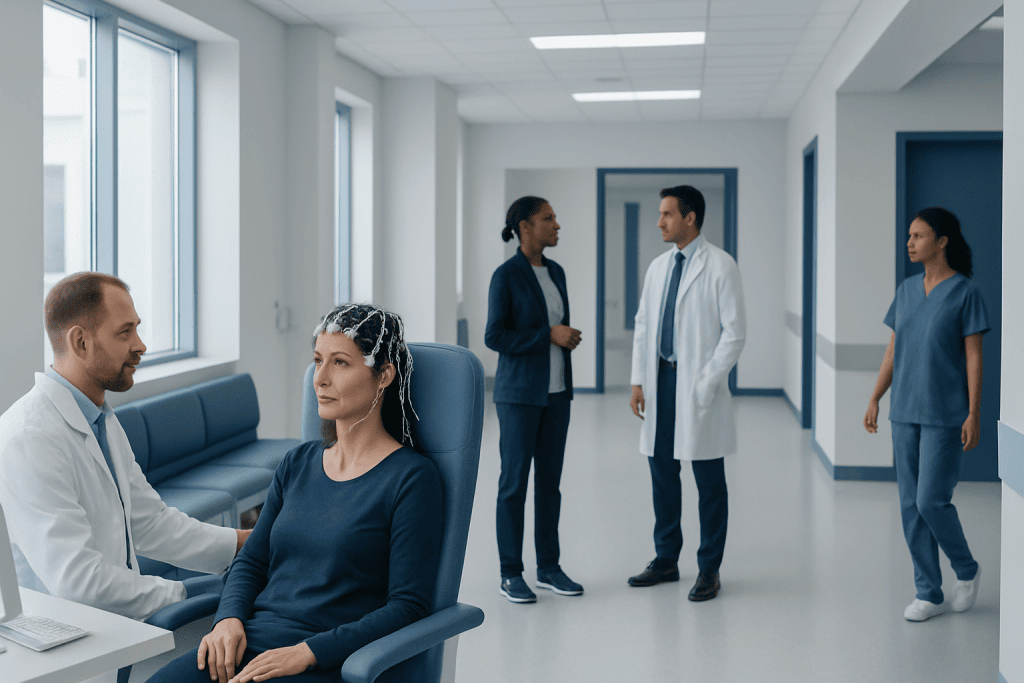
An eeg test records brain wave patterns and does not send electricity into the brain. The test is painless, and many EEGs are done in an outpatient setting.
Key Takeaways
- An eeg test records brain wave patterns and does not send electricity into the brain.
- The test is painless, and many EEGs are done in an outpatient setting.
- EEG results can help doctors investigate seizures, fainting episodes, confusion, and sleep-related symptoms.
- Preparation may include clean hair, limited caffeine, and following instructions about sleep or medicines.
- A normal EEG does not rule out every neurological condition, so results are interpreted with symptoms and other tests.
An eeg test, or electroencephalogram, records the brain’s electrical activity through small sensors placed on the scalp. It is a painless, noninvasive test commonly used to help evaluate seizures, blackouts, sleep disorders, and other neurological symptoms.
Overview: what an EEG test shows
An eeg test is a medical test that records the brain’s natural electrical activity. It uses small metal discs called electrodes, placed on the scalp, to detect brain wave patterns. The test does not cause pain and does not deliver electricity into the body.
Doctors use EEG to help understand symptoms that may be related to the brain’s activity. These may include seizures, unexplained blackouts, brief episodes of staring, unusual movements, confusion, memory lapses, or certain sleep problems. EEG can also be useful after a head injury or when a doctor is evaluating changes in awareness or behavior.
Although EEG is strongly associated with epilepsy, it is not only an epilepsy test. It may support the assessment of epilepsy, sleep disorders, brain inflammation, and some metabolic or toxic conditions that affect brain function. The result is one part of a broader clinical picture and is often considered alongside the medical history, physical examination, and imaging when needed.
Why a doctor may recommend an EEG
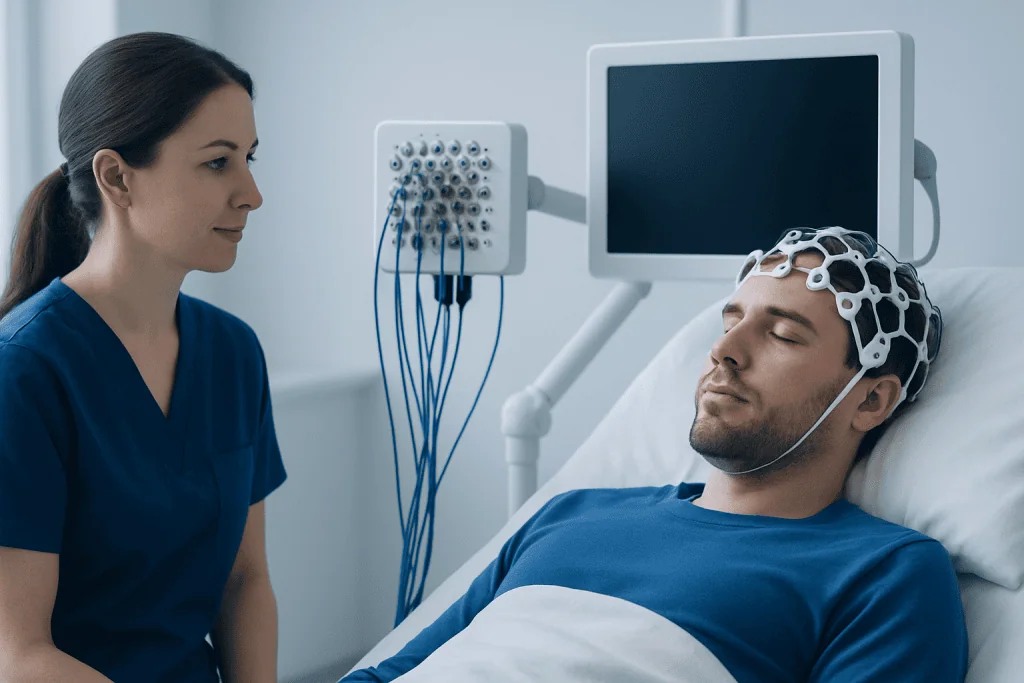
A doctor may order an EEG when symptoms suggest abnormal brain signaling. One of the most common reasons is to investigate possible seizures, including episodes that are subtle and do not involve full-body shaking. For example, sudden staring spells, repeated brief confusion, unexplained falls, or unusual sensations may prompt EEG testing.
EEG may also be used in people with sleep-related symptoms, such as suspected abnormal nighttime events, excessive daytime sleepiness, or possible sleep-linked seizures. In some situations, prolonged monitoring is recommended to capture symptoms as they happen. When sleep issues are part of the concern, a doctor may also discuss formal sleep study evaluation if that better matches the symptoms.
Hospitals may perform EEG in more urgent settings as well. It can help assess unexplained reduced consciousness, monitor brain activity after certain neurological events, or support care in intensive care units. In selected cases, EEG findings are combined with imaging such as MRI to look for structural causes of symptoms.
- Possible seizure or epilepsy evaluation
- Episodes of fainting or blackout when the cause is unclear
- Unusual movements, staring spells, or altered awareness
- Sleep-related events or abnormal nighttime behaviors
- Monitoring after brain injury, infection, or certain neurological illnesses
How the EEG test is done
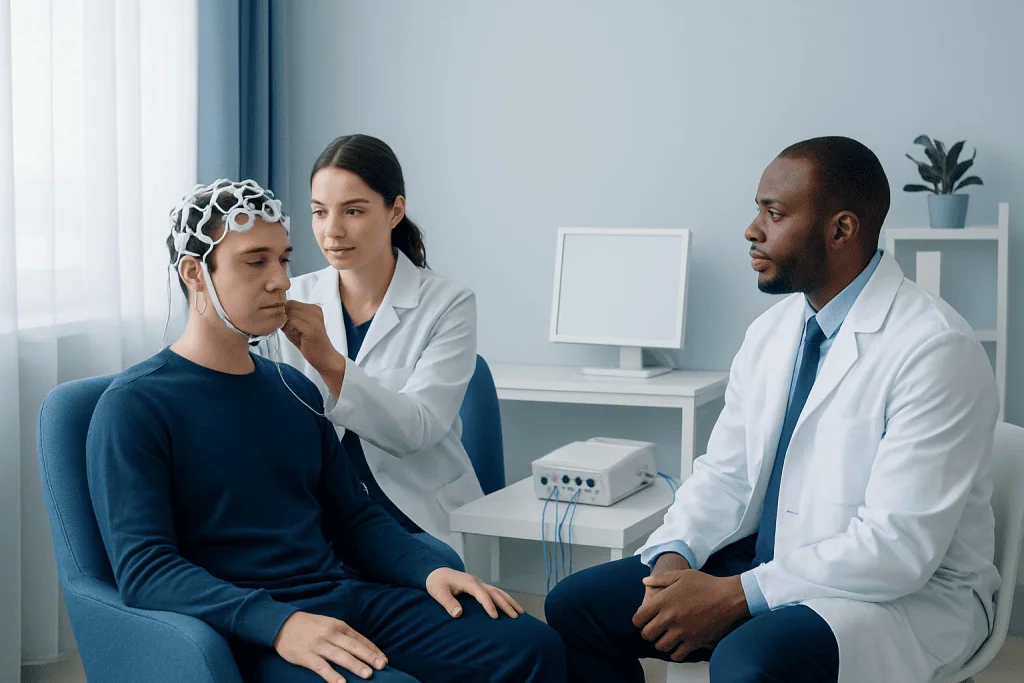
Before the test begins, a technician measures the scalp and places electrodes in specific positions. The electrodes are attached with a paste, adhesive, or a cap designed for EEG recording. Wires connect the electrodes to the EEG machine, which records brain waves as lines or digital signals for later review by a specialist.
During the recording, the patient usually sits or lies comfortably while staying as still and relaxed as possible. The technician may ask the patient to open and close the eyes, breathe deeply for a few minutes, or look at flashing lights. These simple activation methods can help reveal patterns that are not always visible at rest.
Some EEG tests last only 20 to 40 minutes, while others continue for several hours, overnight, or even longer with ambulatory equipment at home. If a routine EEG does not capture enough information, a doctor may recommend sleep-deprived EEG, prolonged video EEG, or inpatient monitoring. In some centers, a neurological team may also coordinate further testing if symptoms point to conditions such as brain tumor or other structural causes.
After the test, the electrodes are removed and most people can go home right away unless they were given sedating medicine or are being monitored in the hospital. The hair may feel sticky until it is washed. A neurologist or clinical neurophysiologist then interprets the recording in the context of the person’s symptoms and health history.
How to prepare and what patients may feel
Preparation instructions vary slightly depending on the type of EEG. In general, patients are asked to wash their hair the night before or the day of the test and avoid oils, sprays, gels, or heavy conditioners. Clean, dry hair helps the electrodes make better contact with the scalp.
Some people are told to avoid caffeine for several hours because it can affect alertness and brain wave patterns. If a sleep-deprived EEG is planned, the patient may be asked to sleep less than usual the night before. It is important to follow medication instructions carefully and not stop seizure medicines or any prescription drug unless a doctor specifically advises it.
The test itself is usually painless. The electrodes do not inject electricity, and most patients feel little more than the paste being applied and removed. Deep breathing or flashing lights may briefly feel tiring or uncomfortable for some people, but the staff watches closely throughout the procedure.
Children and adults who are anxious about testing may benefit from a simple explanation beforehand. Wearing comfortable clothing and bringing a list of medicines can also help the appointment go more smoothly. If there is concern about fainting, claustrophobia, sensory sensitivity, or the ability to remain still, the care team should be told in advance.
Understanding EEG results and their limits
EEG results are usually described as normal or abnormal, but interpretation is often more nuanced than that. A normal EEG means no concerning brain wave pattern was captured during the recording period. This can be reassuring, but it does not always rule out seizures or every neurological disorder, especially if symptoms occur infrequently.
An abnormal EEG may show slowing, asymmetry, or epileptiform discharges, which are patterns that can suggest a tendency toward seizures. However, EEG findings do not diagnose a condition on their own. The same pattern can have different meanings depending on age, symptoms, medical history, and whether the person was awake, asleep, or sleep-deprived during the test.
Because of these limits, doctors often combine EEG with other tools when necessary. Depending on the situation, this may include blood tests, neurological examination, CT scan, MRI, or a longer period of video EEG monitoring. The goal is to match the test findings with what the patient is actually experiencing, rather than relying on one result alone.
Patients often ask how quickly they will get answers. In many cases, a preliminary update may be available soon after the test, while the final interpretation takes longer. If the EEG is part of a broader evaluation, the doctor may wait to discuss the result together with other test findings to provide a clearer explanation and next steps.
Possible risks, safety, and aftercare
Routine EEG is considered very safe. Since it only records electrical activity and does not send electricity into the brain, the main inconveniences are usually minor, such as temporary scalp irritation from adhesive or sticky hair from the electrode paste. Most people return to usual activities right after the test.
In people with photosensitive epilepsy or a strong tendency toward seizures, flashing lights or deep breathing can rarely trigger an event during the EEG. This is one reason the test is performed by trained staff who can respond quickly and keep the patient safe. If an event occurs, it may actually provide useful diagnostic information.
Aftercare is usually simple. Washing the hair removes the paste, and any mild redness on the scalp generally fades quickly. If the test involved sleep deprivation, the person may feel tired afterward and may need someone else to drive if advised by the care team.
When ongoing symptoms require specialist evaluation, coordinated neurological care may be helpful. Near the end of the diagnostic process, some patients may seek assessment in centers such as Acibadem International, where multidisciplinary specialists in JCI-accredited hospitals evaluate and treat neurological conditions for international patients.
When to seek medical care
An EEG is usually arranged as a planned test, but some symptoms should prompt timely medical attention rather than waiting for a routine appointment. A person should contact a doctor if they have a first-time seizure, repeated blackout episodes, unexplained confusion, sudden changes in behavior, or events during sleep that suggest loss of awareness or injury risk.
Emergency care is especially important if a seizure lasts more than a few minutes, happens repeatedly without full recovery, causes serious injury, occurs during pregnancy, or is accompanied by breathing difficulty. Urgent assessment is also needed after head trauma, with fever and confusion, or when weakness, speech difficulty, or severe headache raises concern for a neurological emergency.
Even when symptoms are mild, recurring episodes deserve medical review. Keeping a record of what happened, how long it lasted, triggers, witness observations, and recovery time can help the doctor decide whether EEG or another test is most appropriate. Early evaluation can make diagnosis more accurate and guide safer daily decisions about driving, swimming, working at heights, and medication use.
Frequently asked questions
What is an eeg test used for?
An eeg test is used to record brain wave activity and help doctors evaluate symptoms that may come from abnormal brain signaling. It is commonly used when there is concern about seizures, fainting spells, confusion, memory changes, or certain sleep-related events.
Is an eeg test painful?
No. An eeg test is generally painless because the electrodes only detect electrical activity from the scalp and do not send electricity into the brain. Some people notice minor discomfort from the adhesive or from sitting still, but the test itself is not painful.
How long does an eeg test take?
A routine EEG often takes about 20 to 40 minutes of recording time, though the full visit may be longer. Some patients need extended, ambulatory, overnight, or video EEG monitoring if symptoms are infrequent or need closer observation.
How should a patient prepare for an eeg test?
Most patients are asked to arrive with clean, dry hair and to avoid hair products so the electrodes can stick properly. Depending on the type of EEG, the doctor may also advise limiting caffeine, reducing sleep the night before, or adjusting normal routines for the test day.
Can a normal EEG still happen if someone has seizures?
Yes. A normal EEG does not completely rule out seizures or epilepsy because abnormal activity may not occur during the recording period. Doctors interpret the EEG together with the person’s symptoms, examination, and sometimes imaging or repeat testing.
What happens after an abnormal EEG result?
An abnormal EEG usually leads to a discussion about what pattern was seen and what it may mean in the context of the patient’s symptoms. The next step may include more monitoring, brain imaging, blood tests, or treatment planning, depending on the suspected cause.
This article is for general information only and is not a substitute for professional medical advice. Please consult a qualified doctor about your individual situation.
Hair transplant in Turkey — costs, graft counts & a free assessment
JCI-accredited · board-certified surgeons · reply within 24h
Add us as a Preferred Source to see more of our trusted health content across Google Search, AI Overviews and Discover.

More from the Health Library

Nephrotoxicity: A Complete Medical Overview

Location of Gallbladder — Explained by Medical Evidence, Not Myths
Best Kettlebell Exercises: What Patients Need to Know

Green Lipped Mussel: What Patients Need to Know

Rubbing Alcohol: What Patients Need to Know