Esophageal Cancer: Diagnosis, Outlook, and Modern Treatment Approaches
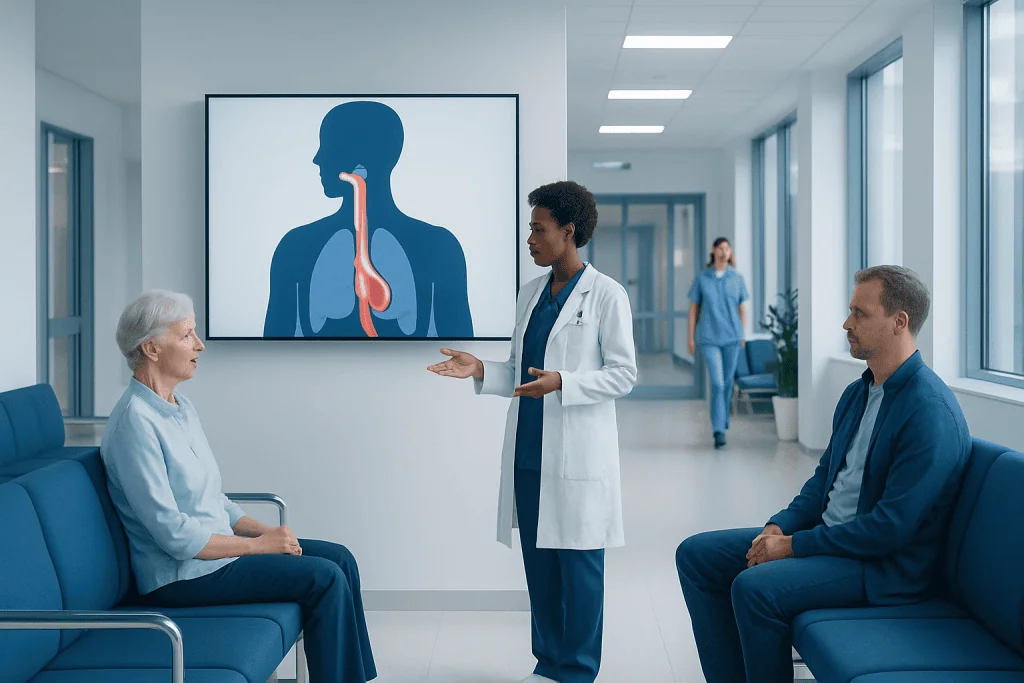
Esophageal cancer often causes trouble swallowing, chest discomfort, weight loss, or persistent reflux-like symptoms. The main types are adenocarcinoma and squamous cell carcinoma, and risk factors differ between them.
Key Takeaways
- Esophageal cancer often causes trouble swallowing, chest discomfort, weight loss, or persistent reflux-like symptoms.
- The main types are adenocarcinoma and squamous cell carcinoma, and risk factors differ between them.
- Diagnosis depends on biopsy confirmation and staging tests to guide the most suitable treatment plan.
- Modern treatment often combines more than one approach, such as chemotherapy, radiation therapy, and surgery.
- Earlier evaluation of persistent swallowing problems can help identify cancer or other serious esophageal conditions sooner.
Esophageal cancer is a cancer that starts in the esophagus, the tube that carries food from the mouth to the stomach. Diagnosis usually involves endoscopy, biopsy, and imaging, while treatment may include surgery, chemotherapy, radiation therapy, targeted therapy, or immunotherapy depending on the stage and overall health.
Overview: what esophageal cancer is and how it is treated today
Esophageal cancer is a malignant tumor that begins in the lining of the esophagus, the muscular tube that moves food and liquids from the throat to the stomach. In many people, the first clear sign is difficulty swallowing, but symptoms can develop gradually and may be mistaken for reflux or other digestive problems. Treatment and outlook depend on the exact type of cancer, how deeply it has grown into the esophageal wall, whether it has spread, and the person’s overall health.
Modern care is usually planned by a multidisciplinary team. This team may include gastroenterologists, medical oncologists, radiation oncologists, surgeons, radiologists, pathologists, dietitians, and supportive care specialists. Rather than relying on one treatment alone, doctors often combine therapies to shrink the tumor, remove it, control symptoms, and reduce the risk of recurrence.
Two main forms account for most cases: adenocarcinoma and squamous cell carcinoma. Adenocarcinoma often develops in the lower esophagus and is linked to long-term acid reflux and Barrett’s esophagus. Squamous cell carcinoma can occur higher up in the esophagus and is more strongly associated with smoking and heavy alcohol use. Distinguishing between these types is essential because it shapes both staging and treatment planning.
Symptoms and early warning signs
The most common symptom of esophageal cancer is dysphagia, or difficulty swallowing. People may first notice that solid foods feel as if they stick in the chest, and later even softer foods or liquids may become harder to swallow. This change can happen gradually, so some people adapt by eating more slowly or choosing softer meals before they realize something is wrong.
Other possible symptoms include unexplained weight loss, pain or pressure behind the breastbone, heartburn that persists or worsens, regurgitation of food, nausea, chronic cough, or hoarseness. Some people feel full quickly or avoid eating because swallowing is uncomfortable. Fatigue may also develop, especially if nutrition has been reduced over time.
These symptoms do not always mean cancer. Problems such as severe reflux, achalasia, strictures, infections, or inflammation can cause similar complaints. Still, persistent or progressive swallowing difficulty should always be assessed by a qualified doctor because early evaluation can identify both cancer and noncancerous conditions that need treatment.
Causes, types, and risk factors

Esophageal cancer develops when cells in the esophagus acquire genetic changes that allow them to grow abnormally and invade surrounding tissue. Doctors usually cannot identify a single cause in one individual, but they do recognize patterns of risk. The two major subtypes arise through somewhat different pathways and therefore have different associated factors.
Adenocarcinoma is often linked to chronic gastroesophageal reflux disease, especially when reflux causes Barrett’s esophagus, a change in the lining of the lower esophagus. People with obesity may also have a higher risk, partly because obesity can worsen reflux. Long-standing irritation from acid exposure can contribute to cellular changes over time, which is why some patients with Barrett’s esophagus are monitored closely.
Squamous cell carcinoma is more strongly associated with tobacco use and heavy alcohol consumption. Additional risk factors for either type may include older age, a history of caustic injury to the esophagus, certain dietary patterns, prior radiation to the chest, and some rare inherited conditions. Having risk factors does not mean a person will develop cancer, but it can help explain why doctors recommend evaluation when symptoms appear.
How diagnosis and staging are done
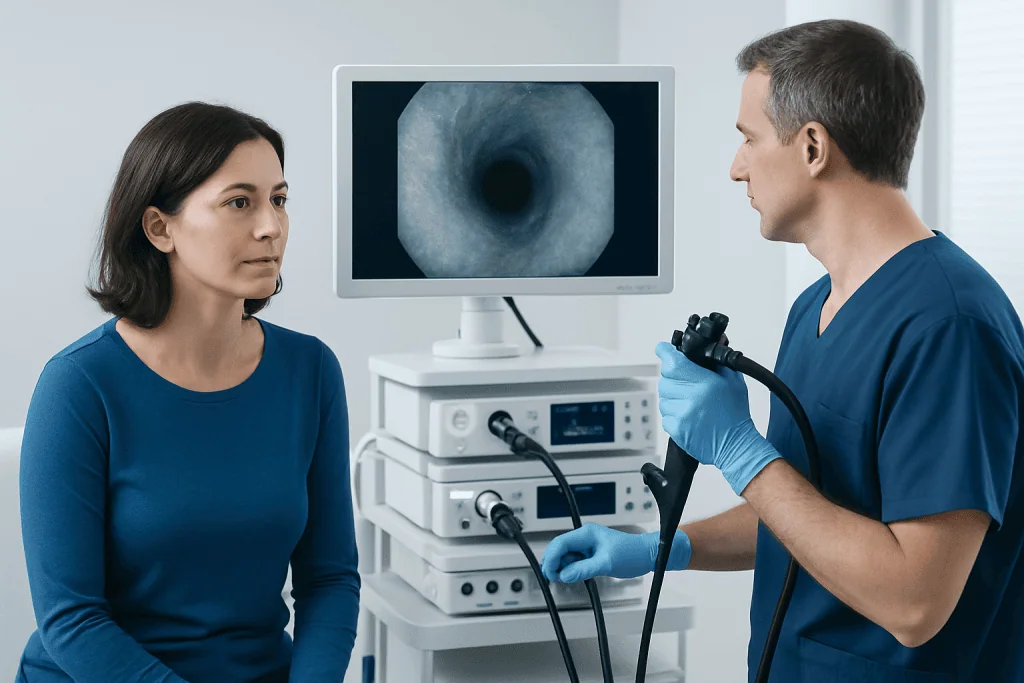
Diagnosis begins with a medical history and physical examination, but esophageal cancer cannot be confirmed without a tissue sample. The key test is an upper endoscopy, in which a doctor passes a thin flexible tube with a camera through the mouth to inspect the esophagus and take biopsies from suspicious areas. This is the most important step because only pathology can confirm the presence and type of cancer.
Once cancer is confirmed, staging tests are used to show how far it has spread. These may include CT scans, PET/CT, and endoscopic ultrasound, which helps doctors assess how deeply the tumor invades the esophageal wall and whether nearby lymph nodes are involved. In some cases, additional procedures are recommended to evaluate the airways or abdomen, depending on the tumor’s location and imaging findings. Endoscopy remains central both for diagnosis and, in selected early cases, treatment.
Biomarker testing may also be performed on tumor tissue. Depending on the case, doctors may check for features that help guide the use of targeted therapy or immunotherapy. Accurate staging is essential because treatment for a very early lesion can be very different from treatment for a locally advanced tumor or disease that has spread to distant organs.
Modern treatment approaches
Treatment is individualized and based on cancer type, stage, location, symptoms, and general health. For very early cancers limited to the surface lining, some patients may be treated with endoscopic techniques that remove or destroy abnormal tissue without major surgery. These approaches are usually considered only when the tumor is small and has a low risk of spread to lymph nodes.
For localized or locally advanced esophageal cancer, treatment often combines chemotherapy and radiation therapy, sometimes before surgery. This combined approach can shrink the tumor, improve the chance of complete removal, and help control disease in nearby tissues. Radiation may be used with chemotherapy as a main treatment in some patients who are not suitable candidates for surgery or whose tumor type and location make organ-preserving treatment more appropriate. Chemotherapy and radiotherapy are commonly used in these plans.
Surgery may be recommended when the cancer can be removed and the person is fit enough for an operation. An esophagectomy removes part or all of the diseased esophagus and reconstructs the digestive passage, usually using the stomach. This is a major procedure that requires careful preoperative assessment and postoperative recovery planning. In advanced disease, treatment may focus on controlling the cancer, prolonging life, and relieving symptoms; this can include systemic therapy, nutritional support, pain management, and procedures to improve swallowing such as stent placement or other palliative interventions. Esophagectomy is one of the key surgical options for selected patients.
Outlook, recovery, and quality of life
The outlook for esophageal cancer varies widely. It depends on the stage at diagnosis, whether the tumor can be completely removed or controlled, the subtype of cancer, response to treatment, and overall health. In general, cancers found at an earlier stage have a better outlook than cancers diagnosed after they have spread.
Recovery is not only about tumor control. Many patients need support with swallowing, maintaining weight, managing treatment side effects, and regaining strength. Dietitians can help with texture changes, meal planning, and calorie intake, while rehabilitation and supportive care teams can address fatigue, pain, and emotional stress. Some people need temporary or longer-term nutritional support during treatment.
Follow-up care is an important part of the overall plan. Doctors monitor for recurrence, treatment effects, and ongoing swallowing or digestive issues. Patients are encouraged to report new symptoms promptly rather than waiting for the next scheduled visit. Near the end of the care pathway, centers such as Acibadem International can coordinate diagnosis and treatment through multidisciplinary specialists in JCI-accredited hospitals for international patients when complex cancer care is needed.
Prevention and self-care
There is no guaranteed way to prevent esophageal cancer, but some steps may lower risk. Avoiding tobacco, limiting alcohol, maintaining a healthy weight, and seeking treatment for chronic reflux are all sensible measures. For people with known Barrett’s esophagus, regular follow-up may be advised so that precancerous changes can be detected and managed appropriately.
Self-care also matters after diagnosis. Eating small, frequent meals, choosing softer foods when swallowing is difficult, sitting upright after eating, and staying well hydrated may help some people feel more comfortable. However, persistent swallowing difficulty should not be managed at home without medical assessment, because delay can lead to malnutrition, dehydration, or missed diagnosis.
Emotional support is also part of care. A diagnosis of cancer often affects daily routines, sleep, and mental wellbeing. Family support, counseling, and practical guidance from the care team can help patients and caregivers cope with the treatment journey more confidently.
When to seek medical care
A person should seek medical care if they have trouble swallowing that lasts more than a short time, food feels stuck in the chest, or swallowing is becoming progressively more difficult. Medical assessment is also important for unexplained weight loss, persistent chest discomfort, ongoing vomiting or regurgitation, or reflux symptoms that are new, severe, or changing.
Urgent medical attention is needed if someone cannot swallow liquids, is choking repeatedly, vomits blood, passes black stools, or has signs of dehydration such as dizziness, weakness, or very low urine output. These symptoms do not always mean cancer, but they require timely evaluation.
People with long-standing reflux, Barrett’s esophagus, or other significant esophageal conditions should ask a doctor what follow-up is appropriate for them. Early investigation can lead to faster diagnosis and more treatment options, whether the cause is cancer or another esophageal disorder.
Frequently asked questions
What is the first sign of esophageal cancer?
The first noticeable sign is often difficulty swallowing, especially solid foods. Some people also notice worsening heartburn, chest discomfort, or unexplained weight loss. Symptoms can develop gradually, so they may be overlooked at first.
Can esophageal cancer be cured?
Some cases can be cured, particularly when the cancer is found early and treated effectively. Cure is more likely when the tumor is localized and can be fully removed or controlled with combined therapy. The treatment team can explain the goal of treatment based on the stage and response.
How is esophageal cancer diagnosed?
Doctors usually diagnose esophageal cancer with upper endoscopy and biopsy. Imaging tests such as CT, PET/CT, and endoscopic ultrasound are then used to determine the stage. This helps guide the most appropriate treatment plan.
Is difficulty swallowing always a sign of esophageal cancer?
No, difficulty swallowing can also be caused by reflux-related narrowing, motility disorders, inflammation, or other noncancerous conditions. However, persistent or worsening swallowing problems should always be checked by a doctor. It is especially important if weight loss or chest discomfort is also present.
What treatments are used for esophageal cancer?
Treatment may include endoscopic therapy, surgery, chemotherapy, radiation therapy, targeted therapy, immunotherapy, or a combination of these approaches. The best option depends on the tumor type, stage, location, and the person’s overall health. Many patients receive care from a multidisciplinary team.
Does acid reflux cause esophageal cancer?
Long-term acid reflux can increase the risk of adenocarcinoma by contributing to Barrett’s esophagus in some people. Most people with reflux do not develop esophageal cancer, but ongoing or severe symptoms should be evaluated. A doctor can advise whether monitoring or treatment is needed.
References
- National Cancer Institute
- American Cancer Society
- National Comprehensive Cancer Network
- World Health Organization
- American Society of Clinical Oncology
This article is for general information only and is not a substitute for professional medical advice. Please consult a qualified doctor about your individual situation.
Esophageal Cancer in Turkey — costs, top hospitals & a free quote
JCI-accredited · board-certified surgeons · reply within 24h
Add us as a Preferred Source to see more of our trusted health content across Google Search, AI Overviews and Discover.

Medical Oncology Department
Medical treatment of cancer with chemotherapy, immunotherapy and targeted therapies under a multidisciplinary tumor board.
60 specialists in this unit