Understanding Sanfilippo Syndrome: A Complete Patient Guide

Sanfilippo syndrome is a genetic lysosomal storage disorder caused by the inability to break down heparan sulfate properly. It mainly affects children and often leads to developmental slowing, behavioral changes, sleep problems, and progressive neurological decline.
Key Takeaways
- Sanfilippo syndrome is a genetic lysosomal storage disorder caused by the inability to break down heparan sulfate properly.
- It mainly affects children and often leads to developmental slowing, behavioral changes, sleep problems, and progressive neurological decline.
- Diagnosis usually involves urine testing, enzyme studies, genetic testing, and assessment by pediatric metabolic and neurology specialists.
- Treatment focuses on supportive, multidisciplinary care such as developmental therapies, sleep and behavior management, and monitoring for complications.
- Families benefit from early medical follow-up, genetic counseling, and practical support for changing care needs over time.
Sanfilippo syndrome is a rare inherited metabolic condition, also called mucopolysaccharidosis type III, that gradually affects brain development, behavior, sleep, and physical health. Although there is currently no cure, early diagnosis, symptom-focused care, rehabilitation, and family support can improve comfort and quality of life.
Overview: what Sanfilippo syndrome is
Sanfilippo syndrome is a rare inherited disorder in which the body cannot fully break down a complex sugar molecule called heparan sulfate. Because this material builds up inside cells, especially in the brain and nervous system, it gradually causes problems with learning, behavior, sleep, movement, and general health. Doctors also call it mucopolysaccharidosis type III, or MPS III.
There are several subtypes of Sanfilippo syndrome—types A, B, C, and D. Each subtype is caused by a change in a different gene, but all lead to a similar problem: a missing or reduced enzyme needed to process heparan sulfate. The condition is inherited in an autosomal recessive pattern, which means a child usually develops it only if both parents carry a non-working copy of the related gene.
Sanfilippo syndrome often begins in early childhood. A child may appear to develop normally at first, then show delayed speech, hyperactivity, sleep disturbance, or slowing of developmental progress. Over time, the condition usually becomes more complex and may affect mobility, swallowing, and independence. Families often need long-term support from specialists familiar with neuropediatric conditions and rare metabolic disorders.
How Sanfilippo syndrome affects children over time
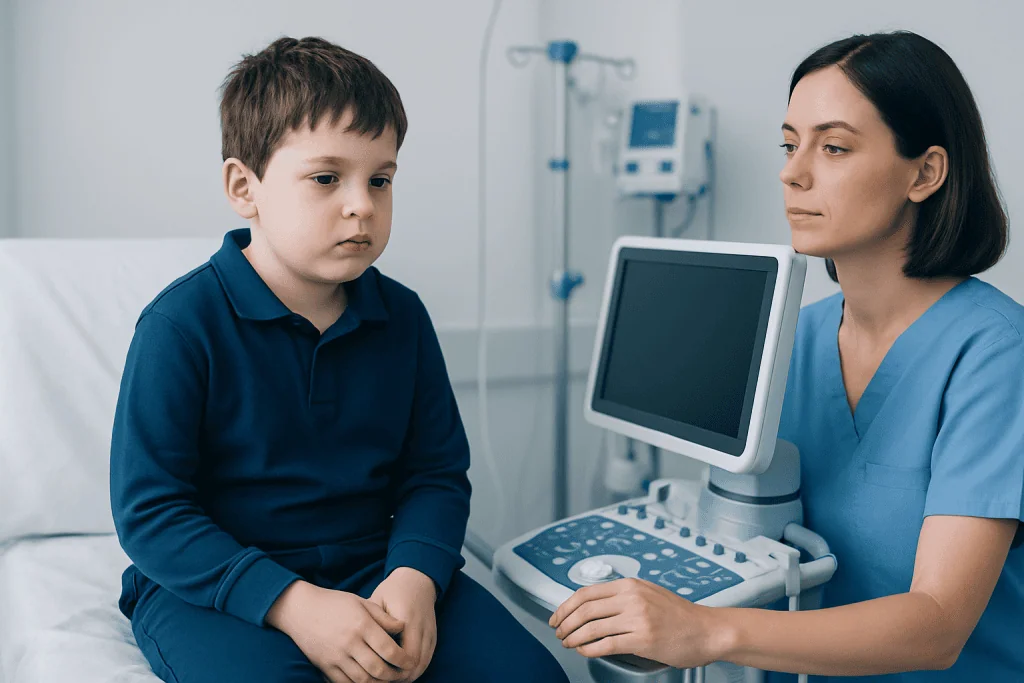
One way to understand Sanfilippo syndrome is to think of it as a progressive condition with changing needs across childhood and adolescence. In many children, the earliest concerns involve language delay, learning difficulties, and behavior that may seem similar to attention or autism-related challenges. At this stage, families may notice frequent waking, reduced safety awareness, impulsivity, or unusually high activity levels.
As the disorder progresses, developmental gains may slow or be lost. Children may have increasing difficulty with communication, daily routines, coordination, and social interaction. Sleep problems can become especially exhausting for families, and behavior may fluctuate depending on discomfort, sensory sensitivities, or changes in routine.
In later stages, physical and neurological symptoms often become more prominent. These can include stiffness, balance problems, seizures in some children, swallowing difficulty, and loss of mobility. The pace and pattern are not exactly the same for every child, but Sanfilippo syndrome usually requires regular review by specialists in pediatrics, neurology, rehabilitation, and supportive care.
Symptoms and signs to recognize
The symptoms of Sanfilippo syndrome can vary by subtype and by individual child, but certain features are common. In early childhood, parents may first notice delayed speech, delayed developmental milestones, restlessness, behavioral challenges, and poor sleep. Some children have frequent ear or respiratory infections, loose stools, or mild changes in facial features, although the physical signs are often less marked than in some other mucopolysaccharidoses.
Common symptoms and signs may include:
- Speech and language delay
- Learning difficulties or developmental regression
- Hyperactivity, impulsivity, or reduced attention span
- Sleep disturbance, including frequent waking
- Behavioral changes such as frustration, aggression, or anxiety
- Frequent infections or chronic nasal congestion
- Stiff joints or reduced mobility over time
- Seizures in some cases
- Difficulty swallowing in later stages
Because early symptoms can overlap with more common developmental conditions, diagnosis is sometimes delayed. Families should not assume that sleep and behavior changes are simply a phase if they occur together with developmental concerns. A fuller assessment can help clarify whether symptoms fit a rare metabolic condition such as metabolic disease.
Causes, genetics, and risk factors
Sanfilippo syndrome is caused by inherited changes in genes responsible for enzymes that break down heparan sulfate. When one of these enzymes does not work properly, heparan sulfate accumulates within lysosomes, which are structures that help cells process and recycle materials. This buildup gradually damages cells, especially in the central nervous system.
The condition follows an autosomal recessive inheritance pattern. This means both parents usually carry one altered gene copy but do not have symptoms themselves. When two carriers have a child together, there is a chance the child will inherit both altered copies and develop the condition. Genetic counseling can help families understand inheritance, testing options, and future pregnancy planning.
There are no lifestyle causes of Sanfilippo syndrome, and nothing a parent did or did not do causes it. Risk is related to family genetics. In some families, there may be no known prior history because carrier status can remain silent for generations until two carriers have a child together.
How doctors diagnose Sanfilippo syndrome
Diagnosis often begins with a careful developmental history and physical examination. Doctors ask about speech delay, behavior, sleep, mobility, infections, and any family history of inherited disorders. Because symptoms can resemble more common developmental conditions at first, children may be evaluated by multiple specialists before the underlying cause becomes clear.
Testing usually includes urine studies to look for elevated glycosaminoglycans, including heparan sulfate. This may be followed by enzyme testing in blood or other cells to identify which enzyme is deficient. Genetic testing is then used to confirm the diagnosis and determine the exact subtype of Sanfilippo syndrome.
Additional evaluations may be recommended to understand how the condition is affecting the child. These can include hearing and vision checks, sleep assessment, developmental testing, swallowing assessment, and brain or nerve-related review when needed. In selected cases, doctors may use MRI imaging or genetic testing as part of a broader diagnostic plan. Early diagnosis can help families access therapies, plan support, and monitor complications more effectively.
Treatment options and supportive care
At present, there is no widely established cure that reverses Sanfilippo syndrome, so treatment focuses on supportive and symptom-based care. The goal is to maintain comfort, communication, sleep, safety, mobility, nutrition, and quality of life for as long as possible. Because the condition affects several body systems, care is usually coordinated by a multidisciplinary team.
Supportive treatment may include speech and language therapy, physical therapy, occupational therapy, behavior support, seizure management when needed, and nutrition or swallowing guidance. Some children benefit from physical therapy and rehabilitation to help preserve movement and daily function. Others may need review by sleep specialists, pediatric neurologists, rehabilitation physicians, gastroenterology teams, or ear, nose, and throat specialists depending on symptoms.
Care plans should be reviewed regularly because needs often change over time. Families may need equipment support, home adaptations, educational planning, and respite services. Near the end of the care journey, symptom relief and palliative support can become especially important. Acibadem International’s multidisciplinary specialists in JCI-accredited hospitals evaluate and treat children with complex neurological and metabolic conditions for international patients when advanced coordinated care is needed.
Daily care, family support, and practical self-care
Although Sanfilippo syndrome cannot be prevented after it is inherited, many day-to-day steps can make care more manageable. Consistent routines often help with sleep and behavior. Safe home environments, supervision around water and stairs, and simple communication tools can reduce stress for both the child and caregivers.
Families often benefit from working closely with therapists and schools to adapt expectations as abilities change. Helpful strategies may include visual schedules, sensory-friendly spaces, flexible seating, and step-by-step task support. Good oral care, nutrition review, and monitoring for constipation or swallowing changes are also practical parts of ongoing care.
Parents and caregivers should also protect their own wellbeing. Long-term care can be physically and emotionally demanding, so support groups, social work input, respite care, and counseling can be valuable. If future family planning is a concern, genetic counseling can explain carrier testing and options for relatives who may also wish to understand their risk.
When to seek medical care
Medical review is important if a child has developmental delay together with persistent sleep problems, marked hyperactivity, loss of previously learned skills, or behavior changes that seem more severe than expected. An assessment is also needed if there are repeated infections, feeding or swallowing problems, seizures, balance changes, or progressive stiffness.
Urgent medical attention is needed for breathing difficulty, choking, prolonged seizures, dehydration, a sudden major change in awareness, or signs that the child may not be safe at home because of wandering or severe nighttime disruption. Families should also contact their doctor promptly if care needs are rapidly increasing or if they feel overwhelmed by symptoms that are becoming harder to manage.
Because Sanfilippo syndrome is complex, regular follow-up matters even when symptoms seem stable. Timely review can help doctors adjust therapies, monitor complications, and coordinate services. Families who are seeking a comprehensive pediatric brain and development assessment may also be referred for pediatric neurology evaluation.
Frequently asked questions
Is Sanfilippo syndrome the same as autism or ADHD?
No. Sanfilippo syndrome can cause behaviors that resemble autism spectrum disorder or ADHD, especially early in childhood, but it is a different condition with a genetic metabolic cause. A thorough medical evaluation is important when behavioral symptoms occur along with developmental delay, sleep disturbance, or loss of skills.
At what age does Sanfilippo syndrome usually appear?
Symptoms often begin in early childhood, although the exact age can vary. Some children appear to develop typically at first and later show speech delay, sleep problems, or behavioral changes that prompt further testing.
Can Sanfilippo syndrome be cured?
There is currently no standard cure that reverses the condition. Treatment focuses on supportive care, symptom management, developmental therapies, and careful monitoring by a multidisciplinary team.
How is Sanfilippo syndrome inherited?
It is usually inherited in an autosomal recessive pattern. This means both parents typically carry one altered gene copy without symptoms, and a child develops the condition if they inherit both altered copies.
What tests confirm Sanfilippo syndrome?
Doctors usually combine urine testing for glycosaminoglycans with enzyme analysis and genetic testing. These tests help confirm the diagnosis and identify the specific subtype of Sanfilippo syndrome.
What kind of specialists may be involved in care?
Care often includes pediatricians, metabolic specialists, neurologists, rehabilitation professionals, speech therapists, occupational therapists, and nutrition or swallowing experts. The exact team depends on the child’s symptoms and stage of disease.
References
- National Institute of Neurological Disorders and Stroke
- National Organization for Rare Disorders
- MedlinePlus Genetics
- Genetics Home Reference resources of the U.S. National Library of Medicine
- Orphanet
This article is for general information only and is not a substitute for professional medical advice. Please consult a qualified doctor about your individual situation.
Explore treatments in Turkey — costs, top hospitals & a free quote
JCI-accredited · board-certified surgeons · reply within 24h
Add us as a Preferred Source to see more of our trusted health content across Google Search, AI Overviews and Discover.

More from the Health Library



Related Specialists

Assoc. Prof. Dr. Umut Kara
Anesthesiology
Prof. Dr. Bülent Tıraş
Gynecology & Obstetrics
Assoc. Prof. Dr. A. Enes Arikan
General Surgery
Dr. Ali Şenol Çelebi
Radiology