Endodontist — Explained by Medical Evidence, Not Myths

An endodontist is a dental specialist focused on the inside of the tooth, including the pulp and root canals. They commonly treat severe tooth pain, deep decay, cracked teeth, dental trauma, and infections affecting the tooth root.
Key Takeaways
- An endodontist is a dental specialist focused on the inside of the tooth, including the pulp and root canals.
- They commonly treat severe tooth pain, deep decay, cracked teeth, dental trauma, and infections affecting the tooth root.
- Root canal therapy is one of the most common endodontic procedures and is designed to save a natural tooth.
- Not all tooth pain means a root canal is needed; careful evaluation is important because pain can come from several causes.
- Early assessment can improve comfort, reduce complications, and increase the chance of keeping the tooth.
An endodontist is a dentist with advanced training in diagnosing and treating problems inside the tooth, especially the dental pulp and root canals. They are best known for root canal therapy, but their role also includes evaluating complex tooth pain, dental injuries, and infections to help preserve natural teeth whenever possible.
Overview: what an endodontist does
An endodontist is a dentist who has completed additional specialist training in conditions that affect the inside of the tooth. This includes the dental pulp, which contains nerves and blood vessels, and the narrow channels in the roots known as root canals. Their goal is to diagnose pain accurately, treat disease or injury within the tooth, and preserve the natural tooth when possible.
Many people associate an endodontist only with root canal treatment, but the specialty is broader than that. Endodontists also evaluate difficult or unexplained tooth pain, manage teeth that have been injured in accidents, treat persistent infection around the root, and sometimes perform minor surgical procedures at the tip of the root. Their training emphasizes both precision and pain control.
A useful way to think about the difference is this: general dentists care for overall oral health, while endodontists focus on the inner structures of teeth and the tissues around the roots. A general dentist may diagnose a problem and either treat it directly or refer the person to an endodontist when the case is complex, urgent, or requires specialist techniques and equipment.
How endodontists differ from general dentists

General dentists provide routine preventive and restorative dental care such as checkups, fillings, gum care, and crowns. Endodontists are dental specialists who receive further training specifically in tooth pain, pulp disease, root canal anatomy, dental trauma, and procedures designed to save teeth. This added expertise can be especially valuable when symptoms are severe, the diagnosis is uncertain, or a previous treatment has not resolved the problem.
Endodontists often use specialized tools and imaging to assess the tooth in detail. These may include magnification, fine instruments for cleaning and shaping root canals, and advanced imaging when needed to understand complex root anatomy or hidden infection. This can improve the accuracy of diagnosis and help guide treatment planning.
Referral to an endodontist does not always mean a person has a serious condition. It often reflects the need for a more focused evaluation. For example, a patient with a painful cracked tooth, a tooth that does not respond normally to temperature, or ongoing discomfort after earlier dental work may benefit from specialist assessment. In some cases, the issue may be related to a dental abscess or another condition that requires timely care.
Symptoms and problems an endodontist evaluates
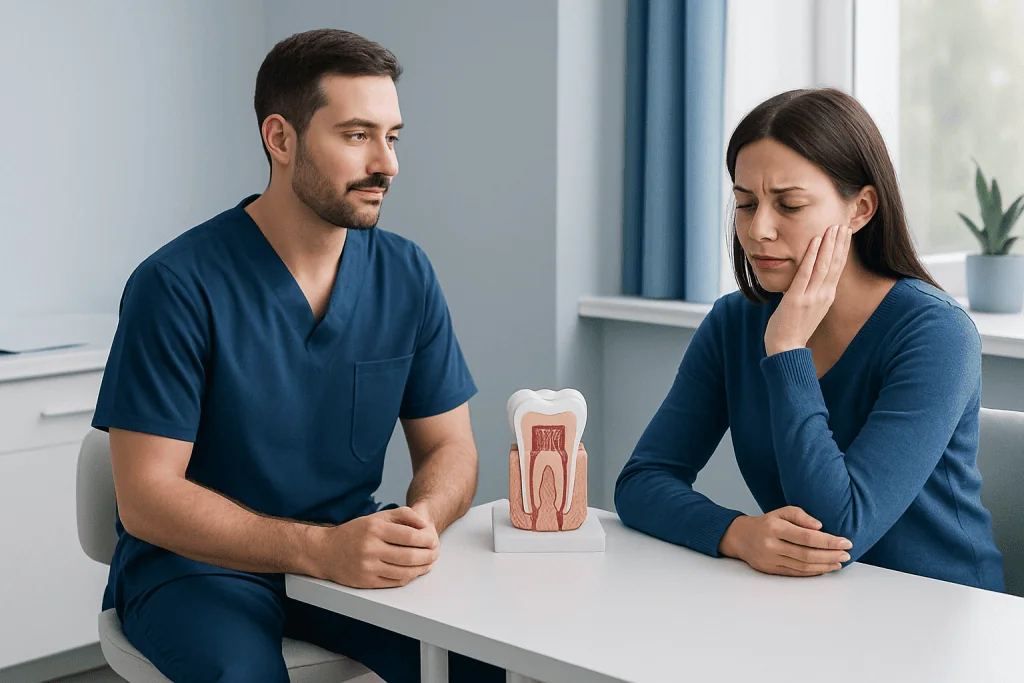
Endodontists commonly evaluate tooth pain, but not all symptoms feel the same. Some people notice lingering sensitivity to hot or cold foods, while others have pain when biting, a deep throbbing ache, tenderness in the gum near a tooth, or swelling around the jaw. There may also be a bad taste in the mouth if infection is draining from the gum.
Symptoms can develop when the pulp becomes inflamed or infected. This may happen because of deep decay, repeated dental procedures on the same tooth, a crack that allows bacteria to enter, or trauma that disrupts the tooth’s blood supply. In some situations, a tooth can be badly damaged inside yet cause only mild symptoms at first, which is why prompt dental evaluation matters when something feels unusual.
An endodontist may also assess teeth after sports injuries, falls, or accidents. Trauma can cause internal bleeding in the pulp, root fractures, tooth displacement, or delayed damage that appears weeks or months later. Children and adults alike may need follow-up after dental injuries, even if the tooth initially seems stable.
- Persistent toothache or pressure
- Pain when chewing or biting
- Lingering sensitivity to heat or cold
- Swelling of the gum or face
- Darkening or discoloration of a tooth after injury
- A pimple-like bump on the gum that may drain
Causes, risk factors, and common myths
The most common reason a person may need endodontic care is bacterial infection reaching the pulp. This usually begins with untreated tooth decay, but it can also result from cracks, fractures, leaking fillings, worn teeth, or trauma. Repeated dental procedures on the same tooth may occasionally irritate or weaken the pulp over time, increasing the risk of inflammation.
Several factors can raise the chance of endodontic problems. These include poor oral hygiene, irregular dental visits, frequent sugary foods or drinks, teeth grinding, contact sports without a mouthguard, and delay in treating cavities or broken teeth. Certain medical conditions and dry mouth may also affect oral health more broadly, making prevention and early care especially important.
There are also persistent myths about endodontists and root canal treatment. One common myth is that root canal therapy is uniquely painful. In reality, modern anesthesia and techniques are designed to relieve pain caused by the diseased pulp rather than create it. Another myth is that extraction is always better than saving the tooth. When appropriate, preserving the natural tooth often helps maintain normal chewing, bite alignment, and jaw function.
A further misconception is that every toothache needs a root canal. Tooth pain can also come from gum disease, sinus pressure, bite problems, cracked fillings, or referred pain from nearby structures. That is why an endodontist’s role begins with careful diagnosis rather than automatically proceeding to treatment.
How diagnosis is made
Diagnosis usually starts with a detailed discussion of symptoms. The endodontist asks when the pain began, what makes it worse or better, whether it wakes the person at night, and whether there has been previous dental work or trauma. This history can provide important clues about whether the pulp is inflamed, infected, healing, or no longer vital.
The clinical examination may include checking the tooth and surrounding gum, gently tapping on the tooth, testing how it responds to temperature, and assessing pain on biting. Standard dental X-rays are often used to look for deep decay, changes around the root tip, previous treatment, or signs of infection in the bone. In selected cases, more advanced imaging may help clarify root shape, hidden fractures, or hard-to-see areas.
Not every abnormal test result means immediate treatment is needed. Endodontists combine the person’s symptoms, examination findings, imaging, and the overall health of the tooth before recommending the next step. This may range from monitoring, to protective restorative care, to root canal treatment if the pulp is irreversibly inflamed or infected.
Treatment options and what to expect
Treatment depends on the diagnosis. If the pulp is irritated but still capable of recovery, the plan may focus on removing decay, replacing a defective restoration, protecting a crack, or adjusting the bite. When the pulp is irreversibly inflamed or infected, root canal therapy is often recommended to remove diseased tissue from inside the tooth, clean and shape the canal system, and seal the space to reduce the chance of reinfection.
During root canal treatment, the tooth is numbed and isolated to keep the area clean and dry. The endodontist creates a small opening in the tooth, removes inflamed or infected pulp tissue, disinfects the root canals, and fills them with a biocompatible material. The tooth is then restored, often with a filling and sometimes a crown, depending on how much structure remains. This restoration is important for long-term strength and function.
Some teeth need retreatment if symptoms return or if the earlier root canal did not fully heal. In selected cases, a small surgical procedure near the root tip may be considered when infection persists despite prior treatment. If the tooth cannot be saved because of severe fracture, extensive decay, or lack of support, extraction may be discussed. In that situation, replacement options can be reviewed, such as dental implant care after healing.
People who have anxiety about dental procedures should mention this early. Clear communication, local anesthesia, and supportive comfort measures can make treatment more manageable. If infection has already spread into the surrounding tissues, additional dental or medical care may be needed, especially when there is notable swelling, fever, or difficulty opening the mouth.
Prevention and self-care
Not every endodontic problem can be prevented, but many can be reduced through consistent oral care. Brushing twice daily with fluoride toothpaste, cleaning between teeth, limiting sugary snacks and drinks, and attending regular dental checkups help lower the risk of decay reaching the pulp. Early treatment of cavities and broken fillings is also important because small problems are usually easier to manage than advanced infection.
Protecting the teeth from injury matters as well. A custom or well-fitted mouthguard can help during contact sports, while a night guard may be recommended for people who grind their teeth. Avoiding habits such as chewing ice, opening packages with the teeth, or biting hard objects can reduce the chance of cracks and fractures.
At home, temporary measures such as avoiding very hot or cold foods, chewing on the unaffected side, and following the dentist’s advice for pain relief may help until an appointment. Home remedies do not treat an infected pulp, so persistent or worsening symptoms should not be ignored. If there is spreading swelling or signs of a significant infection, urgent assessment is important because some people may develop complications related to tooth infection.
When to seek medical care
A person should arrange prompt dental evaluation if they have ongoing tooth pain, pain that lingers after hot or cold exposure, pain with biting, swelling of the gums, or a tooth that changes color after an injury. These symptoms do not always mean root canal treatment is needed, but they do suggest that the tooth and surrounding tissues should be examined.
More urgent care is needed if there is facial swelling, fever, pus drainage, severe worsening pain, trouble swallowing, or difficulty opening the mouth. These can indicate a more advanced infection that may require urgent dental treatment and, in some cases, medical support. People with weakened immune systems, significant medical conditions, or rapidly worsening symptoms should seek care without delay.
For patients who need coordinated evaluation and treatment, Acibadem International’s multidisciplinary specialists and JCI-accredited hospitals provide care for international patients, including advanced dental assessment and oral and dental health services when endodontic problems are suspected.
Frequently asked questions
What is an endodontist in simple terms?
An endodontist is a dentist who specializes in problems inside the tooth, especially the pulp and root canals. They are trained to diagnose tooth pain and perform treatments aimed at saving natural teeth.
Does seeing an endodontist always mean a root canal is needed?
No. An endodontist first determines the cause of the pain or problem, and not every case requires root canal therapy. Some teeth can be monitored, restored, or treated in other ways depending on the diagnosis.
Is a root canal painful?
Modern root canal treatment is usually performed with local anesthesia and is intended to relieve pain caused by an inflamed or infected pulp. Many people describe it as similar to having a routine filling, though individual experiences can vary.
When should a general dentist refer someone to an endodontist?
Referral may be recommended when a case is complex, symptoms are difficult to explain, the root anatomy is challenging, or previous treatment has not fully resolved the issue. Dental trauma and persistent infection are also common reasons for specialist care.
Can an endodontist treat a cracked or injured tooth?
Yes, in many cases. Endodontists often evaluate cracked teeth, teeth damaged by accidents, and teeth that have changed color or become painful after trauma. The best treatment depends on how deep the crack or injury extends.
How can someone tell if tooth pain is serious?
Pain that lingers, wakes a person at night, worsens with biting, or comes with swelling should be assessed by a dentist promptly. Because tooth pain can have several causes, a professional exam is the safest way to understand what is happening.
References
- American Association of Endodontists
- American Dental Association
- National Institute of Dental and Craniofacial Research
- Mayo Clinic
- Cleveland Clinic
This article is for general information only and is not a substitute for professional medical advice. Please consult a qualified doctor about your individual situation.
Explore treatments in Turkey — costs, top hospitals & a free quote
JCI-accredited · board-certified surgeons · reply within 24h
Add us as a Preferred Source to see more of our trusted health content across Google Search, AI Overviews and Discover.