Vibration Plate: A Complete Medical Overview
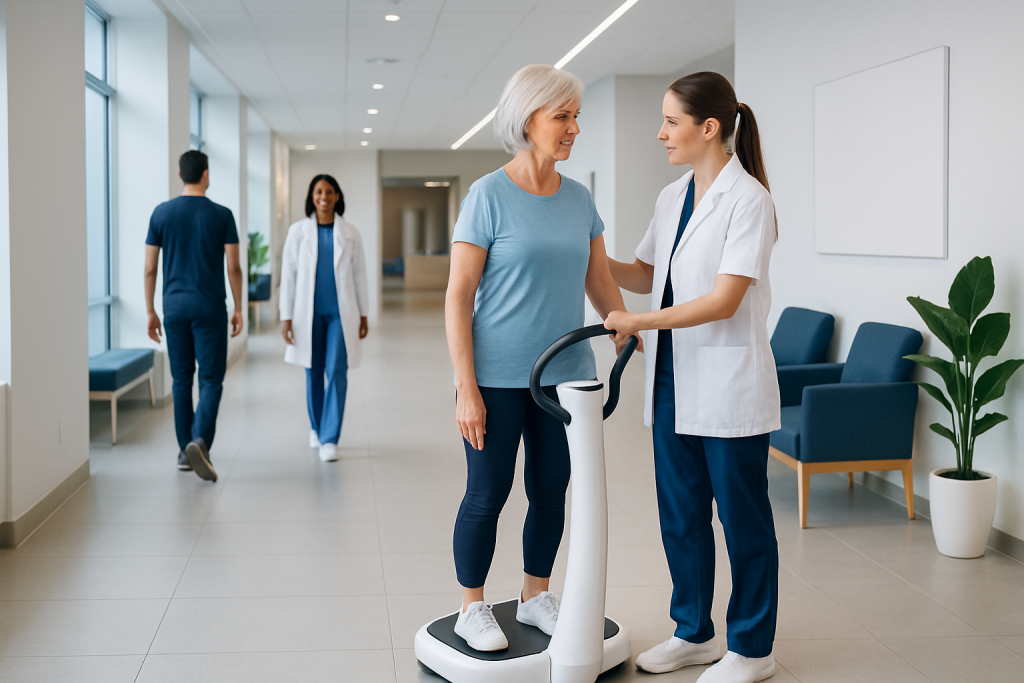
A vibration plate uses whole body vibration to stimulate muscles while a person stands or exercises on the platform. It may be helpful as an addition to exercise or rehabilitation, especially for balance, mobility, and muscle engagement.
Key Takeaways
- A vibration plate uses whole body vibration to stimulate muscles while a person stands or exercises on the platform.
- It may be helpful as an addition to exercise or rehabilitation, especially for balance, mobility, and muscle engagement.
- Results are usually modest and vary widely; a vibration plate is not a replacement for regular physical activity or medical treatment.
- People who are pregnant or who have certain heart, bone, joint, neurological, or implanted-device concerns should seek medical advice before use.
- Safe use depends on the vibration settings, body position, exercise technique, and the person’s overall health.
A vibration plate is a machine that creates rapid oscillations while a person stands, sits, or performs exercises on it. It may help some people with muscle activation, balance, and rehabilitation, but its benefits depend on the individual, the medical goal, and safe use under appropriate guidance.
What a vibration plate is and what it does
A vibration plate is an exercise or rehabilitation platform that moves rapidly to create mechanical vibrations through the body. This approach is often called whole body vibration. Depending on the machine, the platform may move up and down, side to side, or in a pivoting pattern while the person stands, bends their knees, holds a position, or performs simple exercises.
The idea behind a vibration plate is that the body responds to the rapid movement with repeated muscle contractions. In theory, this can increase muscle activation and challenge balance without requiring high-impact activity. For some people, especially those who find conventional exercise difficult, it may offer a lower-impact way to add movement or support a supervised rehabilitation plan.
However, a vibration plate is best understood as a tool rather than a cure or a shortcut. Research suggests that it may provide limited to moderate benefits for selected goals such as balance, lower-limb strength, or exercise support, but results are not the same for every person. The strongest benefits are usually seen when vibration training is combined with regular exercise, physical therapy, or other evidence-based treatment rather than used alone.
How whole body vibration may affect the body
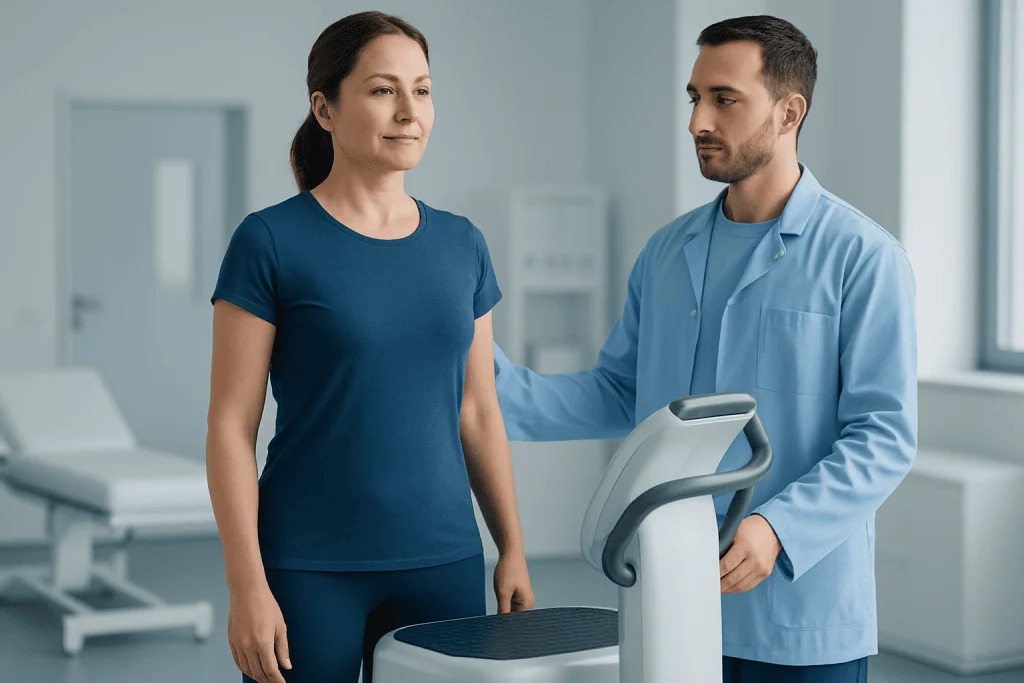
When a person stands on a moving platform, vibrations travel through the feet and legs and may also affect the trunk depending on posture. The body naturally works to stay stable, and this can cause reflexive muscle activity. The knees, hips, core, and ankle muscles are often involved, which is why many programs use a slight squat position rather than standing stiffly upright.
In addition to muscle activation, vibration can create a balance challenge. This is one reason it has been explored in rehabilitation, sports training, and older-adult exercise programs. Some researchers have also studied whether vibration may influence circulation, flexibility, pain perception, and bone loading, although these effects are less consistent and depend on intensity, duration, and the person’s health condition.
The body’s response is shaped by several factors, including the frequency of vibration, amplitude, session length, and the exercise performed on the machine. More intense settings are not always better. If the vibration is too strong or used for too long, it may cause discomfort, fatigue, or aggravation of existing problems rather than benefit.
Potential benefits and realistic expectations
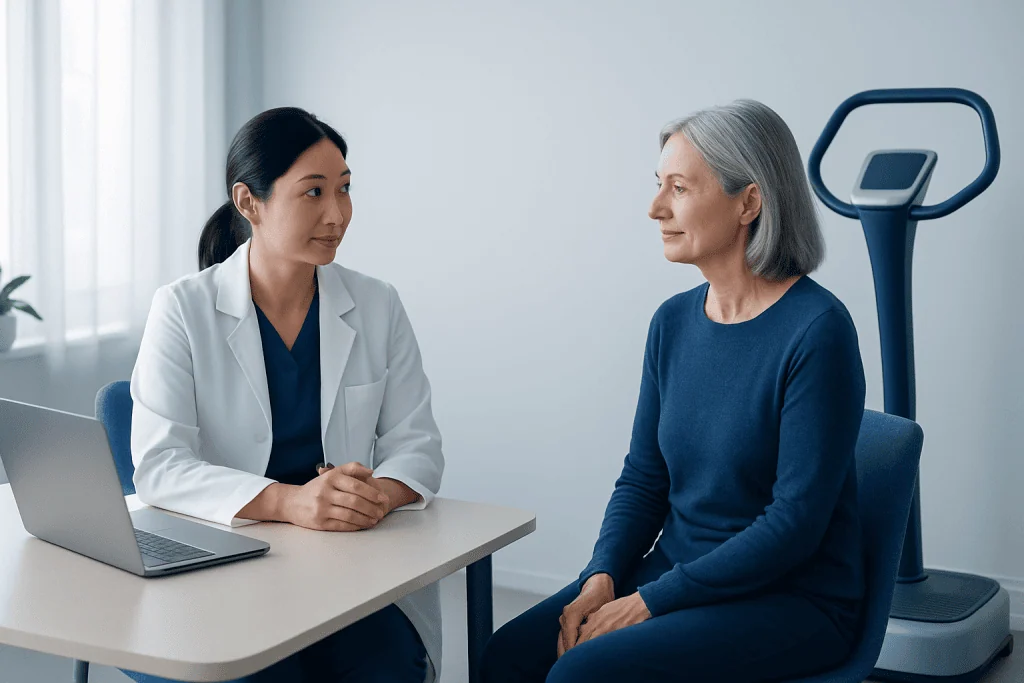
For some people, a vibration plate may help improve muscle engagement, balance, posture control, or confidence with movement. It is sometimes used in fitness settings to add challenge to bodyweight exercises such as shallow squats or calf raises. In rehabilitation, clinicians may use it selectively as part of a wider program aimed at regaining mobility after illness or injury.
Possible areas where a vibration plate may be considered include:
- supporting lower-body muscle activation
- adding variety to an exercise routine
- helping with balance training
- supporting flexibility or warm-up routines
- assisting some rehabilitation plans when prescribed by a clinician
That said, expectations should remain realistic. A vibration plate does not reliably produce major weight loss, dramatic muscle gain, or broad medical improvement on its own. For bone health, cardiometabolic health, and long-term fitness, proven foundations still matter most: regular physical activity, strength training, adequate nutrition, sleep, and treatment of underlying conditions when present.
Some people with chronic musculoskeletal pain or movement limitations may also wonder if a vibration plate could help. In certain cases, targeted rehabilitation is more appropriate than self-directed machine use, particularly if symptoms involve back pain, knee pain, or a neurological condition. Evaluation by specialists can help identify whether structured physical therapy and rehabilitation would be safer and more effective.
Who may benefit most from a vibration plate
The people most likely to benefit are usually those using a vibration plate with a clear purpose and a suitable plan. This may include healthy adults who want to supplement exercise, older adults working on balance under supervision, or patients in rehabilitation who need low-impact muscle activation. The best results often come from short, structured sessions using proper posture rather than prolonged or unsupervised use.
In clinical practice, whole body vibration may be explored for people with reduced mobility, deconditioning, or certain musculoskeletal limitations, but only after a professional assessment. For example, someone recovering from injury or surgery may need a tailored program instead of general gym-based advice. If there is a history of significant joint pain, spinal issues, or weakness, a clinician may assess whether the symptoms relate to herniated disc or another condition before recommending this type of exercise.
People with balance difficulties, falls, or age-related mobility concerns may also ask about vibration platforms. In some cases, the underlying issue needs a more comprehensive review of strength, sensation, gait, medication effects, and neurological health. The machine may then be used as one small part of a broader plan rather than the central treatment.
Risks, side effects, and who should use caution
Vibration plate use is not appropriate for everyone. Temporary side effects may include dizziness, nausea, headache, fatigue, tingling, or worsening of joint or back discomfort, especially if the settings are too strong or posture is poor. Some people also find that vibration aggravates neck strain or causes discomfort in the feet, ankles, knees, or hips.
Medical advice is especially important before use for anyone who is pregnant, has a pacemaker or other implanted device, has recent fractures, severe osteoporosis, uncontrolled cardiovascular disease, a history of blood clots, significant balance disorders, recent surgery, or active joint inflammation. Caution is also sensible for people with chronic back pain, severe arthritis, vertigo, or neurological disease. If joint degeneration is a concern, a specialist may first assess for osteoarthritis or other causes of pain and stiffness.
There are also situations where a vibration plate may simply not be the best option. If a person has progressive weakness, numbness, severe pain, or frequent falls, the priority should be diagnosis rather than self-treatment. In these cases, a doctor may recommend imaging, neurological evaluation, or a structured rehabilitation plan instead of home vibration training.
How doctors evaluate whether it is safe and useful
There is no single medical test for deciding whether a vibration plate is right for someone. Instead, clinicians look at the person’s goals, current symptoms, medical history, medications, and physical function. They may ask whether the aim is general fitness, balance improvement, rehabilitation after an injury, support for bone health, or symptom relief.
A physical examination may assess posture, gait, joint motion, pain triggers, strength, and balance. If symptoms suggest a specific disorder, further evaluation may be needed. This can include bone density testing, heart assessment, neurological examination, or imaging of painful joints or the spine. For persistent knee symptoms, doctors may evaluate for meniscus tear or other structural causes before recommending exercise modifications.
For some patients, referral to a rehabilitation specialist, sports medicine physician, orthopedist, or neurologist is appropriate. The goal is to match the exercise method to the person, not the other way around. If a vibration plate is used, clinicians may advise specific stance positions, session lengths, and progression based on tolerance and safety.
Safe use, treatment alternatives, and self-care
When a vibration plate is considered appropriate, most experts favor gradual use. Starting with short sessions, lower intensity, and slightly bent knees may help reduce strain and improve control. Good footwear, stable support nearby, and careful attention to how the body feels during and after each session are important, particularly for older adults or those with balance concerns.
It is also helpful to remember that a vibration plate works best as one part of a broader health plan. Depending on the goal, that plan may include walking, strengthening exercises, stretching, balance training, nutrition support, and treatment of any medical condition contributing to fatigue, pain, or weakness. People with persistent mobility limitations may benefit more from supervised sports medicine and orthopedics care or rehabilitation than from increasing machine intensity on their own.
For those using vibration for fitness, technique matters. Holding a supported squat, calf raise, or gentle core exercise may be more appropriate than trying advanced movements. If pain, dizziness, palpitations, numbness, or symptom worsening occurs, the session should be stopped and a clinician consulted.
In selected patients, a multidisciplinary team may help decide whether whole body vibration fits into a larger recovery plan. Acibadem International’s multidisciplinary specialists in JCI-accredited hospitals diagnose and treat musculoskeletal, neurological, and rehabilitation-related concerns for international patients when further assessment is needed.
When to seek medical care
Medical advice is important before starting vibration plate use if a person has a chronic health condition, recent injury, recent operation, implanted medical device, pregnancy, significant osteoporosis, or unexplained pain. A clinician can help determine whether the machine is safe, whether another treatment would be more effective, and how to use it without increasing risk.
A person should stop using a vibration plate and seek medical care if they develop chest pain, severe shortness of breath, fainting, strong dizziness, new weakness, numbness, severe back pain, swelling in one leg, or worsening joint symptoms. Prompt evaluation is also appropriate if balance problems are increasing or if there is repeated pain after each session.
More generally, a vibration plate should not delay diagnosis of ongoing symptoms. If pain, stiffness, falls, or mobility problems continue, the underlying cause may need direct treatment rather than exercise modification alone. Early assessment can help protect function and guide safer rehabilitation.
Frequently asked questions
Does a vibration plate really work?
A vibration plate may help some people with muscle activation, balance training, and rehabilitation support. Its effects are usually modest and are strongest when it is combined with regular exercise or a clinician-guided program. It is better viewed as a supportive tool than a stand-alone solution.
Can a vibration plate help with weight loss?
A vibration plate alone is unlikely to cause meaningful weight loss. Weight management usually depends on overall physical activity, nutrition, sleep, and any underlying medical issues. It may add movement to a routine, but it does not replace the basics of a healthy lifestyle.
Is a vibration plate safe for older adults?
It can be safe for some older adults, especially when used at low intensity and with supervision. However, safety depends on balance, bone health, heart health, joint condition, and any history of falls or dizziness. A medical or rehabilitation assessment is often a sensible first step.
Who should not use a vibration plate?
People who are pregnant or who have certain implanted devices, recent fractures, recent surgery, uncontrolled heart disease, severe osteoporosis, or significant balance problems should seek medical advice before use. It may also be unsuitable for people whose pain or neurological symptoms are not yet diagnosed. When in doubt, a clinician can help assess the risks.
Can a vibration plate replace exercise?
No. A vibration plate does not provide the full cardiovascular, metabolic, and strength benefits of regular exercise. Most people benefit more from using it as an add-on to walking, resistance training, flexibility work, or rehabilitation exercises.
How long should a person use a vibration plate?
There is no single ideal duration for everyone, because the safest and most effective session depends on the machine, the settings, and the person’s health status. Many people do better with shorter, gradual sessions rather than long or intense ones. If there is any medical concern, a doctor or physical therapist should guide the plan.
References
- World Health Organization
- National Institutes of Health
- National Institute for Health and Care Excellence
- American College of Sports Medicine
- International Osteoporosis Foundation
This article is for general information only and is not a substitute for professional medical advice. Please consult a qualified doctor about your individual situation.
Explore treatments in Turkey — costs, top hospitals & a free quote
JCI-accredited · board-certified surgeons · reply within 24h
Add us as a Preferred Source to see more of our trusted health content across Google Search, AI Overviews and Discover.

More from the Health Library

Mucous Cyst: A Complete Medical Overview

Miracle Poison Ivy Cure: A Complete Medical Overview

Barre — Explained by Medical Evidence, Not Myths
Fitness Gym: What Patients Need to Know

Bronchiectasis: What Patients Need to Know