Biceps: A Complete Medical Overview
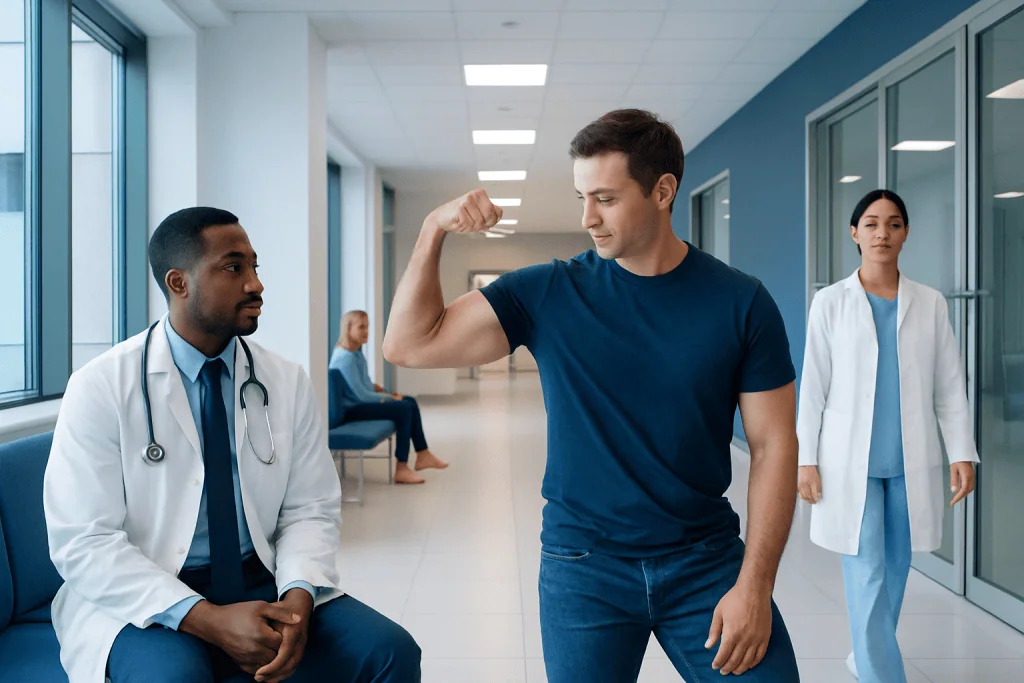
The biceps support elbow bending and forearm rotation, and they also help stabilize the shoulder. Biceps symptoms may include pain, weakness, cramping, bruising, or a change in arm shape after an injury.
Key Takeaways
- The biceps support elbow bending and forearm rotation, and they also help stabilize the shoulder.
- Biceps symptoms may include pain, weakness, cramping, bruising, or a change in arm shape after an injury.
- Common problems include muscle strain, tendon inflammation, tendinopathy, and partial or complete tendon tears.
- Diagnosis usually relies on medical history, physical examination, and sometimes ultrasound or MRI.
- Many biceps problems improve with rest, activity changes, physical therapy, and guided rehabilitation.
The biceps are the muscles at the front of the upper arm that help bend the elbow and turn the forearm. This overview explains how the biceps work, why pain or injury can happen, and how diagnosis, treatment, and prevention are approached.
What the biceps are and why they matter
The biceps are a pair of muscles located at the front of each upper arm. Their main jobs are to bend the elbow and help rotate the forearm so the palm can turn upward. They also contribute to shoulder stability, especially during lifting, pulling, and reaching movements.
The full name is the biceps brachii, meaning a two-headed muscle of the arm. It has a long head and a short head, both of which begin near the shoulder and join into a tendon near the elbow. Because the biceps cross both the shoulder and elbow joints, symptoms can sometimes be felt in either area.
People often think of the biceps mainly as a “strength” muscle, but in medical practice it is also important for daily function. Carrying shopping bags, opening doors, lifting a child, using tools, and participating in sports such as tennis, swimming, rowing, or weight training all place demands on the biceps muscle and its tendons.
Biceps anatomy and how the muscle works
The biceps brachii has two upper attachments. The long head passes through the front of the shoulder joint, while the short head attaches to a nearby structure in the shoulder region. These two parts come together in the upper arm and continue downward to attach near the elbow through the distal biceps tendon.
This arrangement allows the biceps to assist with several motions at once. It bends the elbow, helps turn the forearm into a palm-up position, and supports the shoulder during certain movements. That is why a person with a biceps problem may notice difficulty not only with curling the arm, but also with twisting motions such as turning a doorknob or using a screwdriver.
The biceps also work together with nearby muscles, including the brachialis, brachioradialis, and rotator cuff muscles. When pain develops, the source is not always the muscle itself. In some cases, biceps discomfort is related to shoulder problems such as rotator cuff tears or irritation around the tendon as it travels through the shoulder.
Common biceps symptoms and warning signs

Biceps symptoms vary depending on whether the problem involves the muscle belly, the shoulder-side tendon, or the elbow-side tendon. Some people feel a mild ache that builds gradually with repeated activity. Others notice a sudden sharp pain during lifting, sports, or an awkward movement.
Common symptoms can include:
- Pain at the front of the upper arm or shoulder
- Tenderness over the biceps tendon
- Weakness when bending the elbow or turning the palm upward
- Cramping or fatigue with repetitive use
- Swelling or bruising after an injury
- A visible change in the shape of the muscle, sometimes called a “Popeye” bulge
- Clicking or discomfort in the shoulder during overhead motion
A sudden tearing sensation, immediate bruising, or a marked change in arm contour can suggest a tendon rupture. Not every rupture causes severe pain, especially in older injuries, but it often leads to weakness or a cosmetic change. Persistent pain that interferes with sleep, work, or ordinary arm use should be assessed by a qualified clinician.
Causes of biceps pain and who is at risk
Biceps pain may result from overuse, acute injury, or age-related wear in the tendon. Repetitive overhead activity, heavy lifting, forceful pulling, and sudden resistance against a bent elbow can all strain the muscle-tendon unit. Athletes, manual workers, and people who begin exercise too quickly after inactivity may be more vulnerable.
Doctors often group biceps problems into several categories. These include simple muscle strain, tendon inflammation, longer-term tendinopathy, partial tears, and complete tears. Shoulder-related tendon problems are common because the long head of the biceps travels through a narrow groove and can become irritated with repetitive motion or associated shoulder instability.
Risk factors may include:
- Repetitive lifting or overhead work
- Sports involving throwing, rowing, swimming, or weight training
- Poor lifting technique or sudden training increases
- Age-related tendon degeneration
- Smoking or some chronic health conditions that affect tendon quality
- Coexisting shoulder conditions such as impingement or shoulder impingement
In some people, pain at the front of the shoulder is not coming from the biceps alone. Nearby structures may also be involved, which is why a full examination is important. Distinguishing between muscular pain, tendon injury, shoulder joint disease, and nerve-related pain helps guide treatment more effectively.
How biceps problems are diagnosed
Diagnosis starts with a careful discussion of symptoms, recent activities, and any specific injury. A doctor will usually ask when the pain began, whether there was a sudden pop, and what movements make symptoms worse. The pattern of pain, weakness, and arm use often provides important clues.
A physical examination typically checks tenderness, range of motion, strength, and the appearance of the muscle. The clinician may compare both arms and perform simple maneuvers to evaluate the biceps tendon at the shoulder and elbow. Because pain can come from neighboring structures, the shoulder, neck, and forearm may also be examined.
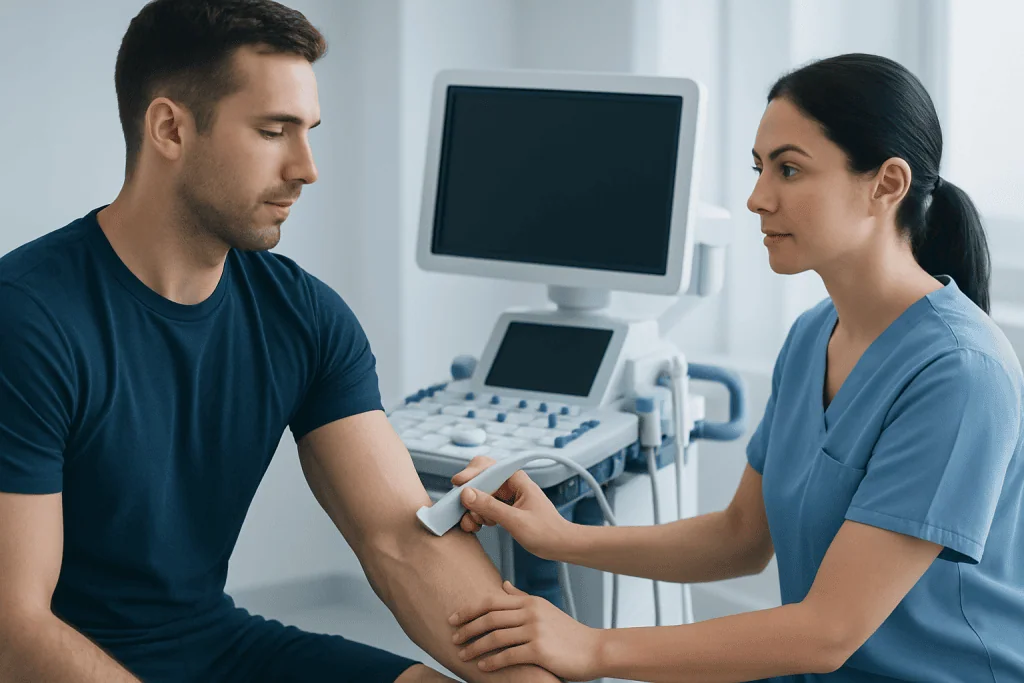
Imaging is not always needed for mild overuse injuries, but it can be very helpful when the diagnosis is unclear or a tear is suspected. Ultrasound can show tendon inflammation or tearing in some cases, while MRI gives a more detailed view of the muscle, tendon, and surrounding soft tissues. If the symptoms seem related to the shoulder joint, a specialist may recommend further evaluation and, when appropriate, MRI imaging or an orthopedic assessment.
Treatment options for biceps injuries and tendon problems
Treatment depends on the location and severity of the problem, as well as the person’s age, activity level, and goals. Many mild to moderate biceps strains and tendinopathy cases improve with conservative care. This usually includes temporary rest from aggravating activities, ice in the early phase, and a gradual return to movement under medical guidance.
Physical therapy is often a central part of recovery. A rehabilitation program may focus on improving shoulder and elbow mechanics, restoring flexibility, strengthening surrounding muscles, and correcting training or work habits that contributed to the problem. Guided physical therapy and rehabilitation can be especially useful for recurring symptoms and for returning safely to sport or repetitive work.
When a partial or complete tendon tear causes significant weakness, persistent pain, or loss of function, surgical treatment may be considered. This is more common in distal biceps tears near the elbow and in selected shoulder-side tendon injuries. Depending on the situation, an orthopedic specialist may discuss procedures performed through arthroscopic surgery or other tendon repair techniques. The choice is individualized, and recovery usually includes a structured rehabilitation period.
Even when surgery is not needed, follow-up matters. Returning too quickly to lifting or sport can delay healing and increase the risk of reinjury. A well-planned progression is usually safer and more effective than pushing through pain.
Prevention, exercise habits, and self-care
Not all biceps injuries can be prevented, but many can be reduced through balanced training and sensible activity habits. A gradual increase in exercise intensity gives the muscle and tendon time to adapt. Warm-up movements, attention to technique, and recovery days are especially important for people who lift weights, play racket sports, or do repetitive overhead work.
Helpful self-care and prevention strategies include:
- Increase weights, repetitions, or training volume gradually
- Use proper form during curls, rows, and overhead exercises
- Strengthen the shoulder, upper back, and core along with the arms
- Stop or modify activities that trigger sharp pain
- Allow time for rest after heavy or repetitive arm use
- Seek guidance if pain persists rather than continuing to train through it
For mild discomfort after exertion, short-term rest and activity modification may be enough. However, self-care is not a substitute for evaluation when there is sudden weakness, major bruising, or ongoing pain. In complex cases, a multidisciplinary team can help identify whether symptoms come from the muscle, tendon, shoulder joint, or another source. Acibadem International’s multidisciplinary specialists in JCI-accredited hospitals diagnose and treat biceps and related shoulder conditions for international patients when expert assessment is needed.
When to seek medical care
Medical evaluation is advisable if biceps pain lasts more than a few days, keeps returning, or limits normal arm function. Pain that affects sleep, prevents lifting ordinary objects, or causes repeated shoulder discomfort deserves professional attention. Early assessment can help prevent a minor problem from becoming a longer recovery.
Prompt care is especially important after a sudden injury with a popping sensation, visible bruising, deformity, or immediate weakness. These signs can suggest a significant tear that may need timely diagnosis. People with numbness, severe swelling, fever, or symptoms after a major fall should seek urgent medical care, as these features may point to a different or more serious problem.
If the pain may be part of a broader shoulder or upper-limb condition, referral to orthopedics and traumatology can help clarify the cause and treatment plan. A qualified doctor can explain whether symptoms are likely to improve with conservative care or whether further tests and interventions are needed.
Frequently asked questions
What do the biceps do?
The biceps help bend the elbow and rotate the forearm so the palm can turn upward. They also play a supportive role in shoulder stability during lifting and pulling activities.
Why do my biceps hurt after exercise?
Biceps pain after exercise may come from normal muscle soreness, overuse, or strain. If the pain is sharp, one-sided, associated with bruising, or lasts beyond a few days, it is a good idea to have it checked.
Can a biceps tendon tear heal without surgery?
Some biceps tendon injuries, especially certain shoulder-side tears or minor partial tears, may be managed without surgery depending on symptoms and function. Distal biceps tears near the elbow are more likely to need surgical discussion because they can cause more noticeable weakness.
How can someone tell the difference between a strain and a tear?
A strain often causes soreness and pain with movement but may not change the appearance of the arm. A tear may cause a sudden pop, bruising, weakness, and sometimes a visible bulge or altered muscle shape. A medical examination is often needed to confirm the difference.
Is biceps pain always caused by the muscle itself?
No. Pain felt in the biceps area can also come from the shoulder joint, nearby tendons, or less commonly the neck or nerves. That is why doctors often examine the entire upper limb rather than focusing only on the arm.
What is the best treatment for biceps pain?
The best treatment depends on the cause. Mild problems often improve with rest, activity changes, and rehabilitation, while more significant tendon injuries may require specialist care and sometimes surgery.
References
- American Academy of Orthopaedic Surgeons
- National Institute of Arthritis and Musculoskeletal and Skin Diseases
- American Society for Surgery of the Hand
- Mayo Clinic
- MedlinePlus
This article is for general information only and is not a substitute for professional medical advice. Please consult a qualified doctor about your individual situation.
Joint and spine care in Turkey — expert assessment & treatment
JCI-accredited · board-certified surgeons · reply within 24h
Add us as a Preferred Source to see more of our trusted health content across Google Search, AI Overviews and Discover.