Keloids and Piercings: What Patients Need to Know

A keloid is a firm, raised scar that grows beyond the original piercing site. Not every bump after a piercing is a keloid; infection, irritation, and hypertrophic scars can look similar.
Key Takeaways
- A keloid is a firm, raised scar that grows beyond the original piercing site.
- Not every bump after a piercing is a keloid; infection, irritation, and hypertrophic scars can look similar.
- People with a personal or family history of keloids have a higher chance of developing one after piercing.
- Early assessment by a doctor or dermatologist may help limit growth and guide treatment.
- Prevention may include avoiding nonessential piercings if keloids have occurred before.
Keloids and piercings are connected because a piercing creates a small skin injury that can sometimes heal with an overgrown scar called a keloid. The risk is higher in people with a personal or family history of keloids, and early medical advice can improve treatment options and help prevent further growth.
Overview: how keloids and piercings are related
Keloids and piercings are related because any piercing creates a controlled skin wound, and some people heal by forming too much scar tissue. A keloid is a thick, raised scar that extends beyond the original injury. This means a small piercing hole can sometimes lead to a larger, firm growth over time, most often on the earlobe or cartilage but also on other pierced areas.
Many people worry that any bump around a piercing is a keloid, but that is not always the case. Irritation, trapped moisture, allergic reactions to jewelry metals, infection, and a different type of raised scar called a hypertrophic scar can all cause swelling or thickening. Distinguishing among these causes matters because treatment and aftercare are not the same.
Keloids are not dangerous in most cases, but they can be uncomfortable, itchy, tender, or distressing because of their appearance. They may continue to enlarge for months or even longer if they are not assessed. For this reason, patients who notice a persistent or growing scar after a piercing benefit from professional evaluation rather than repeated home remedies or changing jewelry on their own.
What a keloid looks and feels like
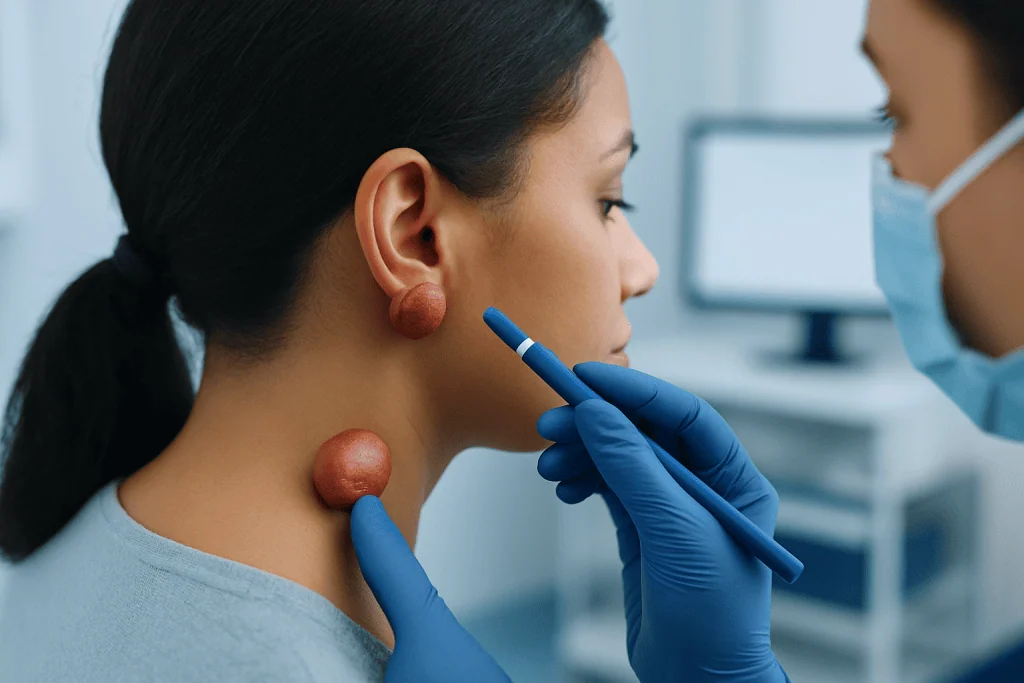
A keloid often begins as a firm, smooth, shiny, or rubbery raised area that develops gradually after the piercing appears to have healed. It may be pink, red, brown, or darker than the surrounding skin, depending on skin tone and how long it has been present. Unlike a simple piercing bump, it tends to enlarge beyond the borders of the original hole.
Symptoms vary. Some patients notice itching, tenderness, or sensitivity when sleeping on the ear or wearing headphones. Others have no symptoms apart from the visible scar. Keloids on earlobes may become rounded or nodular, while those on cartilage can appear broader and more irregular.
It can help to know how keloids differ from other common piercing problems:
- Keloid: grows beyond the piercing site and may keep enlarging.
- Hypertrophic scar: raised scar that stays within the wound edges and may flatten over time.
- Infection: often causes warmth, redness, pain, discharge, or swelling that develops more suddenly.
- Irritation bump: may result from friction, pressure, or jewelry issues and can improve when the trigger is removed.
If there is uncertainty, a dermatologist or surgeon can examine the area and help identify whether it is a keloid or another type of lesion such as skin cancer, which is uncommon in this setting but important not to overlook when a lesion has atypical features.
Why some people get keloids after piercings

The main reason a keloid forms is an overactive healing response. After skin is injured, the body produces collagen to repair it. In keloid-prone skin, this process continues longer than needed, creating a scar that becomes thick and extends outward. This is a biological tendency rather than something the patient did wrong during healing.
Risk is higher in people who have had a keloid before or who have close relatives with keloids. Keloids are also more common in areas where the skin is under tension and in people with darker skin tones, although they can occur in any skin type. Multiple piercings, cartilage piercings, repeated trauma to the same area, and delayed healing may increase the chance of a problem.
Other factors can contribute to irritation around a new piercing and make healing less predictable. These include friction from phones or helmets, sleeping on the pierced side, harsh cleaning products, low-quality jewelry, and allergic reactions to metals such as nickel. While irritation does not automatically cause a keloid, reducing unnecessary inflammation is a sensible part of prevention.
Patients who already know they are prone to excessive scarring should discuss this with a qualified doctor before getting any elective piercing. In some cases, avoiding nonessential piercings is the most reliable way to prevent recurrence.
How doctors diagnose a piercing-related keloid
Diagnosis is usually clinical, meaning it is based on the appearance of the scar, its growth pattern, the location, and the patient’s history. A doctor will ask when the piercing was done, when the bump first appeared, whether it is growing, and whether there have been symptoms such as itching, pain, bleeding, or discharge. A history of previous keloids after acne, surgery, burns, or vaccinations is also useful.
Physical examination helps distinguish a keloid from infection, contact dermatitis, cysts, granulomas, and hypertrophic scars. In most cases, no blood tests or scans are needed. Rarely, if the lesion looks unusual or the diagnosis is uncertain, the doctor may recommend further assessment or a biopsy.
Patients should avoid self-diagnosing if the area is rapidly changing, ulcerated, repeatedly bleeding, or not behaving like a typical scar. A dermatologist may be involved when appearance is unclear or when nonsurgical options are being considered. If a procedure is needed, patients may also be referred for dermatology evaluation or plastic surgery depending on the size, site, and treatment plan.
Treatment options for keloids after piercing
Treatment depends on the size, symptoms, location, and how long the keloid has been present. No single treatment works for everyone, and keloids can recur even after care. For that reason, treatment usually aims to flatten the scar, reduce symptoms, improve appearance, and lower the chance of it returning.
Common first-line approaches include corticosteroid injections placed into the scar over a series of visits. These may soften and flatten the keloid and reduce itch or tenderness. Silicone gel sheets or silicone-based topical products are also often used as part of scar management, especially for early or smaller lesions. Some patients may benefit from pressure therapy, particularly for earlobe keloids, under medical guidance.
For selected cases, doctors may consider cryotherapy, laser-based treatments, or other procedures that target scar tissue. Larger or persistent keloids sometimes require surgical removal, but surgery alone carries a significant risk of recurrence. Because of this, surgery is often combined with additional therapies such as steroid injections or other specialist-directed measures after the procedure.
Patients should be cautious with online advice promising fast removal. Cutting, draining, or tying off the scar at home can worsen inflammation, increase infection risk, and lead to more scarring. A multidisciplinary team may be helpful when both scar control and cosmetic outcome are priorities. Near the end of the care journey, patients who need a broader treatment plan may be assessed in services such as medical oncology only if a different diagnosis is being investigated, though this is not standard for typical keloids.
Prevention and practical self-care after a piercing
The best prevention starts before the piercing. Anyone with a history of keloids should think carefully before getting an elective piercing and may wish to avoid it altogether, especially on the ears, chest, shoulders, or other areas known to scar more noticeably. If a patient decides to proceed, choosing an experienced professional who uses sterile technique and appropriate jewelry may reduce avoidable complications.
During healing, gentle aftercare is important. The area should be cleaned exactly as advised by the piercing professional or clinician, without over-cleaning or using harsh antiseptics unless specifically recommended. Patients should avoid touching the piercing with unwashed hands, twisting jewelry unnecessarily, or changing jewelry too early. Limiting friction from hair, headphones, hats, and sleeping pressure can also help.
If a small bump develops, it is best not to assume it is a keloid or to begin aggressive home treatment. Keeping the area clean, minimizing irritation, and seeking advice if the bump persists are reasonable first steps. Early review may help identify whether the issue is inflammation, allergy, infection, or a forming scar.
When prevention advice needs to be personalized, a skin specialist can assess scar tendency, discuss options for future piercings, and recommend a plan. Acibadem International’s multidisciplinary specialists in JCI-accredited hospitals diagnose and treat scar-related conditions for international patients when expert evaluation is needed.
When to seek medical care
Medical care should be sought if a bump after piercing keeps growing, extends beyond the piercing hole, becomes painful, or causes ongoing itching or cosmetic concern. Early assessment is especially important for people who have had keloids before, because treatment may be easier when the lesion is smaller and newer.
Urgent review is appropriate if there are signs of infection such as increasing redness, warmth, swelling, pus, fever, or severe pain. Piercing infections, particularly in ear cartilage, can damage tissue if not treated promptly. Patients should also seek care if the lesion bleeds easily, breaks down, changes color in an unusual way, or does not seem consistent with a typical scar.
A clinician can advise whether jewelry should stay in place or be removed, because removing it without guidance is not always the best option. If there is uncertainty about the diagnosis or the scar is resistant to initial treatment, referral to a dermatologist or surgeon is often the next step.
Frequently asked questions
Can a piercing cause a keloid?
Yes. A piercing can trigger a keloid because it injures the skin, and some people respond by producing excess scar tissue. The risk is higher in people with a personal or family history of keloids.
Are all piercing bumps keloids?
No. Many bumps around piercings are caused by irritation, infection, allergy, or hypertrophic scarring rather than a true keloid. A keloid typically grows beyond the original piercing site and may continue enlarging over time.
Should the jewelry be removed if a keloid forms?
Not always. The decision depends on whether the problem is a keloid, infection, irritation, or another issue, and removing jewelry too soon can sometimes worsen healing. It is best to ask a qualified clinician before making changes.
Can keloids go away on their own?
Keloids usually do not disappear completely without treatment. Some may become less active over time, but many remain raised and can continue to cause symptoms or cosmetic concern. Early medical advice can help guide the most suitable approach.
What is the best treatment for an ear piercing keloid?
There is no single best treatment for every patient. Doctors often use a combination of methods, such as steroid injections, silicone therapy, pressure therapy, or surgery with follow-up treatment to lower recurrence risk. The best plan depends on the size, location, and history of the scar.
If someone has had one keloid, should they avoid future piercings?
In many cases, yes. A previous keloid means the skin may be prone to forming another one after new injury, including piercing. A doctor can help the patient weigh the cosmetic goal against the risk of recurrence.
References
- American Academy of Dermatology
- National Health Service
- Mayo Clinic
- MedlinePlus
- British Association of Dermatologists
This article is for general information only and is not a substitute for professional medical advice. Please consult a qualified doctor about your individual situation.
Explore treatments in Turkey — costs, top hospitals & a free quote
JCI-accredited · board-certified surgeons · reply within 24h
Add us as a Preferred Source to see more of our trusted health content across Google Search, AI Overviews and Discover.

More from the Health Library



Related Specialists
Dr. Ayla Oktay
Pediatric Cardiology
Assoc. Prof. Dr. Altuğ Yücekul
Orthopedic Surgery & Traumatology
Prof. Dr. Mehmet Aytaç Yüksel
Gynecology & Obstetrics
Dr. Necip Güngör Atikeler
Radiology