Understanding Testicular Cancer: A Complete Patient Guide

A painless lump, swelling, or a feeling of heaviness in one testicle should be checked by a doctor. Most testicular cancers start in germ cells and are broadly grouped as seminomas or non-seminomas.
Key Takeaways
- A painless lump, swelling, or a feeling of heaviness in one testicle should be checked by a doctor.
- Most testicular cancers start in germ cells and are broadly grouped as seminomas or non-seminomas.
- Diagnosis usually involves a physical exam, scrotal ultrasound, blood tumor markers, and imaging when needed.
- Treatment commonly begins with surgery to remove the affected testicle and may include surveillance, chemotherapy, radiotherapy, or further surgery.
- Many people do well after treatment, but follow-up is important to monitor recovery and detect recurrence early.
Testicular cancer is a cancer that begins in the testicle, most often in the cells that make sperm. It is uncommon overall but is one of the more frequent cancers in younger males, and it is often highly treatable when assessed promptly.
Overview
Testicular cancer is a malignant growth that develops in one or both testicles, the organs in the scrotum that produce sperm and testosterone. In most cases, it begins in germ cells, which are the cells that eventually form sperm. Although it is not among the most common cancers overall, it is an important diagnosis because it tends to affect adolescents and younger to middle-aged adults more often than many other cancers.
For many patients, the first clue is a painless lump or a change in the size, shape, or feel of one testicle. Some people notice a dull ache in the lower abdomen or groin, while others feel heaviness in the scrotum. These changes do not always mean cancer, but they should be evaluated without delay because other conditions, such as infection, fluid collection, or testicular torsion, can also cause scrotal symptoms and may require urgent care.
Testicular cancer is often very treatable, especially when found early. Treatment planning depends on the type of cancer, whether it has spread, blood test results, and the patient’s overall health and goals, including fertility concerns. A careful, individualized approach helps guide both effective treatment and long-term follow-up.
Types, Symptoms, and Early Warning Signs
Most testicular cancers are germ cell tumors. These are generally divided into seminomas and non-seminomas. Seminomas tend to grow more slowly and may respond well to certain therapies, while non-seminomas can include several subtypes and may behave differently. Less commonly, testicular cancers arise from other cell types, such as stromal cells. Doctors use the tumor type, imaging, and blood marker results to decide on the best treatment path.
The most common symptoms include a painless lump in a testicle, swelling of the testicle, or a feeling that one testicle has become firmer than usual. Some patients notice a sense of heaviness in the scrotum or a dull ache in the lower belly, groin, or scrotum. Pain can occur, but it is not always present.
If the cancer has spread, symptoms may relate to other parts of the body. Back pain can occur if lymph nodes in the abdomen are enlarged. Breathlessness, chest symptoms, or unexplained fatigue can happen in advanced cases, though these are less common as a first sign. Rarely, hormonal effects from some tumors may lead to breast tenderness or swelling.
- Painless lump or firm area in one testicle
- Change in size or shape of a testicle
- Scrotal swelling or heaviness
- Dull ache in the groin or lower abdomen
- Sudden pain or discomfort in the testicle, in some cases
- Back pain or chest symptoms if disease is more advanced
Causes and Risk Factors
The exact cause of testicular cancer is not fully understood. Like many cancers, it develops when cells acquire genetic changes that allow them to grow and divide abnormally. These changes are not caused by anything a patient did or did not do, and in many cases there is no clear single reason why the cancer develops.
Several factors can increase risk. One of the best-known is undescended testicle, also called cryptorchidism, in which a testicle did not move fully into the scrotum before birth. A personal history of testicular cancer raises the chance of developing cancer in the other testicle. A family history may also increase risk in some people.
Other associations include certain developmental conditions affecting the testicles and fertility problems, although not everyone with these issues will develop cancer. Testicular cancer can occur at different ages, but many cases are diagnosed in younger adults. Having risk factors does not mean a person will get cancer, and some patients develop testicular cancer without any known risk factor at all.
How Testicular Cancer Is Diagnosed and Staged
Diagnosis usually starts with a medical history and physical examination. A doctor will ask about the symptoms, when they started, whether there is pain, and whether there is any history of undescended testicle, infertility, or previous cancer. The testicles and scrotum are examined carefully, and the groin and abdomen may also be checked.
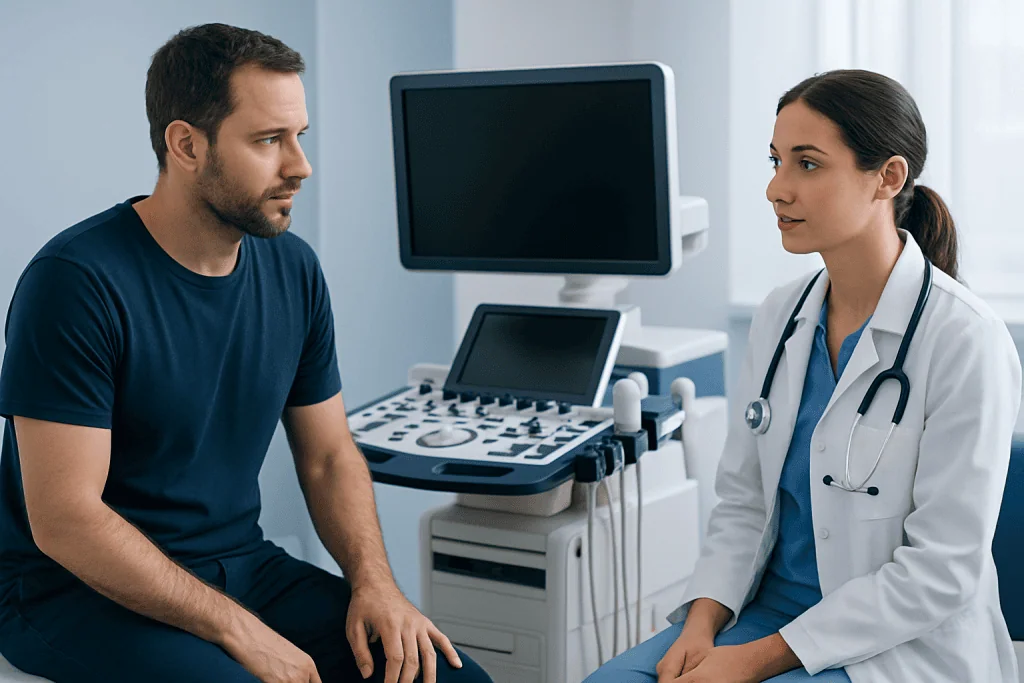
The main imaging test is a scrotal ultrasound, which helps distinguish a mass inside the testicle from other causes of swelling outside it. Blood tests for tumor markers are also important. Depending on the tumor type, doctors may measure markers such as alpha-fetoprotein, beta-human chorionic gonadotropin, and lactate dehydrogenase. These tests can support diagnosis, help with staging, and be used later in follow-up.
If testicular cancer is strongly suspected, doctors usually avoid needle biopsy through the scrotum because of how the cancer may spread locally. Instead, treatment often begins with surgical removal of the affected testicle through an incision in the groin. After surgery, the tissue is examined in the laboratory to confirm the diagnosis. Additional scans, such as CT imaging, may be used to see whether the cancer has spread to lymph nodes or other organs. This process is called staging and is essential for choosing the most appropriate cancer treatment.
Treatment Options and What Care May Involve
The first treatment for most patients is surgery to remove the affected testicle, a procedure called radical inguinal orchiectomy. Removing one testicle does not always affect hormone levels or fertility, because the remaining testicle can often continue these functions. Still, every patient is different, and doctors may discuss sperm banking before treatment, especially if chemotherapy, radiotherapy, or additional surgery may be needed.
After surgery, the next steps depend on the pathology report and stage. Some patients are advised to have active surveillance, which means regular checkups, scans, and blood tests without immediate additional treatment. Others may benefit from chemotherapy, radiotherapy, or surgery to remove lymph nodes, particularly if there is a higher risk of recurrence or evidence that the disease has spread. For selected patients, doctors may discuss robotic surgery or other surgical approaches as part of a broader treatment plan.
Chemotherapy uses medicines to destroy cancer cells throughout the body and is a common option for some non-seminomas, advanced seminomas, or recurrent disease. Radiotherapy may be considered in selected seminoma cases. In more complex situations, care often involves a multidisciplinary team that includes urologists, medical oncologists, radiation oncologists, radiologists, and fertility specialists. In centers with advanced oncology services, supportive approaches such as medical oncology care and rehabilitation planning may help patients manage treatment and recovery.
Near the end of treatment planning, some patients seek care in specialized centers for coordination across surgery, imaging, pathology, and oncology. Acibadem International’s multidisciplinary specialists and JCI-accredited hospitals diagnose and treat testicular cancer for international patients when this level of coordinated care is needed.
Fertility, Recovery, and Follow-Up
Because testicular cancer often affects people during their reproductive years, fertility is an important part of care. Some patients already have reduced fertility before treatment, and certain therapies can lower fertility further. For this reason, doctors may recommend semen analysis and sperm banking before treatment begins, especially if chemotherapy or surgery involving lymph nodes is planned.
Recovery after orchiectomy is usually straightforward, but it still takes time. Patients may need to limit heavy lifting and strenuous activity for a short period while the incision heals. It is normal to have questions about body image, sexual function, and testosterone levels. In many cases, one healthy testicle is enough to maintain testosterone and sexual function, but monitoring may be advised if symptoms such as fatigue, low libido, or mood changes develop.
Follow-up is a key part of long-term care. Even after successful treatment, patients need regular appointments that may include physical exams, blood tumor markers, and imaging. These visits help doctors detect recurrence early and monitor any long-term effects of treatment. Follow-up schedules vary depending on the tumor type, stage, and treatment received, so it is important to keep the plan given by the treating team.
Prevention, Self-Checks, and When to Seek Medical Care
There is no guaranteed way to prevent testicular cancer. However, becoming familiar with the usual size and feel of the testicles may help a person notice changes earlier. Some men choose to check themselves regularly after a warm shower, when the scrotal skin is relaxed. A self-check is not a substitute for a medical exam, but it can prompt timely attention if something seems different.
Healthy habits such as not smoking, staying physically active, and attending routine medical care support general health, but they do not eliminate the risk of testicular cancer. Patients with a history of undescended testicle, infertility concerns, or prior testicular cancer may benefit from discussing individualized monitoring with a doctor. If there are symptoms of scrotal pain, swelling, or a sudden change, other conditions such as infection or varicocele may also need evaluation.
Medical care should be sought promptly for any new lump, persistent swelling, firmness, or heaviness in a testicle. Immediate care is especially important for sudden severe testicular pain, nausea, or rapid swelling, because these can signal emergencies such as testicular torsion rather than cancer. Early assessment helps identify the cause and, if cancer is present, allows treatment to begin without unnecessary delay.
Frequently asked questions
Is testicular cancer curable?
Many cases of testicular cancer are highly treatable, and outcomes are often very good, especially when the cancer is found early. The exact outlook depends on the tumor type, stage, response to treatment, and overall health. A treating specialist can explain the expected outlook for an individual case.
Does testicular cancer always cause pain?
No. The most common early sign is often a painless lump or swelling in one testicle. Some people do have discomfort, heaviness, or a dull ache, but pain is not required for testicular cancer to be present.
What is the first test used to check a possible testicular tumor?
A scrotal ultrasound is usually the first imaging test. It helps doctors see whether a lump is inside the testicle and whether it looks suspicious for cancer or more consistent with another condition.
Can a person have children after treatment for testicular cancer?
Many people can still have children after treatment, especially if the other testicle is healthy. However, fertility can be affected by the cancer itself or by treatments such as chemotherapy or certain surgeries. Doctors often discuss sperm banking before treatment when fertility may be at risk.
Will removing one testicle affect hormones or sexual function?
Often, one remaining healthy testicle can produce enough testosterone to maintain normal sexual function and other hormone-related functions. Some patients may still need monitoring if symptoms of low testosterone appear later. Concerns about libido, erections, mood, or energy should be discussed openly with a doctor.
How quickly should a testicular lump be checked?
A new testicular lump, swelling, or heaviness should be assessed promptly, ideally as soon as practical. It may not be cancer, but it is important not to wait because early evaluation helps identify the cause and guide treatment if needed.
References
- National Cancer Institute
- American Cancer Society
- National Comprehensive Cancer Network
- European Association of Urology
- Urology Care Foundation
This article is for general information only and is not a substitute for professional medical advice. Please consult a qualified doctor about your individual situation.
Testicular Cancer in Turkey — costs, top hospitals & a free quote
JCI-accredited · board-certified surgeons · reply within 24h
Add us as a Preferred Source to see more of our trusted health content across Google Search, AI Overviews and Discover.