Belching: A Complete Medical Overview

Belching most often happens because air is swallowed and later released from the stomach. Eating quickly, carbonated drinks, chewing gum, smoking, and dentures can increase belching.
Key Takeaways
- Belching most often happens because air is swallowed and later released from the stomach.
- Eating quickly, carbonated drinks, chewing gum, smoking, and dentures can increase belching.
- Frequent belching may be linked with reflux, indigestion, gastritis, or functional digestive disorders.
- Evaluation focuses on symptom pattern, diet, medications, and any warning signs such as weight loss or difficulty swallowing.
- Treatment depends on the cause and may include habit changes, trigger avoidance, and care for related digestive conditions.
Belching is the release of air from the stomach through the mouth and is often a normal body function after eating or drinking. When belching becomes frequent, bothersome, or occurs with other digestive symptoms, it may reflect swallowing habits, food triggers, or an underlying gastrointestinal condition.
Overview: what belching means
Belching, also called burping, is the body’s way of releasing excess air from the upper digestive tract. In many cases it is completely normal, especially after meals, carbonated drinks, or eating too quickly. A small amount of belching usually does not mean disease.
Belching becomes more important medically when it is frequent, hard to control, uncomfortable, or associated with symptoms such as bloating, burning in the chest, nausea, upper abdominal pain, or changes in appetite. In these situations, doctors look not only at the amount of air being swallowed but also at whether a digestive disorder may be contributing.
It can help to think of belching as a symptom rather than a diagnosis. Sometimes it reflects everyday habits such as drinking through a straw or talking while eating. In other cases, it may occur alongside conditions such as acid reflux, indigestion, gastritis, or other upper gastrointestinal problems.
How belching happens in the body
Most belching starts with swallowed air. Small amounts of air enter the esophagus and stomach during eating, drinking, laughing, smoking, or rapid breathing. When enough air collects in the stomach, the stomach stretches and signals a reflex that relaxes the valve between the esophagus and stomach. Air then moves upward and is released through the mouth.
Some people also develop a learned pattern of repeatedly swallowing air, often without realizing it. This can happen during stress, anxiety, or as a response to uncomfortable sensations in the throat or chest. In these cases, belching may happen many times a day even when there is not much gas in the stomach.
Belching is different from intestinal gas. Gas from the intestines usually leaves the body as flatulence, while belching mainly reflects air from the upper digestive tract. This difference is important because the causes, tests, and management approach may not be the same.
Common symptoms and related digestive complaints

The main symptom is the repeated release of air from the mouth, often after meals. Some people notice pressure in the upper abdomen or chest that improves after belching. Others describe an urge to burp, a gurgling sensation in the throat, or temporary bloating that seems to ease once air is released.
Belching may also occur with symptoms that point to a related digestive issue. These can include heartburn, a sour taste in the mouth, nausea, early fullness, upper abdominal discomfort, or a feeling of food coming back upward. When this pattern is present, clinicians may consider problems such as gastritis or reflux.
Symptoms that deserve more attention include belching with unintentional weight loss, vomiting, black stools, persistent abdominal pain, difficulty swallowing, or anemia. These do not automatically mean a serious disease, but they are not typical of simple swallowed-air belching and should be assessed by a doctor.
- Belching after carbonated drinks or large meals is often benign.
- Belching with heartburn may suggest reflux.
- Belching with fullness and nausea may suggest indigestion or delayed stomach emptying.
- Belching with new warning signs needs medical review.
Causes and risk factors
The most common cause of belching is aerophagia, or swallowing air. This is more likely when a person eats quickly, drinks fizzy beverages, chews gum, sucks on hard candies, wears poorly fitting dentures, smokes, or drinks through a straw. Talking while eating and frequent mouth breathing can also increase air intake.
Diet can play a role, although foods are more often linked to bloating than to belching itself. Large meals, carbonated beverages, and habits that lead to rapid swallowing are especially relevant. Some people notice more belching with fatty meals, coffee, or highly seasoned foods because these can aggravate reflux or indigestion.
Underlying digestive conditions can contribute as well. These may include reflux disease, functional dyspepsia, gastritis, peptic ulcer disease, and occasionally disorders that affect stomach emptying. Doctors may also review medications, as some medicines can irritate the stomach or relax the lower esophageal sphincter, making related symptoms more noticeable.
Stress does not directly create gas, but it can change breathing and swallowing patterns and make digestive sensations feel more intense. For some people, frequent belching is partly a behavioral response that improves when they learn to recognize and interrupt the air-swallowing cycle.
How doctors diagnose frequent belching
Diagnosis begins with a detailed history. A doctor will usually ask when the belching started, how often it occurs, whether it is related to meals, and whether it improves or worsens with certain foods or activities. Questions about heartburn, abdominal pain, bowel habits, stress, and medications are also important.
In many people, the history and physical examination are enough to suggest that swallowed air or a functional digestive problem is the main issue. If symptoms are persistent or accompanied by warning signs, additional tests may be recommended. These may include blood tests, testing for Helicobacter pylori, upper endoscopy, or imaging in selected cases.
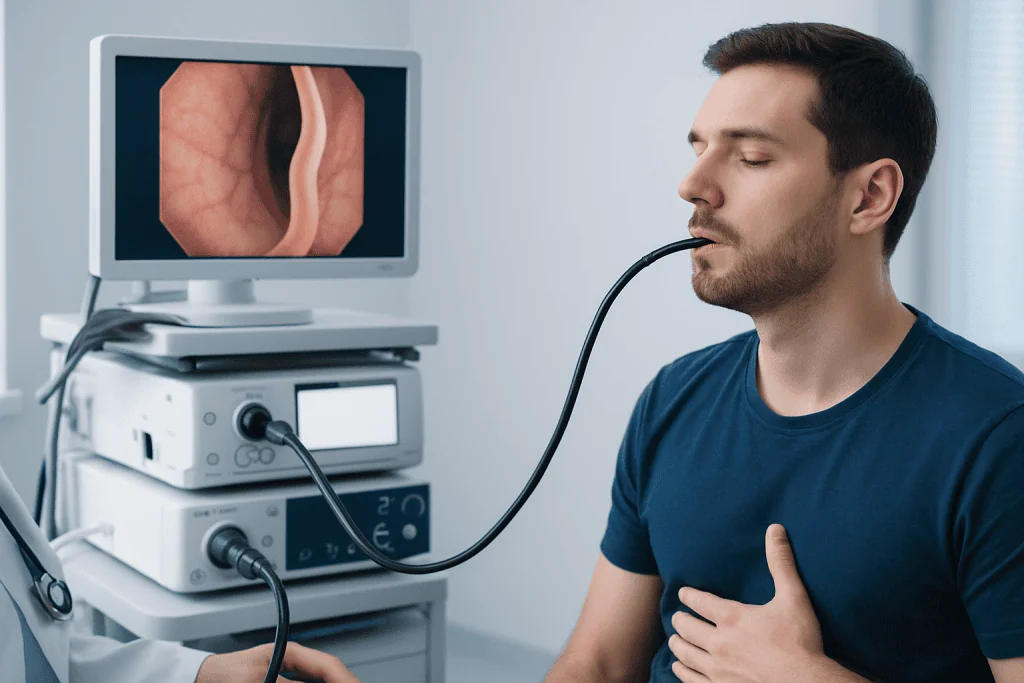
When reflux or upper gastrointestinal disease is suspected, a specialist may consider upper endoscopy to examine the esophagus, stomach, and first part of the small intestine. In more complex cases, assessment by a gastroenterology team may help clarify whether belching is related to reflux, dyspepsia, or a behavioral air-swallowing pattern rather than excess stomach gas alone.
Treatment options and symptom relief
Treatment depends on the cause. If belching is mainly due to swallowed air, simple behavior changes are often the most helpful first step. Slowing down during meals, avoiding carbonated drinks, reducing gum chewing, and limiting straws or hard candies can reduce the amount of air entering the stomach.
When belching is linked with reflux, indigestion, or gastritis, treatment focuses on the underlying condition. This may include meal timing changes, avoiding personal trigger foods, and medications recommended by a doctor to reduce acid or protect the stomach lining. If symptoms fit a pattern of gastroesophageal reflux disease, managing reflux often reduces belching as well.
Some people benefit from techniques that interrupt repeated air swallowing, such as mindful breathing, posture awareness, or speech and behavioral strategies. If anxiety or stress seems to make symptoms worse, addressing those factors can be useful as part of the overall plan. A doctor may suggest further evaluation if symptoms do not improve despite these steps.
For international patients who need specialist evaluation, Acibadem International’s multidisciplinary teams in JCI-accredited hospitals diagnose and treat digestive symptoms with a coordinated approach, including advanced diagnostic endoscopy when appropriate.
Prevention and self-care in daily life
Many people can reduce belching by paying attention to how they eat rather than only what they eat. Taking smaller bites, chewing thoroughly, and sitting down for meals without rushing can lower air swallowing. It may also help to avoid talking continuously while chewing and to pause between bites.
Keeping a short symptom diary can be useful. Recording meals, drinks, timing of symptoms, and situations such as stress or exercise may show clear patterns. For example, some people notice that fizzy drinks, late meals, or lying down soon after eating make belching more frequent.
Other practical measures include stopping smoking, checking denture fit, limiting gum and hard candies, and avoiding overly large meals. If bloating and upper digestive discomfort are also present, eating smaller meals more often and avoiding personal trigger foods may help. Self-care is most effective when it is consistent and combined with medical advice if symptoms are ongoing.
When to seek medical care
Occasional belching is common and usually does not need medical attention. A person should consider seeing a doctor if belching becomes frequent, interferes with daily life, or continues despite avoiding common triggers. Medical advice is also appropriate when belching occurs together with persistent heartburn, nausea, early fullness, or upper abdominal discomfort.
More urgent assessment is needed if belching is accompanied by trouble swallowing, repeated vomiting, vomiting blood, black stools, chest pain, unexplained weight loss, or persistent severe abdominal pain. These symptoms may have many causes, but they should not be dismissed as simple gas.
Children, older adults, and people with chronic digestive disease may need earlier review if symptoms change noticeably. A qualified doctor can determine whether reassurance and lifestyle changes are enough or whether testing and targeted treatment are needed.
Frequently asked questions
Is belching normal after eating?
Yes. Belching after meals is often normal because swallowing food and drinks also brings small amounts of air into the stomach. The body releases that air through the mouth, especially after large meals or carbonated beverages.
What causes excessive belching?
Excessive belching is often caused by swallowing too much air during eating, drinking, chewing gum, smoking, or talking while eating. It can also occur with reflux, indigestion, gastritis, or a learned air-swallowing pattern.
Can stress make belching worse?
Yes, stress can contribute indirectly. It may change breathing and swallowing habits, increase air swallowing, and make digestive sensations more noticeable. Stress management may help as part of a broader treatment plan.
How is belching different from bloating?
Belching is the release of swallowed air from the upper digestive tract through the mouth. Bloating is a feeling of pressure or fullness in the abdomen and may relate to swallowed air, digestion, gut sensitivity, or gas in the intestines.
When should frequent belching be checked by a doctor?
A doctor should assess belching if it is persistent, worsening, or affects quality of life. Evaluation is especially important if there are warning signs such as weight loss, trouble swallowing, vomiting, black stools, or ongoing abdominal pain.
Can changing eating habits really reduce belching?
Often, yes. Eating slowly, avoiding fizzy drinks, limiting gum and straws, and reducing rushed meals can lower the amount of swallowed air. These changes are simple but can be very effective when practiced consistently.
References
- National Institute of Diabetes and Digestive and Kidney Diseases
- American College of Gastroenterology
- National Health Service
- Merck Manual Consumer Version
This article is for general information only and is not a substitute for professional medical advice. Please consult a qualified doctor about your individual situation.
Persistent digestive symptoms? Get evaluated in Turkey
JCI-accredited · board-certified surgeons · reply within 24h
Add us as a Preferred Source to see more of our trusted health content across Google Search, AI Overviews and Discover.