Babinski Reflex: What Patients Need to Know

Babinski reflex is part of a standard neurological examination. An upward big toe response is often normal in infants because the nervous system is still developing.
Key Takeaways
- Babinski reflex is part of a standard neurological examination.
- An upward big toe response is often normal in infants because the nervous system is still developing.
- In older children and adults, a positive Babinski sign may point to an issue in the central nervous system.
- The reflex itself is not a disease; it is a clue that helps guide further evaluation.
- Diagnosis depends on the full exam, symptoms, medical history, and sometimes imaging or other tests.
Babinski reflex is a response seen when the sole of the foot is stroked. It is normal in infants for a time, but in older children and adults it can suggest a problem affecting the brain, spinal cord, or nerve pathways that control movement.
What is the Babinski reflex?
The babinski reflex is a physical response checked during a neurological exam. A clinician gently strokes the sole of the foot and watches how the toes move. In a typical adult response, the toes curl downward. In a Babinski response, the big toe moves upward and the other toes may fan outward.
This finding is also called the Babinski sign or an abnormal plantar reflex. It is important to know that the response means different things at different ages. In babies and very young children, it can be a normal developmental finding because the nerve pathways that control movement are not yet fully mature.
In older children and adults, however, a positive babinski reflex can suggest a problem in the central nervous system, especially along the corticospinal tract, which helps carry movement signals from the brain to the body. The sign does not by itself confirm a diagnosis, but it can help a doctor decide whether more evaluation is needed.
Why this reflex matters in adults and children

The babinski reflex matters because it offers a quick, noninvasive clue about how the nervous system is functioning. Doctors do not use it in isolation. Instead, they interpret it together with strength, muscle tone, coordination, sensation, walking pattern, and other reflexes.
For infants, an upgoing big toe can be expected during early development. As the brain and spinal cord mature, the normal adult downward toe response usually replaces it. If the response remains beyond the expected age range, a clinician may look more closely for developmental or neurological concerns.
For adults, the same finding may indicate disruption in the pathways that normally suppress this primitive reflex. This may occur with conditions involving the brain or spinal cord, including stroke, multiple sclerosis, spinal cord injury, or other neurological disorders. Because context matters, one abnormal reflex does not always mean a serious disease, but it should be assessed carefully.
What a positive Babinski sign can look and feel like
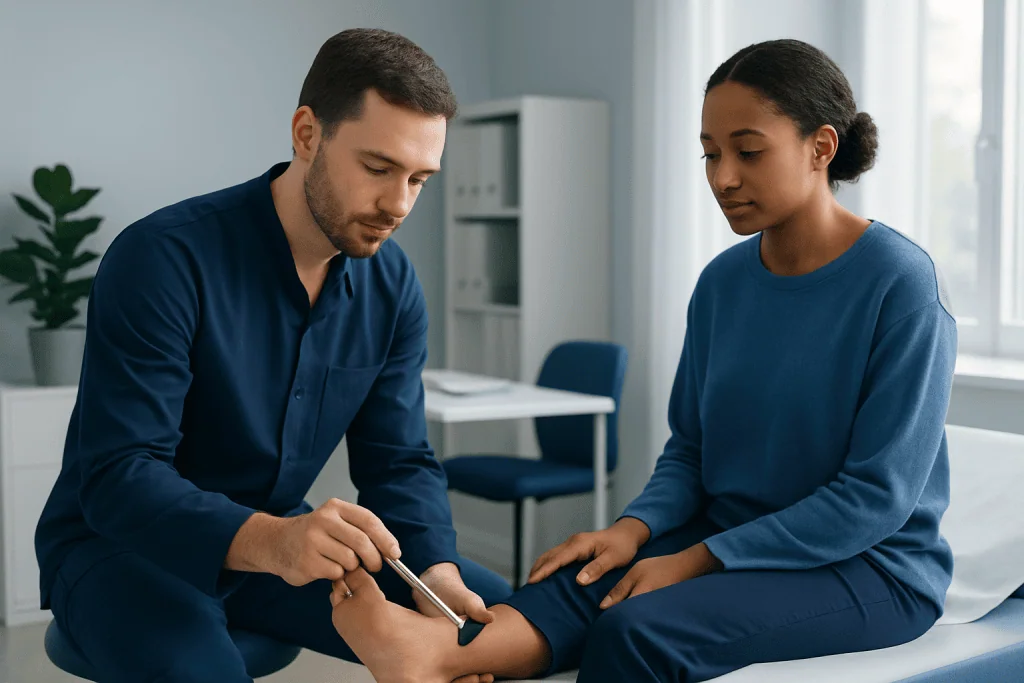
When the sole of the foot is stimulated, a positive babinski reflex usually means the big toe extends upward rather than curling down. The smaller toes may spread apart. The test itself is brief and usually causes only mild discomfort or a tickling sensation, though some people find it unpleasant.
Many people with a positive Babinski sign notice no specific symptom from the reflex itself. Instead, they may have symptoms related to the underlying condition. These can include weakness, muscle stiffness, balance problems, numbness, changes in walking, poor coordination, or trouble with fine motor tasks.
Other neurological findings may appear alongside it. For example, a person might have exaggerated reflexes, increased muscle tone, or one-sided weakness. If these symptoms develop suddenly, especially with facial drooping, speech difficulty, or severe walking problems, urgent medical evaluation is important.
- Babies may have an upgoing toe response as a normal finding.
- Adults normally show toe flexion, meaning the toes point downward.
- An abnormal response in adults is a sign, not a diagnosis.
Common causes and risk factors
A positive babinski reflex in an older child or adult can happen when the upper motor neuron pathways are affected. These pathways begin in the brain and travel through the spinal cord to help control voluntary movement. When they are injured or diseased, primitive reflexes can reappear.
Possible causes include multiple sclerosis, brain injury, spinal cord compression, tumors affecting the nervous system, infections involving the brain or spinal cord, and degenerative neurological conditions. It may also be seen after a brain tumor affects areas that control movement. In some situations, metabolic or toxic problems can contribute to abnormal neurological findings, although the full exam remains essential.
Risk factors depend on the underlying condition rather than the reflex itself. These may include older age for some neurological disorders, a history of trauma, vascular risk factors such as high blood pressure or diabetes in the case of stroke, or a known inflammatory or autoimmune disease. Because many causes are possible, doctors focus on the overall pattern of symptoms and signs rather than a single reflex result.
How doctors evaluate the Babinski reflex
Doctors usually check the babinski reflex as part of a complete neurological examination. They review the person’s symptoms, medical history, timing of changes, and any events such as injury or recent illness. The exam may also include testing muscle strength, tone, coordination, walking, eye movements, speech, and sensation.
If the finding suggests a central nervous system problem, further testing may be recommended. Imaging can be especially helpful. Depending on the symptoms, a doctor may suggest an MRI scan of the brain or spine, or another form of imaging to look for structural changes, inflammation, bleeding, or compression. In selected cases, blood tests or nerve-related studies may also be used.
The goal is to identify the cause, not simply to document the reflex. A positive Babinski sign has more meaning when it appears together with other upper motor neuron findings. If symptoms suggest a sudden brain event, urgent assessment is needed, and evaluation may include rapid CT scanning in emergency settings.
Treatment and management
There is no treatment aimed at the babinski reflex itself. Management focuses on the condition causing it. For example, treatment may address stroke, spinal cord compression, inflammation, infection, or a structural lesion affecting the brain or spine. The best plan depends on the diagnosis, the severity of symptoms, and the person’s overall health.
Some people need medication, rehabilitation, or close neurological follow-up. Others may need more specialized care, such as brain tumor surgery if a mass is responsible, or spinal surgery when spinal cord compression is present. Physical therapy and occupational therapy may help improve strength, mobility, and function after neurological injury.
Early treatment can be important for conditions that affect movement pathways. Even so, not every abnormal plantar response leads to a serious diagnosis. The most helpful step is a timely and thorough evaluation by a qualified clinician who can place the reflex in context.
Self-care and when to seek medical care
Because the babinski reflex is a clinical sign rather than a symptom people usually monitor on their own, self-care mainly involves paying attention to related neurological changes. Anyone who notices new weakness, muscle stiffness, numbness, clumsiness, balance problems, or changes in walking should arrange medical evaluation. It is also helpful to keep a simple record of when symptoms began and whether they are getting better, worse, or staying the same.
Urgent care is needed if symptoms appear suddenly, especially if they include trouble speaking, facial drooping, confusion, severe headache, loss of coordination, or one-sided weakness. These may be signs of a medical emergency such as stroke. For infants and young children, parents should ask a pediatrician if they have concerns about development, muscle tone, or persistent abnormal reflexes.
Near the end of the evaluation pathway, some people may benefit from coordinated neurological, imaging, and rehabilitation services. Acibadem International supports international patients through multidisciplinary specialists and JCI-accredited hospitals that diagnose and treat neurological conditions.
Frequently asked questions
Is the Babinski reflex normal?
It can be normal in infants and very young children because their nervous system is still maturing. In older children and adults, it is usually considered abnormal and may suggest a problem affecting the brain or spinal cord.
What does a positive Babinski sign mean in adults?
In adults, a positive Babinski sign may indicate dysfunction in the upper motor neuron pathways, especially the corticospinal tract. It does not diagnose a specific disease on its own, but it can point a doctor toward further neurological evaluation.
Does a positive Babinski reflex always mean a serious condition?
Not always. The sign should be interpreted along with symptoms, other exam findings, and medical history. Some causes are serious and urgent, while others are less immediate, so proper assessment is important.
How is the Babinski reflex tested?
A clinician gently strokes the sole of the foot with a blunt object and watches the toe movement. The test is quick and is usually done as part of a full neurological examination.
Can the Babinski reflex go away?
In infants, the Babinski response normally disappears as the nervous system matures. In adults, whether it changes depends on the underlying cause and whether that condition improves with treatment or recovery.
Should parents worry about Babinski reflex in a baby?
Usually, no. An upgoing big toe response is often a normal developmental finding in babies. Parents should speak with a pediatrician if they are concerned about delayed development, unusual muscle tone, or other neurological signs.
References
- National Institute of Neurological Disorders and Stroke
- Merck Manual Professional Edition
- American Academy of Neurology
- Mayo Clinic
- MedlinePlus
This article is for general information only and is not a substitute for professional medical advice. Please consult a qualified doctor about your individual situation.
Joint and spine care in Turkey — expert assessment & treatment
JCI-accredited · board-certified surgeons · reply within 24h
Add us as a Preferred Source to see more of our trusted health content across Google Search, AI Overviews and Discover.