Kinesiology Tape — Explained by Medical Evidence, Not Myths

Kinesiology tape is elastic and designed to move with the body, unlike rigid athletic tape. Research suggests it may provide small, short-term benefits for pain, swelling, or movement in selected conditions.
Key Takeaways
- Kinesiology tape is elastic and designed to move with the body, unlike rigid athletic tape.
- Research suggests it may provide small, short-term benefits for pain, swelling, or movement in selected conditions.
- Its effects vary by person, condition, and application technique, and it works best as part of a broader care plan.
- It should not replace medical evaluation for significant pain, weakness, numbness, or an acute injury.
- People with fragile skin, allergies, open wounds, or circulation problems should use it cautiously and seek professional advice.
Kinesiology tape is a stretchy therapeutic tape applied to the skin to support movement, body awareness, and comfort without fully restricting motion. Medical evidence suggests it may help some people with certain musculoskeletal problems, but its benefits are usually modest and it is not a cure on its own.
What kinesiology tape is and what medical evidence says
Kinesiology tape is an elastic adhesive tape placed on the skin to support muscles and joints while still allowing movement. It is commonly used in sports, rehabilitation, and everyday musculoskeletal care. In simple terms, it is not a magic treatment, but it may help some people feel more supported, move more comfortably, or become more aware of posture and movement patterns.
Medical evidence does not show that kinesiology tape can “realign” bones, permanently correct posture, or rapidly heal injuries by itself. Instead, studies suggest it may offer modest, short-term benefits for certain problems such as mild pain, swelling, or reduced function, especially when combined with exercise, activity modification, and guided rehabilitation. Results are mixed, and some people notice more benefit than others.
Because of this, many clinicians view kinesiology tape as a supportive tool rather than a stand-alone treatment. It may be useful in conditions involving overuse, strain, or recovery from injury, but it should fit into a broader assessment of the cause of symptoms. For persistent joint or soft-tissue problems, a structured rehabilitation plan such as physical therapy and rehabilitation is often more important than the tape itself.
How kinesiology tape may work
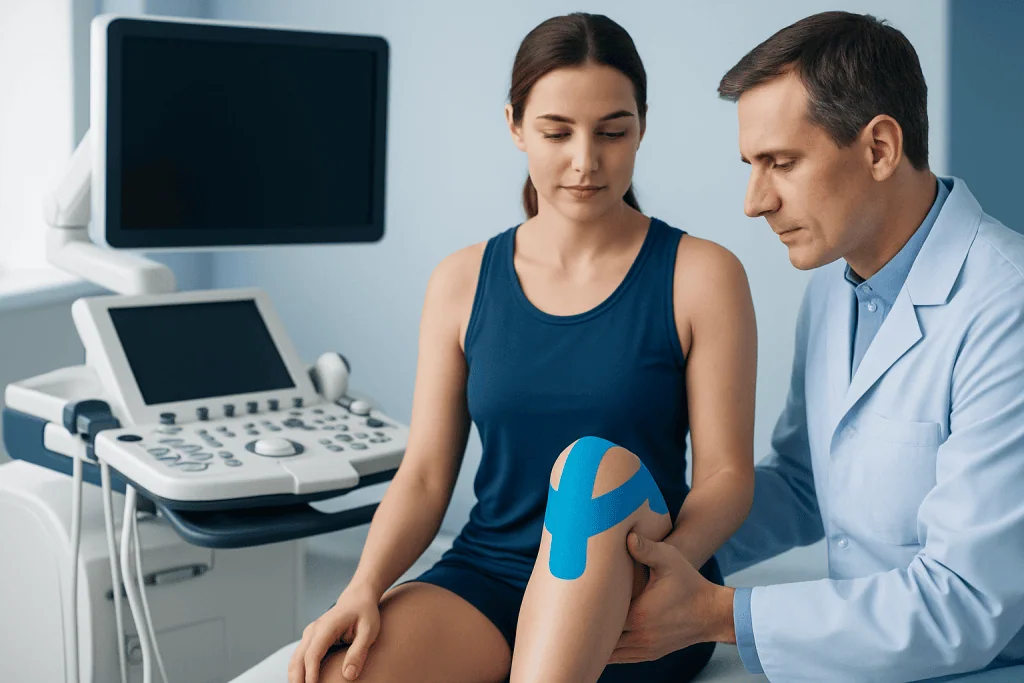
The exact mechanism of kinesiology tape is still being studied. One likely explanation is that it changes sensory input from the skin. This may improve body awareness, sometimes called proprioception, which can help a person move with better control or notice an uncomfortable movement pattern earlier.
The tape may also create a gentle lifting effect on the skin when applied with the body in certain positions. Some researchers suggest this could slightly reduce pressure in superficial tissues and support fluid movement, which may help with mild swelling or the feeling of tightness. However, these effects are generally subtle and should not be overstated.
Another possible benefit is confidence during movement. Some people feel more secure returning to walking, exercise, or sport when tape is applied, which can indirectly improve function. Still, improved confidence should be paired with safe rehabilitation, because tape cannot stabilize a severe injury in the way a brace, splint, or medical treatment might.
Common uses for kinesiology tape

Kinesiology tape is most often used for muscle strains, tendon irritation, mild joint pain, overuse injuries, and recovery support after physical activity. It may be applied to areas such as the shoulder, knee, back, ankle, or calf. Clinicians may also use it to support posture cues or to help manage mild swelling during rehabilitation.
Examples where it may be considered include patellofemoral knee pain, some shoulder problems, ankle discomfort after a sprain, and muscle overuse related to exercise or repetitive work. It can also be used as part of conservative care for conditions such as tennis elbow or after evaluation of ongoing shoulder pain. In these situations, the tape is usually one part of treatment rather than the main treatment.
Kinesiology tape is different from traditional athletic tape. Rigid athletic tape is usually intended to limit movement and support a joint during activity. Kinesiology tape stretches and moves with the body, so it is better suited to light support, movement cueing, and symptom management rather than firm immobilization.
- Muscle strain or fatigue
- Mild joint pain during activity
- Support during rehabilitation exercises
- Swelling management in selected cases
- Posture and movement awareness
What the benefits and limitations really are
The most realistic benefit of kinesiology tape is that it may help reduce discomfort or improve function for a short period of time. Some people report less pain during daily activities, easier movement, or a better sense of support. This can be helpful when returning to exercise, work tasks, or rehabilitation exercises.
Its limitations are just as important to understand. Evidence does not support broad claims that kinesiology tape can repair torn tissues, eliminate inflammation on its own, correct major biomechanical problems, or replace strengthening and medical care. If a tendon, ligament, meniscus, nerve, or joint structure is significantly injured, tape alone is unlikely to solve the problem.
For many musculoskeletal conditions, long-term improvement depends more on identifying the cause of symptoms and treating it appropriately. That may include rest from aggravating activities, guided exercise, footwear changes, ergonomic changes, medication when appropriate, or evaluation by specialists. People with persistent symptoms may need a more focused plan for conditions such as knee pain or a specialist review in orthopedics.
How it is applied and how to use it safely
Kinesiology tape is usually applied to clean, dry skin with varying amounts of stretch depending on the goal and the body area. Different taping patterns are used for muscles, tendons, joints, or swelling. Because technique matters, first-time users often benefit from instruction by a physiotherapist, sports medicine clinician, or another trained professional.
Safe use starts with skin care. The tape should not be placed over open wounds, active rashes, fragile skin, or areas of known adhesive allergy. If itching, burning, blistering, marked redness, or worsening pain develops, the tape should be removed. It is also wise to test a small area of skin first if sensitivity is a concern.
People with diabetes-related skin problems, poor circulation, significant swelling of unclear cause, or nerve symptoms should speak with a clinician before using tape. The same is true after a recent injury with severe pain, deformity, or inability to bear weight. In these settings, proper diagnosis matters more than taping, and diagnostic evaluation may include MRI or other imaging when medically indicated.
Who may benefit most and who should be cautious
Kinesiology tape may be most helpful for people with mild to moderate musculoskeletal symptoms who are able to stay active and are already following an exercise or rehabilitation plan. It can be a reasonable short-term option for someone trying to reduce discomfort during walking, training, or recovery while the underlying issue is being addressed.
It tends to be less useful when symptoms come from a structural problem that requires more direct treatment. Examples include suspected fractures, complete tendon tears, recurrent joint instability, severe arthritis flares, or nerve compression with weakness. In these situations, relying on tape may delay proper care.
Caution is also needed in children, older adults with delicate skin, and anyone with known adhesive reactions. Pregnancy, lymphedema, and certain circulatory or skin conditions may require individualized advice. A clinician can help decide whether taping is appropriate and whether other supports such as exercise therapy, bracing, or further assessment would be more suitable.
When to seek medical care
Kinesiology tape should not delay medical attention if symptoms suggest a significant injury or another health problem. A doctor should assess severe pain, visible deformity, sudden swelling after trauma, inability to use a limb, or pain that does not improve with rest and simple measures. Numbness, tingling, weakness, fever, or unexplained swelling also deserve prompt evaluation.
Medical review is also important when pain keeps returning, interrupts sleep, or limits normal activity for more than a short time. A clinician can check whether the problem involves a muscle strain, tendon irritation, joint injury, nerve issue, or a condition outside the musculoskeletal system. This helps guide whether tape is reasonable, unnecessary, or potentially misleading.
For people who need coordinated evaluation and recovery planning, multidisciplinary specialists can assess movement-related pain and injuries in a structured way. Acibadem International’s JCI-accredited hospitals provide diagnosis and treatment for international patients through teams in rehabilitation, sports medicine, and related specialties.
Frequently asked questions
Does kinesiology tape really work?
Kinesiology tape may help some people, especially for short-term comfort, movement awareness, or mild swelling. The best available evidence suggests benefits are usually modest and vary by condition, person, and application. It is most useful as part of a broader treatment plan rather than as a cure.
What is the difference between kinesiology tape and athletic tape?
Kinesiology tape is elastic and designed to move with the body, while traditional athletic tape is usually more rigid and meant to restrict motion. Because of that, kinesiology tape is often used for support and movement cueing, whereas athletic tape is more often used for firm stabilization. They serve different purposes and are not interchangeable in all situations.
Can kinesiology tape help with pain?
It may help reduce pain for some people, particularly with mild musculoskeletal problems such as overuse symptoms or recovery after activity. Pain relief is often temporary and should not be taken as proof that the underlying problem is fully healed. If pain is severe, recurrent, or associated with weakness or swelling, medical assessment is advisable.
How long can kinesiology tape stay on?
Wear time varies by product, skin sensitivity, sweating, and activity level. Many people wear it for several days if the skin remains comfortable and the tape stays in place. It should be removed sooner if there is itching, burning, rash, blistering, or worsening discomfort.
Can anyone use kinesiology tape?
Not everyone should use it without guidance. People with open wounds, fragile skin, adhesive allergies, unexplained swelling, poor circulation, or certain nerve symptoms should be cautious and may need medical advice first. A trained clinician can help decide if it is appropriate and safe.
Should kinesiology tape replace exercise or physical therapy?
No. For most musculoskeletal problems, exercise-based rehabilitation and proper diagnosis are more important for lasting improvement. Tape may be a helpful add-on, but it does not replace strengthening, mobility work, activity changes, or clinician-guided care.
References
- National Institutes of Health
- American Academy of Orthopaedic Surgeons
- American Physical Therapy Association
- National Health Service
- Cochrane
This article is for general information only and is not a substitute for professional medical advice. Please consult a qualified doctor about your individual situation.
Joint and spine care in Turkey — expert assessment & treatment
JCI-accredited · board-certified surgeons · reply within 24h
Add us as a Preferred Source to see more of our trusted health content across Google Search, AI Overviews and Discover.