Back Pain: Possible Causes and When to Seek Care

Back pain often results from muscle strain, poor posture, disc problems, arthritis, or nerve irritation. Most short-term back pain improves within days to weeks with activity modification, heat, and guided exercise.
Key Takeaways
- Back pain often results from muscle strain, poor posture, disc problems, arthritis, or nerve irritation.
- Most short-term back pain improves within days to weeks with activity modification, heat, and guided exercise.
- Pain with leg weakness, numbness, bowel or bladder changes, fever, or unexplained weight loss needs prompt medical review.
- Diagnosis is based mainly on history and examination; imaging is usually reserved for red flags or persistent symptoms.
- Prevention focuses on regular exercise, core strength, safe lifting, posture, sleep support, and maintaining a healthy weight.
Back pain is a common symptom that can come from muscles, joints, discs, nerves, or internal organs. Many cases improve with time, gentle movement, and simple self-care, but severe pain, nerve symptoms, or systemic warning signs should be assessed by a doctor.
Overview: What Back Pain Can Mean
Back pain is one of the most common reasons people limit activity or seek medical advice. It is a symptom rather than a single disease, and it can start in the muscles, ligaments, joints, discs, or nerves of the spine. In some cases, pain felt in the back may also be referred from nearby structures or internal organs.
For many people, back pain is mechanical, meaning it relates to movement, posture, lifting, overuse, or age-related changes in the spine. This type of pain often improves with time and conservative care. Common examples include muscle strain, joint irritation, and pain linked to a bulging or worn spinal disc.
Back pain can affect the neck, mid-back, or lower back, but the lower back is the most frequent site because it supports much of the body’s weight and helps with bending, twisting, and lifting. The pattern of pain, what makes it better or worse, and whether symptoms spread into the legs or arms can offer important clues about the cause.
Although back pain is often not serious, it should not be ignored when it is intense, persistent, or accompanied by other concerning symptoms. A careful medical assessment helps distinguish common, self-limited causes from problems that need targeted treatment.
Symptoms and Common Patterns
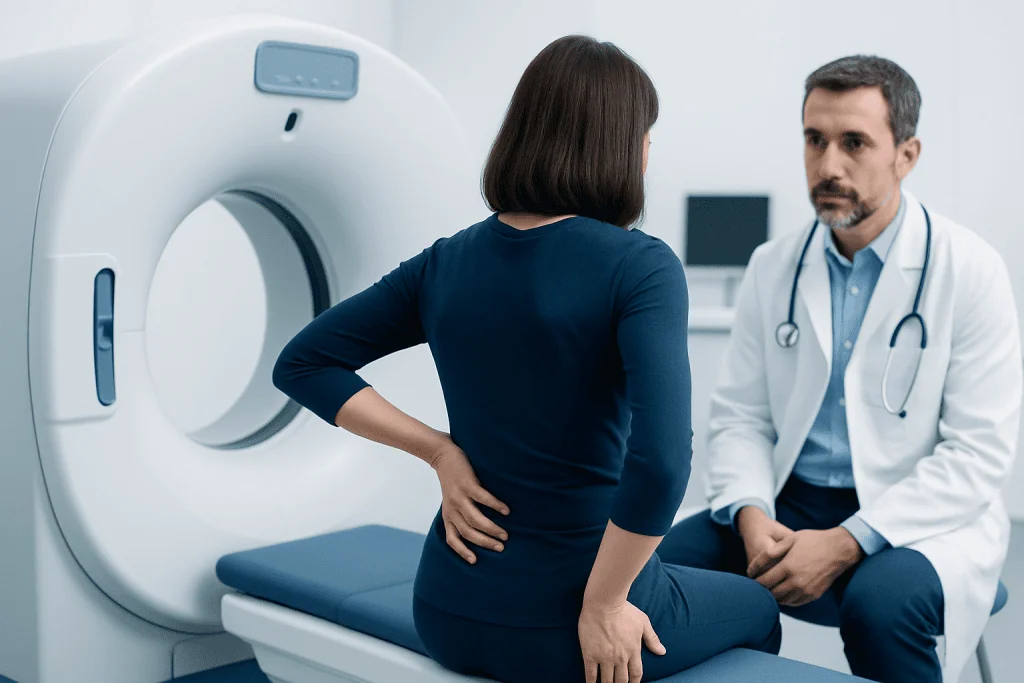
Back pain can feel dull, aching, stiff, sharp, burning, or stabbing. Some people notice pain only with certain movements, while others have continuous discomfort. The pain may stay in one area or spread to the buttocks, hips, legs, shoulders, or chest depending on which part of the spine or surrounding tissues is affected.
Mechanical back pain often becomes worse after lifting, prolonged sitting, twisting, or waking from an awkward sleep position. Many people describe morning stiffness or soreness after long periods of inactivity. Pain from muscle strain may improve gradually over a few days, while disc-related or nerve-related pain can persist longer and may feel more intense with coughing, sneezing, or sitting.
Symptoms that suggest nerve involvement include tingling, numbness, electric shock-like pain, or weakness in an arm or leg. In the lower back, pain that travels down the buttock and leg may reflect sciatica, which can occur when a spinal nerve is irritated. This can happen with conditions such as a herniated disc.
Doctors also pay attention to symptoms beyond the spine itself. Fever, unexplained weight loss, night pain that does not ease with rest, or bowel and bladder changes may point to causes other than routine mechanical strain and should be assessed promptly.
Possible Causes and Risk Factors

Many episodes of back pain are caused by strained muscles or ligaments after lifting, sudden twisting, sports, repetitive work, or prolonged poor posture. Weak core muscles, deconditioning, and spending many hours seated can increase the chance of this type of pain. Stress can also contribute by increasing muscle tension and making pain feel more intense.
Age-related changes in the spine are another common cause. Spinal discs naturally lose water content over time, and joints can develop wear and inflammation. These changes may contribute to degenerative disc disease, facet joint pain, or narrowing around nerves. Sometimes the spine can also curve or slip in ways that create ongoing discomfort or stiffness.
Nerve-related pain may happen when a disc bulges or herniates, when inflammation narrows the spaces where nerves travel, or when spinal structures become enlarged with age. Conditions such as spinal stenosis may lead to pain, numbness, or weakness that worsens with walking or standing and improves with sitting or bending forward.
Less commonly, back pain can be linked to osteoporosis-related fractures, inflammatory arthritis, infection, kidney problems, or other medical conditions outside the spine. Risk factors for more persistent back pain include smoking, obesity, physically demanding work, poor sleep, low physical activity, older age, and a previous history of similar episodes.
How Doctors Diagnose Back Pain
Diagnosis starts with a detailed conversation about when the pain began, where it is felt, what makes it worse or better, and whether there are numbness, weakness, fever, injury, or other associated symptoms. The timing matters: sudden pain after lifting may suggest strain, while gradually progressive pain may point to degenerative changes or posture-related causes.
A physical examination usually includes checking posture, movement, areas of tenderness, muscle strength, reflexes, sensation, and how pain changes with specific motions. This exam helps identify whether the problem is most likely muscular, joint-related, disc-related, or nerve-related.
Imaging is not always needed at the first visit, especially for uncomplicated short-term back pain. X-rays, CT, or MRI are more useful when there are red flags, significant trauma, suspected fracture or infection, signs of nerve compression, or pain that does not improve with appropriate conservative treatment. When needed, MRI scanning can provide detailed images of discs, nerves, and other spinal tissues.
In selected cases, blood tests or additional studies may be recommended to look for inflammation, infection, osteoporosis, or medical causes outside the spine. The goal is to match testing to the person’s symptoms so that care remains focused and appropriate.
Treatment Options for Back Pain
Treatment depends on the cause, the duration of symptoms, and whether nerves are involved. For many people with recent-onset mechanical back pain, the first steps are relative rest, avoiding heavy lifting, using heat or ice, and staying gently active. Long periods of bed rest are usually not advised because they can slow recovery.
Doctors may recommend pain-relieving medicines, anti-inflammatory medicines, or muscle relaxants when appropriate, while taking into account a person’s age, other health conditions, and medication safety. Non-drug approaches are also important. These can include stretching, posture correction, and a structured rehabilitation program such as physical therapy and rehabilitation.
If back pain is persistent, recurring, or linked to nerve compression, treatment may include targeted exercise, image-guided injections, or specialist evaluation. Surgery is usually reserved for specific situations, such as ongoing nerve compression, spinal instability, or symptoms that do not respond to conservative care. In carefully selected cases, options may include spine surgery.
Recovery is often best when treatment addresses both pain and function. That means helping the person move more comfortably, regain strength and confidence, and return gradually to work, exercise, and normal daily routines.
Prevention and Self-Care Strategies
Many cases of back pain can be reduced or better managed through everyday habits. Regular physical activity supports the muscles that stabilize the spine, while stretching helps maintain flexibility. Walking, swimming, and guided strengthening exercises are commonly recommended because they are low impact and practical for long-term use.
Posture matters, but prevention is not only about sitting perfectly. It is more helpful to change positions often, use ergonomic work setups when possible, and avoid staying in one posture for long periods. When lifting, people should keep the object close to the body, bend through the hips and knees, and avoid twisting while carrying weight.
Sleep position and mattress support can also affect symptoms. Some people feel better sleeping on their side with a pillow between the knees, while others prefer lying on the back with support under the knees. A healthy body weight, stopping smoking, and managing stress can all support better spinal health.
- Stay active with regular low-impact exercise.
- Strengthen core and hip muscles.
- Take movement breaks during desk work or long travel.
- Use safe lifting technique.
- Seek early guidance if pain keeps returning.
When to Seek Medical Care
Back pain should be assessed by a doctor if it is severe, lasts longer than a few weeks, keeps returning, or interferes with sleep, walking, work, or daily activities. Medical review is also sensible after a fall, sports injury, or road traffic accident, especially in older adults or people with osteoporosis.
Prompt medical attention is important if back pain occurs with leg or arm weakness, worsening numbness, difficulty controlling the bladder or bowels, fever, unexplained weight loss, or pain that is constant and not eased by rest. These features do not always mean a serious problem, but they require timely evaluation.
People with a history of cancer, immune suppression, long-term steroid use, or known osteoporosis should be especially cautious about new or unusual back pain. A clinician can identify whether the pain fits a common mechanical pattern or needs further tests and specialist care.
For international patients who need coordinated evaluation, Acibadem International’s multidisciplinary specialists and JCI-accredited hospitals diagnose and treat spine-related conditions using individualized plans, including advanced imaging and rehabilitation when appropriate.
Frequently asked questions
What is the most common cause of back pain?
The most common causes are mechanical problems such as muscle strain, ligament strain, poor posture, overuse, and age-related wear in the spine. These causes are often uncomfortable but not dangerous and frequently improve with time and conservative care.
How long does back pain usually last?
Short-term back pain often improves within a few days to a few weeks. If pain lasts longer than several weeks, keeps returning, or is getting worse, a medical assessment can help identify the cause and guide treatment.
Is it better to rest or stay active with back pain?
In most cases, gentle activity is better than prolonged bed rest. Short periods of reducing painful movements can help, but walking, light stretching, and gradual return to normal activity often support recovery.
When is back pain an emergency?
Back pain needs urgent medical attention if it comes with new bowel or bladder control problems, significant weakness, numbness in the groin area, high fever, or major trauma. These symptoms may signal a condition that needs prompt treatment.
Do all cases of back pain need an MRI or X-ray?
No. Many people with recent, uncomplicated back pain do not need imaging right away. Scans are usually recommended when there are red flags, nerve symptoms, trauma, or pain that does not improve as expected.
Can stress make back pain worse?
Yes. Stress can increase muscle tension, affect sleep, and make pain feel more intense or harder to manage. Addressing stress alongside physical treatment can be helpful, especially when pain becomes recurrent.
This article is for general information only and is not a substitute for professional medical advice. Please consult a qualified doctor about your individual situation.
Joint and spine care in Turkey — expert assessment & treatment
JCI-accredited · board-certified surgeons · reply within 24h
Add us as a Preferred Source to see more of our trusted health content across Google Search, AI Overviews and Discover.

More from the Health Library

Why Does My Throat Feel Tight? Here Is What the Evidence Says

Is Cottage Cheese Dairy? A Doctor-Reviewed Answer

Right Side Numbness of Face: Common Causes, Related Conditions, and When to See a Doctor

Is Broccoli High in Potassium? Causes, Explanations, and Next Steps

Is Diarrhea a Sign of Labor? A Doctor-Reviewed Answer