Amh Anti Mullerian: What Patients Need to Know

AMH is a blood test commonly used to estimate ovarian reserve. A higher or lower AMH result does not by itself confirm fertility or infertility.
Key Takeaways
- AMH is a blood test commonly used to estimate ovarian reserve.
- A higher or lower AMH result does not by itself confirm fertility or infertility.
- AMH levels must be interpreted with age, menstrual history, ultrasound findings, and other lab tests.
- The test may help guide IVF planning and may also support evaluation for conditions such as PCOS.
- Results can vary between laboratories and should be reviewed with a qualified doctor.
amh anti mullerian refers to anti-Müllerian hormone, a substance made by small follicles in the ovaries that can help estimate ovarian reserve. The test is useful in fertility assessment, but it is only one piece of the picture and should be interpreted alongside age, ultrasound findings, symptoms, and other hormone tests.
Overview: What amh anti mullerian means
amh anti mullerian usually refers to anti-Müllerian hormone, often shortened to AMH. In women, AMH is produced by small follicles in the ovaries. Because these follicles represent part of the remaining egg supply, AMH is often used as a marker of ovarian reserve, meaning an estimate of how many eggs may still be available.
This blood test is widely used in fertility care, but it is important to understand what it can and cannot do. AMH may help doctors estimate how the ovaries could respond to stimulation during fertility treatment, yet it does not directly measure egg quality, and it cannot reliably predict whether a person will become pregnant naturally.
AMH is also different from a pregnancy test and different from hormones that confirm ovulation. Instead, it is part of a broader reproductive assessment. Doctors often combine AMH results with menstrual history, pelvic ultrasound, age, and other hormone tests to build a clearer picture of reproductive health.
Why doctors order an AMH test
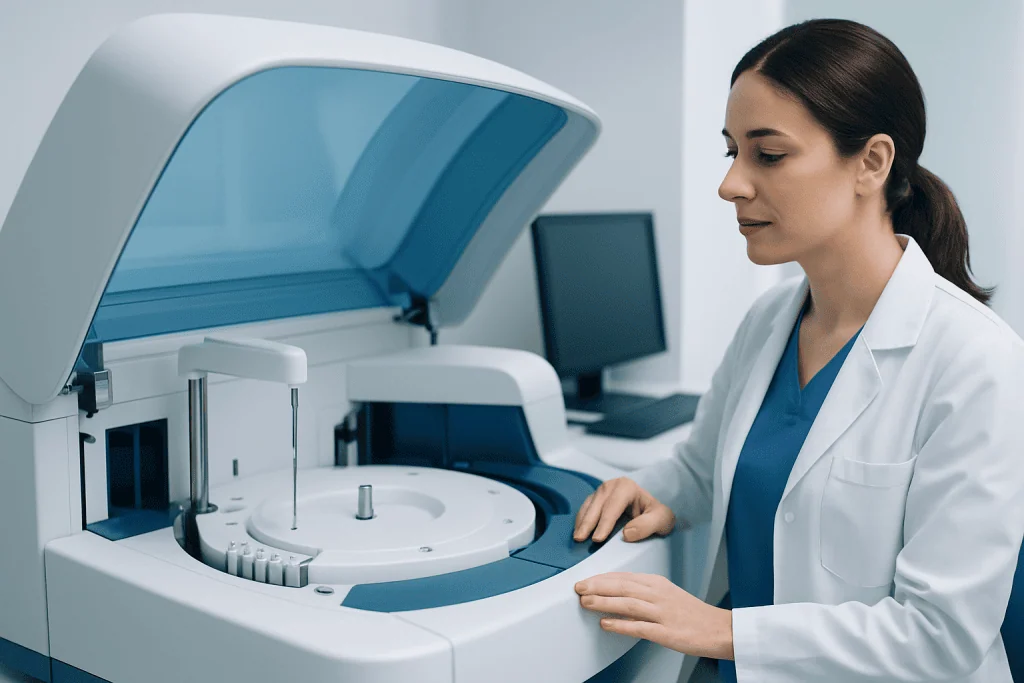
An AMH test may be ordered when a person is trying to understand fertility potential, especially if pregnancy has not happened as expected or fertility treatment is being considered. It can be helpful in estimating ovarian reserve before procedures such as IVF treatment and in planning how the ovaries may respond to medications.
Doctors may also use AMH as part of the evaluation of irregular periods, early menopause concerns, or suspected polycystic ovary syndrome. In some situations, the test helps clarify whether symptoms might fit with polycystic ovary syndrome or another reproductive hormone condition.
For people preparing for surgery or medical treatment that could affect fertility, AMH may be one of several tests used to discuss future family planning. It can also be useful in follow-up after certain fertility-related treatments, though the meaning of changes over time should always be interpreted carefully.
How to understand AMH results

AMH results are usually reported as a number within a laboratory reference range, but there is no single universal cut-off that applies to everyone. In general, lower AMH levels may suggest lower ovarian reserve, while higher levels may suggest a larger number of small follicles. However, a result is never meaningful in isolation.
A low AMH result does not automatically mean that pregnancy is impossible. Some people with low AMH still ovulate and conceive naturally. Likewise, a normal or high AMH result does not guarantee pregnancy, because fertility also depends on egg quality, ovulation, sperm health, the uterus and fallopian tubes, and overall health.
Age remains one of the most important factors in female fertility. AMH tends to decline over time, but the rate differs from person to person. This is why two people with the same AMH level may have very different clinical situations depending on age, menstrual regularity, and ultrasound findings.
Laboratory methods can differ, and repeat tests may not always be directly comparable if they were done in different settings. A doctor may review AMH together with transvaginal ultrasound, antral follicle count, and other blood tests such as FSH, estradiol, LH, thyroid tests, or prolactin when needed.
Symptoms and situations linked to abnormal AMH levels
AMH itself does not cause symptoms. Instead, it reflects what may be happening in the ovaries. A person with low AMH may have no symptoms at all, or they may notice changes that suggest reduced ovarian reserve, such as shorter cycles, difficulty conceiving, or signs of earlier-than-expected reproductive aging.
High AMH is commonly seen in people with polycystic ovary syndrome, although it is not enough on its own to diagnose it. Those patients may have irregular periods, acne, excess hair growth, weight changes, or ultrasound findings of multiple small follicles. In other people, a high AMH level may simply reflect a naturally higher follicle count without causing symptoms.
Doctors may consider broader evaluation if a person has menstrual irregularity, infertility, recurrent treatment failure, pelvic symptoms, or a family history of early menopause. In some cases, additional assessment may be needed to rule out other hormone-related or gynecologic conditions such as endometriosis if symptoms point in that direction.
- Difficulty becoming pregnant after trying for a reasonable period
- Irregular, absent, or very short menstrual cycles
- Symptoms suggestive of PCOS
- Concerns about early menopause or diminished ovarian reserve
- Planning for fertility treatment or fertility preservation
How AMH fits into diagnosis and fertility evaluation
AMH is best viewed as one tool within a larger diagnostic process. For fertility evaluation, clinicians often look at menstrual history, prior pregnancies, pelvic ultrasound, ovulation patterns, partner factors, and overall health. In many cases, a semen analysis and assessment of the fallopian tubes are just as important as ovarian reserve testing.
When infertility is being assessed, AMH may help doctors estimate how the ovaries could respond to stimulation medicines, especially before egg freezing or assisted reproductive treatment. It may also help identify patients who could be at risk of a very low response or, at the other end, a stronger response that requires careful medication planning.
AMH is not usually the only basis for making a diagnosis. A person with irregular periods and high AMH may still need clinical examination, ultrasound, and other tests before PCOS is confirmed. Similarly, a person with low AMH may need repeat assessment, symptom review, and individualized counseling rather than a quick conclusion about fertility.
Treatment options and what happens next
There is no treatment aimed simply at raising or lowering AMH as a goal by itself. Care focuses on the underlying issue and on the patient’s reproductive plans. If pregnancy is desired now, doctors may discuss timing, ovulation monitoring, management of associated conditions, or referral for fertility treatment depending on age and the full evaluation.
For some patients, treatment may involve lifestyle support, treatment of hormone imbalance, or management of conditions that affect fertility. Others may be candidates for assisted reproductive options such as in vitro fertilization if clinically appropriate. The choice depends on age, ovarian reserve, sperm factors, tubal health, and how long pregnancy has been attempted.
If high AMH is linked to PCOS, treatment may focus on cycle regulation, ovulation induction when pregnancy is desired, and support for long-term metabolic health. If low AMH raises concern about reduced ovarian reserve, doctors may discuss not delaying fertility plans, fertility preservation in selected cases, or a personalized treatment pathway.
Near the end of the care pathway, some patients seek coordinated specialist support across gynecology, reproductive endocrinology, imaging, and laboratory medicine. Acibadem International’s multidisciplinary specialists and JCI-accredited hospitals diagnose and treat fertility-related conditions for international patients when further evaluation is needed.
Self-care, limits of the test, and practical questions to ask
AMH is a useful marker, but it has limits. It cannot tell whether ovulation is happening every month, whether the fallopian tubes are open, whether sperm quality is normal, or whether the uterus can support pregnancy. It also does not directly measure the genetic quality of eggs, which is strongly influenced by age.
Good self-care supports overall reproductive health even though it may not dramatically change AMH levels. This includes avoiding smoking, managing chronic conditions, maintaining a balanced weight, staying physically active, and getting individualized advice before delaying pregnancy plans for many years. For people undergoing treatment, emotional support and clear communication with the medical team can also be important.
Helpful questions to ask a doctor include:
- What does my AMH result mean for my age?
- Do I need ultrasound or additional hormone tests?
- Could my symptoms fit PCOS, reduced ovarian reserve, or another condition?
- If I want pregnancy now or later, what are the realistic next steps?
- Would fertility preservation or specialist referral be appropriate in my case?
When to seek medical care
Medical advice is appropriate if a person has irregular or absent periods, has been trying to conceive without success, or has concerns about fertility because of age, surgery, cancer treatment, or family history of early menopause. Earlier assessment is often helpful for people over 35, those with known gynecologic conditions, or those with symptoms of PCOS.
Prompt medical review is also important for severe pelvic pain, heavy bleeding, rapidly changing menstrual patterns, or signs of hormonal imbalance that affect daily life. A clinician can decide whether AMH testing is useful and whether other evaluations, such as ultrasound or broader fertility assessment, are needed.
Because AMH can be misunderstood when seen without context, patients are encouraged to discuss results with a gynecologist, reproductive endocrinologist, or fertility specialist rather than interpreting the number alone.
Frequently asked questions
What is amh anti mullerian in simple terms?
amh anti mullerian refers to anti-Müllerian hormone, a hormone made by small follicles in the ovaries. Doctors use it mainly to estimate ovarian reserve, which is one part of fertility assessment.
Can AMH tell whether someone can get pregnant naturally?
No. AMH does not reliably predict natural pregnancy on its own. Natural fertility depends on many factors, including age, ovulation, sperm health, fallopian tubes, and uterine health.
Does a low AMH level mean infertility?
Not necessarily. A low AMH level may suggest reduced ovarian reserve, but some people with low AMH still conceive naturally or with treatment. The result should be reviewed together with age, cycle pattern, and other fertility findings.
Is a high AMH level always a problem?
No. High AMH can be seen in people with a larger number of follicles and may occur in polycystic ovary syndrome, but it is not always abnormal. A doctor will interpret it alongside symptoms, ultrasound, and other hormone tests.
When is the best time to do an AMH test?
AMH can usually be measured on any day of the menstrual cycle, which makes it more flexible than some other hormone tests. Still, the timing and interpretation should follow the doctor’s plan, especially if other fertility tests are being done at the same time.
Can AMH levels be improved?
There is no proven treatment designed simply to raise AMH as a way to restore fertility. Care usually focuses on the underlying condition, overall reproductive planning, and the most suitable fertility options for the individual.
This article is for general information only and is not a substitute for professional medical advice. Please consult a qualified doctor about your individual situation.
Hair transplant in Turkey — costs, graft counts & a free assessment
JCI-accredited · board-certified surgeons · reply within 24h
Add us as a Preferred Source to see more of our trusted health content across Google Search, AI Overviews and Discover.
Check your numbers in seconds
BMI, calories, due date, blood pressure and 30+ more clinical calculators — free, instant, doctor-reviewed ranges.

More from the Health Library

Frequent Urination: What Patients Need to Know

Bony Spur on Knee: What Patients Need to Know

Cardamom Benefits: An Evidence-Based Guide for Patients

Dicyclomine: A Complete Medical Overview

Dapoxil: A Complete Medical Overview