Talus: An Evidence-Based Guide for Patients

The talus sits between the leg and foot and plays a central role in ankle and foot movement. Talus injuries often happen after falls, sports trauma, or motor vehicle accidents.
Key Takeaways
- The talus sits between the leg and foot and plays a central role in ankle and foot movement.
- Talus injuries often happen after falls, sports trauma, or motor vehicle accidents.
- Symptoms may include ankle pain, swelling, bruising, and difficulty bearing weight.
- Diagnosis usually involves an examination and imaging such as X-rays or CT scans.
- Treatment depends on the type of injury and may range from immobilization to surgery.
- Early medical assessment helps reduce the risk of long-term stiffness, arthritis, or bone healing problems.
The talus is a small but important bone in the ankle that helps transfer body weight from the leg to the foot and allows smooth movement when walking. Problems involving the talus, especially fractures or cartilage damage, can affect pain, stability, and mobility, so timely evaluation is important.
Overview: what the talus is and why it matters
The talus is one of the main bones of the ankle. It sits between the lower leg bones and the heel, forming key joints that help the foot move up, down, and side to side. Although it is relatively small, it carries a large share of body weight during standing, walking, and running.
Unlike many other bones, the talus has no muscles attached directly to it. Its movement depends on surrounding joints, ligaments, and tendons. Because so much of its surface is covered by cartilage, it is designed for smooth motion, but this also means that injury to the talus can affect joint function in a meaningful way.
People often hear about ankle sprains and ankle fractures, but the talus itself receives less attention. In practice, however, talus injuries are clinically important because they can interrupt blood supply to the bone, damage joint cartilage, and raise the risk of long-term stiffness or arthritis if not managed appropriately.
Anatomy of the talus and how it supports movement
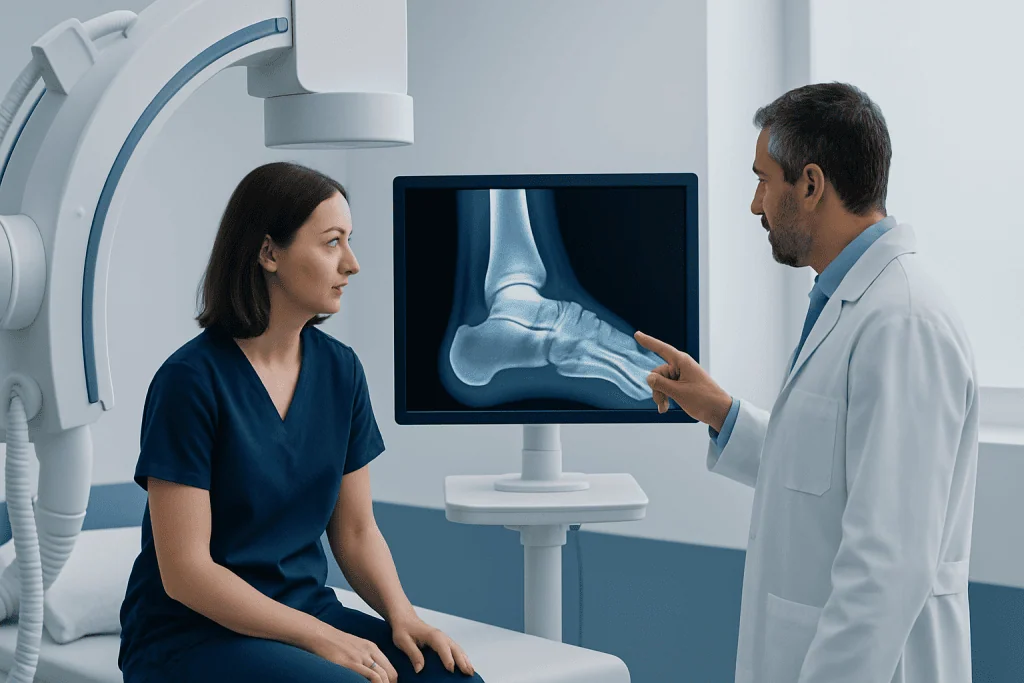
The talus connects with several nearby bones. At the top, it meets the tibia and fibula to form the ankle joint. Below, it joins the calcaneus, or heel bone, at the subtalar joint. In front, it connects to the navicular bone. Together, these joints allow the foot to adapt to uneven ground while supporting balance and forward motion.
The talus is commonly described in parts: the head, neck, body, and dome. The dome is the smooth upper surface that fits into the ankle joint. The neck is a narrower segment that can be vulnerable during high-energy injuries. Different parts of the talus can be injured in different ways, and treatment planning often depends on the exact location of the problem.
Blood supply to the talus is more limited than in many other bones. This is one reason doctors take talus fractures seriously. If circulation to the bone is disrupted after trauma, part of the bone may not heal normally, which can lead to a condition called avascular necrosis. This risk is one of the key features that makes talus injuries different from simpler ankle injuries.
Symptoms of a talus injury or disorder
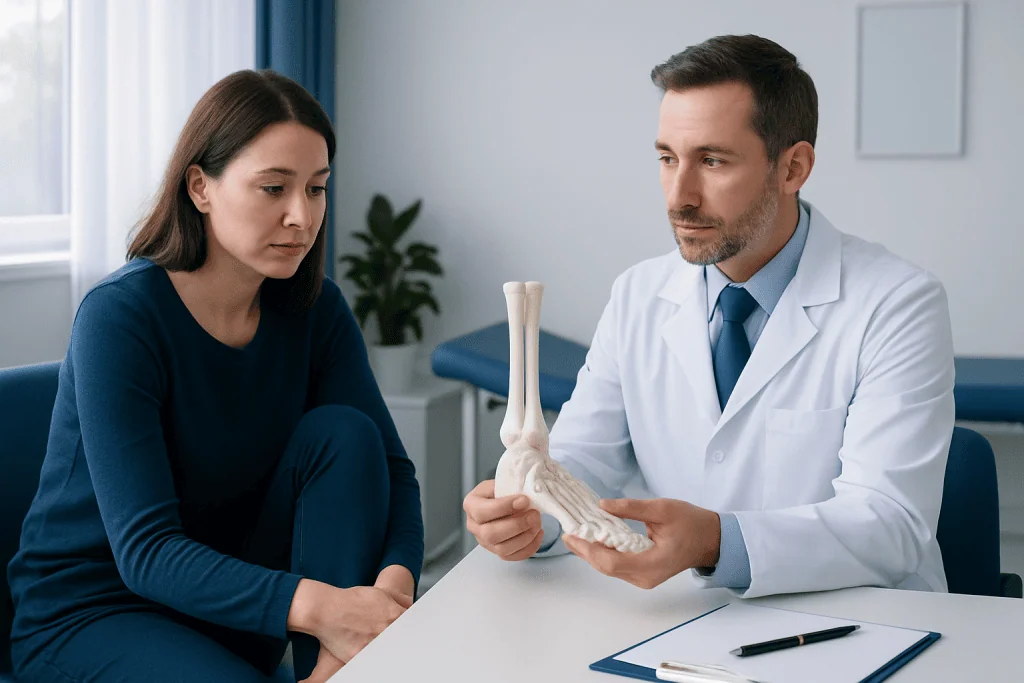
Symptoms depend on whether the talus has been fractured, bruised, dislocated, or affected by cartilage damage. The most common complaints are deep ankle pain, swelling, bruising, and difficulty putting weight on the foot. Some people describe pain in the front, back, or inner side of the ankle, while others mainly notice stiffness and loss of movement.
After a significant injury, the ankle may look deformed, feel unstable, or become too painful to move. In milder cases, symptoms can resemble a severe sprain, which is why talus injuries are sometimes missed at first. Ongoing pain after an ankle injury should not be ignored, especially if walking remains difficult.
Depending on the type of injury, symptoms may include:
- Swelling around the ankle or hindfoot
- Tenderness when the area is touched
- Pain with walking or standing
- Reduced ankle range of motion
- A catching or locking sensation if cartilage is involved
- Persistent pain that does not improve as expected
Some chronic talus problems may develop gradually rather than after a single accident. For example, repetitive stress, previous trauma, or cartilage damage can lead to ongoing ankle discomfort and stiffness over time.
Causes and risk factors
Talus injuries most often result from trauma. High-energy events such as motor vehicle accidents, falls from height, or sports impacts can place large forces across the ankle and foot. Twisting injuries may also affect the talus, especially when the ankle is forced beyond its normal range.
A talus fracture is one of the most important causes of serious ankle pain after trauma. Fractures can involve the talar neck, body, dome, or other parts of the bone. Some injuries happen together with dislocation or with fractures of nearby bones. In other situations, a person may have an osteochondral lesion, meaning damage to the cartilage and underlying bone of the talus, often after an ankle sprain.
Risk factors include participation in contact sports, previous ankle injury, reduced bone strength, and high-impact falls. People with persistent ankle symptoms after a severe sprain may need evaluation for hidden joint or bone injury, including conditions related to ankle fractures or cartilage damage.
Less commonly, the talus can be affected by limited blood flow, inflammatory joint disease, or wear-and-tear changes over time. These problems are less dramatic than an acute fracture but can still lead to pain and reduced mobility if not assessed properly.
How doctors diagnose talus problems
Diagnosis starts with a medical history and physical examination. A doctor will usually ask how the injury happened, where the pain is felt, whether the person can bear weight, and whether symptoms are improving or worsening. The ankle and foot are then examined for swelling, bruising, tenderness, alignment, circulation, and nerve function.
Imaging is often needed because physical examination alone may not show the full extent of a talus injury. Standard X-rays are usually the first step, but small fractures or cartilage injuries may not always be obvious. If a fracture is suspected or surgery is being considered, CT scanning can provide a more detailed view of the bone. MRI may be useful when cartilage injury, bone bruising, or impaired blood supply is a concern.
The goal of diagnosis is not only to confirm the presence of injury, but also to define its pattern and severity. This helps doctors estimate healing time, choose the safest treatment, and watch for complications such as joint stiffness or avascular necrosis.
In some cases, additional evaluation by specialists in orthopedics, orthopedics and traumatology, or foot and ankle care may be recommended, particularly when pain persists or imaging shows a complex injury.
Treatment options for talus injuries
Treatment depends on the exact problem, whether the bone is broken, and whether the injury is stable. Minor, nondisplaced fractures or certain bone bruises may be treated without surgery using immobilization, protection from weight-bearing, and close follow-up imaging. Rest and gradual rehabilitation are often important parts of recovery.
More severe injuries may need surgery. This is especially true when the fracture is displaced, the joint is unstable, or the talus is associated with dislocation. Surgical treatment aims to restore alignment, protect joint surfaces, and support healing. In selected situations, patients may be evaluated for ankle surgery or procedures related to fracture fixation and joint restoration.
Rehabilitation is a key part of treatment. Even after the bone heals, stiffness and weakness can remain. A structured recovery plan may include exercises to improve range of motion, strength, balance, and walking pattern. This is one reason some patients benefit from physical therapy and rehabilitation after immobilization or surgery.
Long-term follow-up may be needed because some complications appear later. These can include arthritis, persistent pain, limited movement, or avascular necrosis. If symptoms continue, doctors may reassess with new imaging and discuss additional options tailored to the person’s goals and daily activities.
Recovery, self-care, and prevention
Recovery time varies widely. A mild injury may improve over weeks, while a fracture can take much longer and may require months of gradual rehabilitation. During healing, following weight-bearing instructions closely is important because putting stress on the talus too early can interfere with recovery.
Helpful self-care measures may include keeping the foot elevated to reduce swelling, using cold packs as advised, wearing the prescribed boot or cast properly, and attending all follow-up appointments. People should not restart sports, running, or impact activity until a qualified doctor says it is safe to do so.
Although not every injury can be prevented, some steps may lower risk:
- Use supportive footwear for sports and uneven surfaces
- Build ankle strength and balance after previous injuries
- Warm up before high-impact activity
- Address repeated ankle sprains instead of returning to sport too quickly
- Seek assessment when ankle pain persists after trauma
For people with ongoing symptoms, specialist evaluation may help clarify whether the issue involves the talus itself or another related problem such as chronic instability, cartilage damage, or post-traumatic joint change. Near the end of the care pathway, centers such as Acibadem International offer multidisciplinary assessment in JCI-accredited hospitals for international patients who need diagnosis and treatment planning.
When to seek medical care
Medical care is recommended promptly after an ankle injury if there is severe pain, obvious swelling, bruising, deformity, or inability to bear weight. These features can suggest a fracture or dislocation rather than a simple sprain. Early assessment helps identify injuries that may need immobilization, imaging, or urgent orthopedic care.
A doctor should also review symptoms that do not improve as expected. Persistent ankle pain, repeated swelling, stiffness, or a sense that the joint is catching or giving way can indicate a hidden talus injury or cartilage problem. Ongoing symptoms deserve evaluation even if initial swelling has settled.
Urgent medical attention is especially important if the foot becomes numb, cold, pale, or increasingly painful, or if the injury happened after a high-energy accident. These signs can point to more serious damage and should be assessed without delay.
Frequently asked questions
What is the talus bone?
The talus is a bone in the ankle that connects the leg to the foot. It helps transfer body weight and allows important ankle and hindfoot movements needed for walking and balance.
Can a talus injury feel like an ankle sprain?
Yes. Some talus injuries, especially small fractures or cartilage lesions, can initially resemble a severe sprain. If pain, swelling, or trouble walking continue longer than expected, medical review is important.
Why are talus fractures taken seriously?
Talus fractures can affect the smooth joint surface and may interfere with blood flow to the bone. This can increase the risk of delayed healing, stiffness, arthritis, or avascular necrosis in some cases.
How is a talus problem diagnosed?
Doctors usually begin with a physical examination and X-rays. Depending on the symptoms and suspected injury, CT or MRI may be needed to show the bone, cartilage, and blood supply in greater detail.
Do all talus injuries need surgery?
No. Stable or nondisplaced injuries may be treated with immobilization and restricted weight-bearing. Surgery is more often considered when the fracture is displaced, the joint is unstable, or alignment needs to be restored.
How long does recovery take after a talus injury?
Recovery depends on the type and severity of the injury. Mild cases may improve within weeks, while fractures can require a longer period of protection, healing, and rehabilitation over several months.
This article is for general information only and is not a substitute for professional medical advice. Please consult a qualified doctor about your individual situation.
Joint and spine care in Turkey — expert assessment & treatment
JCI-accredited · board-certified surgeons · reply within 24h
Add us as a Preferred Source to see more of our trusted health content across Google Search, AI Overviews and Discover.

More from the Health Library

Otezla Uses: What Patients Need to Know

Pectus Excavatum: A Complete Medical Overview

Superior Mesenteric Vein — Explained by Medical Evidence, Not Myths

Epicanthic Fold: What Patients Need to Know

Gigantomastia — Explained by Medical Evidence, Not Myths